Korean barbecue is hot—very hot. The latest addition is Seoul Garden, which recently took over the Creve Coeur location of its cousin Kimcheese.
By the way, the original Kimcheese, in Chesterfield, is alive and well, as is the original Seoul Garden, in St. Ann. Some have identified that location as the genesis of Korean restaurants in St. Louis, but according to the oral traditions among us restaurant critics, that honor most likely goes to Choi’s, which took over an old bar space on Meramec Street in South St. Louis in the mid-’80s.
Find the best food in St. Louis
Subscribe to the St. Louis Dining In and Dining Out newsletters to stay up-to-date on the local restaurant and culinary scene.
When it opened, in July, the new location based much of its identity on its all-you-can-eat Korean barbecue, which was probably a miscalculation—not because the BBQ is one of the lesser of the items on its menu but rather because that approach communicates a long, relatively expensive meal. In light of the many offices nearby, Seoul Garden’s lunch menu of $10-to-$15 dishes is likely going to be its primary source of profit.
Bibimbap is available at lunch and dinner, served in a stone bowl for a buck extra. Though the slight upcharge might be annoying, don’t even consider not paying it; the bowl serves the dual purpose of keeping the dish hot and toasting the rice at the bottom, creating a nice layer similar to the socarrat that forms beneath a good paella.
Sliced or julienned carrot, squash, and radish peek from under a sesame seed–coated sunny side–up egg and are accompanied by your choice of proteins or supplementary Korean dishes such as kimchi and japchae. Mix ’em all up to start, but leave that rice lining the bowl, where it will become an end-of-course treat that’s absorbed all the prior flavors.
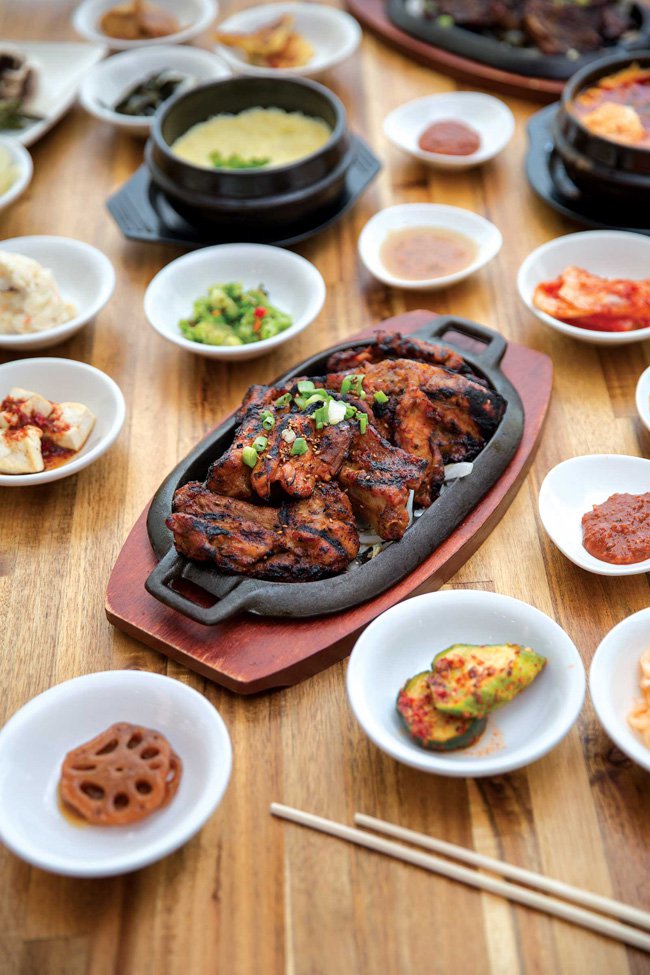
The dinner version of the L.A.–style cut of kalbi (the so-called flanken cut, which results in very short bones) illustrates that the portion sizes are quite generous, as are the banchan—little bowls of noshes served with most Korean meals. After we ordered the kalbi and grilled mackerel, nearly the entire tabletop was filled with 12 banchan: marinated soybeans, several forms of kimchi, and tiny whole fish, among others. (The bibimbap meal had seven, but that was still more than we were able to consume.)
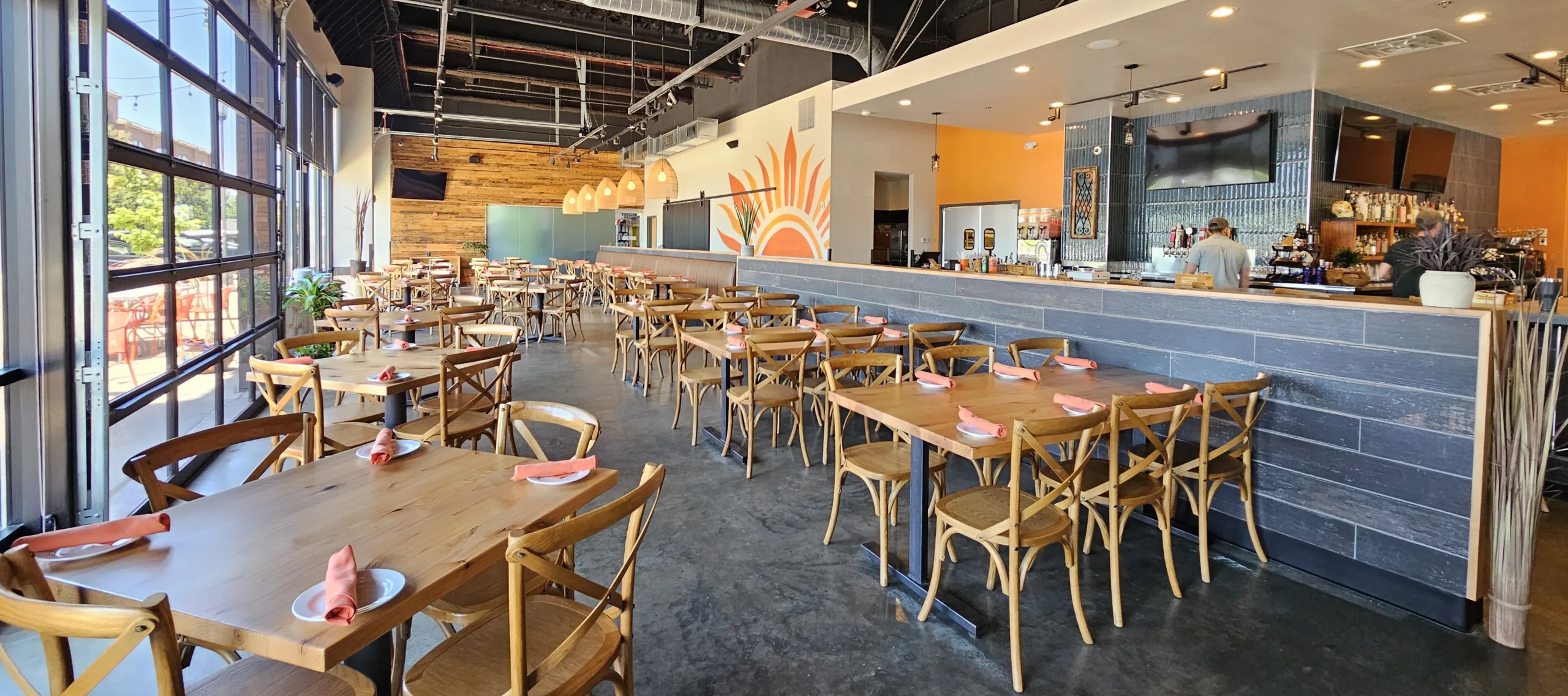
The wooden tables and chairs consist almost entirely of right angles, which might be initially off-putting, but they’re in fact perfectly comfortable and add to the Asian-inspired atmosphere, as do the various pictures. One bears the phrase hahng ahh ree—the word for the jar in the picture—though it could be a transliteration describing the opposite of how you’ll ever feel when leaving Seoul Garden.