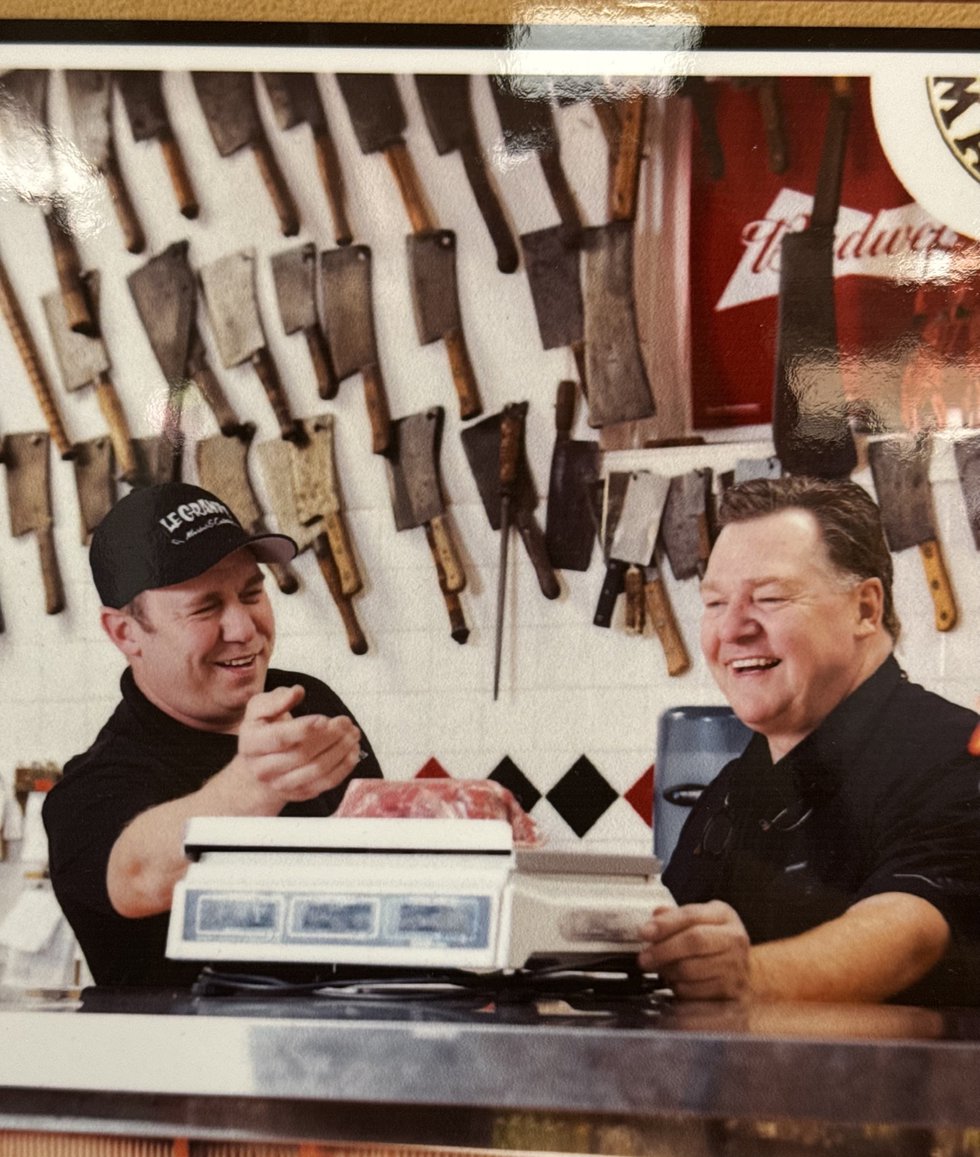
Back in the the 1930s, when LeGrand’s (4414 Donovan) was known by its original name, Binder’s Market, people would give founder William Binder grief because he’d opened a spot “way out in the country”: St. Louis Hills. A lot has changed since then, of course. The Binder family no longer owns the market, the grocery store has been turned into a deli and meat market, and the sign out front bears the last name of its current owner, Jim LeGrand. Its latest purveyor has made it his mission, however, to keep as much the same as possible by offering the same personalized, quality experience that guests have come to expect during the market’s 90 years in operation.
Bratwurst, one of LeGrand’s most beloved offerings, is a relative newcomer in its history, with its famous version invented as a sort of happy accident in 1985. Over the years, it has developed a following akin to Imo’s pizza or Ted Drewes custard. LeGrand dished on the lore surrounding this St. Louis specialty, including how it’s evolved over the years and what makes it so special. He’s not giving us his top-secret recipe, but he did let us in on a couple of things.
Find the best food in St. Louis
Subscribe to the St. Louis Dining In and Dining Out newsletters to stay up-to-date on the local restaurant and culinary scene.
First things first: What is the difference between a sausage and a bratwurst? What defines a brat? There are so many different varieties, but I assume all brats are sausages, but not all sausages are brats?
That’s correct. ‘Sausage’ is a broad name that can cover everything from cold to cooked to dried and cured sausages that you slice. They all get lumped into one big category, which, to me, basically means diced-up meats that are formed into a casing. If you think about it, they are all regional, so the style refers to where they came from. Salsiccia, for instance, is from Sicily; bratwurst is from Germany. They all used what they had at their disposal.
The brats at LeGrand’s are legendary, but I understand that they came about not as an intentional thing but as a way to move some product. What’s the story?
At the time, it was called Binder’s Market, and I was the head meat cutter, working for Mr. Binder. When I came into that position, I inherited all of these seasoning packets that were just taking up space because nobody was buying them. This was back in the 1980s, and there was a product called Make Your Own Sausage at Home; the idea was that you would put ground beef and ground pork in a pan with this seasoning, but at the time, sausage was $2 something a pound, so why would anyone spend all that money to make it themselves when they could just buy it for so much cheaper? So they just sat there, because Mr. Binder was from the old school, where you don’t throw anything away. We had the idea to use it to make a bratwurst. It ended up giving way to its own little product.
Your brats are different from others in town. What was the development process like, and what makes them so special?
When we came up with them, it was 1985, and brats just weren’t that big; I don’t even know if Johnsonville was around at that time, but we decided to go for it anyway. We used the seasoning mix as a base and then dialed it in with our own additional ingredients. Eventually, they became so popular, and we ran out of spice packets that we had to recreate the blend for them. What’s special about ours is what we don’t use. In traditional brats, there are two seasonings that stand out: nutmeg and mace, plus there’s a little dehydrated milk or whey in them as well. I don’t really like sausage that has those flavors, so I didn’t put it in there. Without those, it really takes on its own unique flavor. People who don’t typically like brats like ours because of that. Another important thing is that we use fresh, lean local pork. You can really pick up on its hints of natural sweetness. Plus, there’s a lot of garlic in there. If you don’t like garlic, you might not like ours.
You’ve really branched out since that initial brat recipe. How do you come up with all of your flavors, and what inspires you?
When it’s not grilling season, like during the winter months, we have time to experiment with things. That’s when we put on our thinking caps and create new varieties. The first we came up with was our cheddar brat, which we formulated with this dry-aged cheddar cheese that doesn’t turn into Velveeta when it’s heated. That took off like crazy, so the next year we made hot pepper brats that use a slow melting hot pepper cheese and more dehydrated jalapeños. I only spoke about three sentences to tell you about that, but it took us three months to work on these recipes. It’s a lot of trial and error where you have a product that isn’t quite the way you want it to be, so you try something else because you know you can improve on it.
What are some of your more interesting concoctions?
One that I came up with a couple of years ago is a mushroom and Swiss brat. I found the same slow melt cheese we use for the cheddar and pepper cheese available in Swiss and added sautéed onions and mushrooms together that I mixed in with the regular brat recipe. In every batch of sausage, you add water to mix it all together and to make it more pliable, but here we use cream of mushroom soup.It’s a magical thing.
Another one we just recently made is a brown sugar brat with dehydrated pineapple in it. It’s one of my favorites, and it, too, was a project because we had to find just the right dehydrated pineapple to make it work. My son just came up with one that I think will be a hit. He calls it the cowboy brat, which is based on his really good pit bean recipe. It has molasses, onion, bacon, and beans all in there that are smoked in the smoker for hours.
One that is really special is a South African boerewors that we made after a customer from South Africa came in and described it to me. We make ours with lamb and pork, and it has some really cool seasonings in it. In South Africa, it would have always been made with game meat like impala, but lamb takes the place of it now. When I told him I wanted to try to make it, he called his good friend from South Africa who gave me this awesome recipe. You learn so much in this business.
That sort of story is the reason that people love LeGrand’s. How do you maintain this legacy after all these years?
When I first bought the store, I had to transition from a small grocery store into a meat shop and deli, and I’ve been really cautious about making any changes too fast. I probably could have made a lot more money doing it all at once 30 years ago than making a change every five years, but I took it slow. Now, I’m only working two or three days a week, and my son is running it. He has a spark that won’t go out, and it’s so good to see him excited about all of these new ideas and things he thinks are going to work. It allows me to stand back and look and reflect on what got us here. It’s been a lot of hard work, but it makes you feel really good seeing how much we mean to people. I don’t think there is a dollar value you put on that.
Jim LeGrand’s 4-Bean Baked Beans
LeGrand is not sure exactly when and how this recipe for baked beans originated in his family, but it’s been a staple of get-togethers for as long as he can remember. Over the years, he’s adapted it to include mustard, black beans and bacon, which he believes has made for a richer, and more flavorful dish. “You can never have enough bacon,” says LeGrand. “When you make it yourself, feel free to double it.”
Ingredients
- 1 16 oz. can of black beans (drained and rinsed)
- 1 20 oz. can Cambell’s Pork-n-Beans (partially drained)
- 1 16 oz. can of butter beans (drained and rinsed)
- 1 16 oz. can red kidney beans (drained and rinsed)
- ½ lb. of bacon, fried and crumbled, reserving 3 TBS of grease
- 3 small, thinly sliced yellow onions
- ¾ cup brown sugar, packed
- ¼ tsp. garlic salt
- ¼ tsp. dry mustard
- ½ cup Catsup
- ¼ cup vinegar
- Optional: Pinch of cumin and pinch of oregano for even more flavor
Directions
- Cook bacon in skillet. Crumble after cooked. (Reserve grease).
- In the bacon skillet, sautée the onions, brown sugar, seasonings, catsup, and vinegar in the reserved grease, and simmer for 20 minutes.
- Add the crumbled bacon.
- In a 2-quart casserole dish, add the three cans of beans, and mix up.
- Pour the sauce over the beans, and bake at 350 degrees covered for 25 minutes.
- Stir and bake uncovered for an additional 10 minutes.