What’s the most unlikely word combination? What about “St. Louis Chapter of the San Jose Sharks Fan Club?” OK, the second most unlikely? How about “vegan slider”?
“Slider” isn’t exactly the word, but that’s what you’ll think of when the vada pav come out of the kitchen at Bombay Food Junkies.
Find the best food in St. Louis
Subscribe to the St. Louis Dining In and Dining Out newsletters to stay up-to-date on the local restaurant and culinary scene.
The proliferation of Indian restaurants has been one of the bigger food stories of late in St. Louis and other Midwest cities. You’re in the mood for Northern India’s curries, paneer, and big circles of chewy naan? Or do you prefer rolled dosa crepes and lentil-based stews from the South? In most areas of St. Louis, you can find all kinds of regional specialty restaurants to satisfy your appetite.
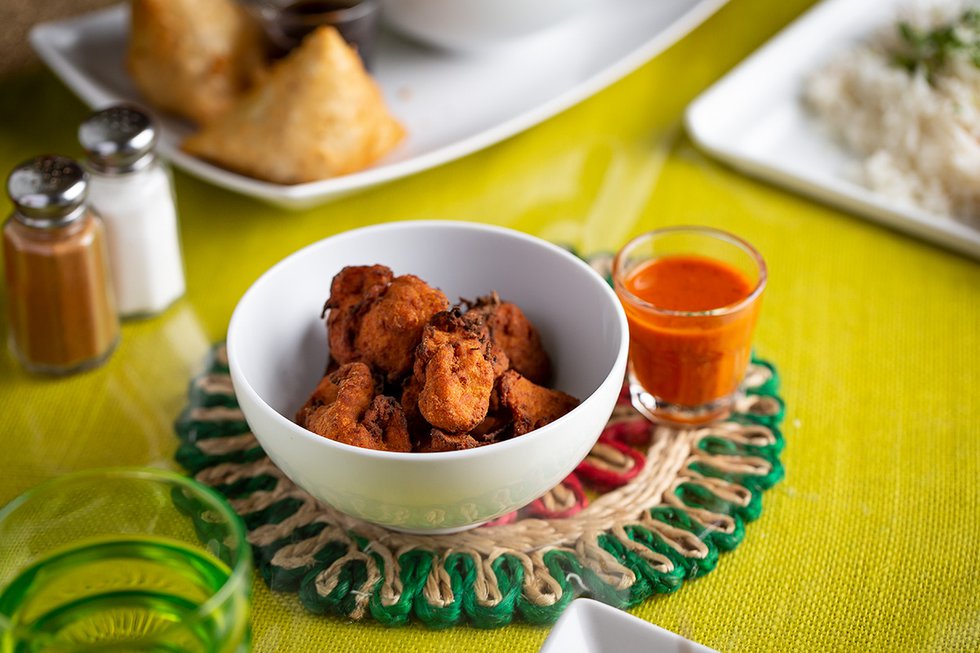
One aspect of Indian fare that hasn’t truly been introduced here, though, was the surprising array of street foods: nibbles, tidbits, and snacks that sizzle and pop, perfuming back streets all over India. Late-night repasts are enjoyed with friends as one makes a culinary stroll, stopping by here for a platter of warm chaat or crispy samosas, then over there for the rose-scented, betel leaf paan.
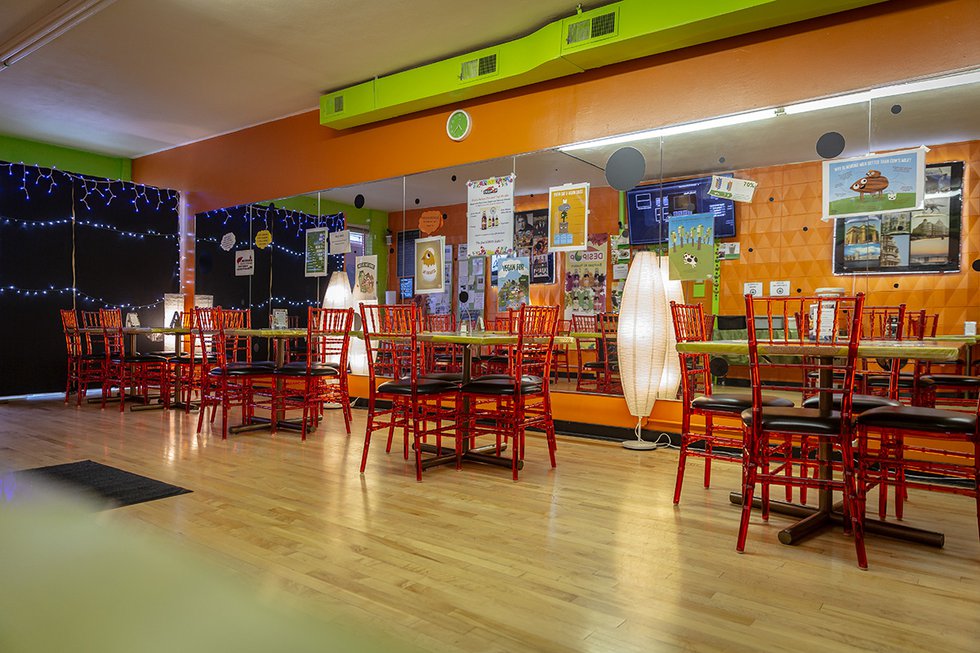
For a few years, the kaleidoscope-colored food truck of Bombay Food Junkies has been chugging about, dispensing some of these street foods. In need of a base kitchen from which to supply the truck, owners Krupa and Sid Panchal found just the spot in St. Ann, in a ’60s-era strip mall that’s also home of the celebrated Sweet Spot Cafe. When a dance studio next door closed, the landlord offered the space to the Panchals. And so what had once been the scene of jete battus and emboites is now a home to a meatless café featuring some of India’s classic street foods—and some intriguing riffs.
Bombay Food Junkies’ main courses are bowls and wraps. The former are loaded with rice or noodles, topped with a variety of ingredients:
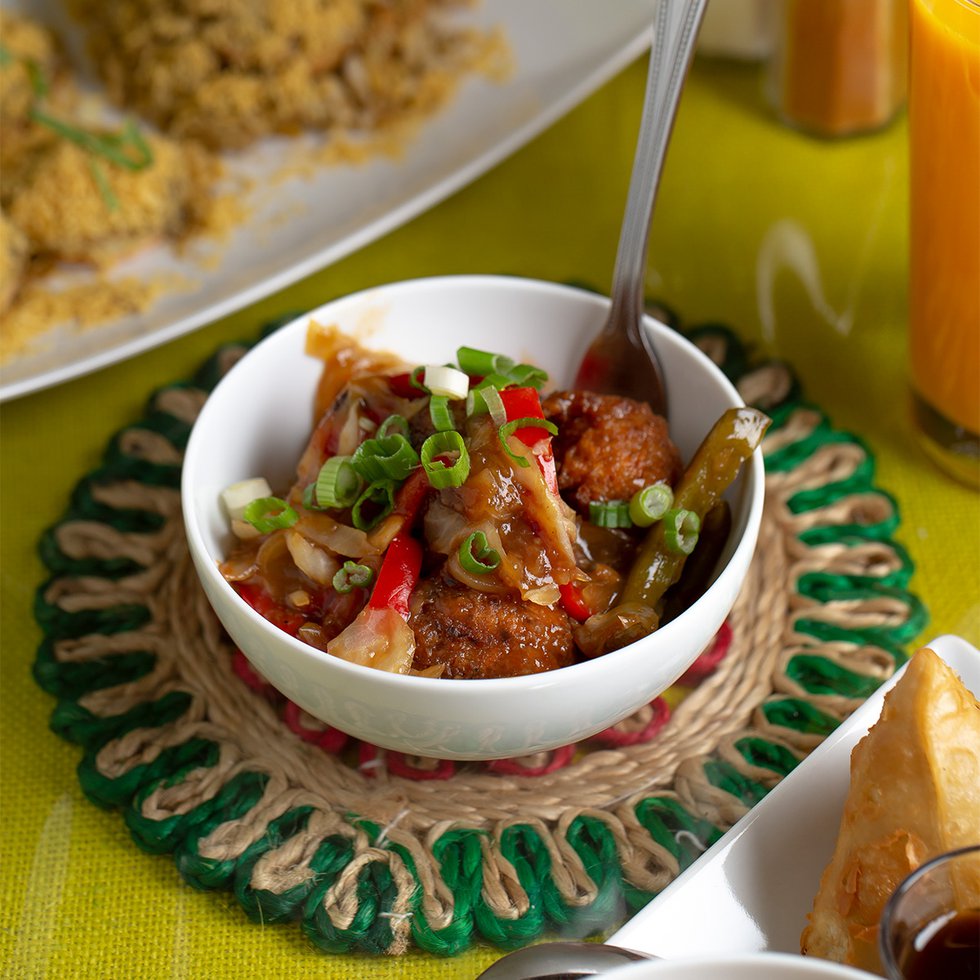
“Veggie meatballs” (pictured above)—yes, think about that for a moment—are stir fried with onions and bell peppers. Chicken-like nuggets are tossed with tikka spices and a rich, tomatoey sauce. Gobi—deep-fried, battered cauliflower—is topped with a mint sauce. (This is the same gobi, redolent with turmeric and coriander, you’ve had in the well-known potato and cauliflower dish aloo gobi, a standard at many Indian buffets, and it is certainly the most civilized way to eat that vegetable.)
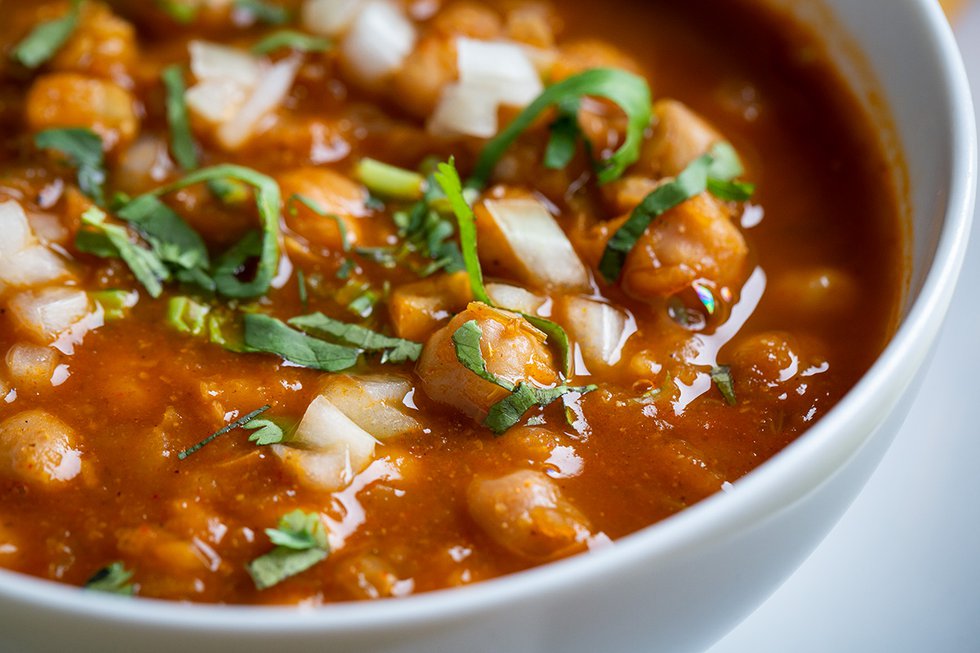
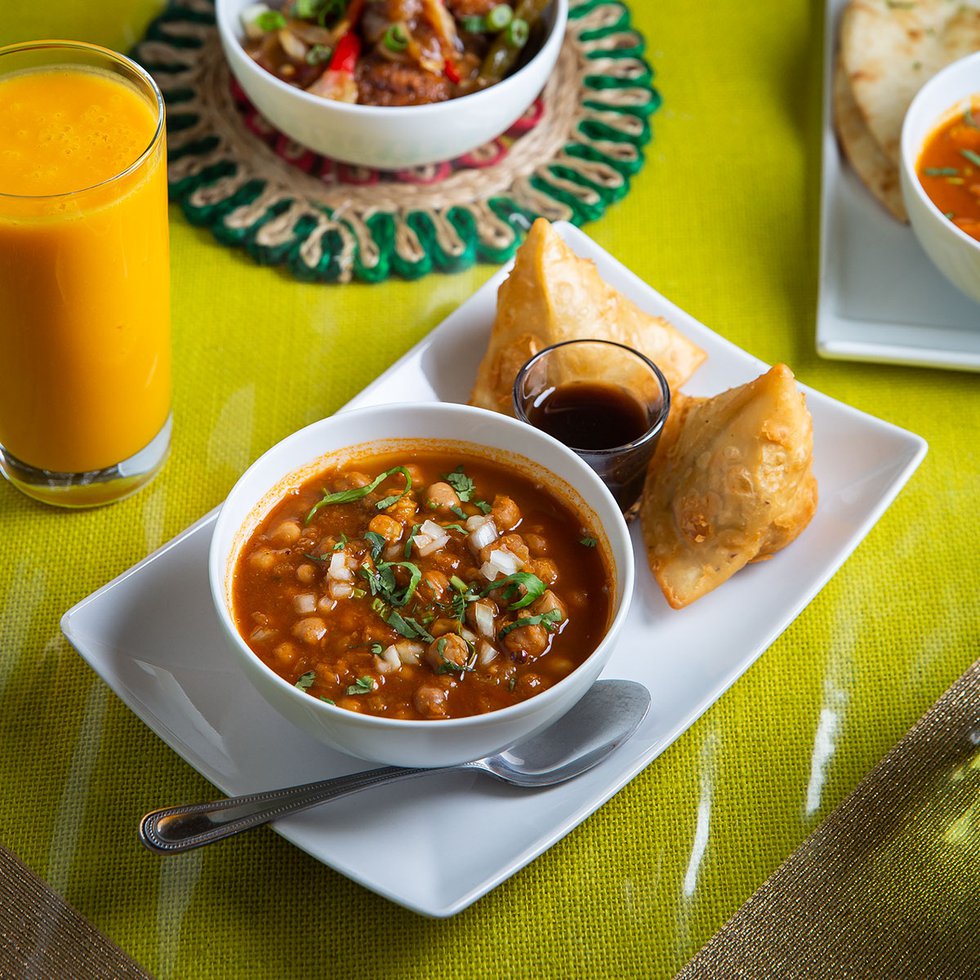
Chole (pictured above)—think of it as chickpea curry—is a Punjabi classic, and it’s probably the best addition to either the rice or noodles here. Seemingly simple, it’s incredibly rich in flavor; the texture is pleasant and filling.
Wraps offer the same fillings, along with one version stuffed with a masala-spiced vegetable patty along with a schmear of hummus and another with ersatz chicken wings and a smooth ranch dressing. The wraps, not incidentally, are paratha, a flatbread with a lovely, chewy texture. It differs from naan in that paratha’s made from whole-wheat flour (naan is made from white flour), giving it a more robust quality. It adds much to the wraps.
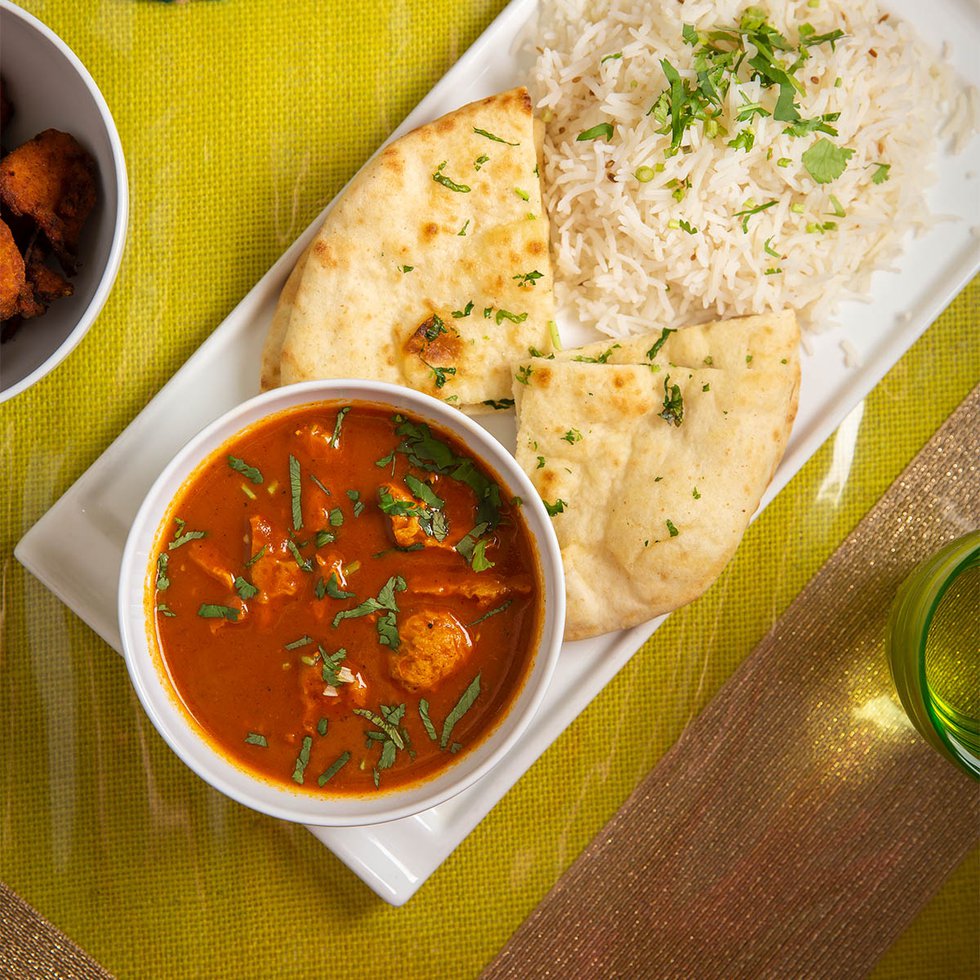
If you want to understand the basics of Indian cuisine, you should sample the chaat, eaten in the hundreds of millions every day in India, sold at train stations, and along streets from portable carts.
“Chaat” is one of those loose food terms that gets attached to a range of snack-style eats; tapas or hors d’oeuvres might be a good comparison. What seems like a simple canape is actually, when prepared at a place like Bombay Food Junkies, a carefully constructed composition.
A good chaat is like a good jazz quintet, all the parts playing their role, keeping their individual qualities but blending smoothly. Think of the chaat here as the Miles Davis Quintet, not the ’60s one but the one from earlier, the “My Funny Valentine” one with John Coltrane. The Miles Davis, the anchor of the chaat is its foundation: papdi, a small, flour wheat cracker that keeps it all together. A fabulous dollop of mango chutney, sweet and spicy, goes on the papdi—it’s the Coltrane here, sparking the whole shebang. Then there’s the paste, the ground chickpeas, on top of that, the Red Garland of the quintet, providing a smooth, cool undertone. Paul Chambers’ bass in the chaat comes from potatoes that provide some heft and texture. And the lively crackle of fine chickpea noodles is like Philly Joe Jones’ percussions.
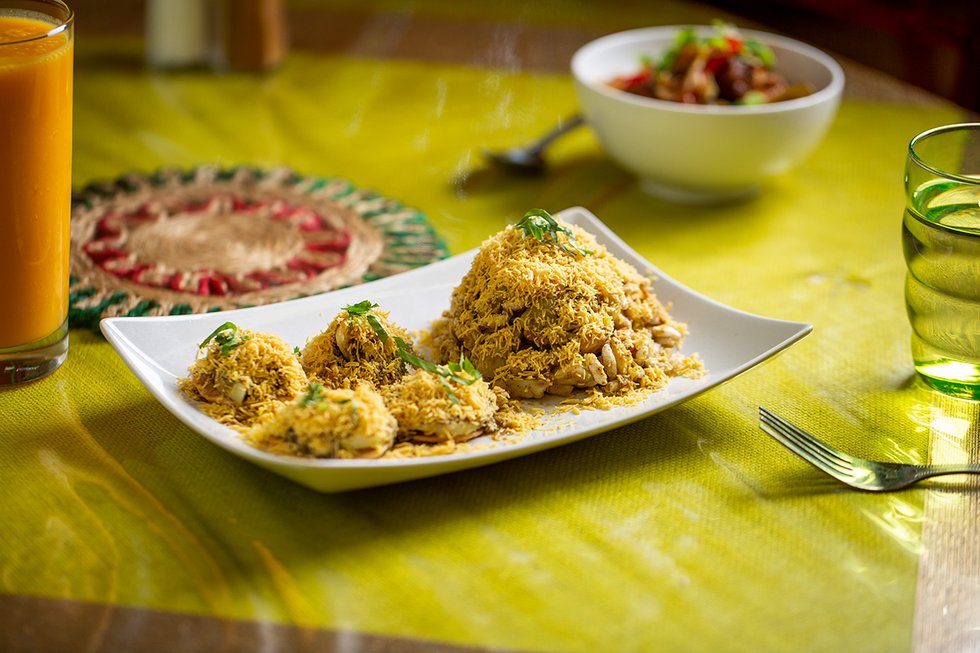
So what you’ve got looks like something you’d nibble on at a cocktail party and tastes like a spectacular fireworks show in your mouth. The place offers several versions of this standard chaat, with different players but the same kind of coordinated joy:
- Sev puri, made with crispy, light crackers as the base
- Bhel puri, almost a small salad, made with puffed rice
- Pani puri, which look like airy profiteroles and are crunchy and delicate .
- Samosa chole, using a chickpea mixture that has a bright curry flavor that’s accentuated by a mint chutney and other excellent sauces
The other street food we were excited to try was the vada pav (pictured below), the sliders of Indian cuisine. The pav is a puffy little bun that looks very much like what you’d have at White Castle. The vada is a mashed potato mixture dusted with besan, or chickpea flour, then fried like a fritter. It’s basically a deep-fried potato sandwich—which in no way does justice to these beauties.
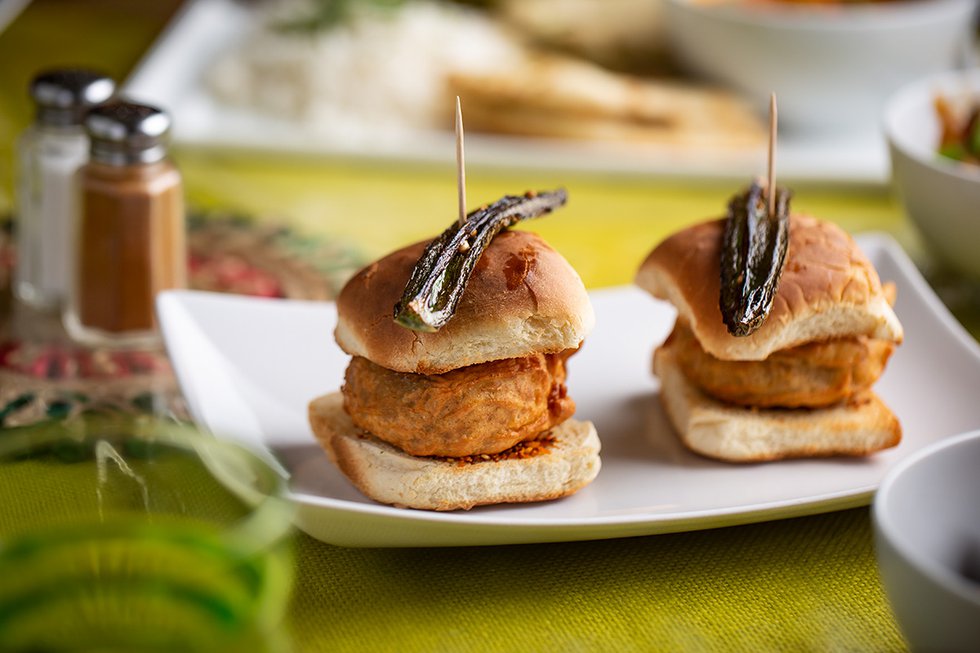
The dressings, chutneys, sauces, and dips make each vada pav a do-it-yourself snack. The best of these is a garlic and peanut chutney that turns the starchy sandwich into a pungent, mouthwatering delight. You can knock off three or four of them quickly. With a glass of mango lassi, they go down even more enjoyably.
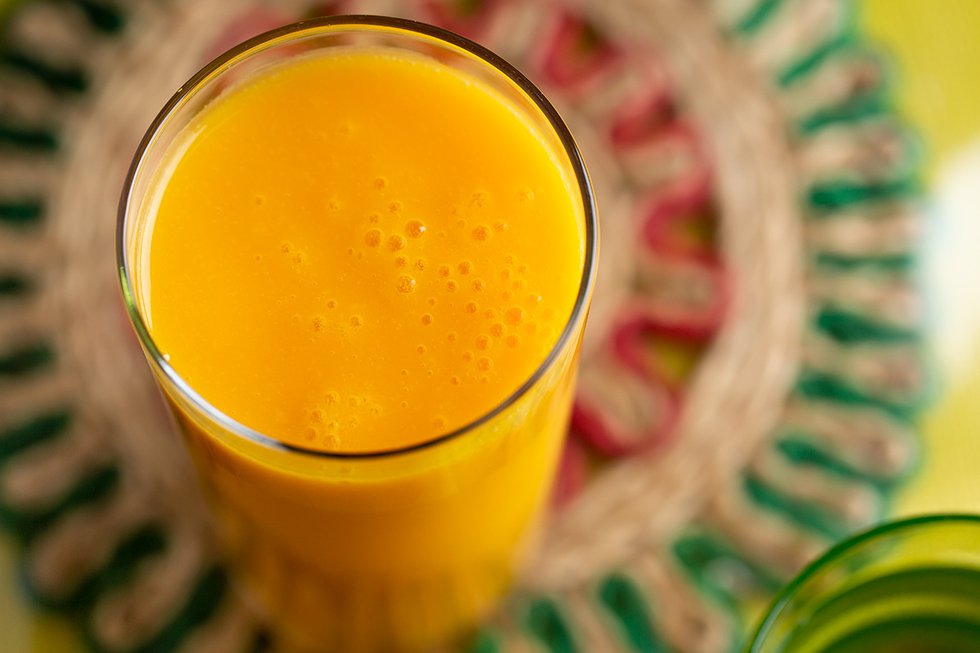
That lassi, not incidentally, is made with almond milk. Like everything else here, there’s no meat or dairy, which has made Bombay Food Junkie hugely popular with St. Louisans who prefer their meals to come from sources that have not walked, crawled, flown, or swum. In fact, the place has become such a success that the all-you-can-eat policy has been discontinued. Even so, you’re going to be satisfied: Portions are generous, and the seasoning and nimble use of textures leave a sensation of having eaten more than one’s actually consumed. Few meatless eateries can make this claim, and it’s rewarding to see how cleverly it’s managed here.
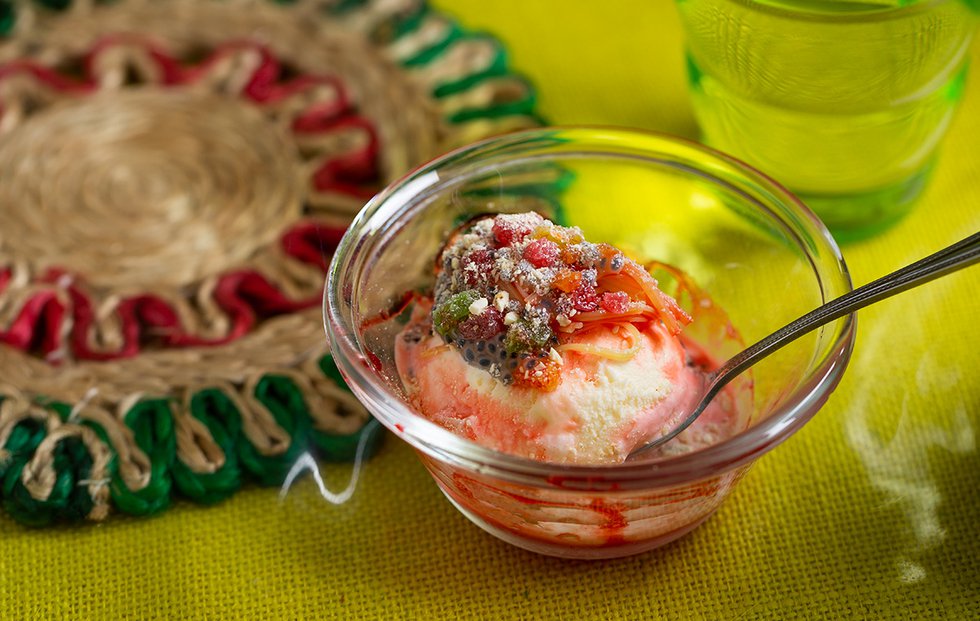
We did have just enough room for dessert. Falooda (pictured above) answers the timeless question: Is it possible to have a pasta dessert? Yes. The “pasta,” in this case, are thread-fine chickpea-based noodles, which are really more of a topping. The base is a dairy-less ice cream, piled with sweet basil seeds, rose syrup, and a hefty sprinkle of the crushed noodles. The result is a mildly sweet confection that’s aromatic with the syrup, the noodles adding a welcome crunch.
Before you go, note that Bombay Food Junkie’s hours are sporadic. The restaurant sometimes closes unexpectedly during the summer, when the food truck takes precedence. If traveling to St. Ann is inconvenient, there’s also a popular platform for online ordering for weekly delivery called the Bombay Tiffin Club. Check the website for all menus, additional details, and special events.