Do restaurants and servers prefer cash tips? —Suzie S., St. Louis
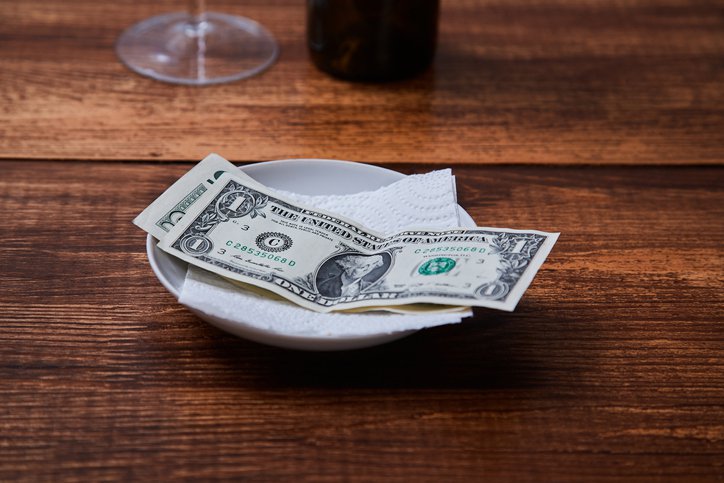
This question was prompted by a note on a restaurant guest check saying, “Cash tips are greatly appreciated at this time.” It turns out that the message dates back to the pandemic, when it was more beneficial to distribute cash tips among the (often few) employees at the end of every shift, rather than dispersing them later on a paycheck.
Find the best food in St. Louis
Subscribe to the St. Louis Dining In and Dining Out newsletters to stay up-to-date on the local restaurant and culinary scene.
In many establishments, servers do have to wait until the end of the week or pay period to collect tips on credit cards, so, yes, in that case especially, cash in hand is appreciated.
The main difference with a server preferring cash over credit involves the declaration of tips: All of a server’s tips on credit cards get reported to the IRS, but the declaration of any cash tips is at the server’s discretion. The IRS says that employees must report any tips of $20 or more in a calendar month to their employer. Any unreported cash tips must be claimed on the employee’s tax return. As a practical matter, cash tips have become minimal–less than 5% of total tips, according to a representative of a local restaurant group–and what used to be a huge concern for the IRS no longer is.
Restaurants are assessed credit card fees (usually 2 to 3 percent) based on sales and gratuities, so it costs the restaurant every time you tip on a card. Credit card fees are a huge line item on a restaurants’ P&L, often amounting to thousands of dollars per month, dollars they’d prefer to have back. Some restaurants have resorted to back-charging these fees to the server (claiming servers should cover the cost of processing their own tips) while some pass the fee along to the customer via the guest check.
The legal and moral issues of tip declaration aside, the bottom line is that many servers and restaurants would probably prefer that you tip in cash while the government probably does not.
We asked several industry professionals for their opinions:
Chris LaRocca, Crushed Red, Culinary Architects: “From a tipped employees’ perspective, they would opt for cash 100 percent of the time for two reasons: 1) If tips run through the restaurant, they’re reported as income with payroll and ultimately taxed. 2) With cash, there’s no record, so the employee can effectively do whatever they want, meaning claim it or not.”
Natasha Kwan, Frida’s, Diego’s Cantina, Station No. 3, Bonito Bar: “Cash used to be king, but COVID changed that. Because business changed to online orders and curbside business, we began pooling tips. Because of this, all cash tips are included in the pool and distributed along with credit card tips in the employees’ checks. So it really doesn’t matter to us anymore.”
Stanley Browne, Robust Wine Bar: “I believe most servers definitely prefer cash, but in any case, restaurants differ when comes to dispersing them–cash out same night, add tips to check, pool the tips/cash out that night, pool the tips/add to check. Any tips added to a server’s check are taxed.”
Charlie Downs, Cyrano’s, Sugarfire Smoke House, Sugarfire Pie, Chicken Out, Hi-Pointe Drive-In, A Little Hi, operator of The Boathouse in Forest Park: “When a merchant requests cash tips, my first response is that they may be trying to avoid paying the processing fee on the tip. From the server’s standpoint, if the restaurant pools tips, as many do now, my fear is that a server may not turn in all cash tips to the pool, not only which has tax implications for them but also shortchanges their fellow employees.”
Brant Baldanza, OG Hospitality Group: “Cash is still king, baby!”
Jen Masur, Niche Food Group: “Servers still prefer cash as a tip. It allows them to leave with cash that day or night. Credit card tips are appreciated, too, but are typically paid on a server’s biweekly paycheck. One thing to remember about credit card tips, though, is that you can easily provide documented income when purchasing a home, buying a car, etc.
Follow dining editor George Mahe on Twitter and Instagram, subscribe to his weekly newsletter, or send him an “Ask George” email at [email protected]. For more from St. Louis Magazine, subscribe or follow us on Facebook, Twitter, and Instagram.