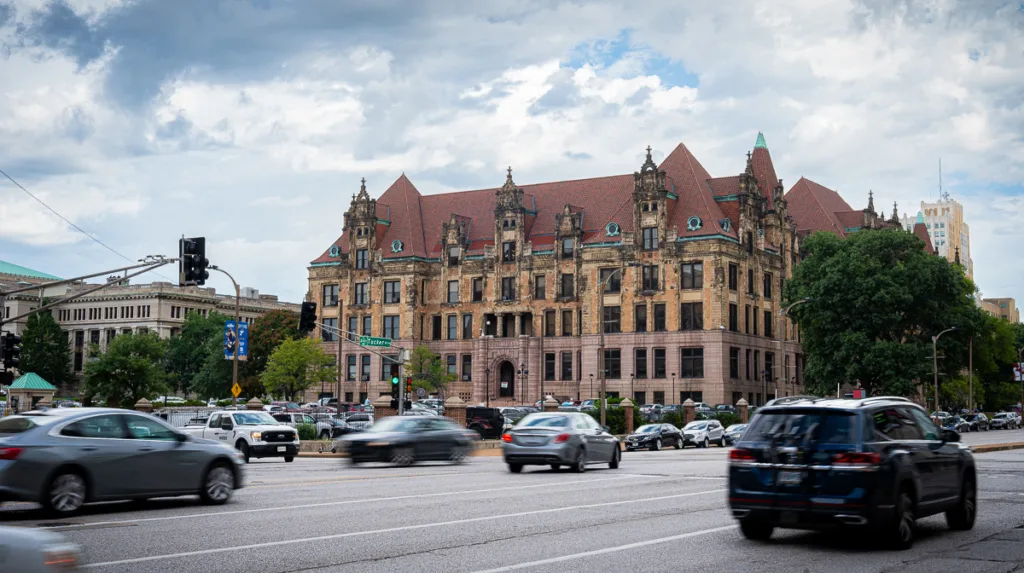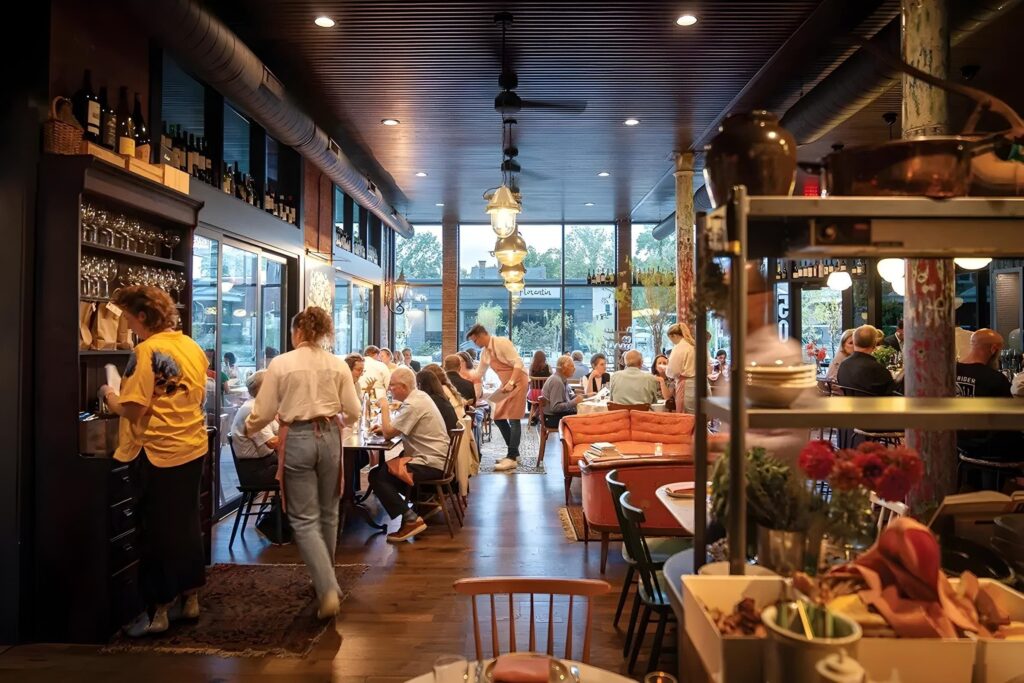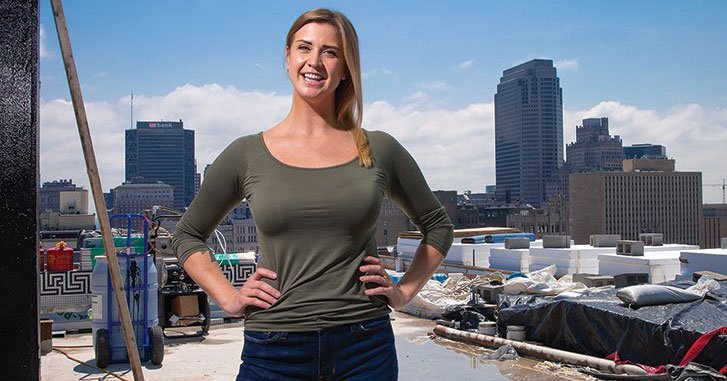
When hotelier Tim Dixon was in the early stages of planning The Last Hotel, opening June 28 in the former International Shoe Company building downtown, Evy Swoboda was his culinary ambassador, revealing St. Louis’ neighborhoods and culture through its restaurants. She became the hotel’s executive chef and could easily moonlight as its spokeswoman.
Was there a particular event that caused you to get into the restaurant business? Our family travelled a lot when I was younger—to Turkey, India, China, Estonia, South America—so I’ve always been infatuated with how other cultures celebrated food, especially street food. I was talking about opening up a food truck back in eighth grade. When I received cash gifts, then and all through high school, my thank you notes would say “thanks for donating to my food truck.” It was going to be called Heavy Evy’s Sandwiches, but I got sidetracked and it never happened.
Find the best food in St. Louis
Subscribe to the St. Louis Dining In and Dining Out newsletters to stay up-to-date on the local restaurant and culinary scene.
Did you ever consider other positions within the restaurant industry? No, I always wanted to be a chef. I went to college to be a dietitian so I could be a specialty chef, for geriatrics, but it didn’t take me long to figure I was a good chef but not much of a scientist.
What was the most unusual place you’ve ever worked? My first job out of high school was working 10 hours a day in a refrigerated room in the basement of a resort hotel. My job was to assemble table-size trays of fruit and vegetables for conferences and I didn’t even know how to cut a pineapple. I learned as I went. In the fall, my chef recommended for a job at the Alumni Center in Columbia, which is where I probably learned the most since just about everyone working there wanted to be a chef. It was like being paid to work in a culinary class. I worked breakfast every single day and went to school after. Then I jot a job at 44 Stone [Public House], working the grill station. I remember nights when I had 20 steaks and 10 burgers going, cooking them all to temp, plus the burger buns!
How did you end up at Pastaria? After coming back home, I got a job there, as a line cook. I said ‘But I want to be a sous chef, I want to sous chef,’ and the exec chef said, ‘You have to calm down.’ I eventually became the chef de cuisine and helped open the one in Nashville.
Talk about Pastaria. The place is always busy, even after seven years. When I started Gerard [owner Gerard Craft] was still in the kitchen, so he taught me how to make pizzas and all the factors that can affect the finished product. My first impression was the level of organization and the importance of team building there, and the emphasis on hospitality—for the guests and employees—and interaction. After working in that open kitchen, I’ll never work in a closed one. A whole different type of energy is created when a cook can present a dish directly to the customer. Pastaria will always be one of my favorite places.
Talk about the hotel’s name…it definitely sounds odd if you don’t know the story. The hotel and restaurant are in the old International Shoe Company building and a last is a tool—the mold used to provide shape and solidity. But the name works, because just like a shoe, a lot of components come together to make a hotel work. We’ve creating an experience from something most people never knew existed.
And the connotations work, too. A keynote of service is lasting impressions, and making the best last impression. We’re doing a reverse happy hour, for example, ‘have your last drink with us.’ The idea is to unfold that story and that branding gradually throughout the guest experience.
There are several downtown hotels either recently open or planned. How else will The Last Hotel differentiate itself? Tim is an urban developer. He wants the hotel to be a total St. Louis experience, for out of towners and for staycationers. International Shoe Company was the largest shoe company in the world until the 1980s. Our goal is to expose people to St. Louis via the role that International Shoe Company played in its development. There are different names on the building, for example, all with a story behind them. We’ve even hired storytellers to tell them.
One involves Tennessee Williams. When he lived in St. Louis, Williams worked in the shoe company warehouse and would go to movies at The Tivoli to relax. The chairs in the hotel’s 9thfloor theater—the Tennessee Williams Star Screening Room—came from the Tivoli.
Speaking of stories, the City Museum is directly behind the hotel. Bob Cassilly bought both buildings. The hotel is the former administration building and the City Museum is the former warehouse. Mail and packages were delivered to the top floor and were routed to the various departments by chutes which became the museum’s now famous slides.
There are several walkways between the two buildings. We hope to plant hydroponic gardens on a few of them…flowers for banquets on one level, greens and garnishes on another, herbs, of course…things we can functionally use on a daily basis. We have a blue roof system that stores rainwater which can be used for hydroponic purposes. And if we can eventually share and contribute to the food desert situation in the city, so much the better.
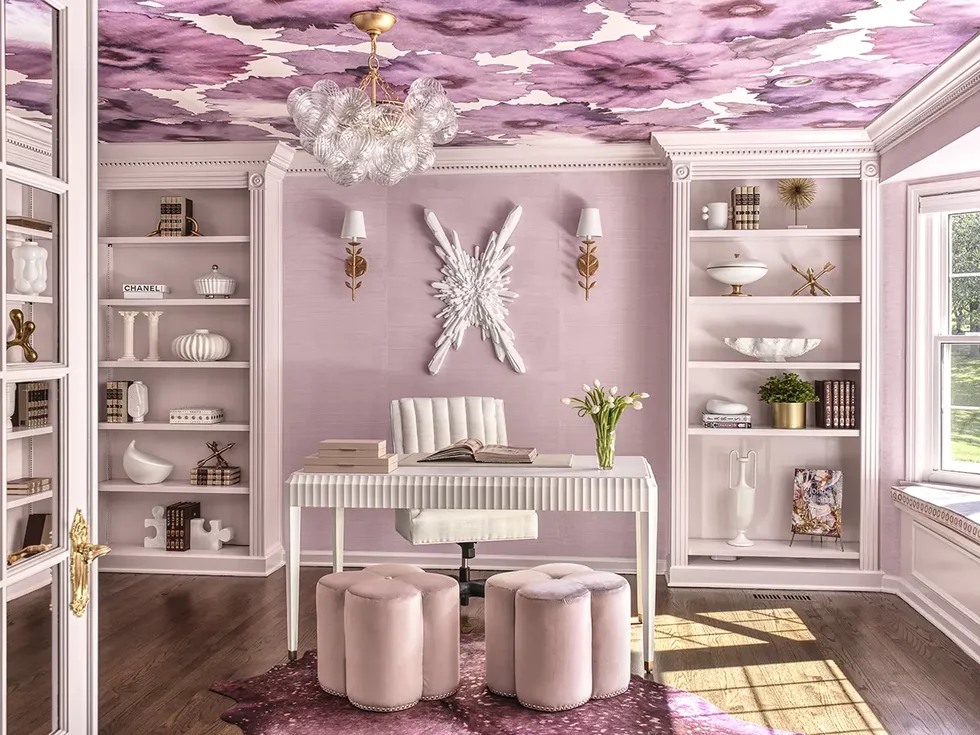
Talk about the hotel rooms. Tim’s top line vision was to take the St. Louis—of that era and beyond—and bring it inside the building. Theodore Link’s exterior design includes New Classic, Gothic, Art Nouveau, and contemporary design, and some of that has been introduced in the rooms. Originally, each floor had different departments. Even the elevator landings were different. All that’s been maintained, right down to restoring the barrel ceilings and using the original windows, which you don’t often see in these old buildings.
Are the room amenities different? The case goods, the desk, the minibar, the vanity, showerhead placement, all were given the form versus function test, and many ended up being redesigned. The amount of shampoos we tested before settling on one was insane. And there are actually places to put your suitcase! Even the minibar prices are different—the same as downstairs—so guests are encouraged to have a beer or cocktail in their room and not be scared off by higher prices.
What are the price points? It’s a luxury hotel without the luxury prices, which in the Midwest translates to ‘very affordable.’ Same holds true for the prices in the restaurant and bar.
But how will St. Louis fill all the new hotel rooms? Starting with the renovation of the Arch grounds, St. Louis has experienced billions of dollars in local investment. Out of town developers see the local commitments—like the NGA project, City Foundry, the success of Cortex, and St. Louis attracting more tech in general—which attracts their investment. They’ve seen other cities—places like Boston, Pittsburgh, Milwaukee, Nashville—turn the corner, and I’ve been told that St. Louis is next…that it only makes sense that a city with more history, more appeal, and more stock available for rehab projects shouldbe next. Our food-and-beverage director, Will Rogers, who’s personally witnessed turnarounds in parts of Austin, Miami, and Brooklyn, says St. Louis has more potential than any of them and is arguably the best candidate for that change.
All that change takes time, though. Things like weddings, banquets, and restaurant events will be huge for us in the short term. We’re a small independent that considers itself a restaurant and a rooftop bar first—but with a hotel attached—a different mindset than other hotels where the main concern is booking rooms. Here, just like at Tim’s two other hotel projects [Iron Horse Hotel in Milwaukee and the Hewing Hotel in Minneapolis), it’s the experience that’s the driver. One part of the operation will eventually lead to another.
You’ve taken a different approach to banquet service. In addition to serving plated or buffet-style dinners, my love for Italian food and how it’s served in Italy led me to recommend serving family-style. You can take what you want and it forces interaction with other guests at the table. So far, the response has been very positive. We’ve scheduled several wedding dinners served that way.
Talk about the hotel’s different food and beverage options. We thought long and hard how to name them, but in the end, we thought it’s the facility you remember, not the specific name of the restaurant, as in ‘let’s go to the Last,’ so we named them The Last Kitchen, The Last Pantry, and The Last Rooftop. (laughs) It was a natural, three-month decision.
Talk about The Last Pantry. It flanks the main hallway and includes a show-cooler and retail space where guests can pick up everything from hotel swag and hot sauce to the house rye whiskey from StilL 630. Everything that we make in house can be taken home with guests when they leave.
How about The Last Kitchen? The dinner menu revolves around items from our in-house butcher, so we’ll have different cuts of meats on different days cooked on live fire grill. The bar has a separate tavern menu that runs all day…sandwiches, wood fired pizzas, fresh pasta, plus sharable snacks. [Laughs.] Then there’s the brunch menu. In the end, though, it’s a ‘say yes’ kitchen. A guest can get any item off any menu in any part of the facility.
You took a month-long trip —up and down the Midwest—to do menu research. And I discovered that St. Louis cuisine is hard to define, because the city was a melting pot founded on river trade. I worked with chefs from the north and south—Minneapolis, then Milwaukee, Chicago, St. Louis, Nashville, Kentucky, Louisiana. I came across a tater tot casserole dish from up north that I’ve adapted—house made tater tots, bechamel, braised beef, cheese… You’ll see catfish po-boys from down south. House made charcuterie, including my grandpa’s recipe for salcissia, any of which can be served corn dog-style.
Would you call The Last a farm-to-table restaurant? We’ll do regional sourcing rather than hyper-local. Some of our meat comes from a farmer in Kentucky, for example, who I know has really, really good products, the best in the area.
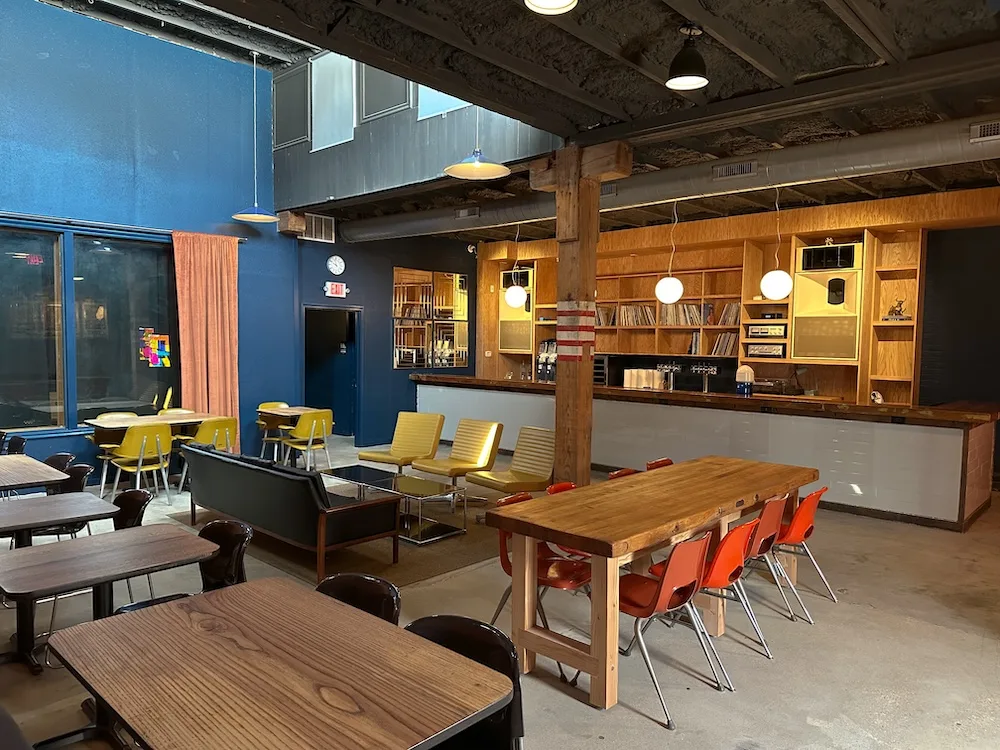
You say that dining at The Last is experiential. What does that mean? Many different dining experiences are possible. There’s a private table for four on a mezzanine. The tables in front of the kitchen can be used for special dinners or tastings. The bartenders come out from behind the bar to tend to the bar tables, a nod back to the pre-prohibition tavern experience. And most restaurants have a hard time—or even discourage—larger parties. We have five tables that can accommodate 10 people, including a round-top that’s actually in the bar. I want to be able to say yes to that size group on a Friday night.
That leaves The Last Rooftop. On the 11thfloor roof, we’ll serve poolside sharables out of the same kitchen that services the 10thfloor event space. The Rooftop menu will be lighter, much of it revolving around seafood, but again, guests can order from any menu they want. The rooftop has a Sunset Specials happy hour and a Last Nightcap later on. On Tuesdays, we’ll feature a new vinyl album that dropped that week, plus other records that people can play.
What will distinguish the cuisine at The Last from that at other local hotels? We’re not limiting ourselves to one type of cuisine. St. Louis has neighborhoods with different ethnic foods, so you may see a Mexican dish or something Indian-forward as a way to incorporate the city’s different cultures.
What food items can guests expect to find at The Last? Sandwiches that can still be eaten like a sandwich. We’ll offer options on bacon—thin or thick, crispy or not. Seasonal tacos using house made olive oil tortillas. Tempura fried, pickled seasonal vegetables. Our buffalo bites are smoked and fried thigh meat, served with two hot sauces, one that’s fermented for two months then finished in a whiskey barrel.
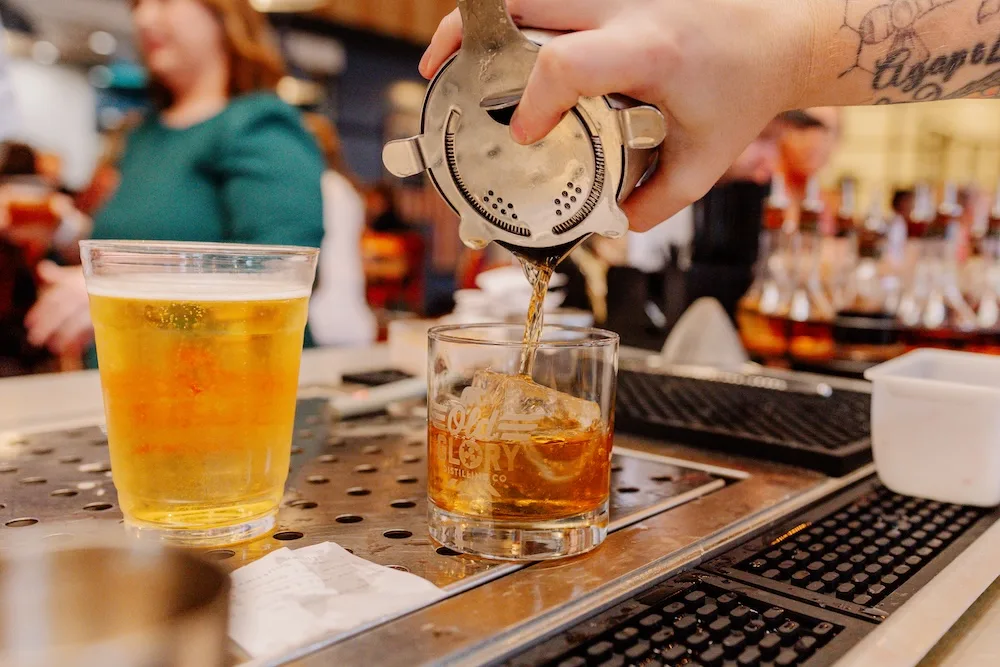
Speaking of whiskey, how’s the cocktail program? St. Louis products, first. Missouri, second. Guest requests, third.The list features pre-prohibition cocktails—basically your classic cocktails—done right, using local or regional spirits. Measured pours, hard ice, no soda guns, juice squeezed on the spot, touches like that. And with a deference to speed, not flair. Some pool-forward cocktails will be available on the roof, like the Three Wives daiquiri, because Hemingway’s three wives were all from St. Louis.
Will all the beers be local as well? Ten beers on tap, all local craft brews representing all types. Four Hands is making us a special ISC [International Shoe Company] Ale, a pale ale on draft. We’ll have Bud Light, but also Spaten, since it’s also owned by A-B. On the roof, we hope to offer one-off special releases, only available at the Sunset Specials happy hour.
How about wines? Our 100-bottle list will change seasonally, because people tend to drink different cabs in the summer versus the winter, with Coravin wines to accompany some high-end steaks and dinner specials. Same beers and wines will be available on the roof, because we feel the guest experience should be seamless throughout the hotel.
Where do guests park? For food and beverage guests, valet parking is complimentary for two hours, which will especially help attract the after-work crowd.
Would you call The Last a boutique hotel? In that it’s small, particular, independent, and with fine amenities, yes. But Tim prefers the term experiential, because each of his hotels speak to a specific city. The Iron Horse is Milwaukee. The Hewing is Minneapolis. The Last Hotel is St. Louis.
What’s coming up first at The Last? In conjunction with the hotel’s opening on June 28, we’re offering everyone free champagne, on the roof, as our first Sunset Special. Bubbles. On us. We’ll toast the town.