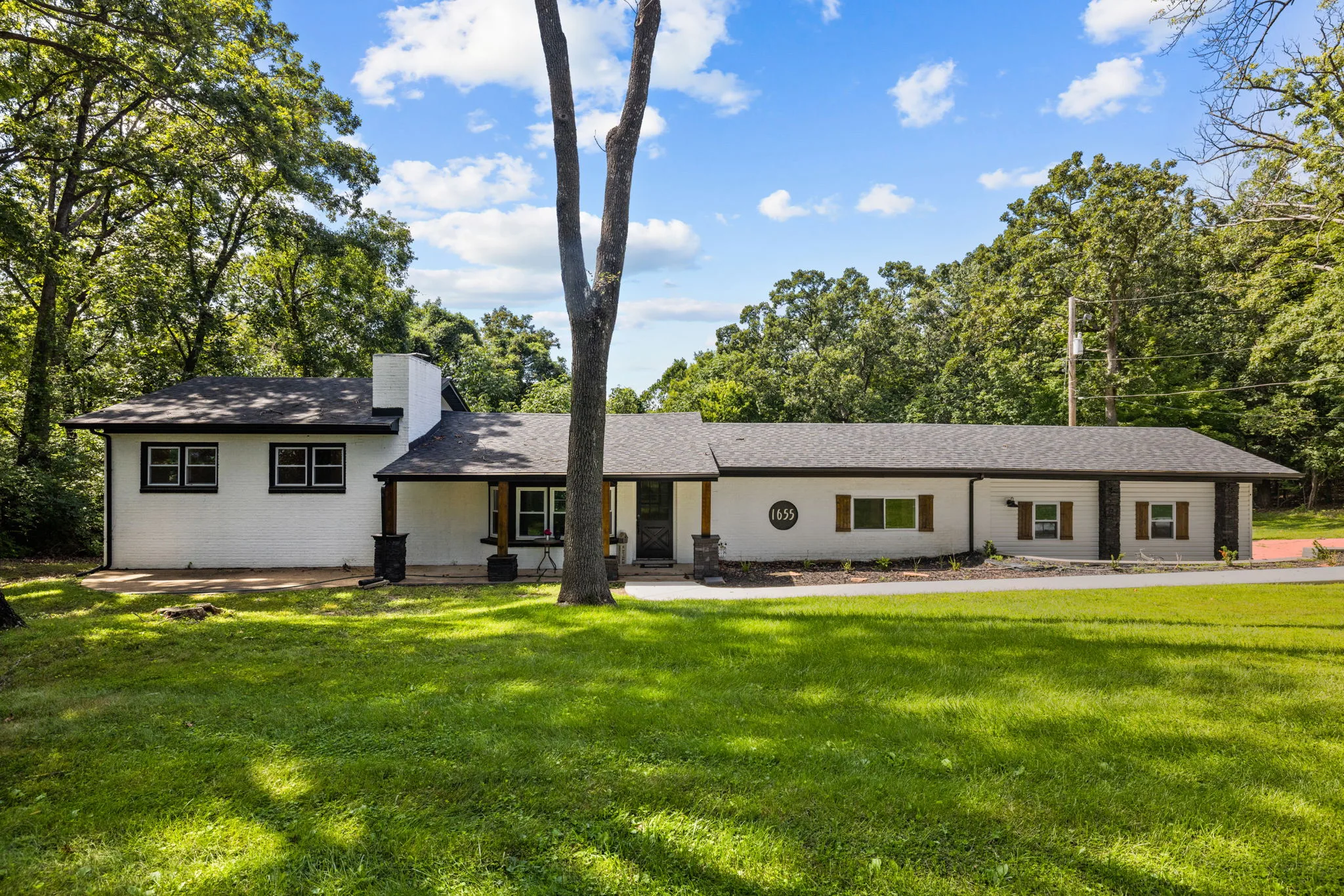
The tornado that ripped through St. Louis neighborhoods on May 16 caused severe damage to both homes and businesses, including the shattering of windows and doors of all ages, shapes, and sizes. As a result, homeowners now face the task of picking up the pieces, and those who live in historic homes deal with an additional set of questions.
Due to the severity of the storm and the rush to hire local experts in the weeks since then, most window companies and contractors are showing longer-than-normal wait times, with many of them prioritizing jobs where homes are compromised or exposed to the elements. If your situation doesn’t fall into this category, it may be unclear how quickly contractors will be able to get to your job. In the meantime, homeowners should do their best to secure damaged windows or glass doors until they can be repaired or replaced.
Get a weekly dose of home and style inspiration
Subscribe to the St. Louis Design+Home newsletter to explore the latest stories from the local interior design, fashion, and retail scene.
Alex Mattan, owner of Ambacht, a local company specializing in historic window restoration, recommends removing the broken glass first and boarding up each window from the outside by attaching plywood to the brick mold rather than to the window sashes. Doing so, he says, protects the whole window.
“If you don’t like the plywood, and it’s a longer wait time, you can put a piece of plexiglass in front of it,” he says. “That safeguards you for the next year without any issues.” Not only is plexiglass hard to break into, he says, but it also allows daylight to shine into the house. (Be sure to check with your insurance company to confirm that your policy covers the use of plexiglass.) Some local companies, such as Zen Windows, will secure and board broken windows for an additional charge depending on the need—and due to the fact that window replacement can take up to eight weeks from the time the order is placed to install.
Deciding whether to repair or replace windows and/or broken glass depends on the age and amount of damage to the windows. “If it’s just glass breakage, many times you can replace the glass [on a non-historic window], instead of the whole window,” says Dennis Riley, owner of Zen Windows. “That’s sort of a band-aid approach. But, if you’ve only got one window damaged, that might be the way to go instead of full window replacement.”
“Once you get into full window replacement, the one you replace isn’t going to fully match the other windows that are undamaged, so that may be a deciding factor,” says Riley, whose company provides a lifetime warranty covering the window, glass, and installation. “If the window is so damaged that it’s inoperable or leaking, then your only option is going to be a full replacement. Your insurance adjuster will let you know what’s damaged and whether it’s full window replacement or repair.”
As a full-service window replacement company, Zen will measure each individual window opening, so all of them are custom sized, install the replacement windows, and haul away the damaged windows, including any trash.
Riley reminds consumers that window replacement companies, like his, generally repair only what they sell. If a home or business owner is simply looking to repair a few broken panes of glass, he recommends contacting an insulated window glass company, such as Hyperion Glass, Gravois Glass or Gateway Glass.
Casie Childers, office manager at Hyperion Glass, says that as long as the sash or framing is in good condition, the company can usually just replace the glass. The type of glass they use depends on the window system and the thickness of the glass it can hold.
“Tempered glass can help with strength, as it’s stronger in the middle, but weakens the closer you get to the edges. Each window/sash that moves up and down has balances that are weight rated for a specific glass thickness and sash weight, typically ⅛-inch with residential,” Childers says.
Childers says that glass companies, such as Hyperion, can send a specialist to the home to look at the window system and determine the type of thickness/type of glass needed.
“We get the information we need to remake the insulated glass unit and go back out to the customer’s house to do the replacement,” she says. “We also offer in-shop replacement, so we have a few options depending on the situation. The timeline depends on the type of glass or any parts that may need to be replaced, such as the balances or locks. Depending on our schedule, turnaround can take anywhere from two weeks to a month.”
Owners of historic homes, particularly those in a historic district, must also consider the codes of their particular neighborhood, as well as the integrity of the original windows or doors. The good news, says Mattan, is that “older windows were designed and built to be repaired. If you add on a storm window, they’re actually more energy efficient than the new windows.”
According to Mattan, air is an insulator. “The air trapped between the window and the storm window forms a bigger and better insulator than that of a double pane window,” he says.
Keep in mind that repairing or replacing a single pane of glass can be more complex when historic windows and doors are involved. Typically, wavy glass is required. Replacing it with new, straight glass will cause aesthetic inconsistencies to the exterior of the home.
“The glass is meant to be able to be taken out and put back in,” says Kelsey Moss, owner of Moss Restoration, which specializes in historic window and door restoration. “We have some salvaged wavy glass, but our local wavy glass salvage stores are running low with the demand.” In that case, Moss can order replica wavy glass from a company based in Baltimore, adding, “it’s a good replica.”
For homeowners who need to repair or replace stained-glass windows, Mattan recommends showing a picture of the old stained-glass window to the insurance company, and then taking it to Preston Art Glass to have it remade exactly as it once was.
If the surrounding wood frames or sashes on historic windows and doors on stained glass or traditional windows are damaged, companies such as Ambacht and Moss Restoration can repair those, too.
“Because it’s wood, if there’s a little part of it that’s splintered or broken, we can get a new piece of wood trim, or mill it to the right profile and get it fixed. I really want to encourage people to restore instead of replace,” Moss says. “We can pull the whole sash out and bring it back to our shop and rebuild the original look–even if it’s curved or complicated.”
While restoring historic windows may be costly and take more time due to the craftsmanship that’s involved, both Mattan and Moss agree that, in the long run, it’s the best decision.
“Most of us are trying to make room for the most urgent repairs. Be patient but know that it’s worth it to work with a skilled artisan to get the repair done right, because it’s going to last you for the lifetime that you own that home,” Moss says. “It’s hard to wait, but it will be worth it for you and for the character of the home and the neighborhood.”