Find Out the Sun/Shade Ratio
“Take a look at your space and get a grip on your sun/shade situation,” Reiss says. “That is the number one thing when you think about plant selection.”
Get a weekly dose of home and style inspiration
Subscribe to the St. Louis Design+Home newsletter to explore the latest stories from the local interior design, fashion, and retail scene.
Look Up
Don’t overlook vertical surfaces. Reiss recommends installing a trellis and guiding vines so they snake upward. Going vertical might also mean placing pots on window ledges for a decorative element.
- What to plant: clematis and climbing hydrangeas
Contain Yourself
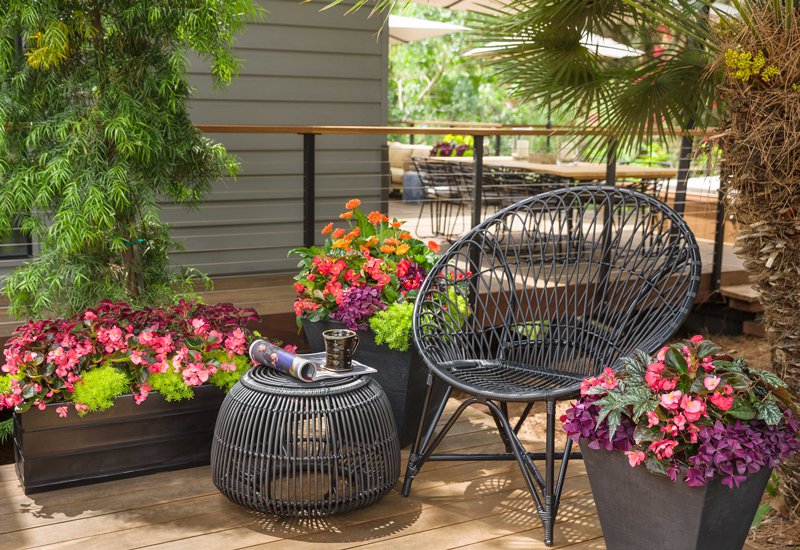
In November, begin preparing containers for the holidays. “If you have a back porch or a deck, get some containers going,” says Reiss. “At my house, I use all terra-cotta because they’re cheaper and they’re a neutral color.” But there are hundreds of pretty containers in a range of colors, and they can be used as a design element or as a focal point in your space. Just about anything can grow in a container, Reiss says: “Roses, perennials, herbs and vegetables, strawberries, tomatoes… the sky’s the limit.”
- What to plant: red twig dogwood stems, evergreen boughs, berry picks, colorful ribbon, pansies
Keep It Simple
Avoid crowding small spaces. “Scale down your plant selection so that you have more of a few plants versus one of every kind of plant,” Reiss says. With the plant and color palettes simplified, the final effect is one of peace and tranquility.
- What to plant: variegated hosta, Japanese forest grass, a smaller coral bell (in shade); perennial geranium, trainsville, smaller daisies, dwarf yarrow, dwarf fountain grasses (in sun)
Make Use of Space
“Are you viewing the space from a kitchen window, or are you sitting in the garden and enjoying the birds?” Reiss asks. “I recommend using some kind of seating, even if you’re viewing the garden from the house. Garden chairs or a lounge work as a focal point and are welcoming and pretty.”