It may be hard to believe, as you eye the following three pages, resplendent as they are with life and beauty, that Sue Leahy wasn’t much of a gardener until she got hooked on native plants 12 years ago.
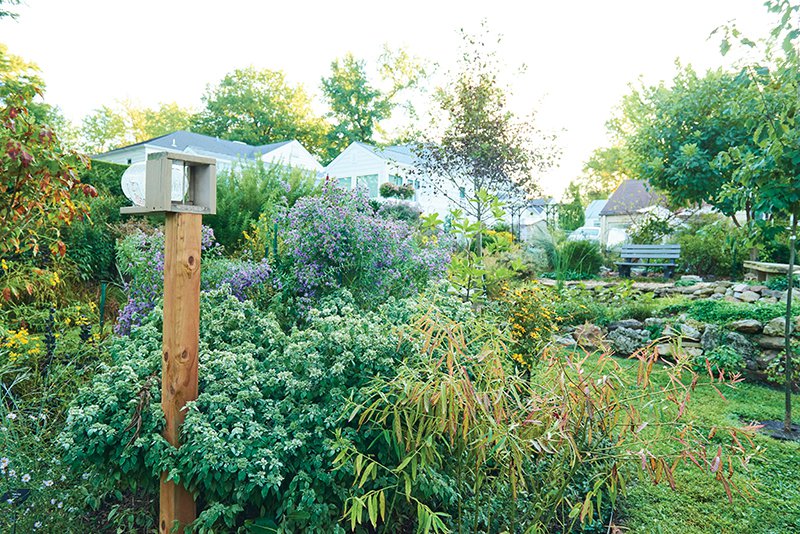
But today, her yard—both front and back—is home to nearly 200 species of plants, nearly all of them native to the Midwest. An advocate for sustainable gardening, Sue serves on the board of Wild Ones St. Louis, a nonprofit that seeks to restore and establish native plant communities. She is also passionate about education. That made her decision to open her garden to hundreds of visitors during the 2019 Sustainable Backyard Tour easy.
Get a weekly dose of home and style inspiration
Subscribe to the St. Louis Design+Home newsletter to explore the latest stories from the local interior design, fashion, and retail scene.
Sue is drawn to natives for many reasons, she says, including their extensive root systems, which hold soil and slow water runoff, and their ability to attract birds, bees, butterflies, and other pollinators to her yard.
That wildlife is what transformed Sue from an uninformed sometime gardener into an evangelist for natives: “I like the wildlife the plants have brought to the backyard—the birds, butterflies, and bees are what I’m all about. I’m not doing this because I like to garden.”
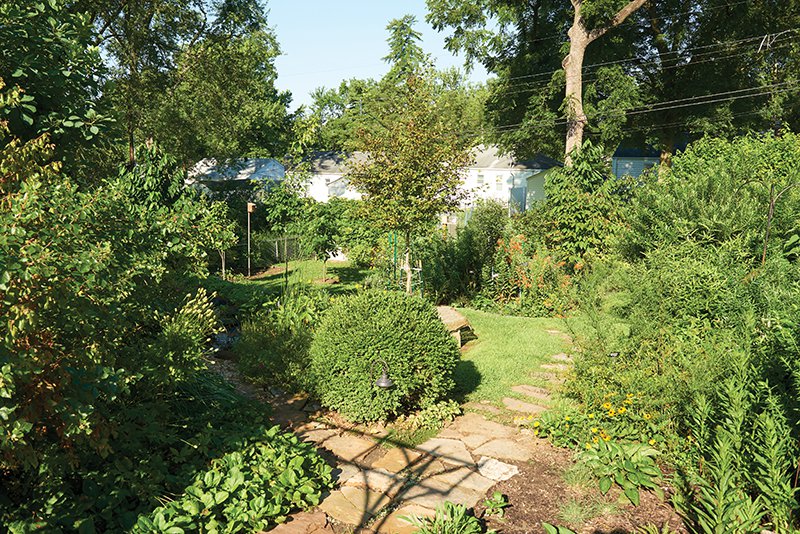
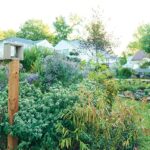
Last summer, at Design STL’s request, Sue welcomed photographer Greg Rannells to her Brentwood home. He captured the life cycle of the garden in three phases, from high summer to early fall.
“I enjoy the plants, don’t get me wrong, but the plants are the means to the end,” says Sue. “I’m trying to do my little part to improve the overall health of the planet, because God knows it needs help.”
What’s Jumping in July?
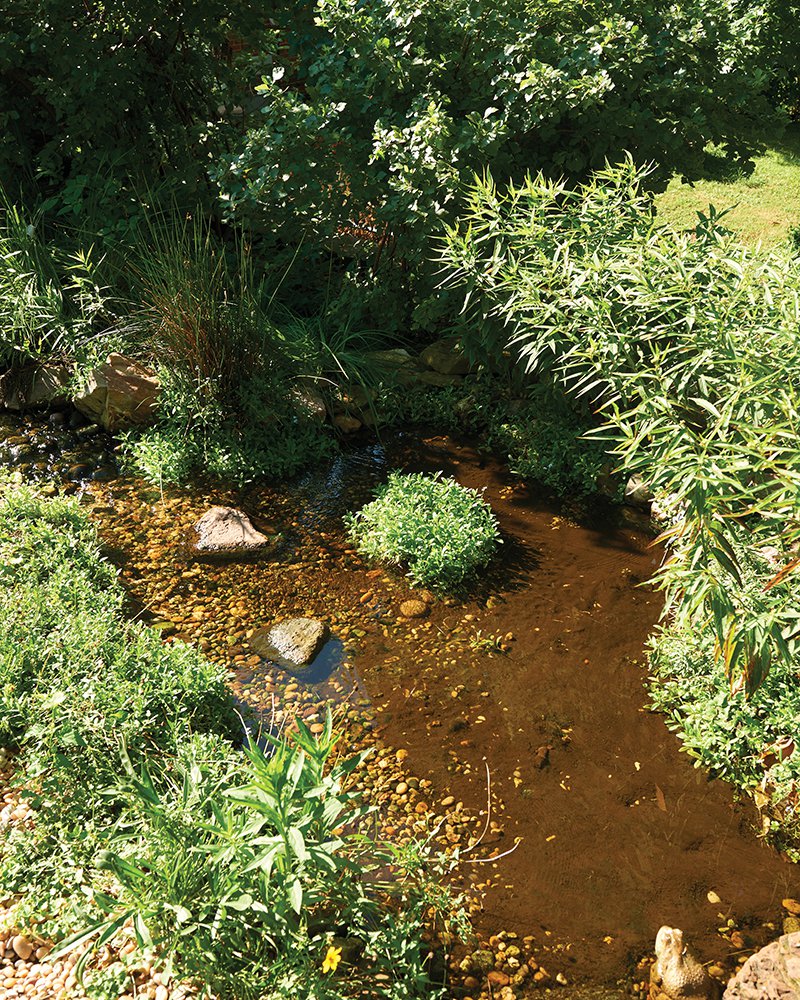
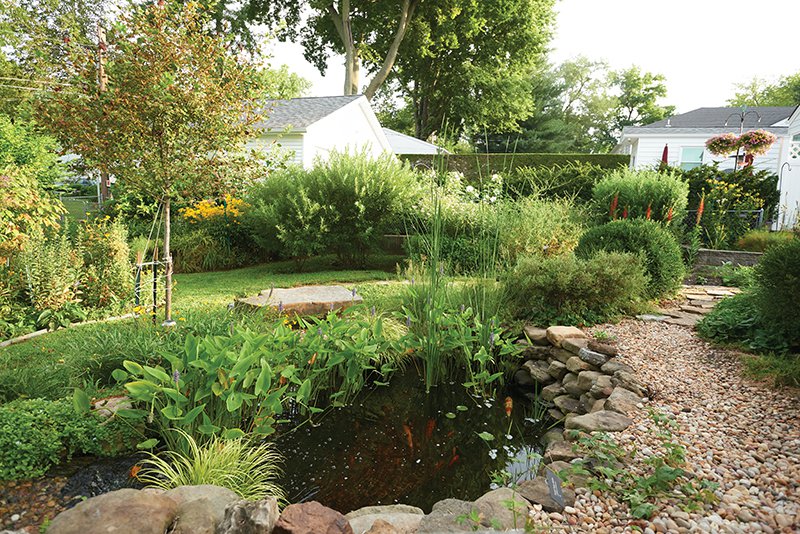
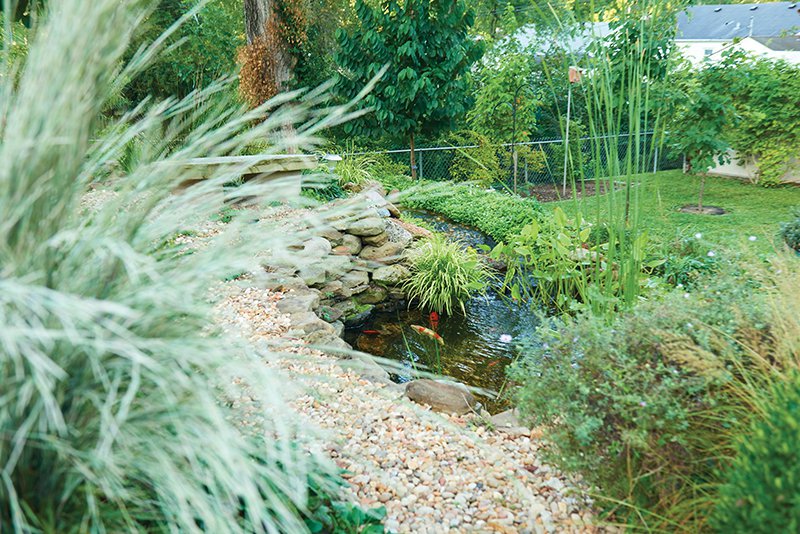
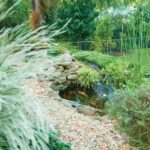
In the Leahy garden, it all started with a stream pond and waterfall. After their installation, in 2007, toads began appearing in the springtime, singing and laying their eggs. Sue enjoyed watching the tadpoles and decided that she wanted to attract more wildlife. So she and her husband, Andy Leahy, planted a butterfly garden, although there was no real master plan for the backyard. Then she attended a lecture by entomologist Doug Tallamy on the importance of natives in biodiversity. During his talk, Sue turned to her husband and whispered, “We’re not done.”
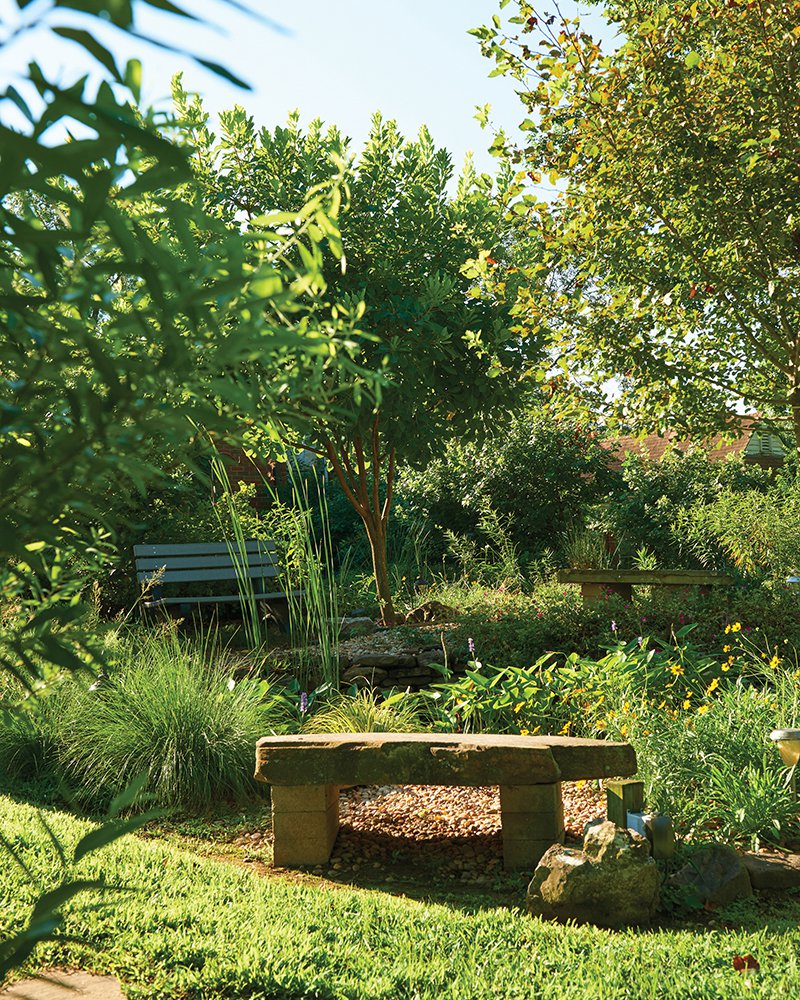
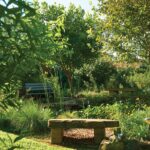
Each year, the Leahys have chosen to tackle one big project—including the rain gardens, in 2009 and 2013; the rebuilding of the pond, in 2013; and the installation of a butterfly garden, in 2007. Andy has done nearly all of the hardscaping: building stone walls, setting walkway pavers, finding the stone bench, and rebuilding the pond in 2013. “He says, ‘Sue plans and I do,’ and that’s about right,” she says, laughing. “I could not have done this without him.” Sue acknowledges that the work they did in the early years was substantial, but it’s paid off. These days, she does a minimal amount of weeding and trimming to keep the walkways clear and the edges of her beds orderly. The stone bench is a favorite spot for watching butterflies, bees, and birds.
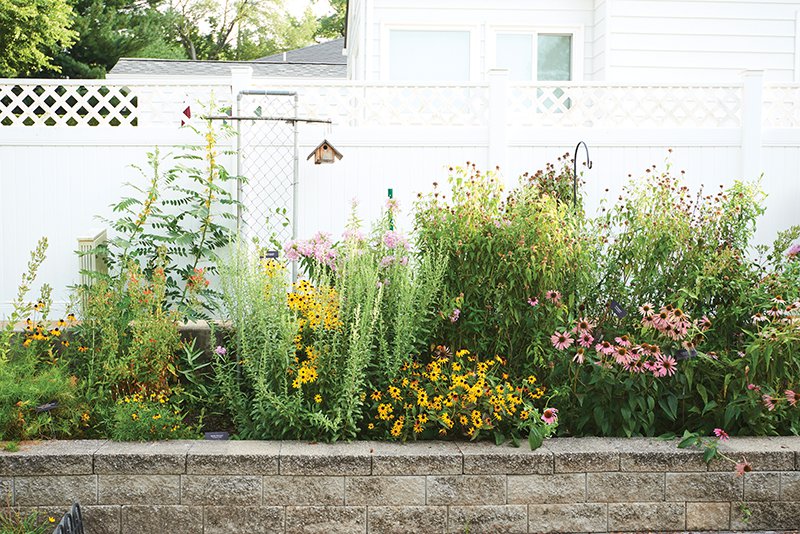
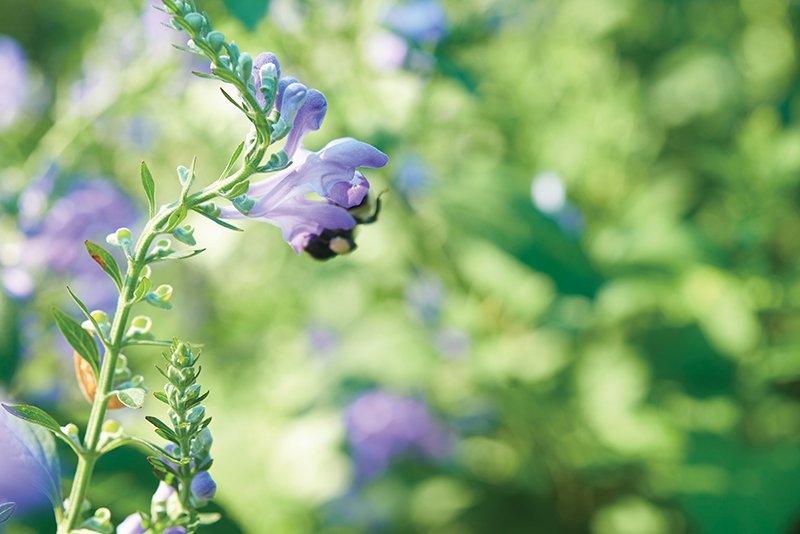
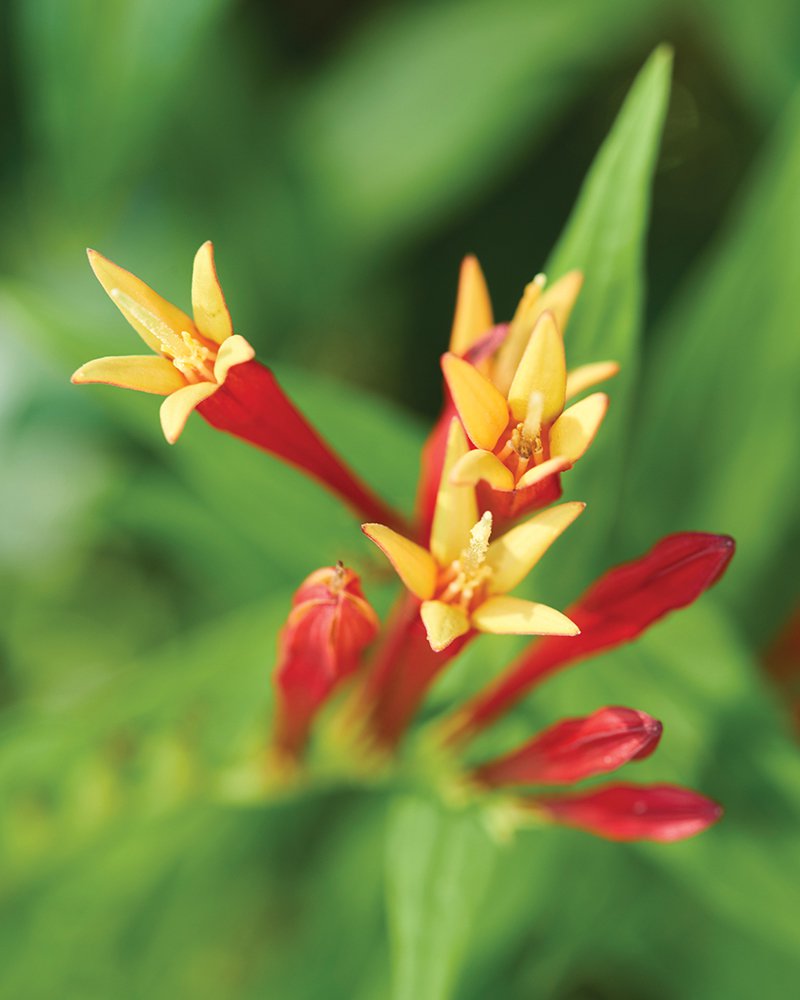
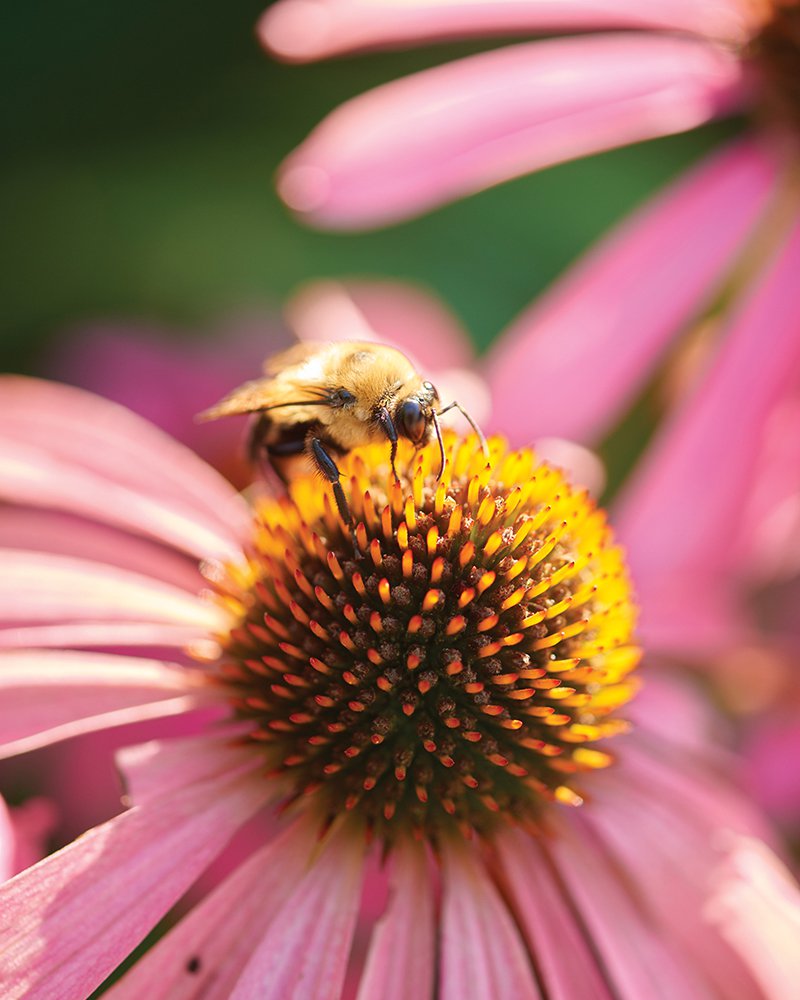
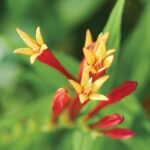
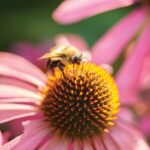
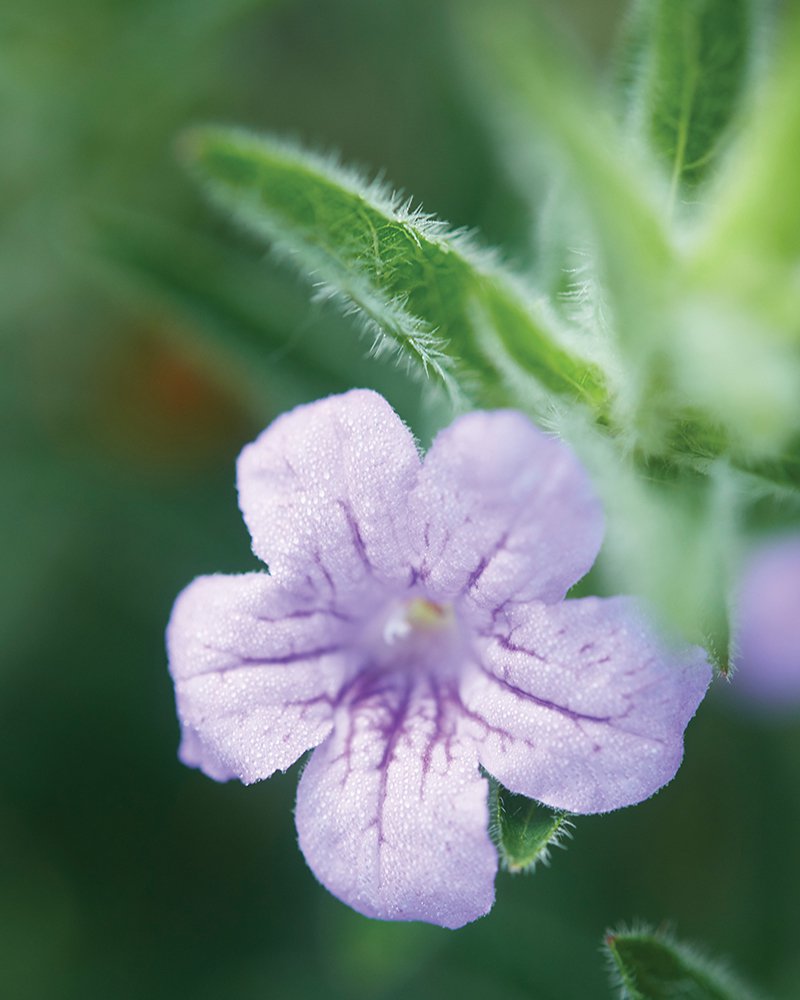
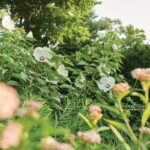
With each project, Sue is intentional about her plantings, so something is blooming all the time. “You need something in the spring and early summer for the bees,” she says. By July, the garden is in full bloom—tough, drought-tolerant rattlesnake master is a bee magnet, Sue says. Indian pink attracts hummingbirds, and purple poppy mallow is rich in July. Downy skullcap and purple coneflower provide a show of color throughout summer. Buttonbush hosts a variety of insects, including the tiger swallowtail butterfly.
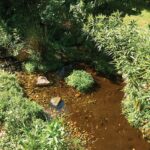
When Andy rebuilt the pond, Sue planted such natives as pickerelweed in the water and added nonnative cattails, too. The pond continues to draw wildlife; one night Sue watched a frog snatch an insect with his lightning-fast sticky tongue. On another occasion, she spotted a luna moth, a rare sight. The couple has seen a swarm of dragonflies descend upon the pond’s still waters. “We’ve had some neat experiences,” she notes.
In Awe of August
Sue had no grand plan when she considered planting a butterfly garden in 2007. In fact, she had no real plan at all, other than driving to nurseries and buying plants labeled “good for attracting butterflies.” She reached out to a friend who was a master gardener and, unknown to Sue, a native plant enthusiast. The friend came to the house with an armful of natives, and the two women laid out the garden and planted. They left for lunch, and when they got back, 30 minutes later, the plants were already covered in butterflies. “That was validation I was trying to do the right thing,” Sue recalls.
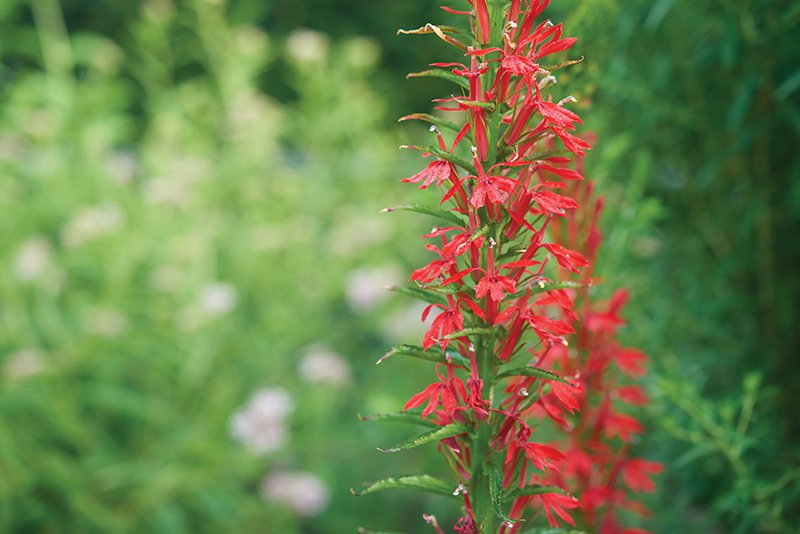
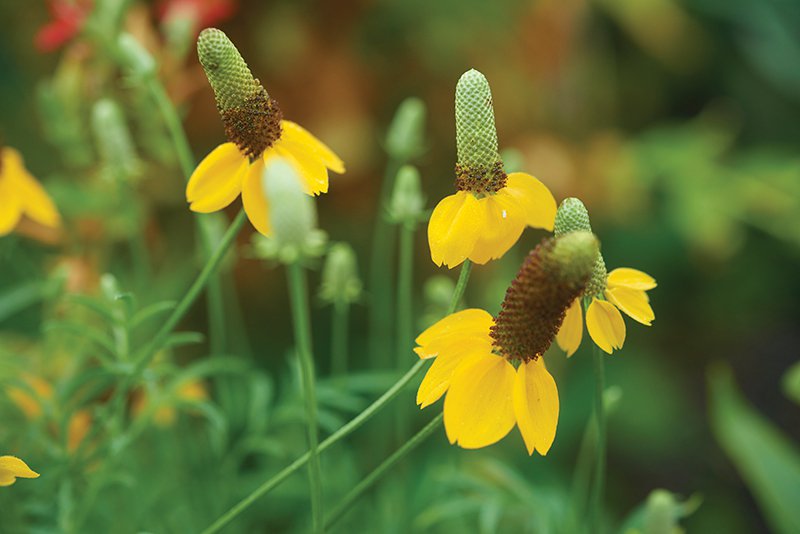
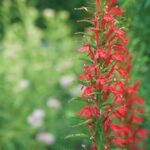
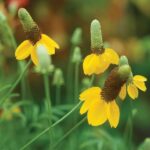
She started reading and asking more questions, and her friend returned days later bearing more plants, including a cardinal flower. “When it bloomed in late summer and I saw a hummingbird on it, that was it,” says Sue. “There was no going back.” Now, many years later, the upper butterfly garden (so named for its higher elevation in the Leahy backyard) holds purple coneflower, Missouri coneflower, goldenrod, wild senna, and wild bergamot (a favorite of finches), among other natives.
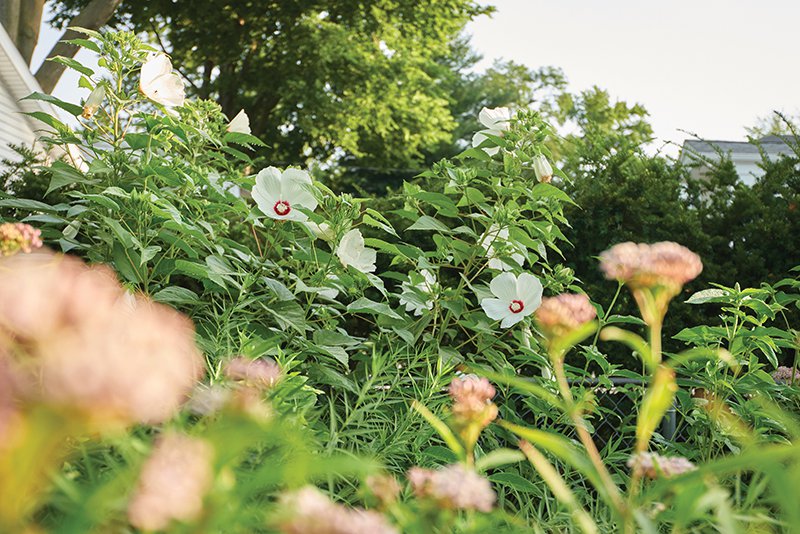
The Leahys decided it would be wise to capture rainwater from the two downspouts that drained through a pipe in the yard and built a rain garden. As its name implies, a rain garden catches and holds runoff water until it can seep into the ground. “The plants you put there have very deep roots to pull that waterway down,” says Sue. “It’s a way to keep water from running off into storm sewers.” In addition, the drainage problems that they’d experienced for years as a result of a neighbor’s landscaping led them to install a second, larger rain garden, where rose mallow, a relative of hibiscus, towers over swamp milkweed.
“August is a prime month for color,” says Sue. In fact, her plants are happier than she is during a typical hot August night (and day). “Part of the reason you plant natives is that they are adapted to our soil, to our climate, to our weather,” she says, recalling the extended dry summer of 2012, when she didn’t water her native plants even once. “I was already sold on natives before that year, but that experience convinced me even more. They were blooming away, happy as can be, and I just said to myself, ‘I’m going inside to watch you from there.’”
A Show-Stopping September
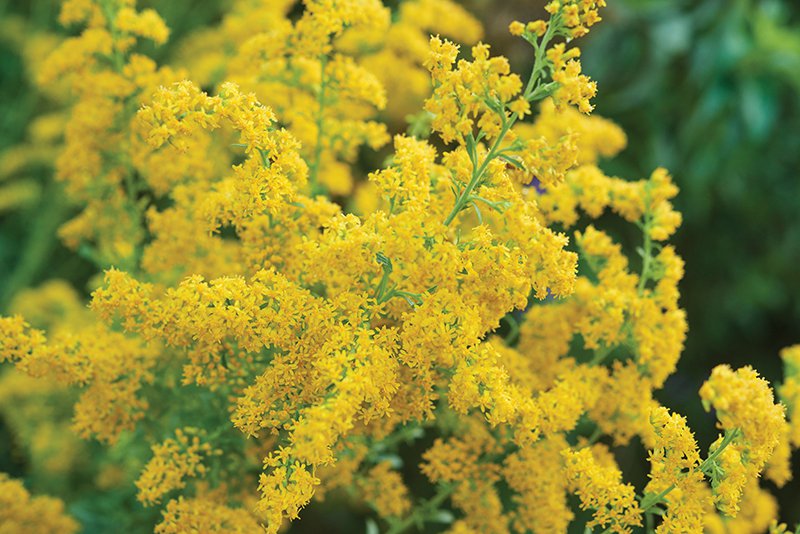
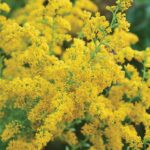
“Asters and goldenrod are the crowning glory of September,” says Sue. New England aster, one of her favorite plants, blooms throughout the month, a “phenomenal” attractor to pollinators, she says. “It gets so many bees and butterflies that it looks like it’s quivering.” She’s planned her gardens so that about 60 percent of the plants are blooming in late summer and early fall. That’s when butterflies are most active and hummingbirds, monarchs, and other migrating species are fueling up for the winter. Oxeye sunflower, which also attracts hummingbirds, adds pops of yellow in the lower butterfly garden. A few years ago, the Leahys planted an oak tree and a flowering dogwood as the beginning of a mini–woodland garden, after learning that oak trees harbor more than 500 species of insects. “[Entomologist] Tallamy says that if you can only plant one tree in your yard, make it an oak tree,” says Sue. “We now have two.” Insects are an important food for baby birds, who must have protein to grow, she explains.
American beautyberry is another September showstopper. The plant is almost insignificant until September, when it produces purple berries that Sue calls “breathtaking.” The fruit is an important food source for nearly 40 species of birds. Sue enjoys adding new and interesting plants, testing them to see how they’ll flourish in her yard. Vivid blue wild indigo blooms in early spring. In September, however, its foliage begins to turn silvery-gray and seed pods rattle as they ripen. “It’s a good plant for a sensory garden,” Sue says.
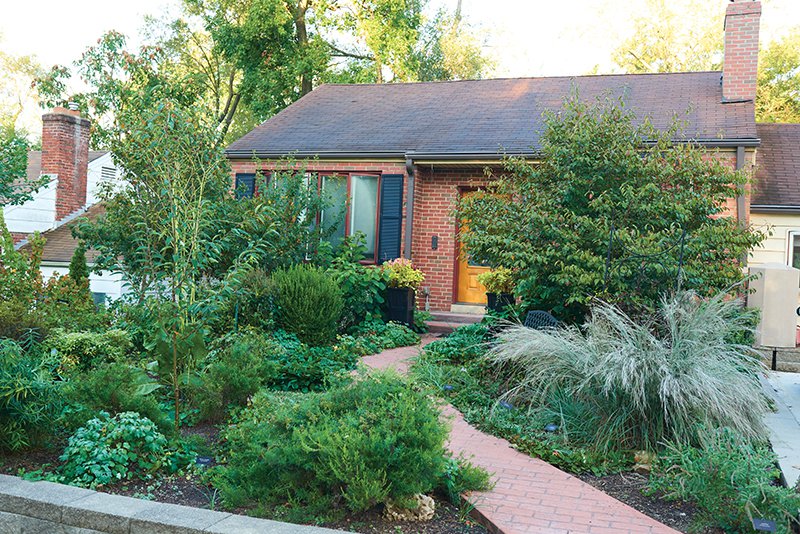
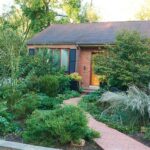
The couple replaced the sod with natives in the front yard after receiving recommendations from the St. Louis Audubon Society’s Bring Conservation Home program, which guides homeowners in the restoration of native plants and animal habitat on their property. Sue and Andy brought in Black Gold soil—but not all the native plants appreciated it. “Rose verbena, for example, really doesn’t like rich soil,” she says. “Some of the things I originally put in the front, I’ve had to move. People say, ‘I can’t do natives, because I’ve got clay soil.’ I tell them natives will be just fine in clay soil.”
For a lush front garden that welcomes visitors to their home, Sue planted wild hydrangea, fragrant sumac, native coral bells, and a serviceberry tree, among others.
“People think native gardens are weedy,” she says, “but they can be very formal. It all depends on what plants you pick.”