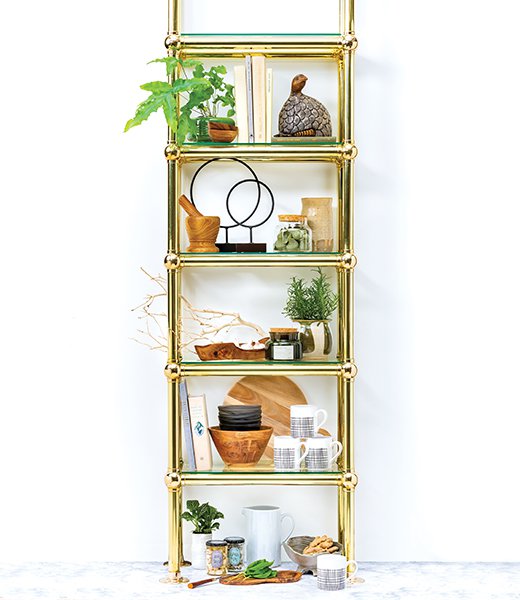
The reality of the open-concept kitchen is that what was once hidden behind cabinet doors is now a part of the décor. See for yourself: Spices line the bottom shelf, and stylish glass containers within easy reach offer convenience and flair. The shelves may be filled to the brim, but there’s a purpose for every item and nothing looks too busy or out of place. “In general, it’s all about achieving balance,” Fasnacht says.
What’s your look?
Get a weekly dose of home and style inspiration
Subscribe to the St. Louis Design+Home newsletter to explore the latest stories from the local interior design, fashion, and retail scene.
Decide whether you want to amp up, or downplay, your shelving. Fasnacht chooses to warm up the brassy tones in a shelf made by Rande Hackmann of Architectural Elements. By adding natural textures from plants and wooden items, plus decorative pieces plucked from local vintage stores, she’s creating contrast without competing against the shelf itself.
Pick an element
Fasnacht recommends that homeowners choose an object they love and work around it. Here, she selects a plant with undulating leaf edges and surrounds it with warm wooden objects whose lines are similar. She then grabs an assortment of objects in various shapes and sizes—coffee mugs, glass jars, a stylish mortar and pestle, to name a few—and lets them make their mark.
Consider a theme
Don’t forget to “add height and sculpture,” Fasnacht says. Shop for a range of items, and don’t be afraid to play with shape. On a recent shopping trip, Fasnacht was charmed by the handmade duck pictured here. Why? “It’s fun,” she says simply. The designer gives the duck some height by stacking him atop a book. Three levels below, additional books add to the literary theme. Another pattern emerges with the tree branch that almost floats off the shelf and the potted plant that grows high and to the right.
Mix and match
“Bridge the gap between modern pieces and ceramics,” says Fasnacht. The assortment should look seamless but will likely take some time to perfect, so play around with what you have, moving objects from one spot to another until the look is just right. Try placing handmade objects like pottery, original and rare in appearance, on the same shelf as an industrial piece like the circular sculpture shown here. On another shelf, the mix features a decorative candle next to a wooden tray filled with garlic cloves.
Repetition keeps it interesting
This photo depicts four main colors—white, black, gold, green—but the intentional repetition of each creates a dialogue among the various pieces. Choose a handful of hues and work in patterns and textures when styling your own kitchen shelves.