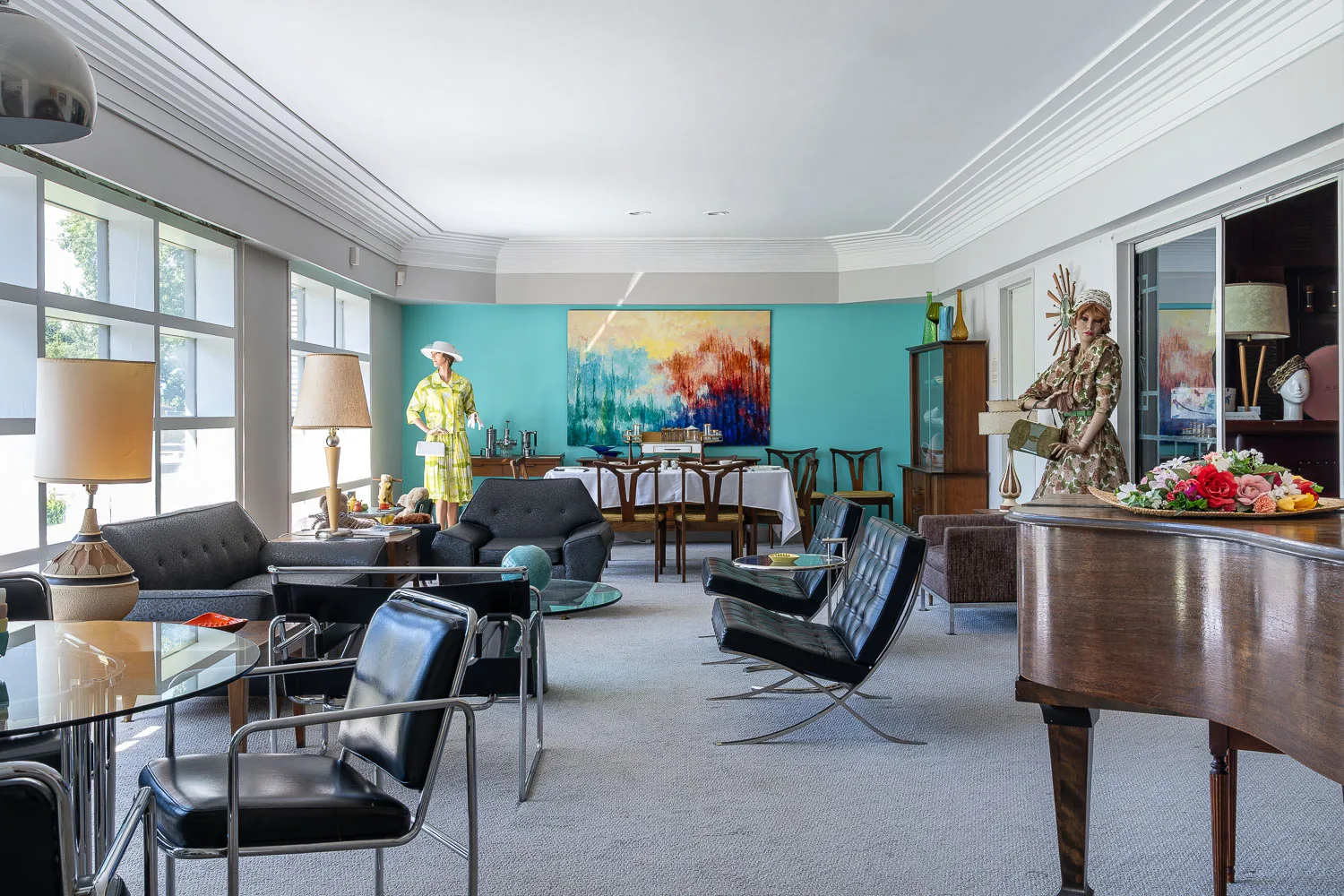
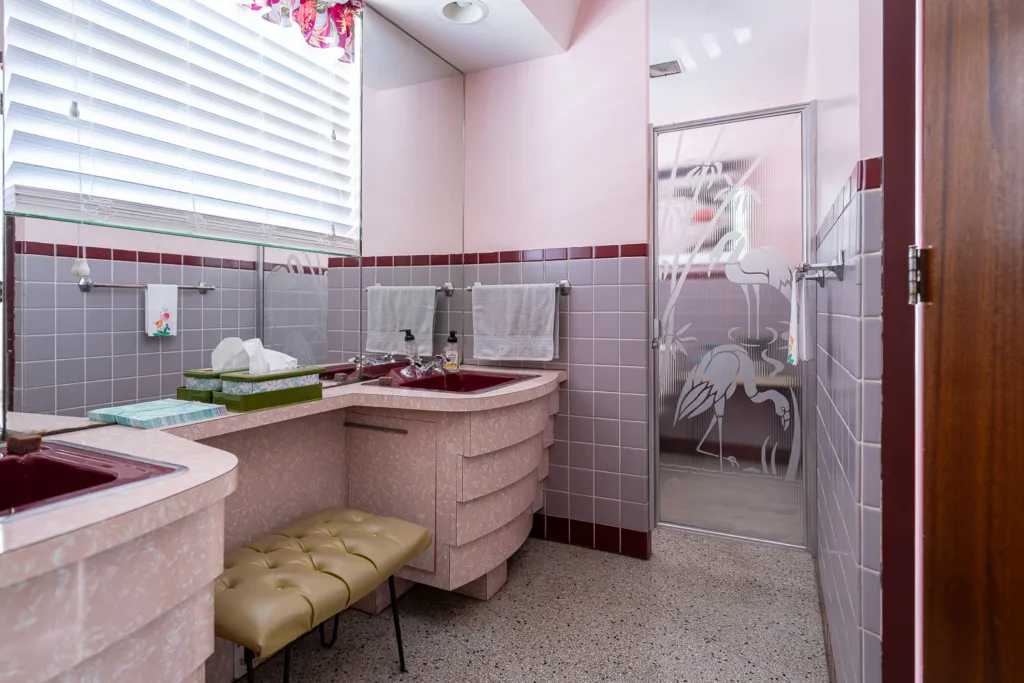
In 1952, Terry and Thelma Blazier commissioned architect Charles E. King to design a new home for them in the Oak Knoll neighborhood in Belleville. The couple, who were empty nesters, loved to throw parties and designed the home with entertainment in mind. Built on three front lots, the one-story residence with large windows and terrazzo floors features some permanstone siding, a product manufactured by The Blazier Company, the construction firm run by Terry and his partner.
“Terry wanted something different from King, and that’s exactly what King loved to hear,” says Larry Betz, president of the Belleville Historical Society. “It’s a very modern-looking house and it would fit in Palm Springs perfectly.”
Get a weekly dose of home and style inspiration
Subscribe to the St. Louis Design+Home newsletter to explore the latest stories from the local interior design, fashion, and retail scene.
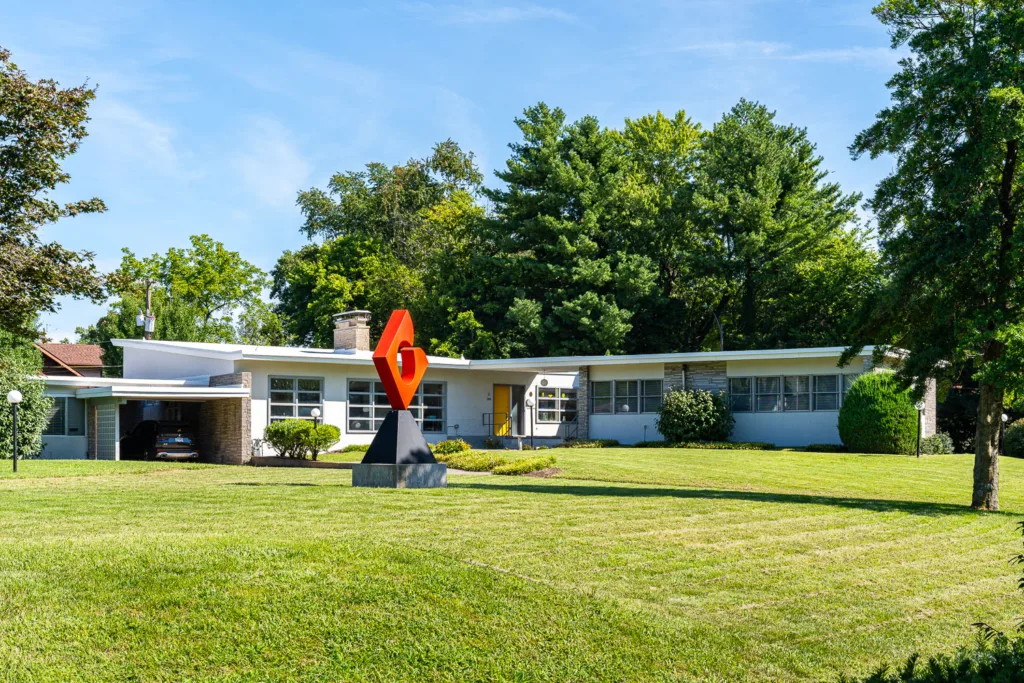
As the Blaziers took up residence at 6 Oak Knoll Place, the midcentury modern movement was gaining steam across the country, and King was considered its leader in Belleville and the surrounding area. Originally from Cynthiana, Kentucky, King married Belleville-native Audrey Marsh. He’s credited with designing both residential homes and several public buildings, including Belleville City Hall, churches and elementary schools, and the headquarters for the Marsh Stencil Company, Audrey Marsh King’s family-owned business. “It’s amazing how many of these houses we see in little clusters,” says Betz. “At that time, Belleville was growing just like everything else was.”
The Blaziers lived in the house for about a decade. In 1962, Terry’s company went bankrupt and the bank took possession of the house, eventually selling it to George Brichler, owner of Brichler Funeral Home in East St. Louis, in 1966. After several different owners, the house went up for auction in 2015 and it was acquired by the Belleville Historical Society. “One of the projects the Belleville Historical Society set up early on was to honor two of the most prominent architects from Belleville, and Charles King was going to be the second one,” says Betz. “But, as things turned out, we had the opportunity to purchase this house, so we decided to honor Charles King first.”
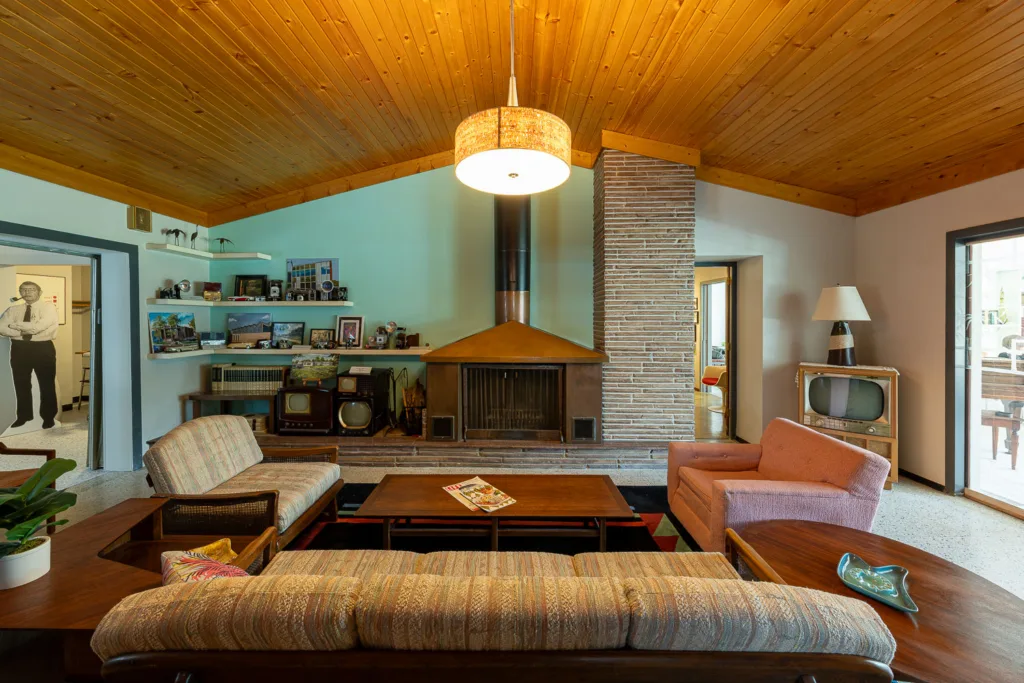
Today, the two-bedroom home with an attached mother-in-law apartment is known as the Museum of Mid-Century Modern Architecture & Design. Its mission is to showcase King’s work but also, more broadly, the design of the midcentury period. Unlike the Blaziers’ home decor preferences—heavy drapes, lush carpets—the museum’s look is evocative of authentic midcentury style.
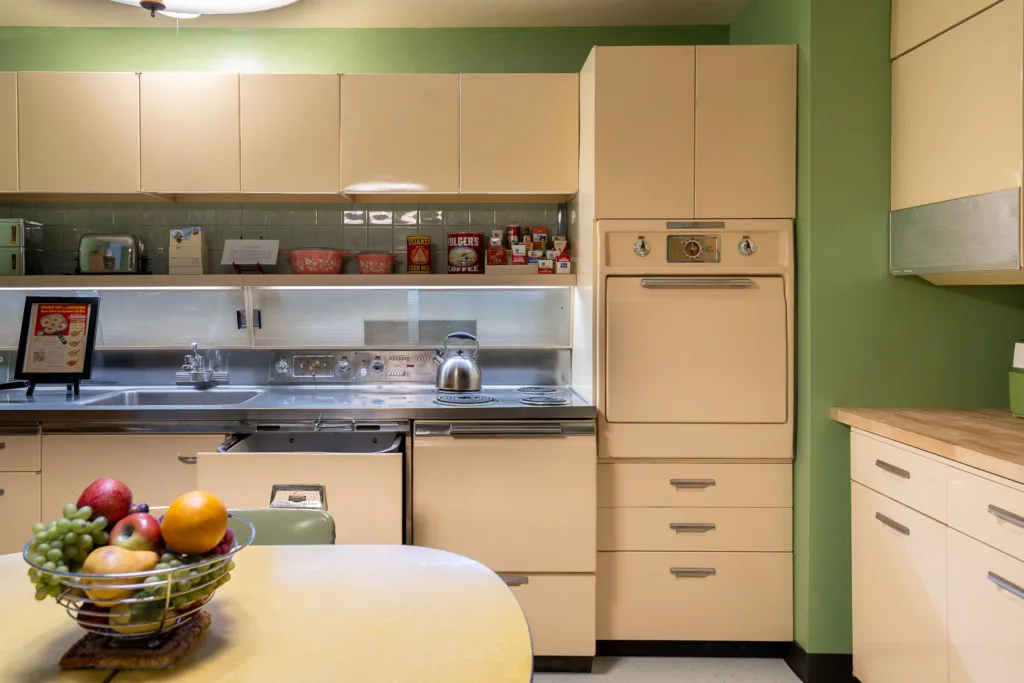
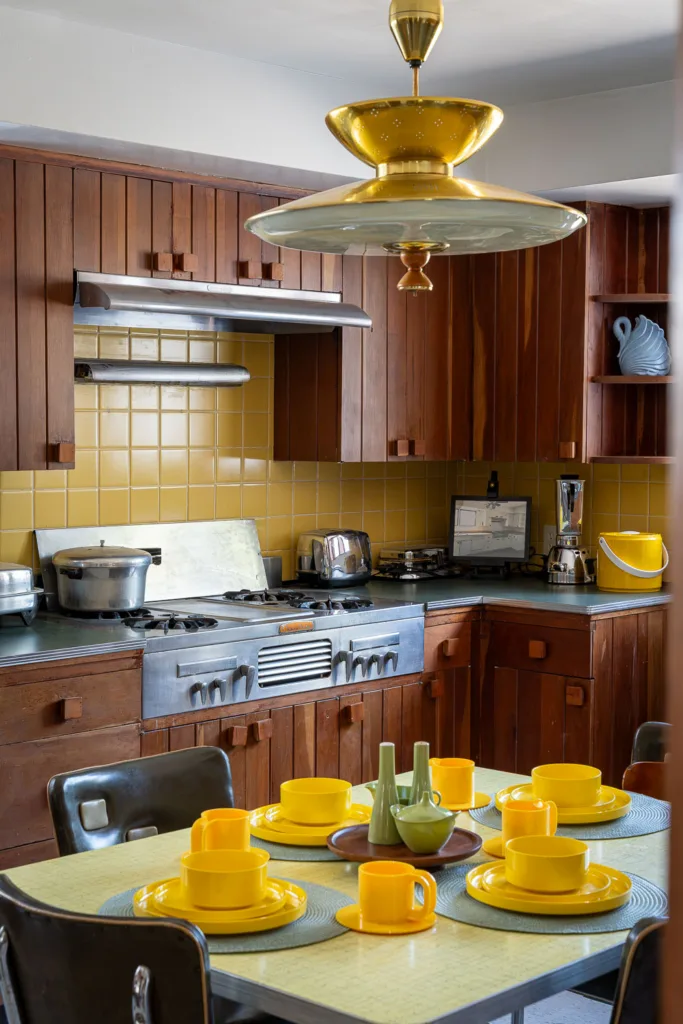
As its main curator, Betz is responsible for the museum’s interior design, often sourcing the furnishings and accessories on Facebook Marketplace and through local vintage sellers, such as Green Shag Market and TFA. While the Blaziers’ style didn’t reflect the look of the midcentury, the museum features many of its iconic designs, such as furniture by Mies van der Rohe and Charles and Ray Eames. The kitchen’s 1956 General Electric Wonder Kitchen is a hit with visitors. It was donated by a homeowner who bought a 1950s house in Ladue that had never been updated. Aside from the stainless steel countertops and a complete cabinet set, the kitchen was missing a refrigerator–though Betz was able to source a wall unit by the same manufacturer in Indiana. When Betz arrived at the house to pick it up, it was still on the wall and in use. “So we had to get it off the wall and that thing weighs a lot. It was the wrong color but I didn’t care. My body shop guy painted it to match.” Other decorative elements are a set of yellow Hellerware tableware—“The cat’s meow in the 50s,” says Betz—and a baby grand piano in the living room; Charles King’s drafting table, along with other personal office items, was donated to the museum by his son, James Marsh King. “I guess the key here is the teamwork of people that have helped make all of this possible,” says Betz.
The three-person committee responsible for making decisions about the museum include Bob Quaas and Margaret Meyer, the museum’s Charles King advisor to the board of directors. Meyer hosts events and conducts tours informed by her own experience living in a King house. “I have worked very hard rooting out people who knew King, and his son and granddaughter have been extraordinarily helpful,” she says. “When I do the tour, depending on the interest level, I tell Charles King’s whole life story. It’s amazing to me, this is a person I never met, and I feel like I’m part of his family.”
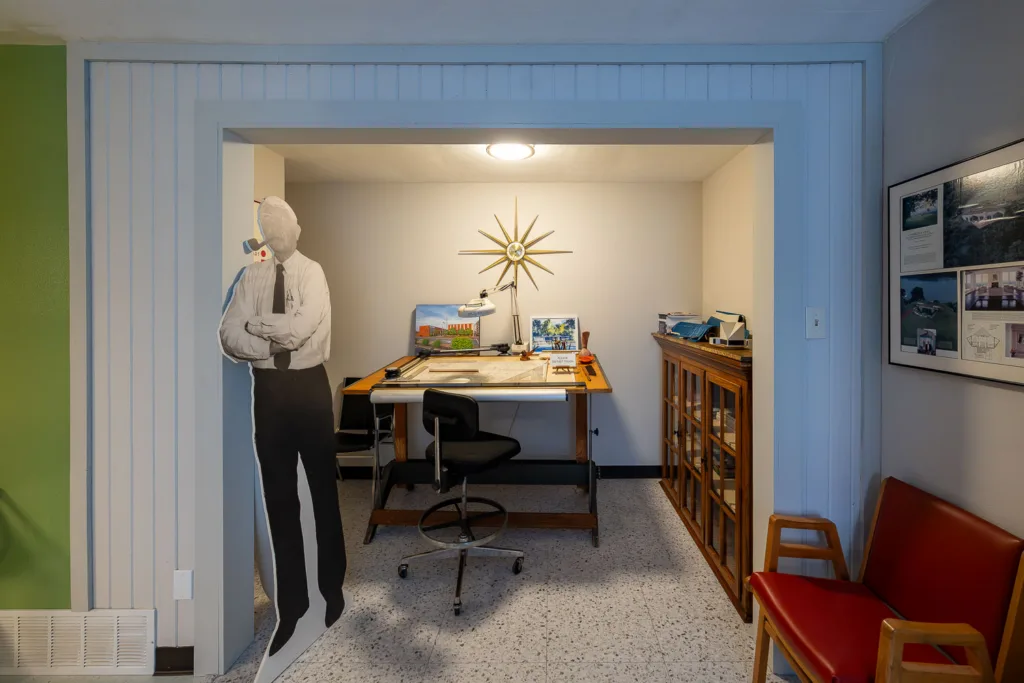
King was known for working with his clients on the design of their home, tailoring each residence to their needs. “It’s not his house he’s designing, it’s your house,” says Meyer. Yet, there are a few signature elements that stand out, such as the fireplaces—and none of them look the same. “As I always say, there are no two alike,” says Meyer.
One of the Belleville Historical Society’s first projects was the restoration of the original roof, which had a hole in it. As a result, water was leaking into the house and the plaster was in need of repair, too. During its life as a funeral parlor, some of the doorways had been widened to make room for caskets and those were returned to their previous dimensions. Damaged terrazzo floors were restored. The family room’s cherrywood accent wall and its stone fireplace, both painted white, were brought back to their original splendor. “They’d built a shabby little porch on the back that we had to remove,” says Betz. “There were a lot of issues, but we worked through them.”
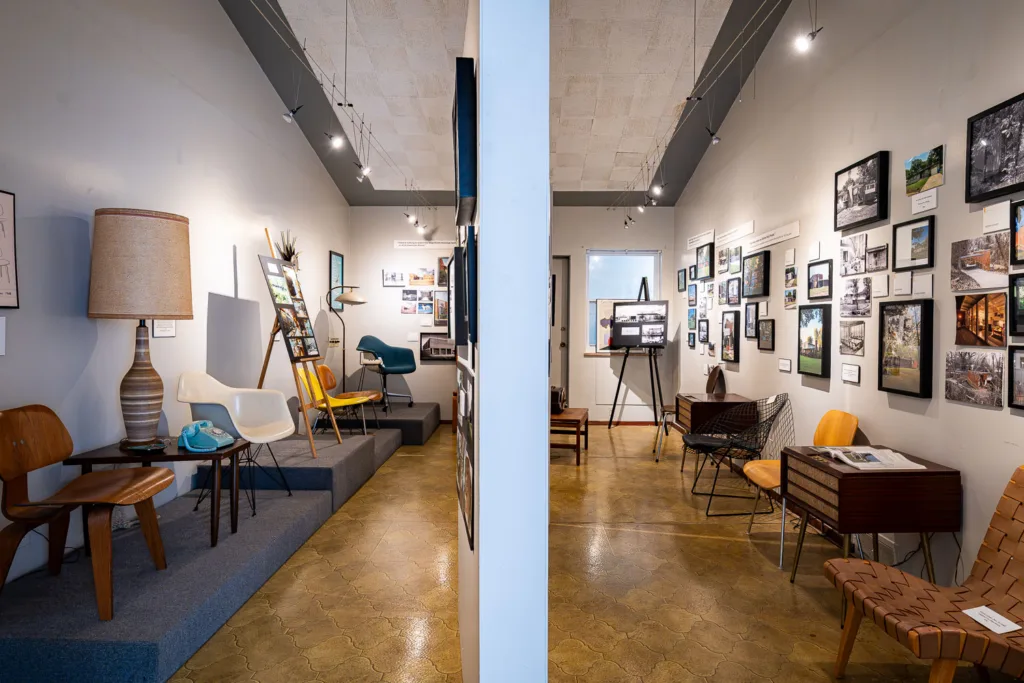
For those who are curious to see the house, there’s more than one way to experience it. One is by booking a tour, another is by renting the mother-in-law apartment, a time-capsule of the midcentury that functions as an Airbnb and is managed by Meyer. Currently, there are plans underway to curate another exhibit—this time on midcentury hats—with Thelma Blazier’s collection as the centerpiece. “She loved to make hats,” says Betz. Scanning Facebook Marketplace, he found and purchased a 50s-style sewing machine to go along with the exhibit. “We want to constantly try to get new things in and rotate things, so it’s not the same old thing every time.”
The group is always on the lookout for another King house, says Meyer. “Now we know of about 100 King projects all over the place, so it’s been—my friends say—like an Easter egg hunt,” she says. Before 2012, the year Meyer joined the team, there weren’t too many people thinking, Oh, I’d sure like to live in a Charles King house. But now there are people actively looking,” she says.
“I’m happy with where we are and with what we’ve accomplished,” says Betz, an architecture aficionado who has studied the life and work of Frank Lloyd Wright.
“The problem is we’re just not getting any younger and we’ve got to find people that are going to be willing to carry this mission forward.”
In the meantime, though, the group is assessing where they are and establishing new goals. “I know one thing,” says Betz. “Margaret wants new drapes. We don’t have any drapes in the living room.”