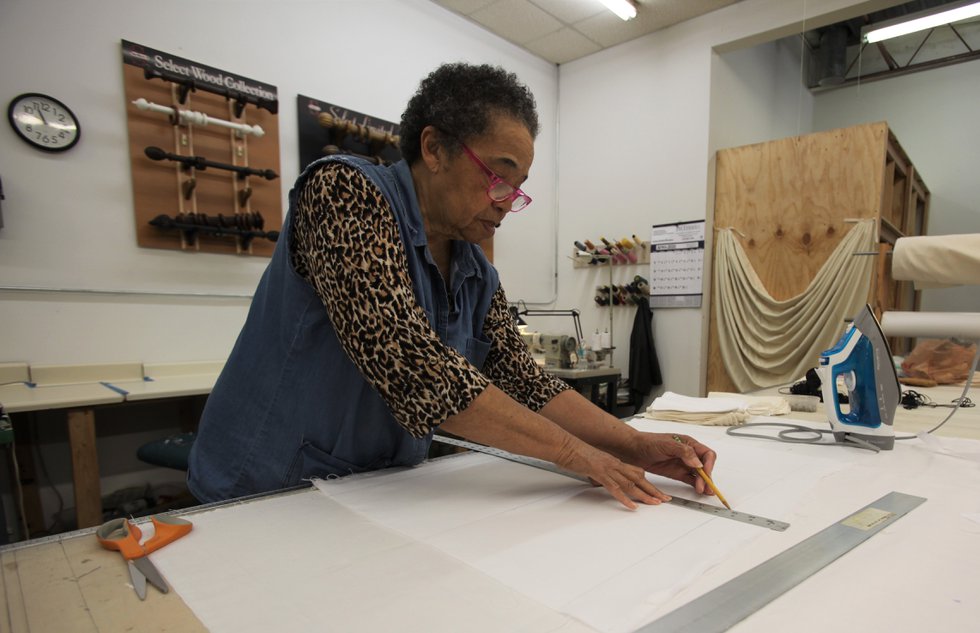
When drapery artisan Mae Johnson suggested to Michael Pepper, president of Edwin Pepper & Associates, that they start making face masks in the company’s workroom, Pepper was skeptical. The coronavirus was just beginning to make global headlines, and it was difficult to imagine that it would spread in the United States, much less St. Louis.
But within a few weeks, the situation had changed and there was a growing need for “personal protective equipment in all areas, not only hospitals,” says Pepper. “All these businesses that are deemed necessary and remain open need masks.”
Get a weekly dose of home and style inspiration
Subscribe to the St. Louis Design+Home newsletter to explore the latest stories from the local interior design, fashion, and retail scene.
Although the design firm has temporarily closed while St. Louis County’s stay-at-home mandate is in effect, Johnson and fellow drapery artisan Brennae Miller are volunteering to make masks to donate to the community.
Johnson’s daughter, a nurse at a local hospital, was the inspiration. She predicted that there would be a need for masks when the coronavirus reached St. Louis. “We looked at some of [the patterns online], and we got information from doctors about what they thought would be best,” says Johnson, who has been sewing for Edwin Pepper for close to 30 years.
After years of making complicated window draperies, masks are fairly simple to construct. Using cotton remnants, Johnson and Miller produce 75 to 100 masks per day. They take every precaution in the workroom, including using separate workstations and wearing protective gear.
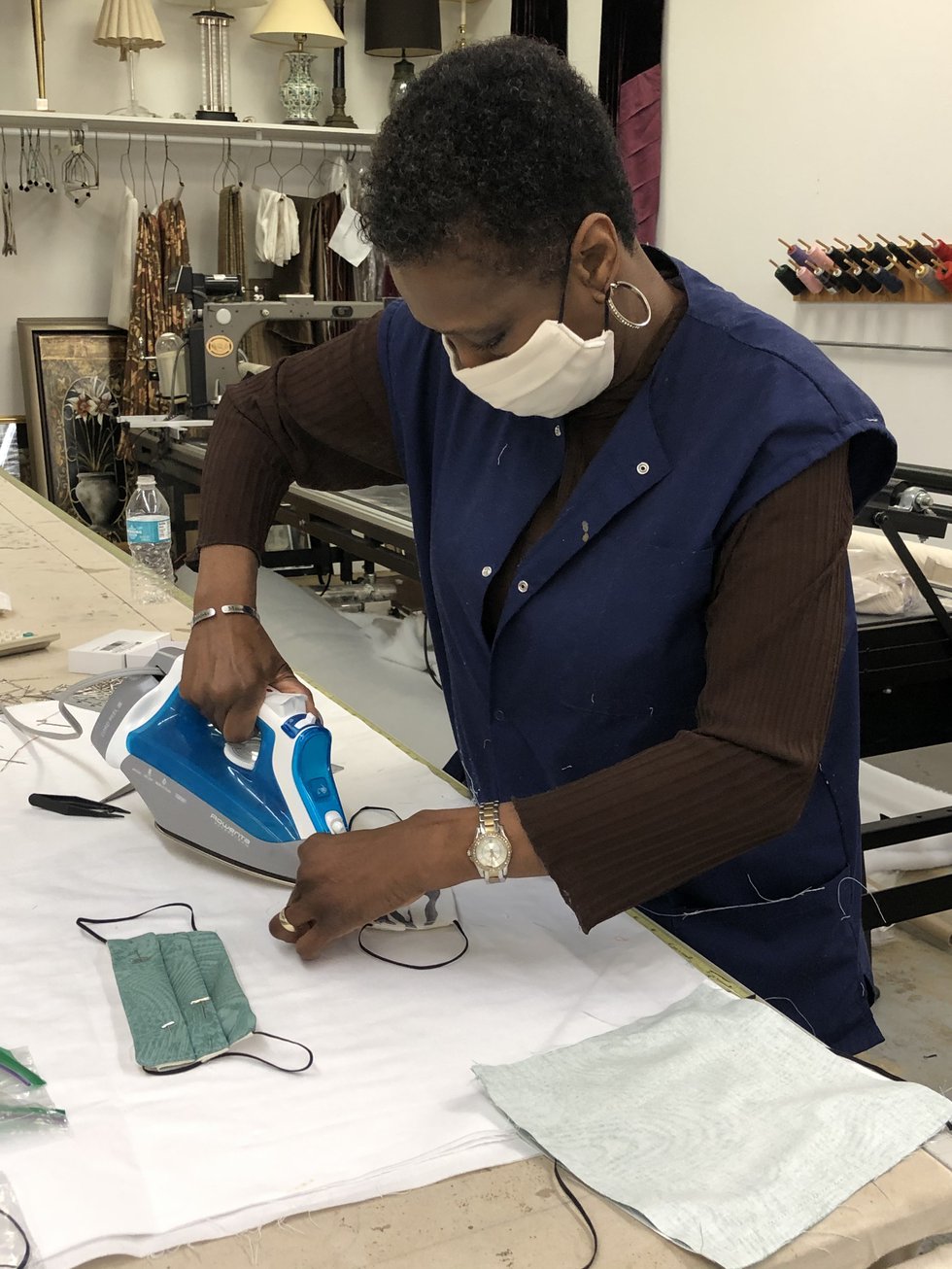
“With my husband being a cancer survivor, it was just dear to my heart to get something done for the community and for his protection and others’ protection,” says Miller, who has been sewing for the company for a decade.
Johnson also has family members who may be at higher risk, and she says she’s happy to do her “little part” to help others. “With the skills that we’ve got, we’re able to give back to the community to help those who are in need.”
“I’m all for it,” says Pepper, who is working to get the masks into the hands of those who need them. So far, they’ve supplied masks to senior living and skilled care facilities, a food pantry, a fire department, and several other essential businesses. They’ve also provided fabric to local nonprofit The Collective Thread to make masks and hospital gowns.
“In a situation like this—be it a company, a community, or a country—pulling together is what makes the difference in getting through this,” Pepper says.