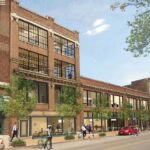



St. Louis’ Midtown Alley has become a magnet for creative agencies that provide everything from models to marketing, so it’s fitting that the area is expanding to include imaginative office spaces.
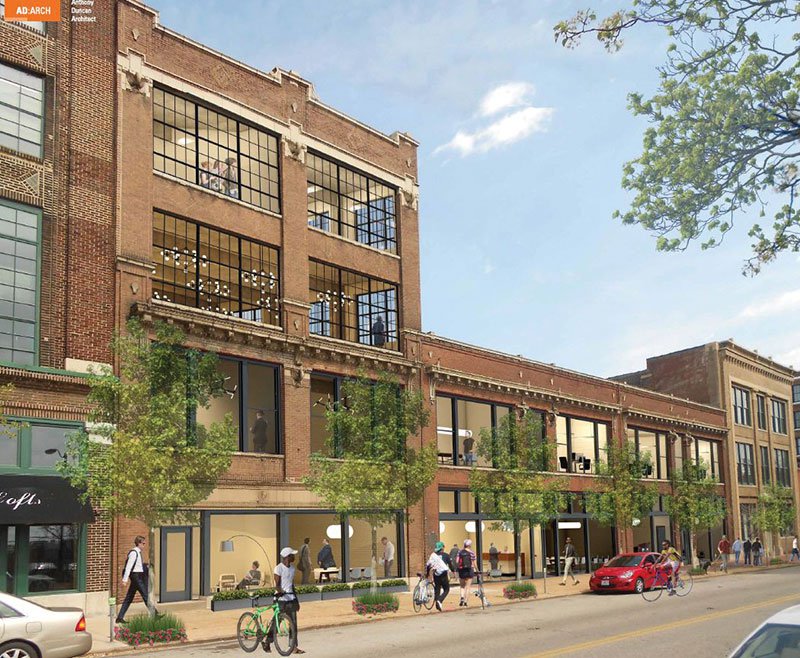
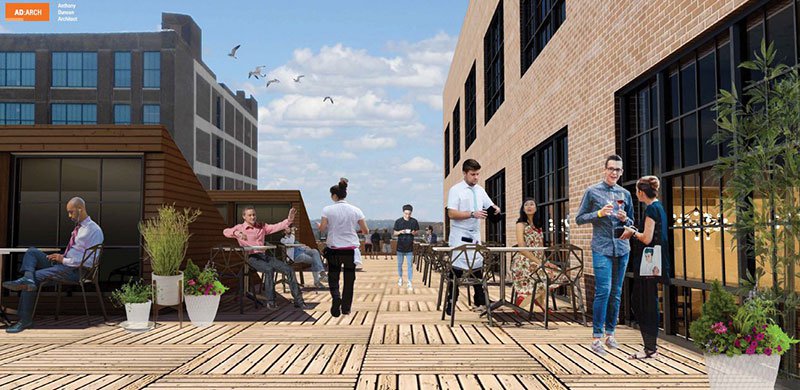
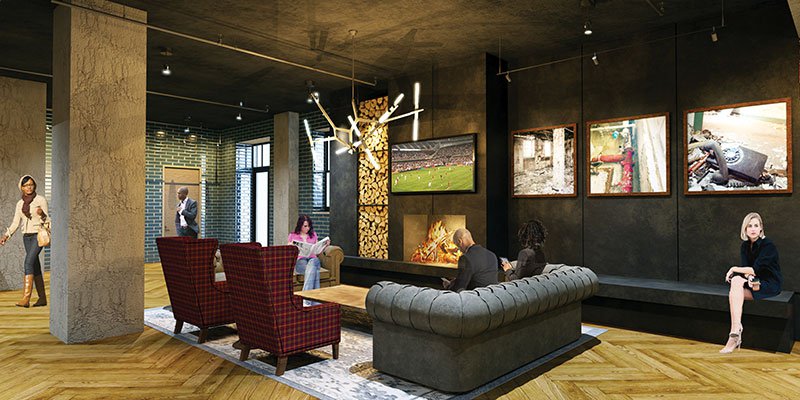
The Mendenhall Building, 2315 Locust, will be rechristened Martin by the end of 2018. In addition to a rooftop restaurant, Martin will accommodate two anchor tenants and 14 office spaces ranging from 1,000 to 2,500 square feet, says Jassen Johnson, owner of Renaissance Development Associates, the firm behind the project. It will also be the area’s first Fitwel-certified building, thanks to such wellness-promoting features as art-laden stairwells, lactation rooms, bike racks, showers, and hallways equipped with whiteboards that are ideal for standing meetings.
Get a weekly dose of home and style inspiration
Subscribe to the St. Louis Design+Home newsletter to explore the latest stories from the local interior design, fashion, and retail scene.
“We named the building Martin because in our conversations about it, it was as if we were talking about a person,” says Johnson. The moniker is an homage to the building’s past life as a Ford dealership and the company’s stewardship of the Aston Martin.
Neighbors will include the Beaumont Telephone Exchange Building, renamed Malone after St. Louis entrepreneur Annie Malone, plus a hotel, residential units, and a retail village made from shipping containers.
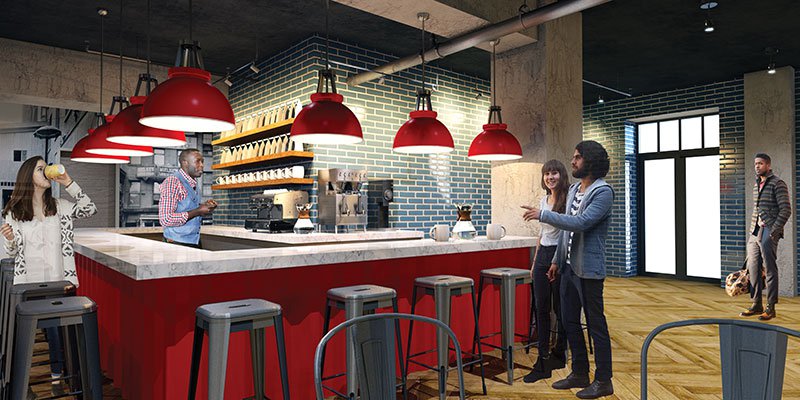
Developers call the overall project the Jefferson Connector, and it’s designed to offer residents from Downtown West and the people who work and live in Midtown Alley the amenities that have been largely absent from the area. Johnson discovered the concept of packaging stores and service providers inside shipping containers when he visited the Ross Group in Tulsa, Oklahoma. There, Ross and other partners had recently completed the Boxyard, which houses restaurants and retailers in 39 repurposed shipping containers.
“A light bulb went off; I thought, ‘This is what we need in Midtown to provide a village center for those in Midtown Alley and Downtown West to come together,” says Johnson, who is partnering with the Ross Group on the retail business.
Johnson expects the $70 million Jefferson Connector Project to be completed in about two and a half years. Meanwhile, he’ll continue to work on development efforts in Midtown Alley that he hopes will help guarantee the project’s success. The additional office space along Locust Street, for instance, will allow companies to expand without leaving the neighborhood.
Once the Jefferson Connector is finished, those companies will be in a position to entice future employees and prospective clients with live, work, and play spaces. That’s one reason that the marketing agency SCORCH signed on as an anchor tenant for Martin.
“It’s important to have a space where you can collaborate with your team,” says SCORCH CEO Chris Buehler. “Through SCORCH’s work with Silicon Valley clients and the high-tech focus of our new headquarters, we’re making West Coast and global tech corporations sit up and take notice of St. Louis as a creative marketing resource.”
Fur further reading, see “More and more creative firms are locating downtown. Can they recreate St. Louis?” written by Jeannette Cooperman, in the August 2018 issue of St. Louis Magazine.