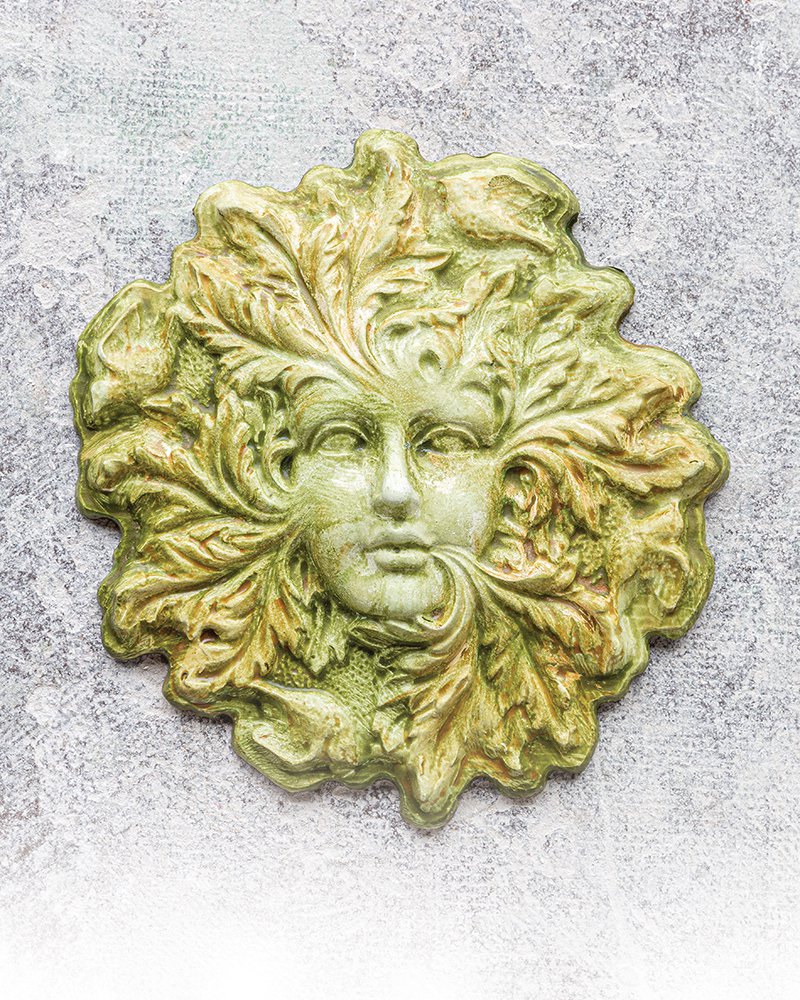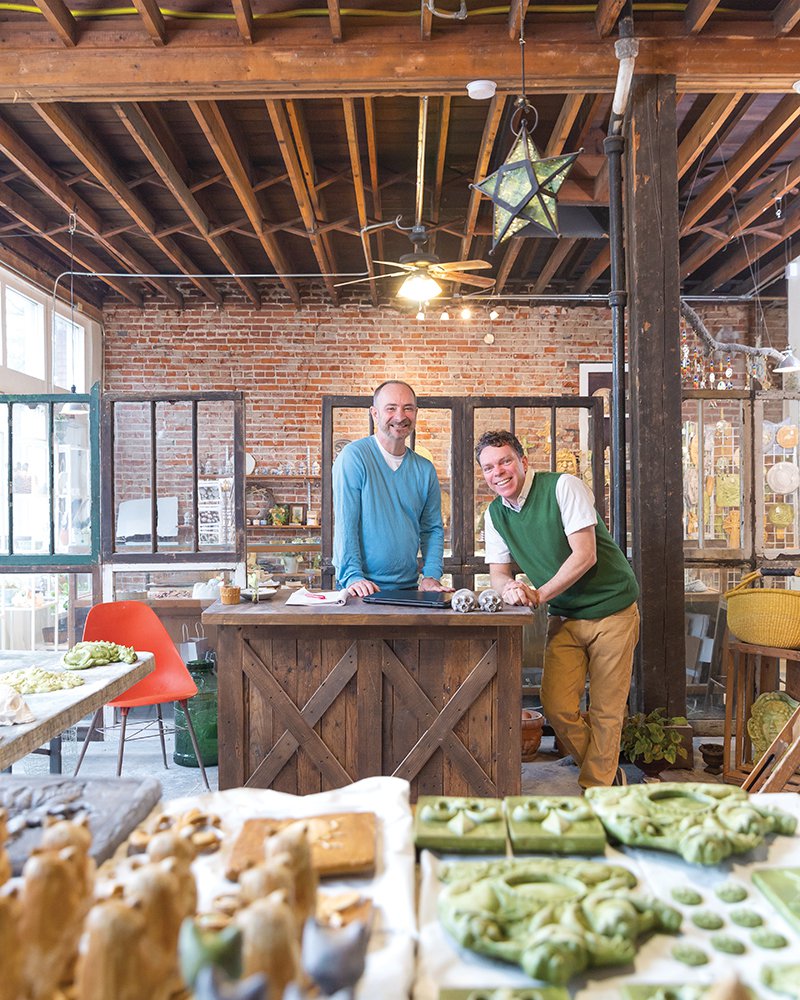
For the entrepreneurial and artistic duo of Curtis Comer and Tim Woods, it was only a matter of time before they stumbled upon their big idea. It happened on a 2011 trip to New Orleans, in a little shop where the owner—a master caster—made art of concrete. “We loved the shop and found [the work] fascinating,” says Woods. “We went home, tried to teach ourselves the craft and technique of casting and molding, and failed miserably.” They eventually tracked down the shop owner—who was by then living in the mountains of North Carolina—to learn the process. From a hobby the couple did in their garage, casting has evolved into a full-time endeavor. Last year, they opened a studio and retail gallery at Iowa and Cherokee, where they create work for local and national shops, as well as such institutions as the Washington National Cathedral, in D.C.
What made you start your own company?
Get a weekly dose of home and style inspiration
Subscribe to the St. Louis Design+Home newsletter to explore the latest stories from the local interior design, fashion, and retail scene.
Comer: We have a profound interest in European art, culture, and mythology, so when we found the gentleman in New Orleans, [his work] spoke to us, and we thought, “This is something we can do.”
Woods: For the first years, we were doing it more as a hobby. Then, people said, “You guys should sell that,” so we experimented with doing small art markets and farmers’ markets.
How do you describe the process behind your work?
Woods: We find an original piece that we like or one that we imagine, and then we build it or carve it. If it’s a piece that we like, it has to be public domain. We make models from that. Some of our pieces are old architectural fragments that we modify in some way or reproduce, but they’re all hand reproductions.
Comer: We hand-color everything that we hand-pour. The pieces aren’t just for gardens, which a lot of people think; a lot of the stuff we do is suitable for interior design as well.
What lessons did you have to learn?
Woods: We had to experiment with the material and learn which material works best with which pieces—indoor and outdoor—how long the curing process would take and how long certain pieces have to dry once they’re painted. We had to come up with our own paint mixes; we came up with three signature colors.
What’s it like, using cement as your art form?
Woods: Actually, the material that we use most is gypsum cement, because it’s the easiest to work with. It’s like a lightweight concrete or a very durable plaster. We use it because it takes detail well. Also, it comes out of its mold pure white, so it takes color very well.
Where do you find inspiration?
Comer: I’d say nature, but also mythology, anything beautiful.
Woods: We’re very drawn to Old World imagery, old Nordic or Celtic culture, Neoclassical. A lot of our imagery is spiritual in nature. Often we hear comments like: “This is so beautiful. You don’t see this kind of thing anymore,” or, “You only see this in Europe.”