On July 19, 1937, Adolf Hitler’s Nazi Party opened a propogandist Degenerate Art exhibition in Munich, Germany. The gallery was filled with modern art, trussed up and defaced with mocking captions—a blatant threat to any artist who dared defy the regime. Painter Max Beckmann knew it marked the end of free artistic expression in Germany. The next day, he boarded a train for Amsterdam.
After 10 years spent in exile from his home country, Beckmann moved to the United States and eventually accepted a temporary teaching position at Washington University in St. Louis. Today, his work is the inspiration behind the Saint Louis Art Museum’s Day & Dream in Modern Germany 1914–1945, on view through February 26.
Stay up-to-date with the local arts scene
Subscribe to the weekly St. Louis Arts+Culture newsletter to discover must-attend art exhibits, performances, festivals, and more.
Melissa Venator, the Andrew W. Mellon Foundation fellow who curated the exhibition, came up with the idea while touring SLAM’s permanent collection. Seeing Beckmann’s lithographic print series Day & Dream, she says, was like reading a novel. “I was immersed in this world that he created,” Venator says. “It was sad, but it was also joyous and funny at the same time.”
Beckmann produced the 15-sheet portfolio in 1946, while he was still in Amsterdam. Many of its elements are surrealist and whimsical, resembling characters that could be found in a storybook. Yet the specter of the two world wars—and Beckmann’s own trauma—suffuse the project. Venator was fascinated by this interplay of fantasy with reality and used it to shape the exhibition.
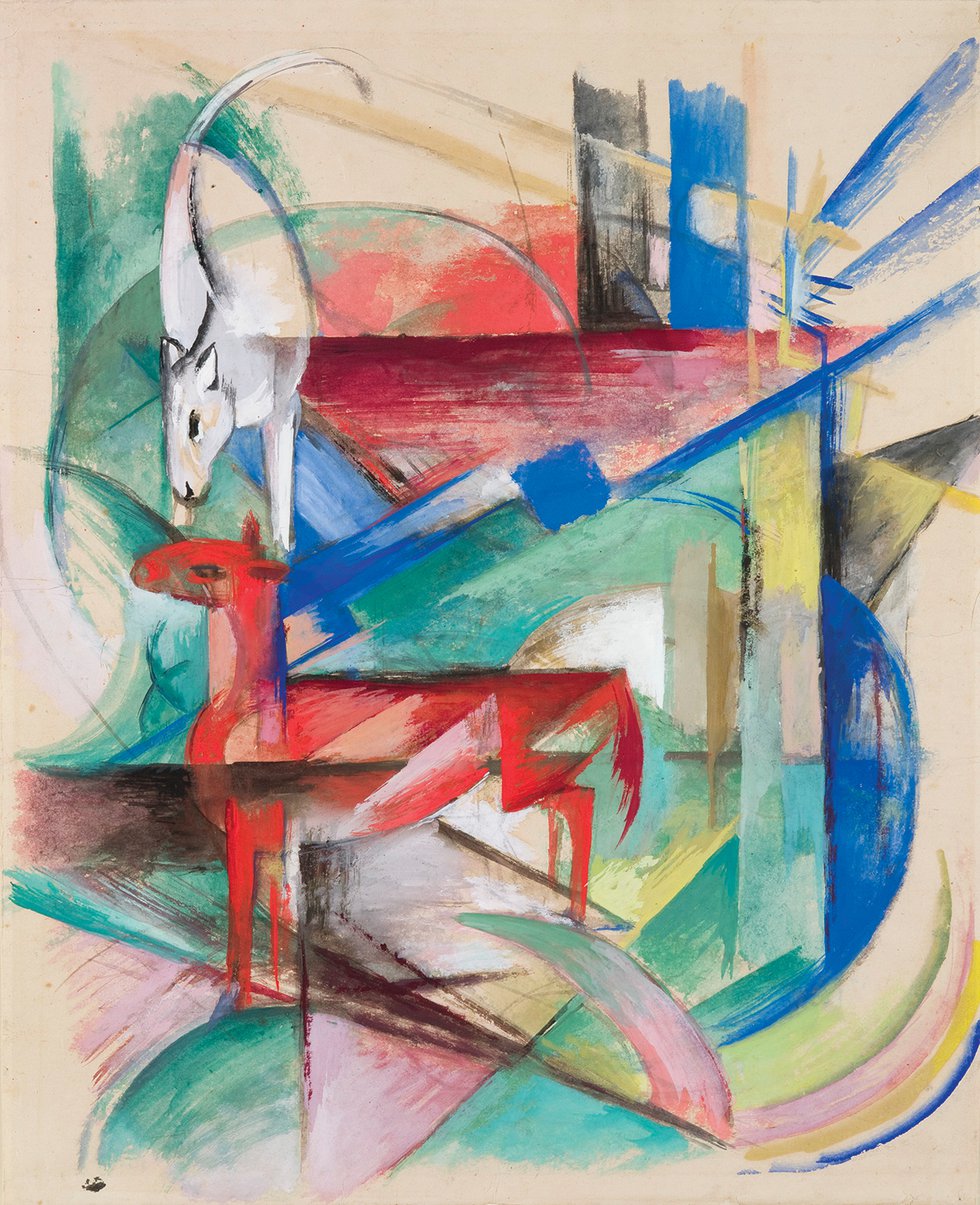
Day & Dream in Modern Germany contains works on paper from 18 artists, including Beckmann, that were created between 1914 and 1945—a period of constant political turmoil in Germany. After World War I, Venator says, many artists felt an obligation to address social issues.
“At the same time,” Venator says, “you have other artists who look at this terrible world they live in and say, ‘I want to use my art as a refuge. I want to escape from this unpleasant reality.’”
These two perspectives are the exhibition’s foundation. More than half of the pieces have never been shown to the public, and 62 of the 64 works come from SLAM’s own body of German modern art. In fact, the museum houses the largest collection of Beckmann’s art in the world. According to Venator, Day & Dream in Modern Germany serves as an opportunity to explore the museum’s collection in a meaningful way.
“Hopefully, it will feel contemporary, and it will feel relevant,” Venator says. “And hopefully people will leave having found some peace in their own mind.”