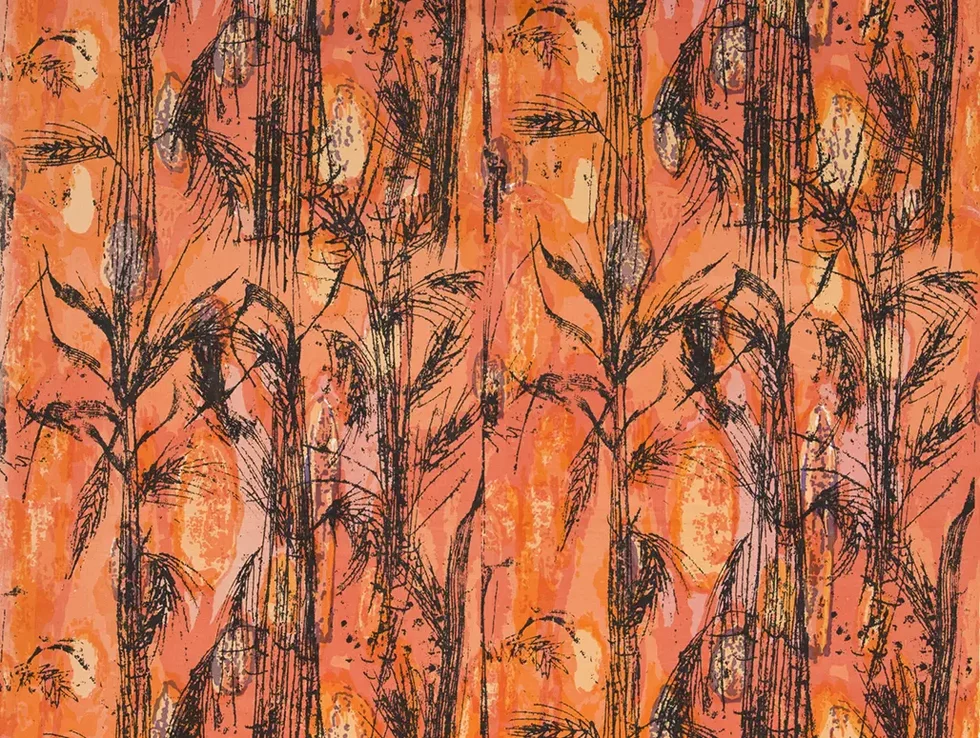
Screen printing—a stencil process in which color is forced onto the material through a mesh screen—was first used to mass-produce posters. But in the mid-1900s, the technique experienced a boom in another field: textile design. Bolts of Color: Printed Textiles after WWII, opening November 8 at the Saint Louis Art Museum, will present a collection of postwar, screen-printed textiles in the Carolyn C. and William A. McDonnell Gallery 100.
Since the turn of the 20th century, artists had worked to disassemble the barriers between the art and design worlds, says Genevieve Cortinovis, the Andrew W. Mellon Foundation associate curator of decorative arts and design at SLAM. This experimental screen-printing era gave artists a newfound sense of creative freedom, which further expanded and destigmatized the design field.
Stay up-to-date with the local arts scene
Subscribe to the weekly St. Louis Arts+Culture newsletter to discover must-attend art exhibits, performances, festivals, and more.
“You don’t need specialized machinery or expensive and technically demanding carved blocks, so you can be more experimental,” says Cortinovis. “The technique allows for the faithful reproduction of painterly effects—like loose brushwork, sgraffito, and stippling—and facilitates play with scale and color.”
Once designs were made, artists collaborated with printers and manufacturers to finalize their works, primarily by hand. The textiles displayed in Bolts of Color are printed on cotton and displayed naturally on fabric bolts. The exhibition will also feature a new hanging mechanism for SLAM. The new setup allows fabrics to drape loosely, giving them some movement.
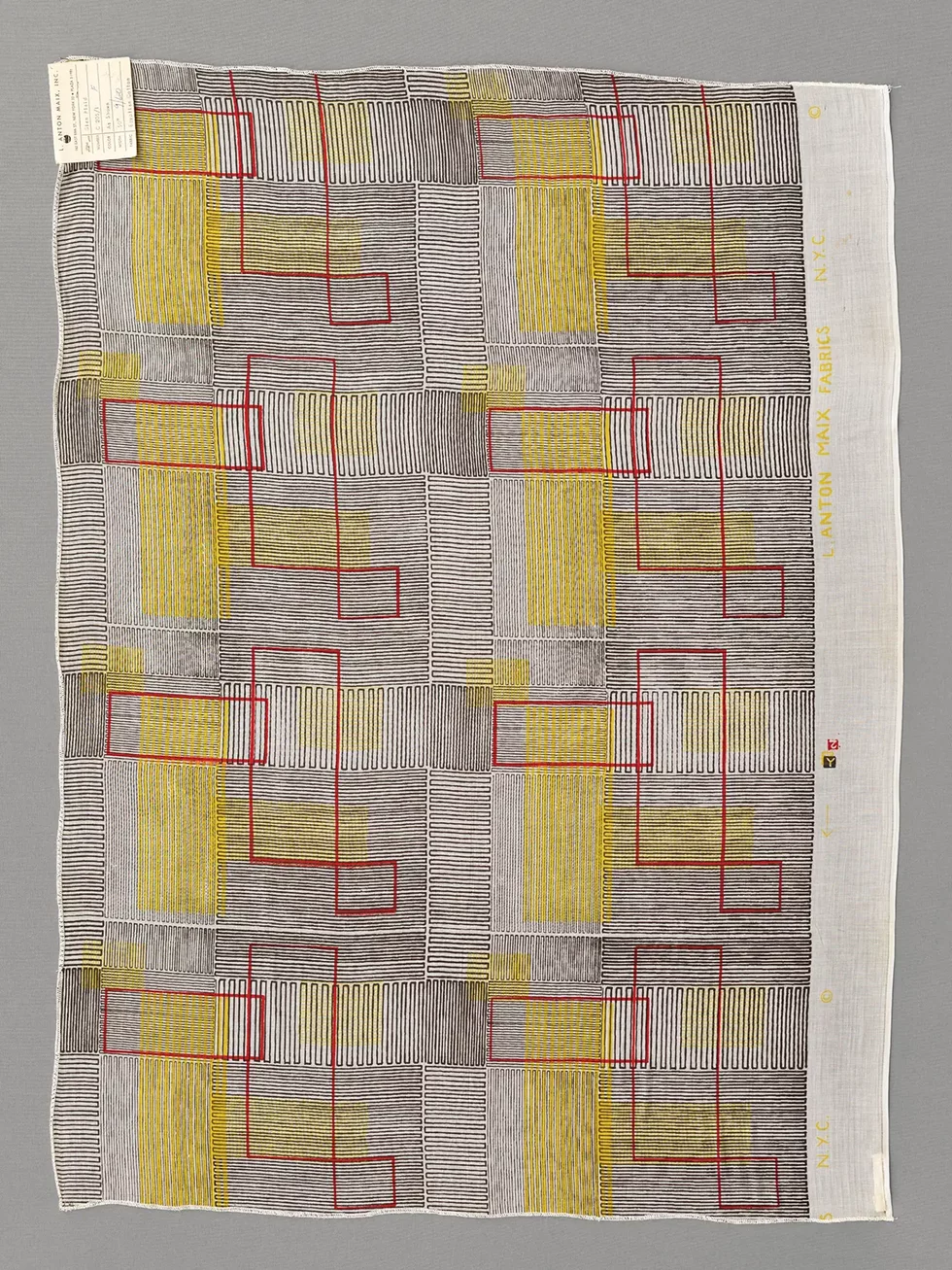
Screen-printed textiles often reflected the contemporary art movements that emerged at the time of their production. For example, Cortinovis says, bright, psychedelic colors dominated during the 1960s, alongside the surge of pop art—a stark departure from the precise designs of the 1940s. Often used in fashion, upholstery, and home interiors, the fluidity of textiles amplified their popularity.
“These textiles show ingenuity, creativity, and experimentation. It’s exciting because the designers and manufacturers are engaged in rich conversations with contemporary art practices at the time,” Cortinovis says. “I also love that there are so many women working and excelling as leaders in the field.”
Highlighting works created by women, artists of color, artists specializing in other media, and both small- and large-scale prints, Bolts of Color seeks to enlighten museumgoers about the artistry of this commonplace material, exposing them—one screen at a time—to the stories of an underappreciated art form.
How It’s Made
A quick primer on screen-printing techniques
Stenciling
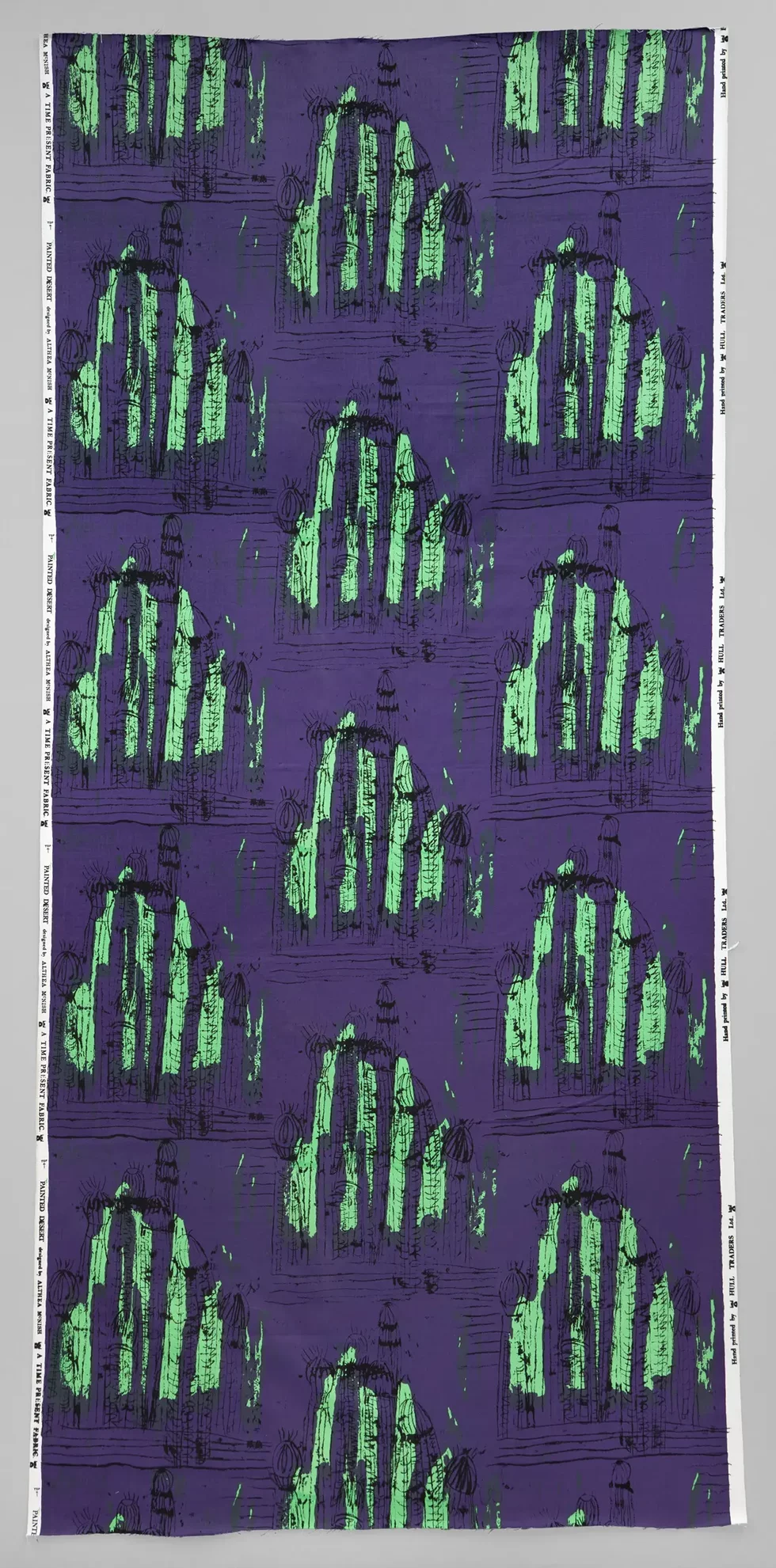
Stencils could be customized depending upon the desired results of the final pattern. The design could be directly applied to the screen with a liquid filler substance such as shellac or glue, a method that designer Althea McNish was known for experimenting with. Stencils could also be cut from lacquer film and adhered to the screen using heat or chemicals.
Photo emulsion
The photo emulsion screen-printing process usually delivers more detailed images than other stenciling techniques. A layer of light-sensitive emulsion is first “squeegeed” onto the mesh screen and left to dry. Then, a photo is exposed onto the screen, using negative and positive space to prevent light from passing through. Areas left to light exposure then harden, leaving behind the desired design to be printed.
Printing with multiple colors
To avoid smearing or unwanted mixing of colors, multiple screens are used for each color in the design. Multiple screens also allow for unique layering effects and to achieve secondary colors.