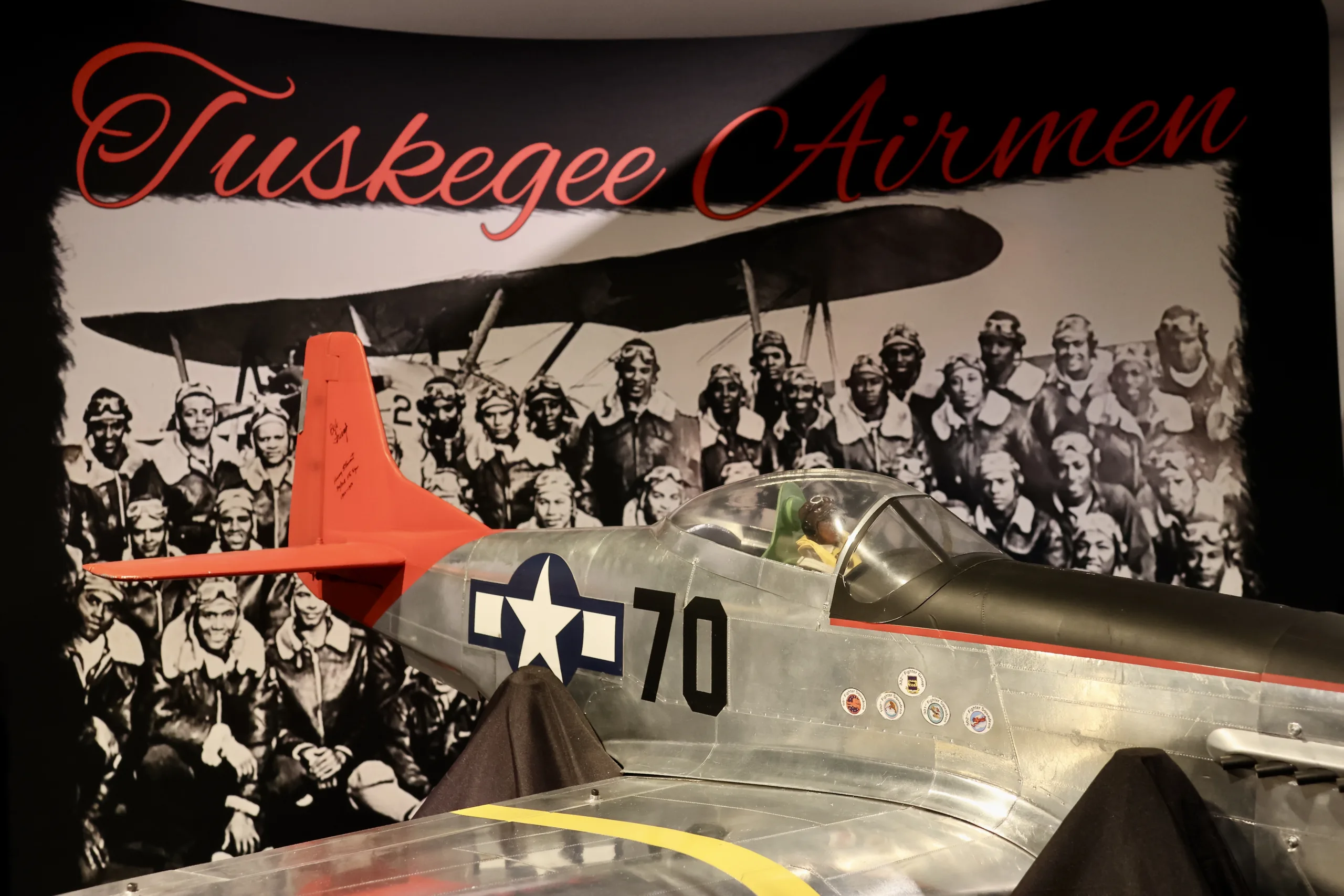
Visitors to Soldiers Memorial Military Museum have the chance to immerse themselves in American civil rights and military history this summer and fall as Tuskegee Airmen: America’s Freedom Flyers takes over as the museum’s temporary exhibit.
The exhibit pays homage to the Tuskegee Airmen, the predominantly African-American servicemen and women who broke the color barrier in the U.S. Army Flying Corps during World War II. It honors the rich history of the Airmen, many of whom continued lives of service beyond the war, often in the face of racism and discrimination.
Stay up-to-date with the local arts scene
Subscribe to the weekly St. Louis Arts+Culture newsletter to discover must-attend art exhibits, performances, festivals, and more.
America’s Freedom Flyers is a traveling exhibit of NOLAWorld Music & Artwerks, and is presented in collaboration with the local Hugh J. White Chapter of Tuskegee Airmen, Inc.
A quick elevator ride from the museum’s entrance down to the lower level transports visitors back to the 1940s. Through an inviting display of informative plaques and historical artifacts, America’s Freedom Flyers educates guests on the heroic contributions of Tuskegee Airmen.
READ MORE: Missouri Historical Society president and CEO Jody Sowell on the future of capturing St. Louis’ past
One common misconception that the exhibit hopes to dispel is that the distinction of “Tuskegee Airman” is only given to Army pilots. Visitors will learn this is far from the case, as thousands of ground crew, navigators, bombardiers, and additional personnel provided integral support to the Tuskegee program and its 992 combat pilots.
The exhibit’s curator, Robin Williams, says special attention in crafting the exhibit was given to ensure that all airmen were celebrated, especially those who may not have been previously acknowledged. Though the exhibit honors famed fighter Airmen like Charles Hall and Wendell Pruitt, it places equal emphasis on the importance of contributions from lesser-known figures such as Margaret Barbour and Hugh White.
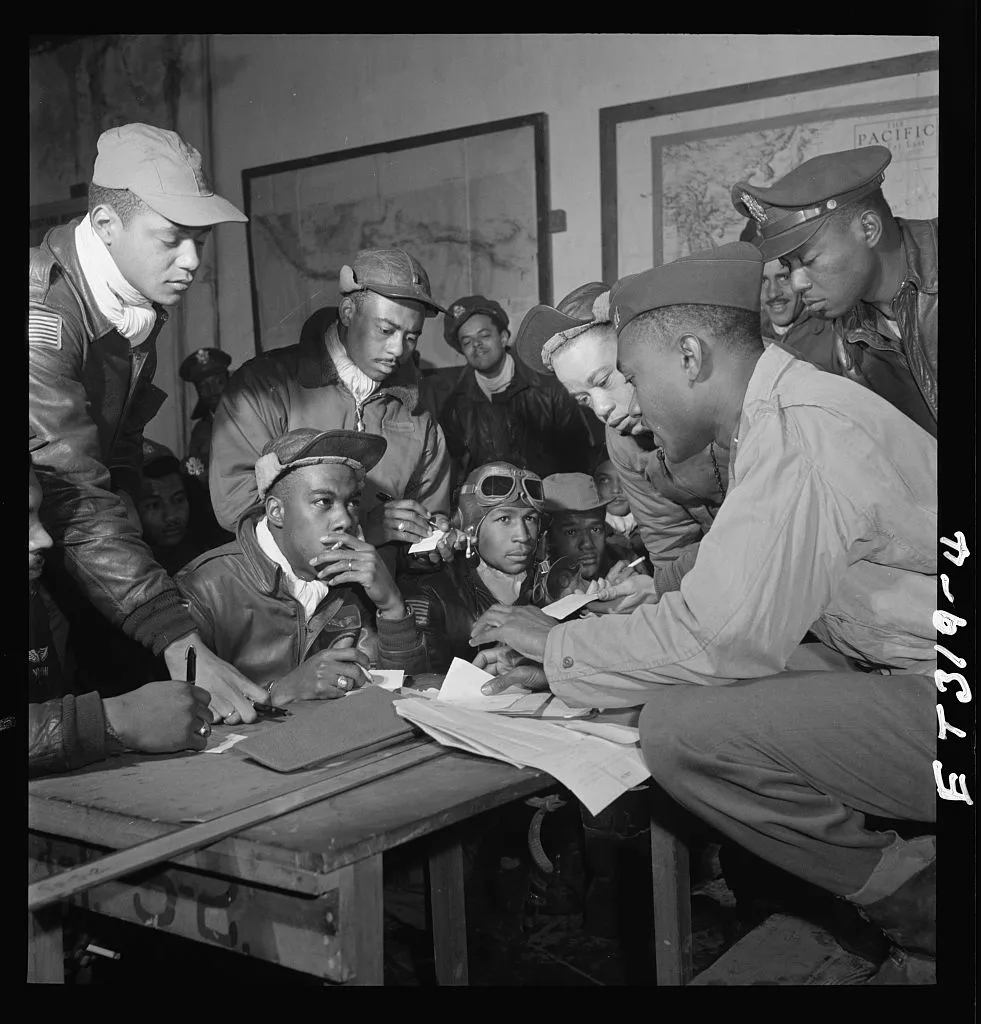
“Learning their stories and their connections, I think that really makes it more personal and more engaging for the viewer,” Williams says.
Williams’ sentiment was echoed by Zellie Rainey Orr, a historian who aided in research for the exhibit. Orr says one of the team’s primary goals was to provide an inspirational account of the Airmen for young museum visitors.
“It’s about making sure that kids understand that when you’re told you can’t do something, you believe in yourself,” Orr says. “Because Airmen proved through persistence and of course preparation through an education, things like that, that they could achieve.”
While much of the display will remain identical for future exhibitions, one area changes with each iteration. A “Hometown Heroes” section tailored to acknowledge Tuskegee Airmen with local ties tells the stories of St. Louis’ own Tuskegee Airmen. The local chapter of Tuskegee Airmen, Inc., spearheaded by Henderson Smith III, led the research for the St. Louis exhibit.
Smith says his research started with 50 names identified on a plaque in North St. Louis and quickly expanded to nearly double that initial tally before research concluded in advance of the exhibit’s opening.
“I thought, Let’s go and verify these and start getting books and start researching,” Smith says. “And well, it went 51, 52, 53, 54, 55— woo! And so, we ended up with 91 of them.”
Numerous miniature, remote-controlled replica airplanes are on display, including the iconic “red tail” P-51 Mustang famously flown by Tuskegee pilots on combat missions and the new-generation T-7A Red Hawk training aircraft. The planes are capable of flight and are on loan from artist Bill Hence, who helped organize the exhibit.
In celebration of both the exhibit’s opening and Juneteenth, the stretch of Chestnut Street in front of Soldiers Memorial was renamed Tuskegee Airman Way on June 19. The nod began American Freedom Flyers’ run at Soldiers Memorial, where it will remain open during regular museum hours through November 2. The exhibit is free to all visitors.