To our modern ears, it might sound harmlessly old-timey, but in its heyday, ragtime music—with its “ragged” rhythms and bouncy syncopation—was semi-scandalous (and therefore, wildly popular). Its most celebrated composer and performer was Scott Joplin, born to formerly enslaved parents in Texas but most closely associated with his time in Sedalia and later St. Louis. In these cities, he wrote “The Maple Leaf Rag,” “The Entertainer,” and many other rags, along with scores for the full-scale operas that he hoped to produce. In Sedalia, the annual Scott Joplin Ragtime Festival plans a 2022 return (and the Sedalia Katy Depot houses exhibits on the music and its history), while Midtown St. Louis is home to the Scott Joplin House State Historic Site, the flat where Joplin lived with his wife, Belle, as he worked to establish himself in the musical world.
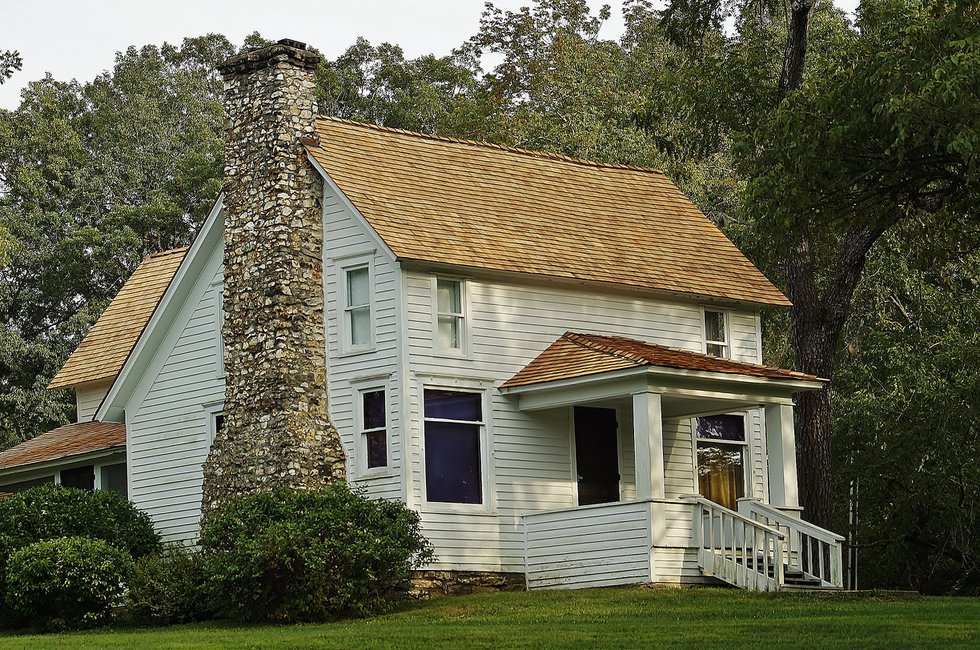
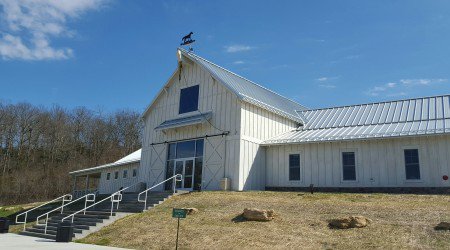
She was already married and a young mother herself by the time she arrived in Mansfield, but it was on the farm at Rocky Ridge, outside of town, where Laura Ingalls Wilder wrote down the tales of her girlhood and upbringing in the big woods of Wisconsin, the prairie of Kansas, and parts of Minnesota, Iowa, and the Dakota Territory. Wilder got her start as a popular home and family columnist for farm papers. After the Great Depression, she devoted more time and rigor to developing her own autobiographical work. In 1932, the first of what would become a juggernaut series, Little House in the Big Woods, was published. Eight of the Little House books eventually appeared and gained incredible staying power and new audiences through the TV show that was loosely based on their stories. Wilder and her husband, Almanzo, lived on the farm at Mansfield for the rest of their lives. Today, the Laura Ingalls Wilder Historic Home & Museum welcomes visitors from around the world to view original manuscripts and family heirlooms, including Pa’s fiddle.
Find inspiration and tips for your next trip
Subscribe to the St. Louis Travel newsletter, covering big cities, small towns, and everywhere in between!
Another childhood full of famous magic was that of a young Walt Disney, who spent his formative years hanging out around the train tracks in Marceline, strolling down the town’s main street (which later became the inspiration for Main Street, U.S.A. at Disney theme parks), and sitting under “the Dreaming Tree,” a large cottonwood on the family farm that gave the young man a chance to observe critters up close and the cycles of nature. The Walt Disney Hometown Museum provides a deeply personal look at the life and times of the kid who became the man who brought out the kid in all of us. Exhibits include family memorabilia and personal correspondence, along with prototypes and sketches of what would become Disneyland.
We may not all have been to Disneyland, but we’ve almost all been to kindergarten. For the very idea of such a then-radical concept, we have St. Louis native Susan Blow to thank. As the daughter of a U.S. ambassador, Blow was well-traveled at a young age; she was deeply impressed by the schools for young children she saw in Germany. Simple objects such as blocks and balls let them explore concepts in math, science, and language, and Blow became convinced of the soundness of this method for educating children. Once home in St. Louis, she convinced the head of the public schools to let her open an experimental public kindergarten at the Des Peres School in 1873. Before long, the model had taken off nationwide. Today the Carondelet Historical Society operates in the historic school building, and a replica of the first kindergarten classroom she established occupies the main floor, along with exhibits showcasing the manipulatives given to students.
George Washington Carver was born to enslaved Missouri plantation workers, but his parents died when he was an infant. Although he was raised and educated at home by his owners, his original name (“Carver’s George”) was a constant reminder of his status. Nevertheless, Carver excelled when given the chance at formal education, and his aptitude for science and math, and especially botany, earned him the nickname “the plant doctor.” Although today he’s remembered largely as “the peanut man,” Carver had wide-ranging expertise in agricultural and social topics and a vision for empowering African Americans that he worked all of his life to cultivate. He spent his childhood near Diamond, where today the George Washington Carver National Monument (the first national monument dedicated to an African American) carries his story forward.