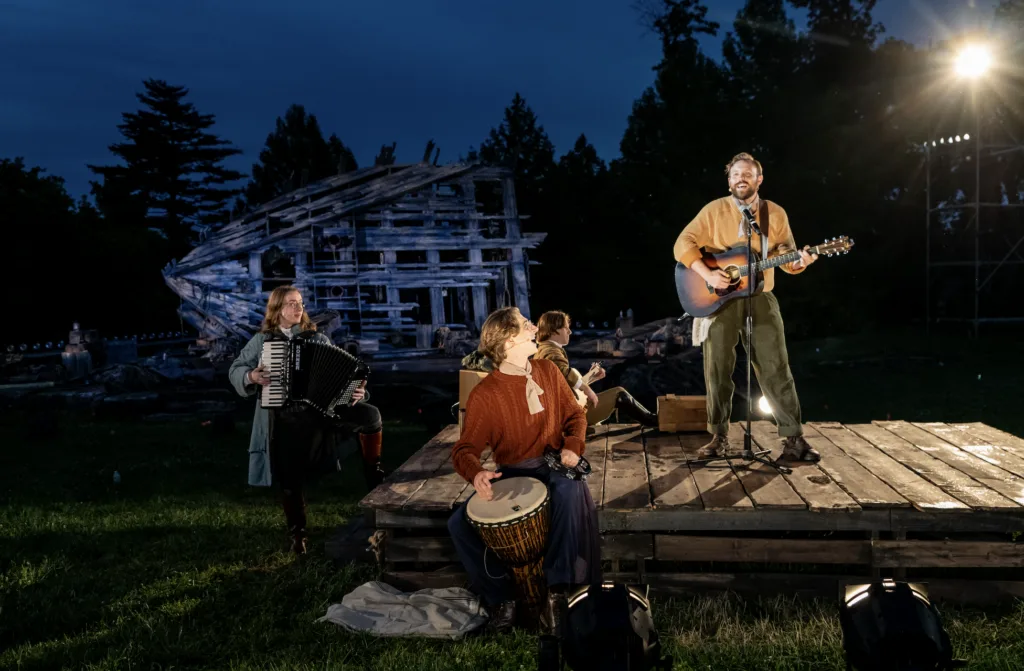
As evening falls on Forest Park, the music of guitars, accordion, and hand drum fills the tree-lined bowl of Shakespeare Glen. A fitting drizzle falls on the final dress rehearsal for St. Louis Shakespeare Festival’s The Tempest, but actors laugh and sing as a raucous celebration kicks off a tale of love, betrayal, magic, and forgiveness.
The Tempest, on stage in the glen from May 27–June 21, may be a less familiar tale to many viewers than some of The Bard’s other works. There’s no easy-to-digest teen rom-com version to fall back on, and these characters’ stories are messier than most.
Stay up-to-date with the local arts scene
Subscribe to the weekly St. Louis Arts+Culture newsletter to discover must-attend art exhibits, performances, festivals, and more.
“This is more White Lotus than Henry V,” says Rick Dildine, director of The Tempest and former artistic director of the St. Louis Shakespeare Festival. Dildine is returning to the glen to direct after leaving St. Louis to lead the Alabama Shakespeare Festival. These days, he’s connecting the next generation of audiences to live theater as artistic director of the Children’s Theatre Company.
“The Tempest is largely regarded as Shakespeare’s last play that he wrote solely by himself and his only fully original storyline,” Dildine says. “And what we see in it is him trying a lot of different things. This play is not neat. It doesn’t wrap up with a pretty little bow. And I think this is such a mirror to what life is.”
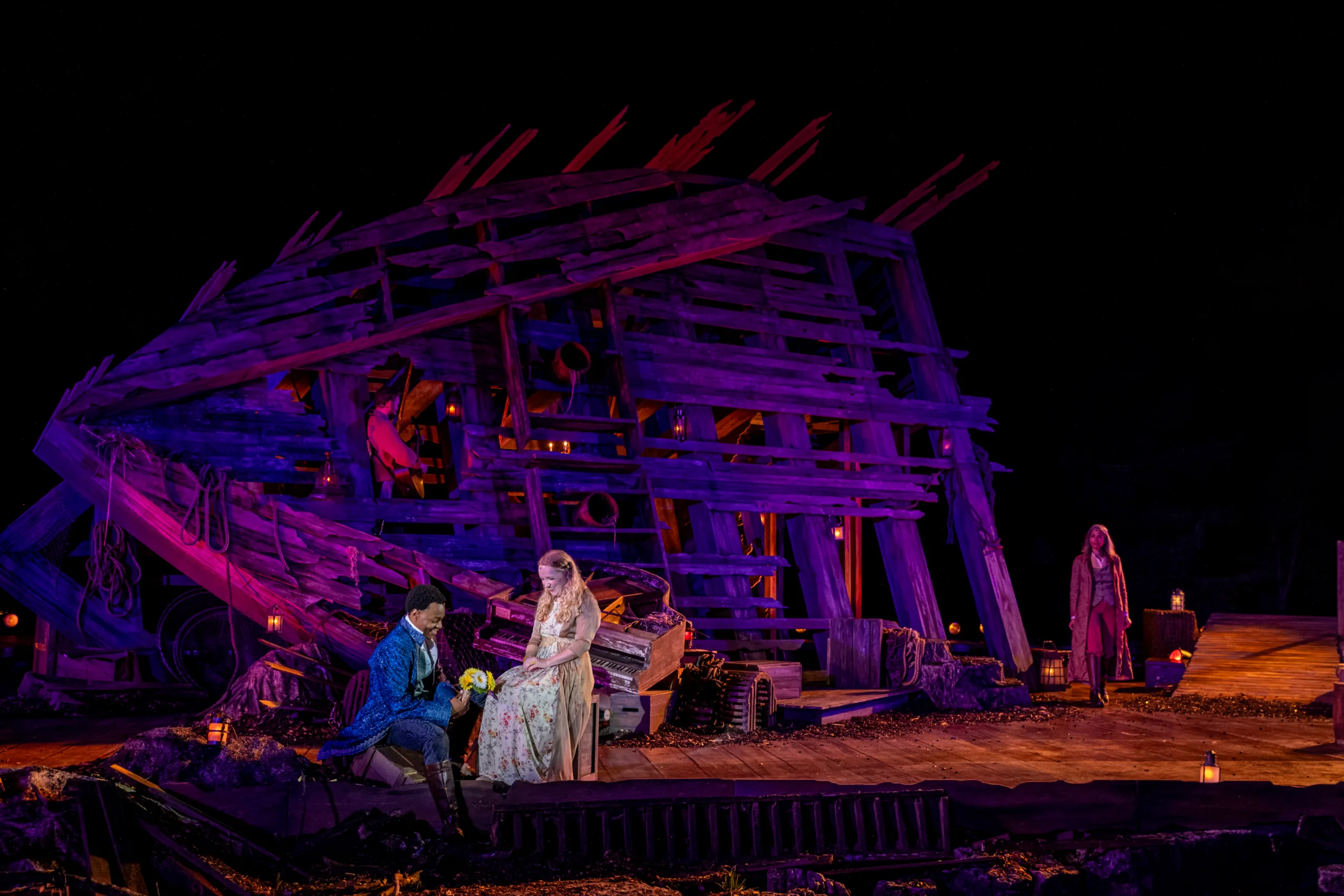
The Tempest is not a tidy story, but it is set to be an impressive one. Dildine was joined by previous collaborators Christopher and Justin Swader to help bring the play’s stormy seas, pitching ship, and fantastical island to life. Visitors to Shakespeare Glen will encounter an impressive shipwreck-turned-domicile, where bird’s nests perch and lanterns glow from within. A satellite stage amidst the crowd plays host to a wedding reception before becoming a ship dashed apart by the roiling sea.
“I feel spiritually connected to this site and artistically connected to the site. The moment I saw it in 2008, when I came to visit to interview for the job, I just instantly knew and felt how to make theater out here,” Dildine says. “So in working on this, the design team and I, we kept asking ourselves, How does this show work in relation to nature? So all of the sound effects are all natural sound effects. They’re all the different elements—earth, wind, fire.”
The Swaders, alongside lighting designer Jeff Behm and sound designer Melanie Chen Cole, have truly transformed the grassy slope into a mysterious and fantastical island. Flares of light bring waves to life, transport us, and make magic real. Seagulls caw, winds whisper, and the island comes to life as the audience is enveloped in its sounds.
The Tempest, of course, also comes to life through its talented cast. They are led by local theater stalwart Nancy Bell in the role of the sorceress Prospero, a magician, mother, and betrayed noble with plans to right past wrongs.
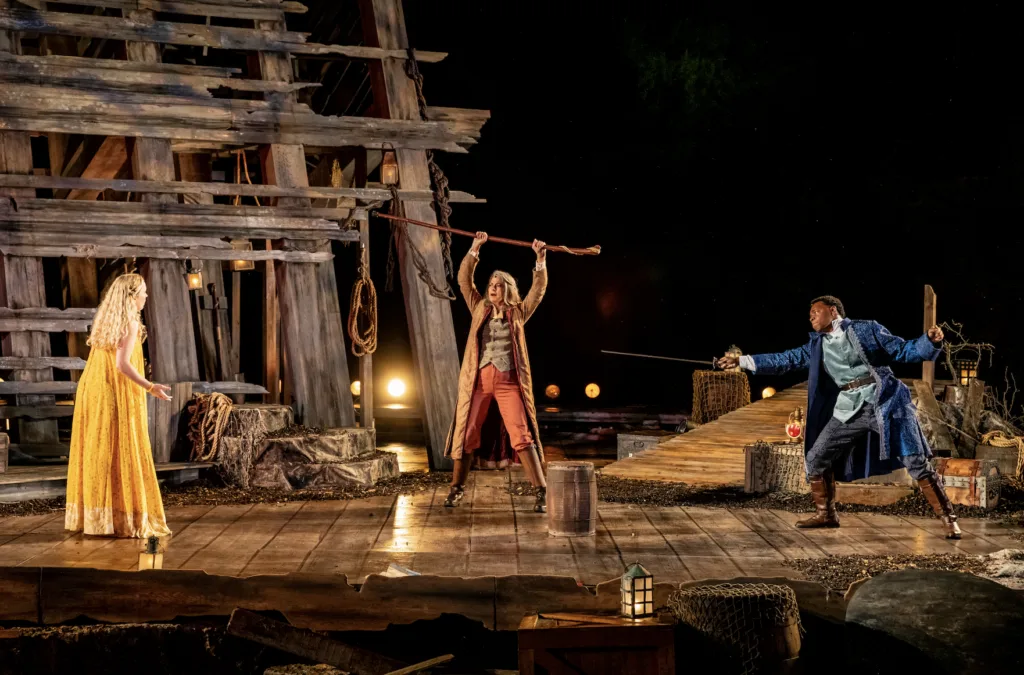
“This cast is phenomenal. We ran the full show on day 10 of rehearsal, that’s how good and polished they were coming in,” Dildine says. “Nancy is an exceptional actor, and, you know, I tell folks that 90 percent of directing is casting. Having her lead the company—she has set the tone for the whole process.”
That process will culminate this week as The Tempest welcomes audiences for opening night on May 27 in Shakespeare Glen. Those who are familiar with the piece will notice some new additions in the festival’s production, including live music and an opening scene penned by Dildine.
READ MORE: St. Louis Shakespeare Festival announces 2026 season
“I hope Shakespeare doesn’t kill me, but I wrote an opening as if Shakespeare had written an opening to the show. In The Tempest, the people that are on the shipwreck, they’re actually returning from a wedding. They’ve just been at the wedding of Claribel, the daughter of Alonso, who’s on the boat. I wrote what I had imagined as the wedding reception of Claribel,” Dildine says. “The pre-show, which is about 20 minutes, is the wedding reception, and somebody in the audience will get picked as Claribel, and she will get a crown put on her head. For the rest of the night, whenever we reference Claribel, we will have our Claribel out in the audience.”
The reception features several talented musicians, whose upbeat arrangements of folk and contemporary singer-songwriter selections will serenade audiences as they settle in for the evening’s tale. The story that will unfold before them is magnificent in its messiness—and the hope is that visitors to the glen will find a moment of connection within it.
“You know, a lot of Shakespeare’s plays end with the villain getting their due, or a wedding, and everyone’s happy. This one doesn’t end like that. It actually ends with a few characters who have no lines at the end, and we’re like, What happened there? And I think that’s what life is like,” Dildine says. “This is a play about forgiveness. A brother does something terrible to his sister. And we can all relate to having something horrible done to us. What I want people to take away from this play is that life is not neat and tidy. This is the play for that.”