The Odyssey, as they say in pop culture jargon, is having a moment. Christopher Nolan’s movie version of Homer’s epic poem about Greek hero Odysseus and his 20-year journey back to his family after fighting in the Trojan War wasn’t just this summer’s biggest blockbuster, but a cinematic event. And one of the source materials the director used while making the film was English author Emily Wilson’s 2017 translation of the colossal Greek story.
In 2024, Anna Ziegler premiered her play, The Janeiad, in Houston. The following year it ran in San Diego, where it starred actress and Saturday Night Live alumna Michaela Watkins. The premise centers on two women, one modern and the other from ancient Greece, who connect over the deaths of their husbands and the hope that they’ll someday return. Ziegler developed the play, inspired by a widow of the September 11 terrorist attacks, in 2022 at the Ojai Playwrights Conference. The title is a twist on Virgil’s Aeneid.
Stay up-to-date with the local arts scene
Subscribe to the weekly St. Louis Arts+Culture newsletter to discover must-attend art exhibits, performances, festivals, and more.
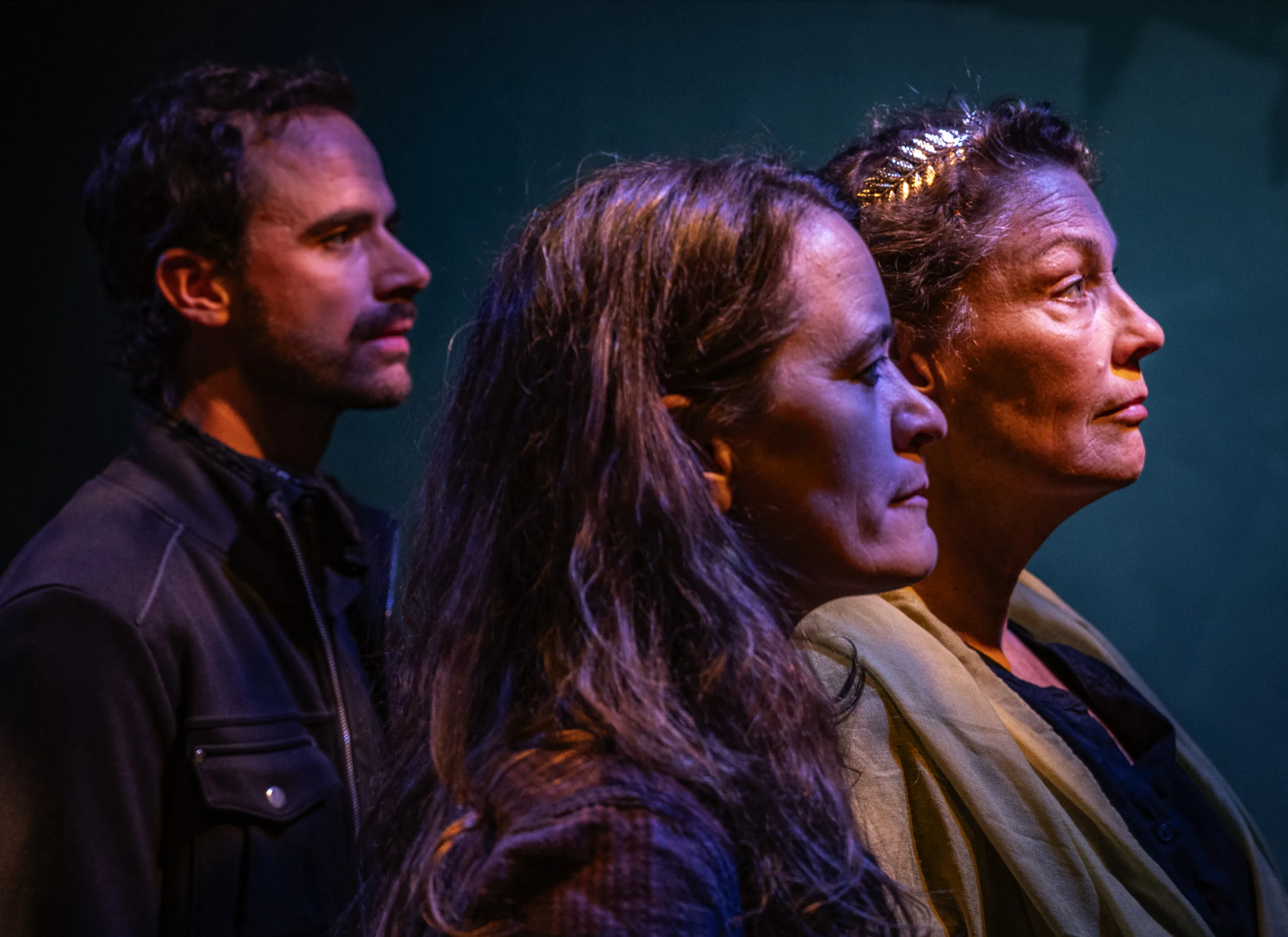
Kim McKean, the Illinois-based director of Upstream Theater’s upcoming production of The Janeiad, on stage at The Marcelle November 6-22, says the piece is about “how we are all protagonists in our own epic and how we’re all living our own epic.”
“I thought it was such a beautiful gift for us to tell this story at this time,” McKean says. “There’s this renewed cultural fascination we’re having with The Odyssey, its resurgence this summer and its convergence with the 25th anniversary of 9/11.”
This isn’t the only time Ziegler has tackled Greek mythology. She has written 14 plays, including 2015’s Photograph 51, about 1950s English chemist and X-ray chrystallographer Rosalind Franklin, which originally starred Nicole Kidman. Cats and Les Miserables’ Tom Hooper is directing the film, which will feature Natalie Portman. More recently, though, Ziegler debuted Antigone (The Play I Read in High School), her adaptation of Sophocles’s tragedy.
In The Janeiad, Jane (Lizi Watt) is a New York former schoolteacher, wife, and mother of twin boys. It’s September 11, and Jane is sitting in her Brooklyn brownstone reading The Odyssey when she gets a call from her husband, Gabe (Chris Tipp), who works at a firm in the World Trace Center. Jane speaks to him for the last time as she watches the buildings collapse. She retreats from reality for the next two decades, agonizing over the event and wondering if her husband will ever come back.
But no one knows more about waiting than Penelope (Jane Paradise), loyal wife of Odysseus, mother of Telemachus, and master weaver. She, too, has been sticking it out in Ithaca for 20 years, fending off her many suitors, all while her husband is off fighting giants, witches, sirens, nymphs, and cyclops shepherd. She appears in Jane’s subconscious, and the two trauma bond over their shared experience. She talks to the audience and leads Jane through the play. When Jane asks Penelope how long she has to wait for her husband to return, Penelope tells her 20 years.
“The play asks us how we find hope and the ability to change when we’re paralyzed by grief and we feel stuck,” McKean says. “It explores the stories we tell ourselves about who we are and how we move forward amidst loss. The crux of it is this relationship between Jane and Penelope and how they process their grief in different ways. Penelope is someone who understands. She deeply gets the experience that Jane is going through. There’s this deep recognition of herself in Penelope. They challenge and support each other throughout their journey.”
In the play, Penelope also morphs into other characters, including Jane’s mother, her sister, housekeeper, therapist, yoga teacher, and realtor, all of whom give Jane their own advice about moving on with her life. A fellow September 11 widow even helps her create an online dating profile.
“The housekeeper takes care of Jane,” McKean says. “The shrink helps her process. The yoga teacher helps her be present. Her sister reminds her that she’s loved. The rabbi encourages her to reach out. They all come into her life and remind her that she has support if she is ready for it.”
As McKean points out, the play isn’t about September 11, but about mourning, coping, sisterhood, and how long is too long when it comes to patience and suffering.
“Odysseus is a man who goes off on this journey, but what about the people left behind?” McKean says. “What does the journey look like from their perspective? The Odyssey questions how we process grief and trauma, especially through Penelope’s lens, in the same way that 9/11 also asks us how we’ve processed the grief and trauma of that day 25 years later. I hope the audience walks away with hope and wanting to live in the present and reclaim their own stories.”
The Janeiad runs November 6-22 at The Marcelle in Grand Center (3310 Samuel Shepard). Tickets are $40-$45 and available online.