For 125 years, the South Broadway Athletic Club has been a draw in Soulard, but what it’s drawn has changed quite a bit over time. A new history, South Broadway Athletic Club: St. Louis’s Home for Boxing, Wrestling and Cheap Beer Since 1899, details its rise, fall, and reinvention.
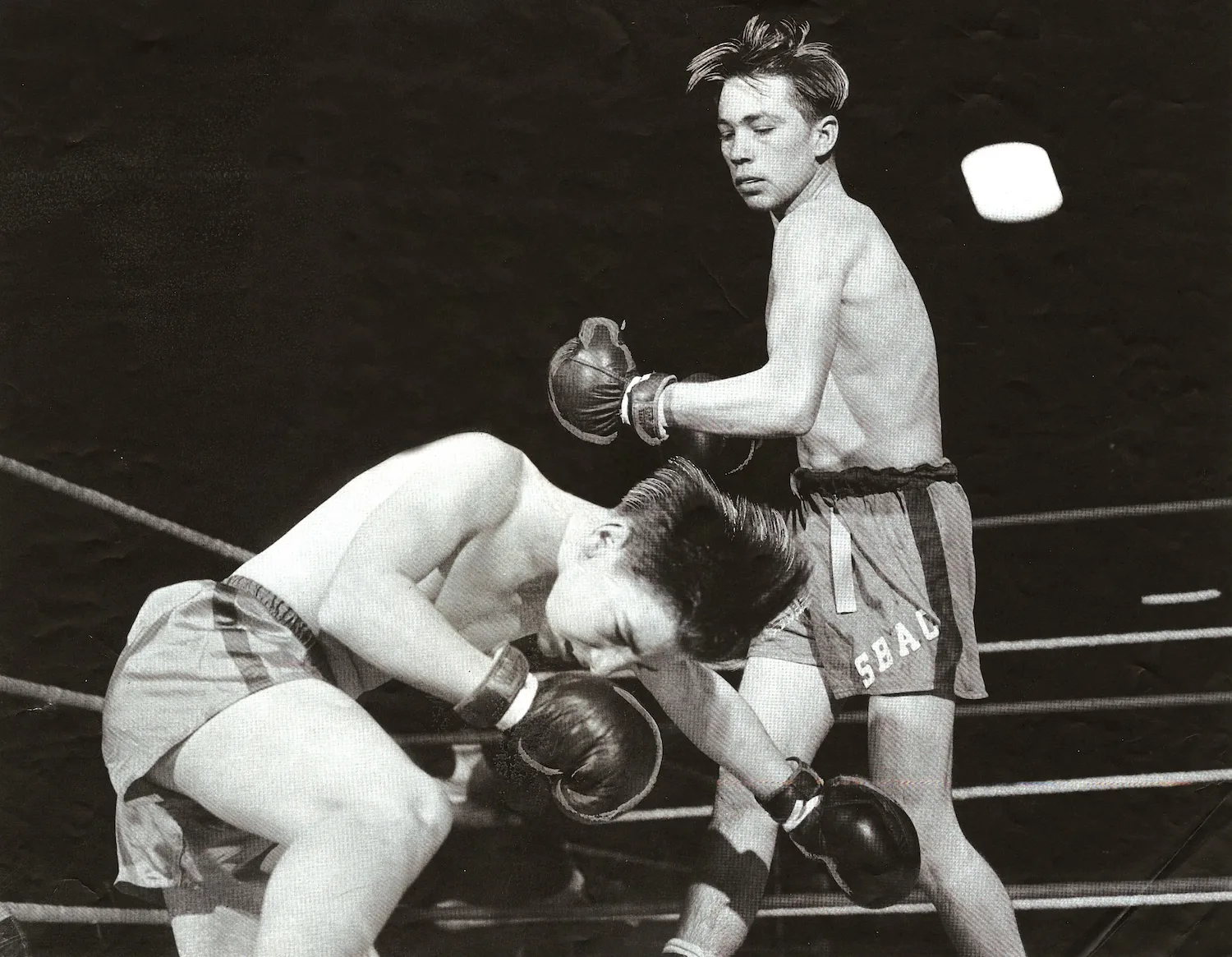
The club was started by five young men at the tail end of the 19th century, back when Soulard was a neighborhood of German immigrants and it was common for youngsters from one neighborhood to whale on youngsters from other neighborhoods in organized sport. The SBAC hit its peak around the middle of the 20th century with about 400 members. But its fortunes faded until current president Kevin Wilkins came aboard in the 1990s and—with a little help from alt-country pioneers The Bottle Rockets—reinvented the place as both a private hangout as well as an event space, hosting everything from wrestling to rock concerts, boxing to art shows, pig roasts to political debates.
Stay up-to-date with the local arts scene
Subscribe to the weekly St. Louis Arts+Culture newsletter to discover must-attend art exhibits, performances, festivals, and more.
Athletic club members Miriam Moynihan and Ryan Buckley co-authored the new book from Reedy Press detailing that history, with a release party tonight at 8 p.m. at, where else, the South Broadway Athletic Club (2301 South 7th). Moynihan is a longtime journalist who worked for papers in Annapolis, Maryland, and Houston, Texas, before moving to St. Louis. Buckley is a bricklayer who has worked on many historic buildings around town. They had help from Wilkins, Mitchell Goist, and Dan Guenther (yes, the former alderman, who is currently working for St. Louis Mayor Cara Spencer).
Moynihan chatted with SLM ahead of tonight’s event. The conversation has been edited.
Tell me about the very early days of the South Broadway Athletic Club, back when it started in 1899.
Moynihan: Back then, it was kind of the rage to start clubs, especially in the Soulard area. The five young men who started the South Broadway Athletic Club were interested in boxing, primarily. In the charter, they initially said that it was going to be a debate club, but quickly realized that they were more interested in athletics. The athletes were largely German, which is what Soulard mostly was at the time.They rented space at 611 Geyer and then, after about 10 years, realized they needed more space, and so they moved to 2301 South 7th. We’ve been in that space for more than 100 years.
What were those early fights like?
Moynihan: It was the other clubs that were the competition. The first match was against a guy from the News Boys’ Home [a shelter for orphaned or abandoned boys]. During that time, the various neighborhoods all had their own heroes, their own athletic stars. They called them smokers.
They called the fights smokers?
Moynihan: Apparently a lot of people were smoking.
The club kind of hit its peak in the middle of the 20th century, right?
Moynihan: In the 20s, 30s and 40s, boxing became very serious. Boxing became more popular during that time because they came up with standard rules, standard equipment. It was less dangerous, and it was a way to draw crowds. At the South Broadway Athletic Club, there were coaches who coached groups of young men, and they became a cohesive club of athletes. They were serious contenders in the city against the other clubs. The Globe-Democrat started the local Golden Gloves competition. South Broadway entered that competition every year.
The club experienced a decline in the latter half of the 20th century, but it’s really rebounded recently and redefined itself. Can you tell us how it managed to do that?
Moynihan: Yeah, the membership was way down, less than 100. It was considered a private club for members to just enjoy the space and hang out. [In 1996], The Bottle Rockets were driving around town taking pictures for their latest record. And they took photos in front of our club, and they liked those pictures, and they named their album South Broadway Athletic Club. [Club president] Kevin Wilkins thought, well, maybe they’ll come play a show. So they came and played a show and donated the proceeds to the club. It was a real shot in the arm to help bring the club back to its feet.
In all the 125 years of history, what’s one story that you uncovered that really sticks with you?
Moynihan: The club sent two athletes to the 1904 Olympics. They were freestyle wrestlers, and they both won bronze medals. One of their grandnephews is a member of the club. It’s a real point of pride. I talked to the other one’s grandson, too.
Do they know where the bronze medals are? Are they still in the family?
Moynihan: One of them is in the book. I took pictures of it. The other one is lost to time.