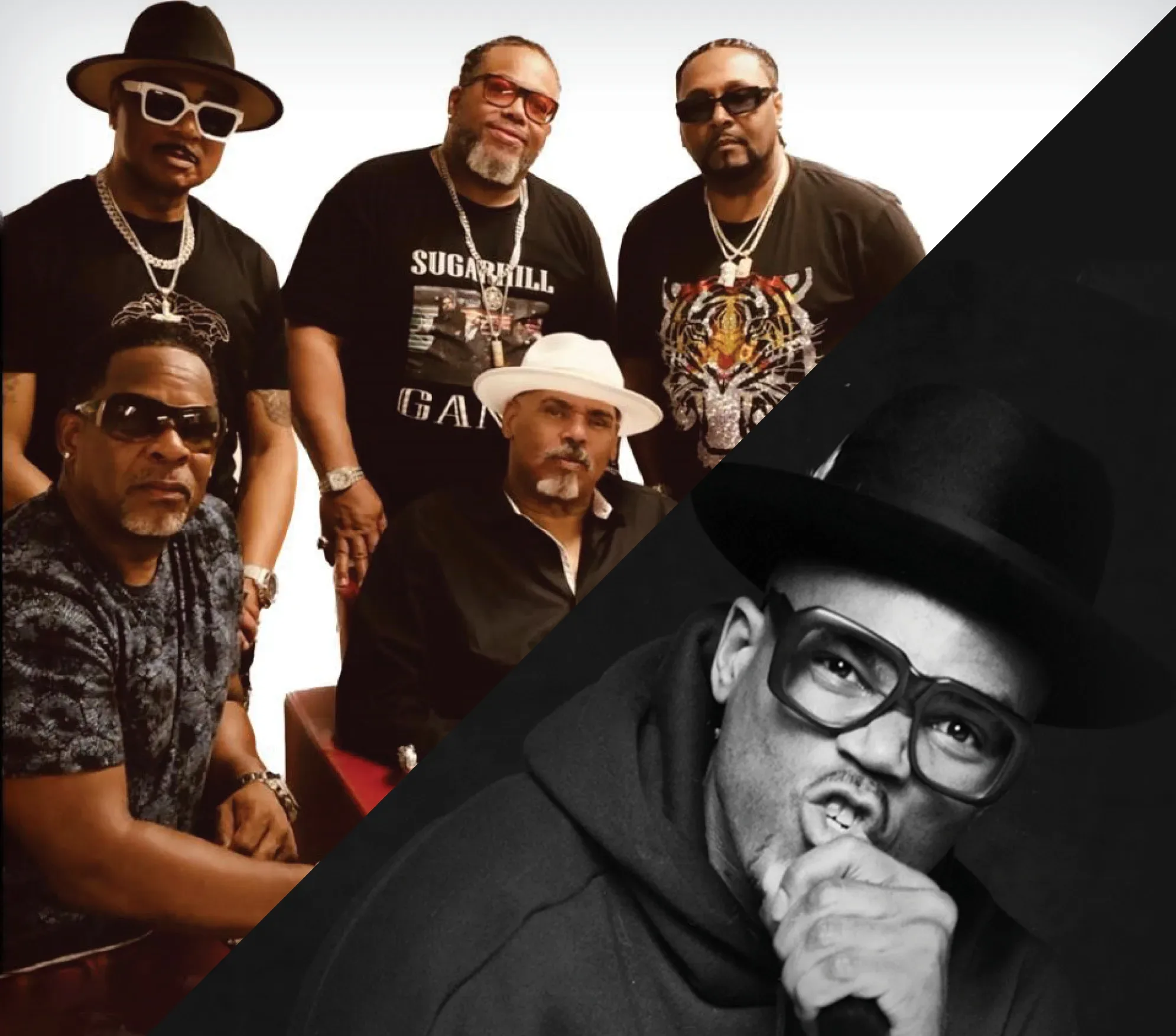
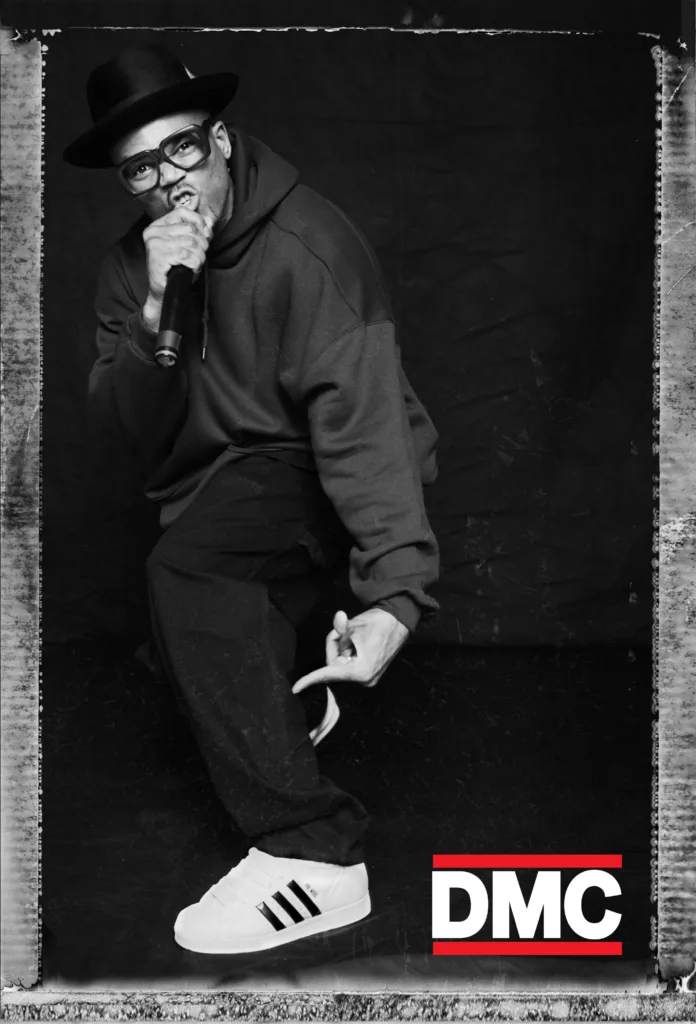
On May 8, Darryl “DMC” McDaniels of Run-D.M.C. is headed to St. Louis for A Celebration of Hip Hop alongside the Sugarhill Gang. The artists will be joined by the St. Louis Symphony Orchestra, conducted by Edwin Outwater, and Living Colour’s Doug Wimbish, DJ T. Dynasty, and DJ Charlie Chan Soprano. Ahead of the big night at Stifel Theatre, DMC spoke with SLM’s Anne McCarthy to talk about the performance, legacy, and what’s next for the legendary artist.
On Thursday, you’re performing with the St. Louis Symphony Orchestra—can you share a bit about what audiences can expect and what excites you most about this collaboration?
Get a guide to the region’s booming music scene
Subscribe to the St. Louis Music newsletter to discover upcoming concerts, local artists to watch, and more across an eclectic playlist of genres.
In the words of the legendary pioneers of hip-hop Grandmaster Caz and the Cold Crush Brothers: hip-hop didn’t invent anything; it reinvented everything. When it started, hip-hop utilized every form of music: jazz, disco, blues. When Run-D.M.C. did “Walk This Way” [with Aerosmith], it totally changed the music industry. We wrapped it all up, all the different genres of music. And hip-hop has always used classical and symphonic sounds. The beautiful thing about this upcoming performance is we get to do our music in real-time live with the symphony. So, the audience can expect hip-hop, rock, and symphony all combined to create a unique and magical experience. Above all, it’s gonna be fun. That’s the beauty of it.
St. Louis has such a storied musical legacy, from Josephine Baker to Chuck Berry to Nelly. What does performing in a city with that kind of history mean to you?
For me, it’s full circle. When I was a little kid, I wanted to be a rock star. I wanted to be Freddie Mercury, but I couldn’t sing. I didn’t have a band, a drummer, or a guitar player. I didn’t have a wonderful band like Queen. But a thing like hip-hop comes from The Bronx over the bridge to Queens, and it allowed this little Black kid from Hollis Queens to fulfill his rock and roll dream. I called myself the King of Rock because that’s what I wanted to be. It’s allowing me to fulfill my dream. As we all know, the blues is the root, and everything else is the fruit. For me, it allows me to live from a musical legacy.
You’ve consistently turned personal challenges into meaningful action—co-founding The Felix Organization for kids in foster care and serving on the board of Children’s Rights. What drives your commitment to this kind of work?
I’m driven because of people like Neil Young, Bono, Melissa Etheridge, and Sheryl Crow. We look at them as the “famous celebrity rock star,” but besides just being on the radio and on tour, we constantly hear about what they’re doing in communities around the world. We were given these skills, abilities, and gifts to do more than just talk about how great we are.
Before music, all I cared about was comic books. There was something about these superheroes that I was attracted to. I realized what it was: a lot of these superheroes had been through trauma—from Batman to Peter Parker—they’re geeky, nerdy, and super talented individuals. I remember what [Uncle Ben] said in the Spider-Man comic book: “Peter, with great power comes great responsibility.” For me, my superpower is hip-hop and rock and roll. The Felix Organization tries to create better situations for those kids in foster care; they’re the next journalists and symphony members. Comic books instilled in me: we all have purpose. And hip-hop allowed me to unleash that power.
You’ve spoken openly about your mental-health journey and even authored a suicide-prevention book called Ten Ways Not to Commit Suicide. Where do you draw the strength to be so open and vulnerable?
The number one true but funny thing is: hip-hop is about keeping it real. How do you get rid of stigma? You got to remove the guilt and the shame. In a lot of great films, poems, and books, you see all these people struggling. We look at mental health––and people who are alcoholic, anorexic, depressed––and a lot of people are ashamed to speak up about themselves. I want to remove the guilt, shame, and pain of the situation.
In the same way I’m not ashamed to say, “my tooth hurts,” I shouldn’t be ashamed to say, “something is wrong, and I need help.” I have a bigger impact when I talk about my struggles. The mighty King of Rock isn’t ashamed of being alcoholic and depressed. I try to encourage the person to go get help for themselves. It’s okay to not be okay. The young people need to know that, too.
Run-D.M.C. reshaped the music world—breaking barriers with things like being the first hip-hop group to appear on the cover of Rolling Stone and bringing hip-hop into the mainstream. Do you ever pause to reflect on the scale of that impact?
Yesterday I was in a meeting, and I totally forgot I did Live Aid [laughs]. One of the producers of the Live Aid show had to remind me that I did Live Aid. I did it just like Freddie Mercury. We never really had a destination for fortune and fame. We just wanted to be heard. We grew up watching Soul Train and seeing Queen on American Bandstand. Those were the people that inspired and motivated us. It wasn’t ever a destination; we just wanted to be heard in our own neighborhood, and then we were able to be heard around the world.
Out of all the Run-D.M.C. tracks, which is your personal favorite?
“It’s Tricky.” From the movies Road Trip to White Chicks to Sonic the Hedgehog, the song is everywhere. I have a children’s book, Darryl’s Dream, that deals with bullying, self-belief, and not following the crowd. When I go to schools to talk about the book, and they don’t know who Run-D.M.C. is, they still know the song “It’s Tricky.” All the kids join in and sing every word with me. Across all generations, people love that song.
Who were the artists that first lit the fire for you musically?
I loved Bob Dylan, Black Sabbath, the Doobie Brothers, Marvin Gaye, and Freddie Mercury. When I heard the rock sounds, from Janis Joplin to Freddie, it was so unique to me. I’m going to have an album coming out later this year and it’s called America, and the reason is: male, female, Black, white, metal, punk…it’s all on this album showing you what America really is. The title song, “America,” comes out this month, on May 30, and it’s a remix of Ram Jam’s “Black Betty.” On the song, it’s me, Sebastian Bach from Skid Row, and Travis Barker on the drums.
What’s the best piece of advice you’d offer to someone hoping to build a life in the arts today?
Look at what everybody’s doing and do something completely different! Find your own sound. Our first producers Larry Smith and Rick Rubin said to us, “everybody can rap. Can you do something that’s going to captivate everybody in the room.” Every time we did what everybody was doing––but different––it got us on MTV, Rolling Stone. It took us to those places we didn’t think we’d be able to go. We were challenged to do something more.