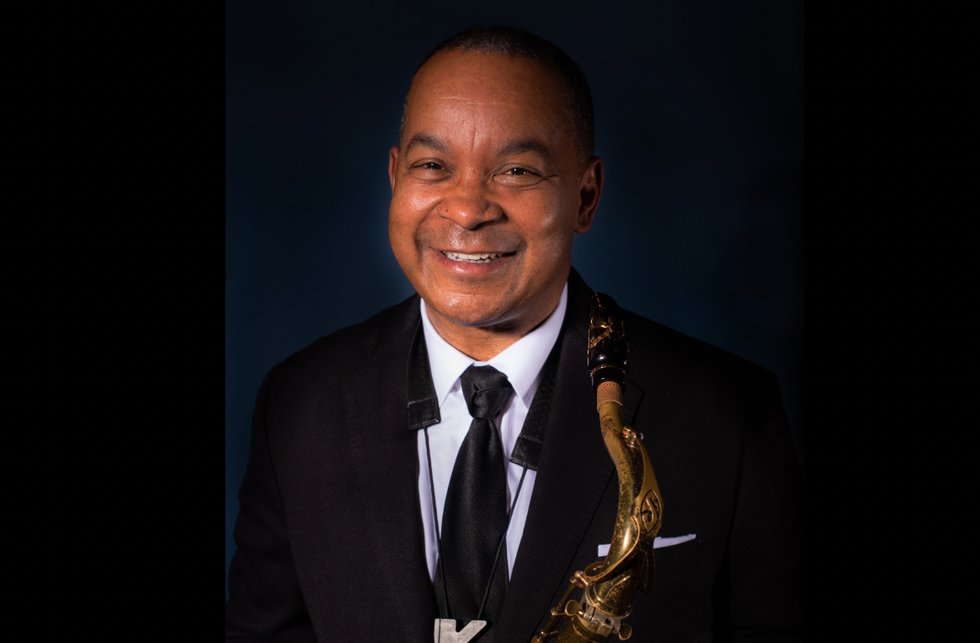
Victor Goines officially started his role as the new president and CEO of Jazz St. Louis on September 19, replacing Gene Dobbs Bradford, who retired earlier this year. The esteemed New Orleans musician and educator is a member of the Jazz at Lincoln Center Orchestra where he’s performed with the Wynton Marsalis Septet since 1993 (Marsalis recommended the position to Goines). Goines, 61, previously served as the director of jazz studies at Northwestern University. He also served as an artistic director of jazz studies at The Juilliard School.
As a distinguished jazz saxophonist and clarinetist whose career spans more than 200 original compositions, Goines has performed with artists like Stevie Wonder, Diana Ross, Dizzy Gillespie and more. But, for him, living in the present is key. He doesn’t rest on his laurels. To be a musician is to understand the art of improvisation, according to him.
Get a guide to the region’s booming music scene
Subscribe to the St. Louis Music newsletter to discover upcoming concerts, local artists to watch, and more across an eclectic playlist of genres.
“As a musician, I try to encourage people to prepare for everything,” he says. “That way, you don’t have to be excluded from anything, not in terms of a lightweight version of that, but in-depth history and studying it all, so that when you have a chance to participate, you can do it at the best level that you can because you try to take deep into what the topic is and it is not just a matter of surface studying.”
Goines plans to adapt that same mentality in his new role. On his first day of running Jazz St. Louis, he talked to us about his plans for the position, his relationship with Wynton Marsalis and how he envisions the future of Jazz St. Louis.
What has today been like, what have you learned, what have you been doing?
It’s been excellent. It’s actually been a pretty natural movement into the role. I was fortunate to be able to shadow the meetings of our interim president, Celia Hosler, and she was gracious enough to give me some background on things and show me things that she’s done in her time. She’s been tremendous in keeping the organization moving forward from the time when Gene Dobbs Bradford moved on to the time of my arrival, so while there’s a lot to learn, at the same time, it’s been pretty easy to walk into the room. I had an opportunity to meet everyone weeks before, so we’re just becoming more and more familiar with each other.
What brought you to St. Louis, and what made you want to lead Jazz St. Louis?
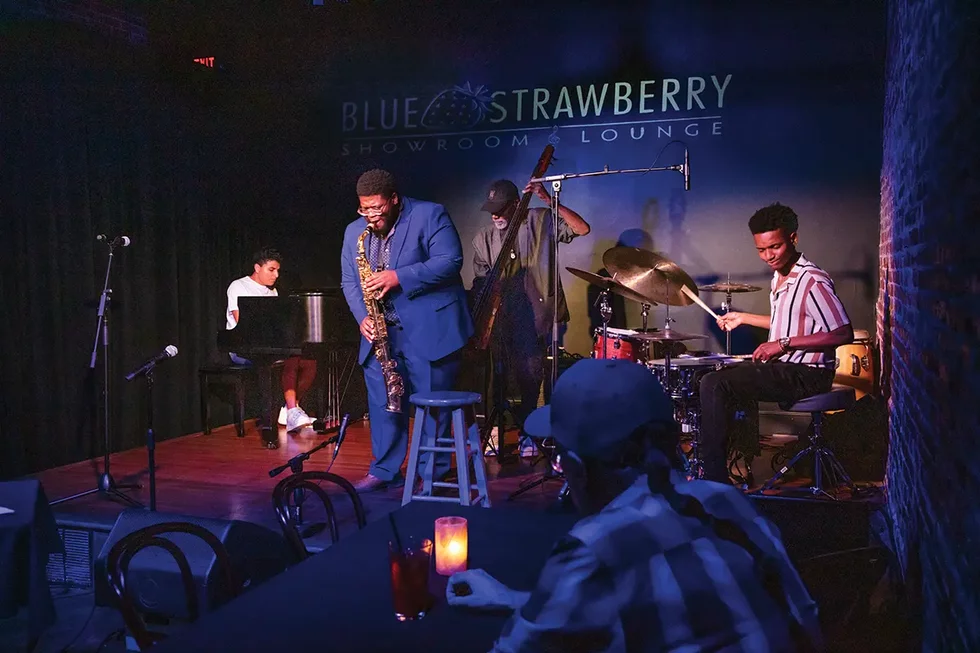
I think it’s a fabulous opportunity to be president and CEO of an organization like this. It has a reputation for excellence in the industry. So many of my friends have performed in the club, and I have performed in the club as well. I’ve seen it when it was in the Hotel Majestic, known as Just Jazz—that’s what it was called at the time. I’ve been at the club before its renovations in 2015, and being here now, I’ve had a chance to see the flower just continue to blossom.
My experiences as a musician and as an educator I think align with their mission statement and the things that they advertised for the position, so I felt like all of those things put together were right in line with what I’ve done.
Is this your first time leading an organization like this?
It is. Prior to this, I’ve been in directorships at Northwestern University and Juilliard in New York, but I think this position allows me to utilize all of the things that I’ve been able to accumulate in my career as a performer and educator and someone who has kind of been understudying at places like Jazz at Lincoln Center, which is another performing arts institution. Being in that band for 29 years has really trained me for what I’ll be doing at Jazz St. Louis, which is to lead the organization to the next level of what they can accomplish.
What are some things you’re hoping to accomplish at Jazz St. Louis?
Well, first of all, become familiar with the people that I pledged to work with. Secondly, become familiar with the community here, and then help the entities outside of St. Louis to become familiar with Jazz St. Louis and our community. There’s always been tremendous talent to come out of St. Louis, whether it’s been jazz or otherwise. I mean, your legacy is rich. We associate Miles Davis, who’s actually from Alton, Illinois, with St. Louis, and Clark Terry, a great trumpeter, is from here. Tina Turner is from here. Nelly is from here. Michael MacDonald is from here, and it goes on and on. The wealth of talent and the commitment to the arts that the city of St. Louis has always had in the community is really extraordinary. I’d like to be able to expand upon that, help get the community more involved with what we do here at Jazz St. Louis, and take what we do at Jazz St. Louis and bring it more out into the community and give them greater exposure to what’s going on inside of here.
I’m glad that you mentioned those connections, because I think St. Louis’ contributions to music, especially jazz, are often overlooked. Do you, as someone who’s from New Orleans, feel that way?
I don’t think it’s been overlooked, but, of course, I’m aware of it. I know these legends that I’m speaking about. I think what you’re speaking about is not so much overlooking St. Louis’ contributions to music, but I think it has to do with the lack of knowledge about jazz by other people around the country. Those who are informed about jazz know very well about what St. Louis has contributed to the music. We have no mistake about Clark Terry. We have no mistake about Miles Davis. We have no mistake about Montez [Coleman]. We have no mistake about Keyon [Harrold]. All of those people are very well-represented and acknowledged in the jazz world.
The key is to make jazz a more day-to-day activity for people who are not informed about what jazz is. That’s something that we can do a better job of bringing out to the community and exposing people to it at a young age, so it can be very similar to any other activity. In New Orleans, we tend to relate a lot of things to food. People make decisions about food sometimes without knowing what it tastes like. And it’s OK if you don’t like it. Taste it first, though. Once you taste it and you decide it’s not your thing, OK. Move on. But I think there’s more to making decisions about things than making decisions upon ignorance. I want them to have knowledge. That’s why education is so important to us, because if they have the knowledge, they can make calculated decisions about what they think is best for them, and, hopefully, they will realize that Jazz St. Louis is best for them
What are you most looking forward to in this new role, and what do you think you bring to the table in this position?
I think it’s important for people to come together and collaborate. In my experience as a musician and an educator, what I have tried to do is understand what I do and then explain to it people so they can help fill in the knowledge. When a musician gets on the bandstand and starts to improvise, most people don’t really know what’s going on, but it’s no different than you and I in this dialogue. We’re having an interchange of information. That’s what jazz is like. In times past, musicians have been so busy defining it in technical terms that non-musicians have not had the privilege of being able to engage in.
I think what I have done is learned a lot in my educational experience that will allow me to help people who are not musicians better understand what it is we’re doing. It’s like everything else. Everyone wants to be at the party, but you want to know what’s in the party in order to be there. You don’t want to be the wallflower. You want to get up and dance. We want everyone to get up and dance.
Can you speak on your relationship with Wynton Marsalis and what you learned from working with him?
He kind of planted a seed. He said, “What do you think about running Jazz St. Louis?” I said, “Man, I don’t know. I never thought about it much, but let me think about it.” Then I started to think about it. Wynton and I go back to kindergarten, so we have a lot of history. When you have that kind of history with someone, we joke a lot like friends do, we argue like brothers do, but I respect him as a great thinker in the world. When he brought that to my attention—and I knew the position had been vacant for some time—maybe at the beginning it wasn’t that much of an interest to me based on what I was doing at the time. As I was becoming more content with my education career winding down and I decided to retire from Northwestern, I looked at this position and the job description and thought, Well it seems like they wrote this job description and signed “Victor Goines” at the bottom. Nothing in my career has been as complete for me as the description for this job. Wynton played a big part in that.
How do you envision the future of Jazz St. Louis under your leadership?
I see the sky as the limit. We can’t look at it from what we cannot do. We look at it from what we can do. I would like for Jazz St. Louis not only to be known in St. Louis, but around the world. One of the questions that was placed to me in my early consideration for the job was, “How can I make Jazz St. Louis world-renowned?” I have some ideas about that that I can’t go into right now, but that’s an objective of mine. I think it already has a world-renowned type of appeal, but I think there are people in St. Louis who need to learn more about Jazz St. Louis, and there are people around the world who need to know about Jazz St. Louis.
Anything else you want people to know about your new role?
We have an event coming up on October 14 called Homecoming. It’s an opportunity for jazz alums from this particular program [JazzU] who have gone on to do very well as jazz musicians to come back. Our event is going to take place at the Anheuser-Busch Biergarten from 6-9 p.m. I hope everyone in our community will come and be a part of it.