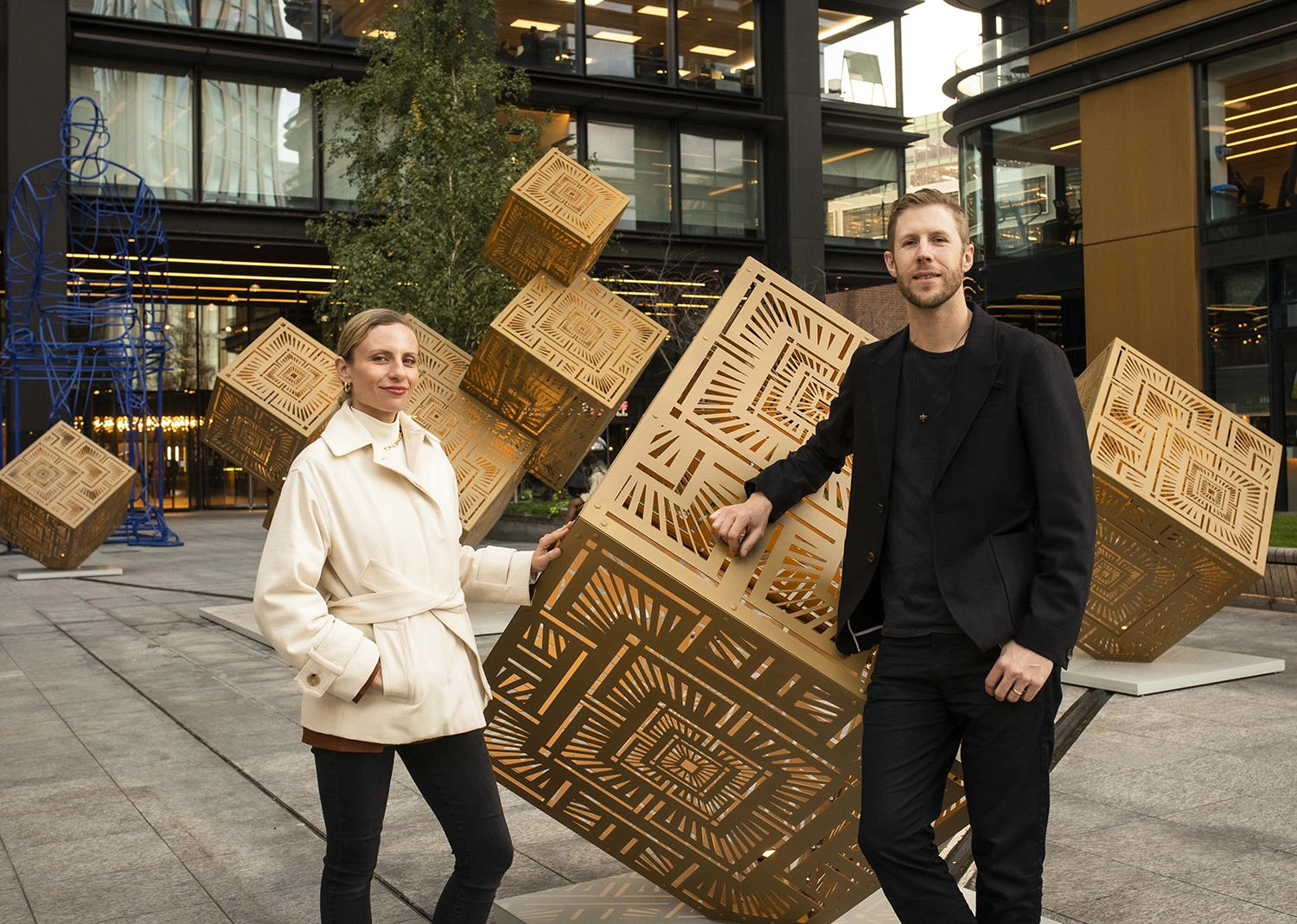
Nights at the Missouri Botanical Garden are about to get a whole lot brighter. Patterns in Nature: The Art of HYBYCOZO will bring 21 interactive installations by artists Serge Beaulieu and Yelena Filipchuk to the garden from April 10–September 26.
Previously displayed in such venues as Burning Man, Phoenix’s Desert Botanical Garden, and the Smithsonian’s Renwick Gallery, HYBYCOZO uses large-scale geometric sculptures to illuminate the patterns and systems of the natural world.
Stay up-to-date with the local arts scene
Subscribe to the weekly St. Louis Arts+Culture newsletter to discover must-attend art exhibits, performances, festivals, and more.
MOBOT events manager Lauren Morgan first came across Beaulieu and Filipchuk’s work through outdoor exhibitions in California and Arizona, and she thought it could be a perfect fit for one of the garden’s spring/summer signature exhibitions.
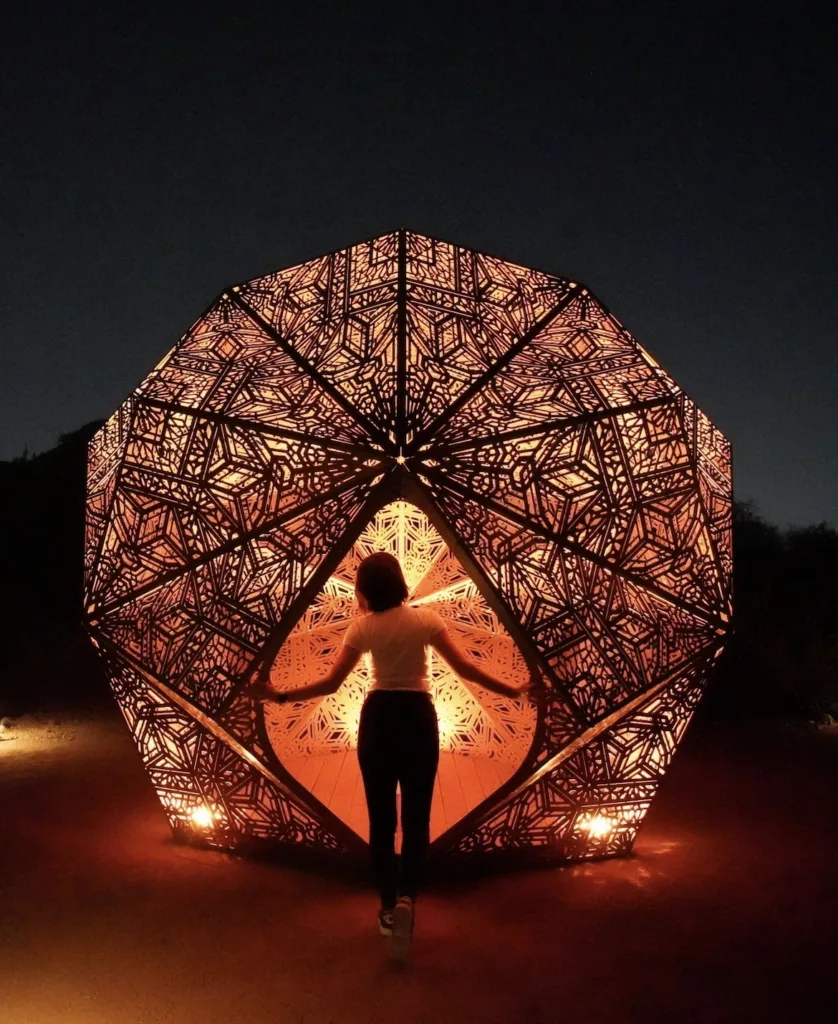
“We got to see it up close, see how guests interacted with the work, and we were really drawn to how different the show is from day to dusk and the nighttime,” Morgan says. “It’s like three different shows, and it was nice to see how interactive it is. Guests can get up and touch it, or they can take a paper and draw on it and get the shape.… They’ll be able to really interact with the artwork.”
READ MORE: St. Louis Spring and Summer Arts Guide
Changing light is key to the experience of Patterns in Nature, which will be illuminated each evening in an event series called LightForm, featuring food, drinks, live music, and activations. Works that seem solid and grounded in the light of day become delicate and ethereal when lit from within, their glow spreading to the darkened gardens around them.
Visitors will also see several new works by Beaulieu and Filipchuk that were inspired by the Missouri Botanical Garden environs, including plants and the Climatron’s geodesic dome. “[The artists] came here about a year ago, and we did a walkthrough with them and our horticulture team,” Morgan says. “It’s really important for us that whatever we bring to the garden is highlighting the garden, so they worked closely with our horticulture team to place their artworks with our plants and make it make sense. There’s been a lot of back-and-forth collaboration. They have a lot of new pieces that they’ve designed with the garden in mind.”
That means celebrating—as the title says—the patterns in nature and the sense of geometry and symmetry that originate in the natural world, as well as the garden’s winding paths, mix of architecture, and hidden corners.
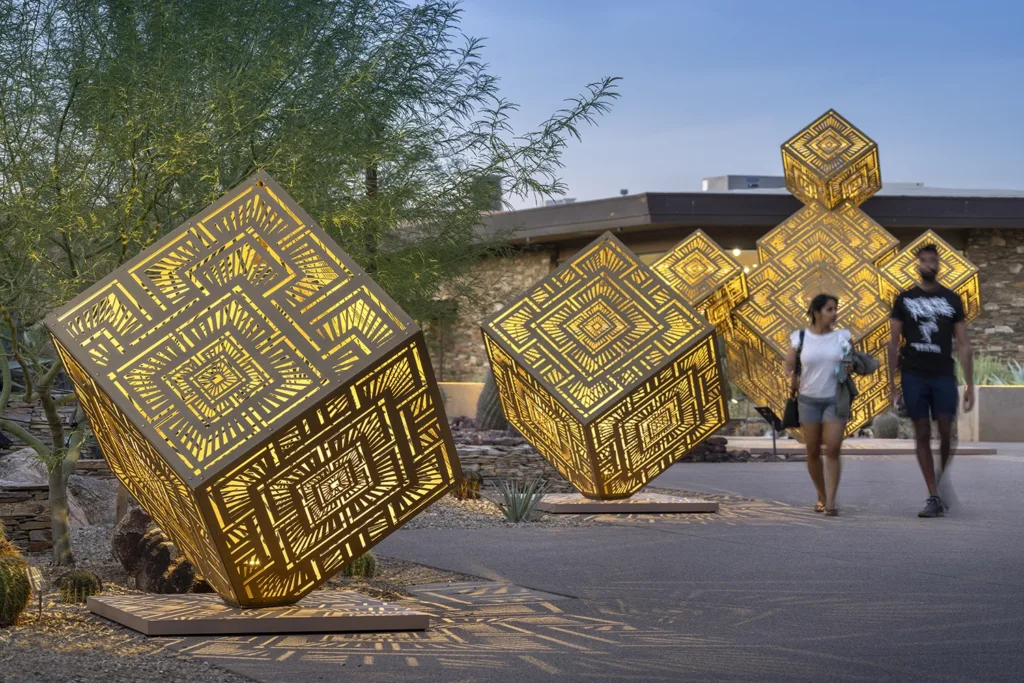
“We just loved how the paths were laid out and how that created a journey for the people who are going to walk through the show,” Filipchuk says. “We definitely wanted people to see the new works and then some of our previous works, then new work—really create a cadence for both the garden and our work.”
Filipchuk says visitors who are willing to search can expect to see some Easter eggs hiding in the garden’s far corners, and there will be myriad opportunities to touch, explore, and interact with the works. The goal, she says, is for visitors to recognize that patterns, symmetry, and beauty have their roots in the natural world, and to find points to connect with that world.
“I just hope that when people experience the artwork, it gets to that deeper sense of what our conception of beauty and proportion and harmony really feel like,” Filipchuk says. “You feel it innately when you look at the crowns of a tree and the forms of a forest. The sculptures try to harmonize that two-dimensional pattern with that three-dimensional form, to create that sense of harmony and proportion.”