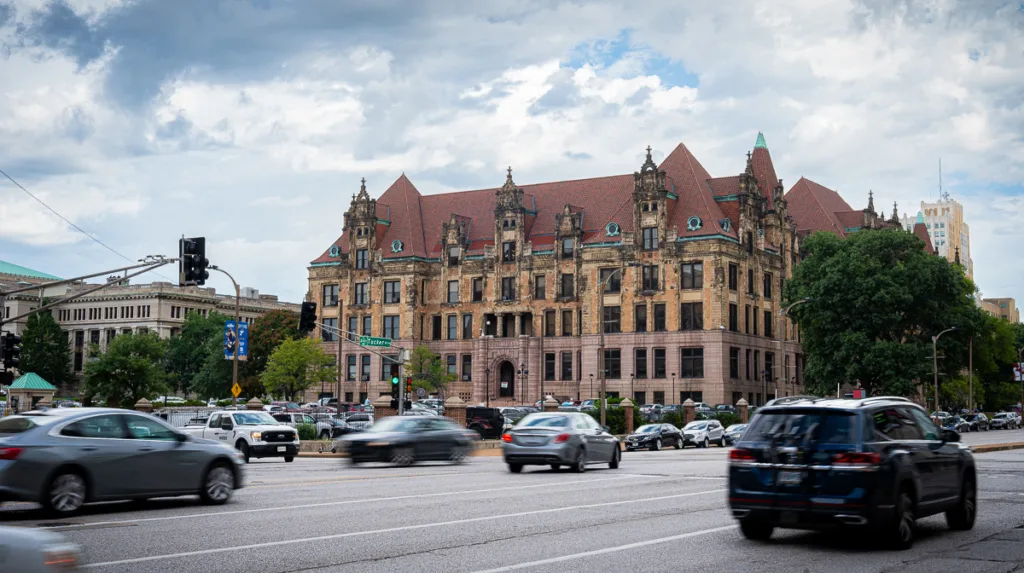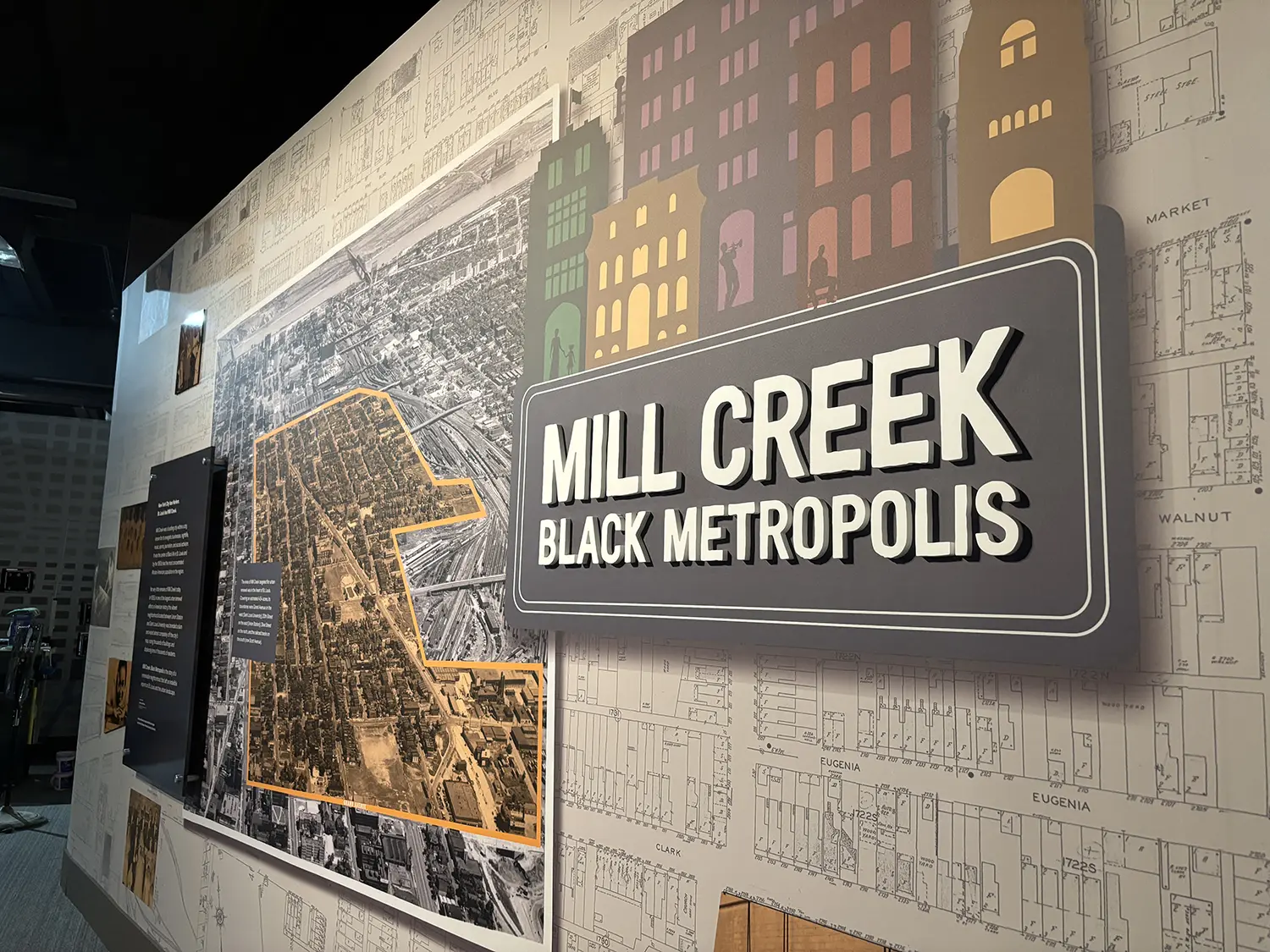
At the Missouri Historical Society’s new exhibit, Mill Creek: Black Metropolis, visitors can journey through time to a St. Louis neighborhood that was thriving before urban renewal tried to wipe it off the map.
“Mill Creek was the Harlem of the Midwest,” says Julia Clark, African American history initiative programming specialist. “It was a cultural epicenter of the city of St. Louis.”
Stay up-to-date with the local arts scene
Subscribe to the weekly St. Louis Arts+Culture newsletter to discover must-attend art exhibits, performances, festivals, and more.
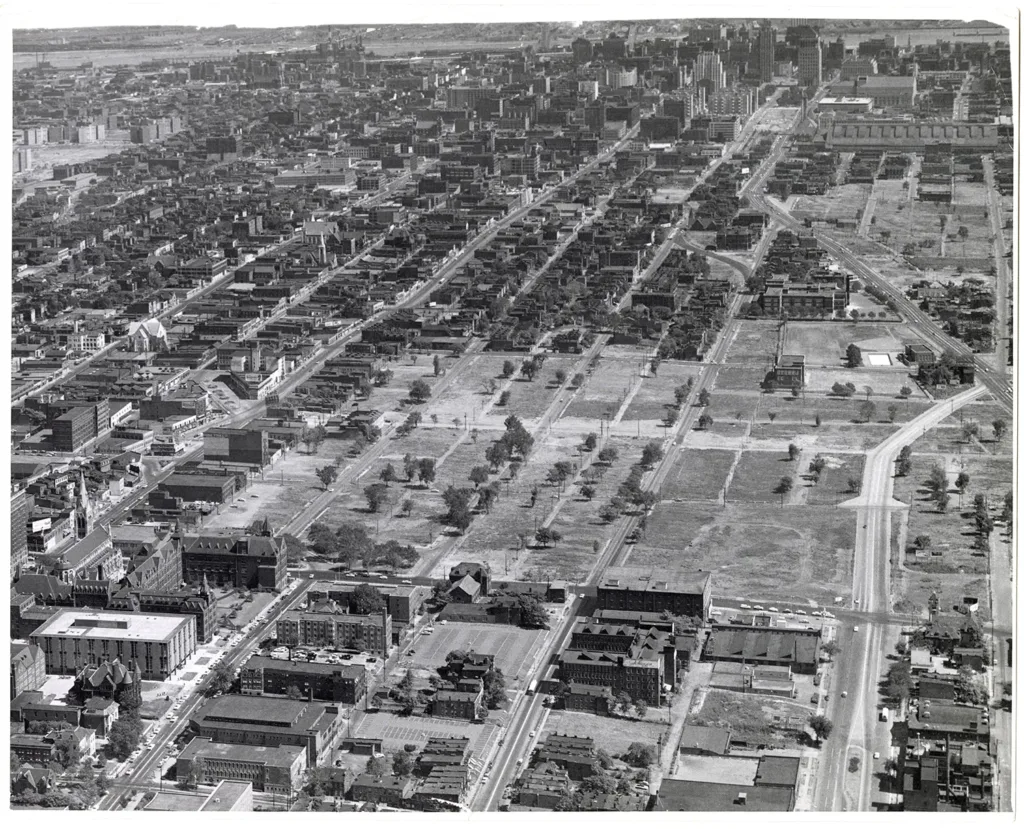
The predominantly Black neighborhood, spanning 454 acres in what is now called the central corridor, was razed in the 1950s to make room for new developments that never panned out. The 20,000 residents and their homes, churches, businesses, clubs, and institutions were pushed out. The exhibition aims to tell their stories—to recall what was lost, to celebrate the neighborhood’s beauty and legacy, and to provide space to mourn. The highly anticipated exhibit runs through July 2026 and includes photographs, oral histories, memorabilia, and rare film images.
“Gwen Moore, our curator, as well as several other community members that have worked with us through advisory boards, were residents of Mill Creek Valley,” Clark says. (Read about Moore here.) “When you have people who are deeply involved in the process of creating an exhibit that have the lived experience of what it means to them to be a part of that community, and also what it meant to have that community ripped away because of racist policies like urban renewal, I think it makes an exhibit even more accurate and significant.”
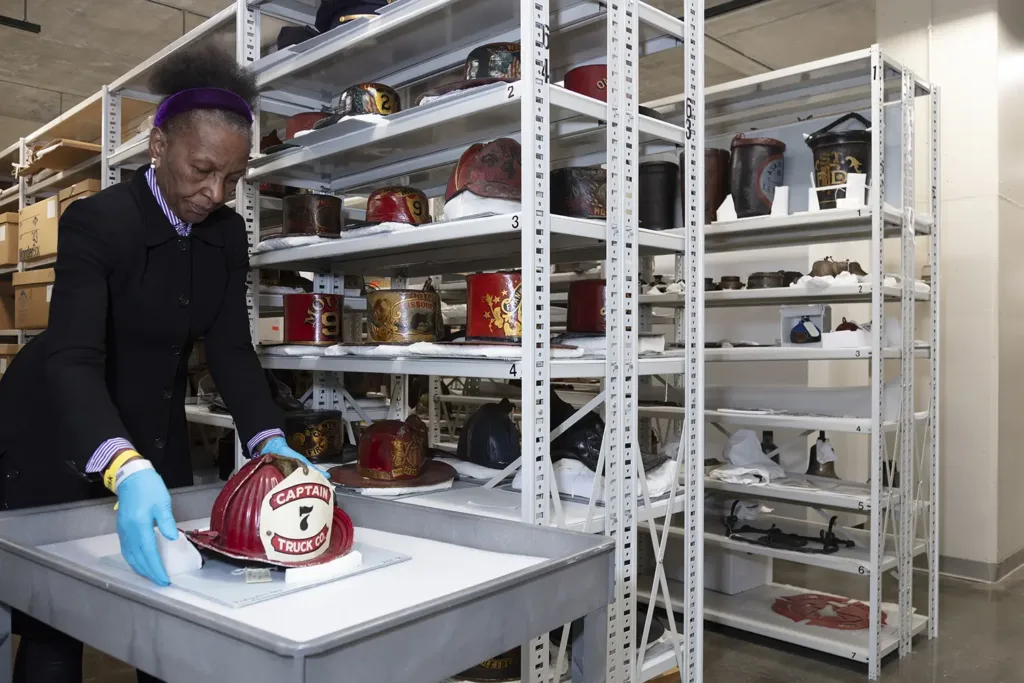
The items in the show were collected from past residents and their families. Clark credits their careful stewardship and gracious sharing of these memories with bringing the exhibit to life. The objects are amazing, she says, but there’s something else she finds captivating.
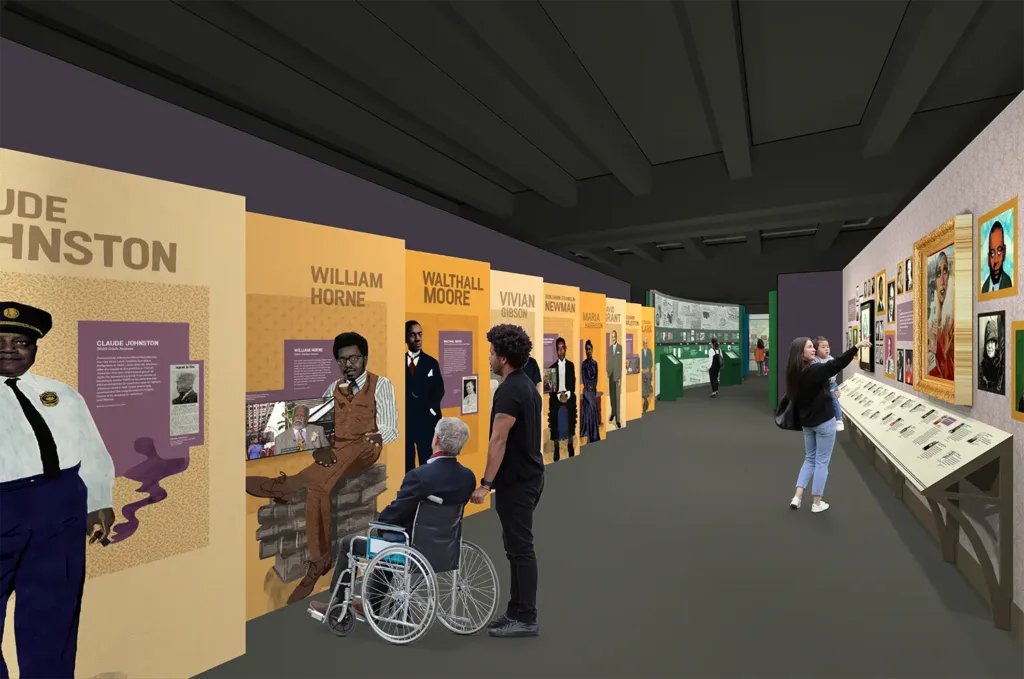
“My favorite part of the exhibit that I’ve seen so far has been the film footage that we’ve been able to get of just regular life in Mill Creek. I’m really excited for people to see it,” Clark says. “It just shows what life was like—it shows dinner parties, it shows people playing cards. It shows what people wore, the fashion, the community, the family all sitting at the table.”
In the Reflection Room, people can write love letters to the homes, neighbors, and families they lost. The Freedom Community Center will be on hand to help with trauma-informed care and processing emotions.
Clark says she expects that the exhibit will spark new recollections from the people with connections to Mill Creek Valley who attend, and there will be space to share those.
Says Clark, “We hope in the future to be able to continue to amplify these voices, even when this exhibit closes next July.”