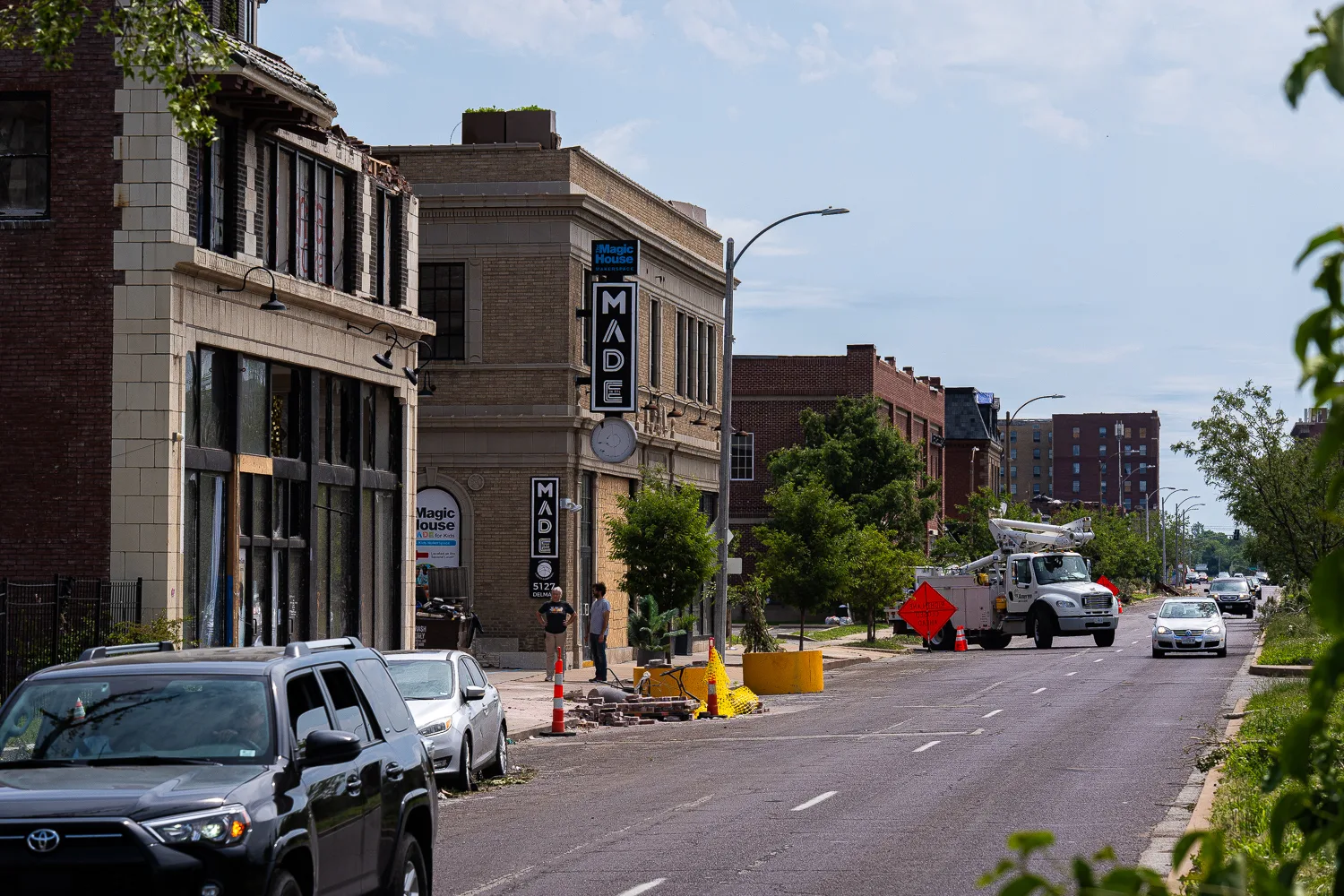
It’s hard to believe that the destruction left by the May 16 tornadoes could produce anything beautiful, but as we’ve watched the community come together time and again, that perspective grows. Aiming for a more tangible representation of that resilience—in the form of free, walk-up community art sessions—is MADE Makerspace (5127 Delmar)–one of the businesses most prominently impacted by the damage.
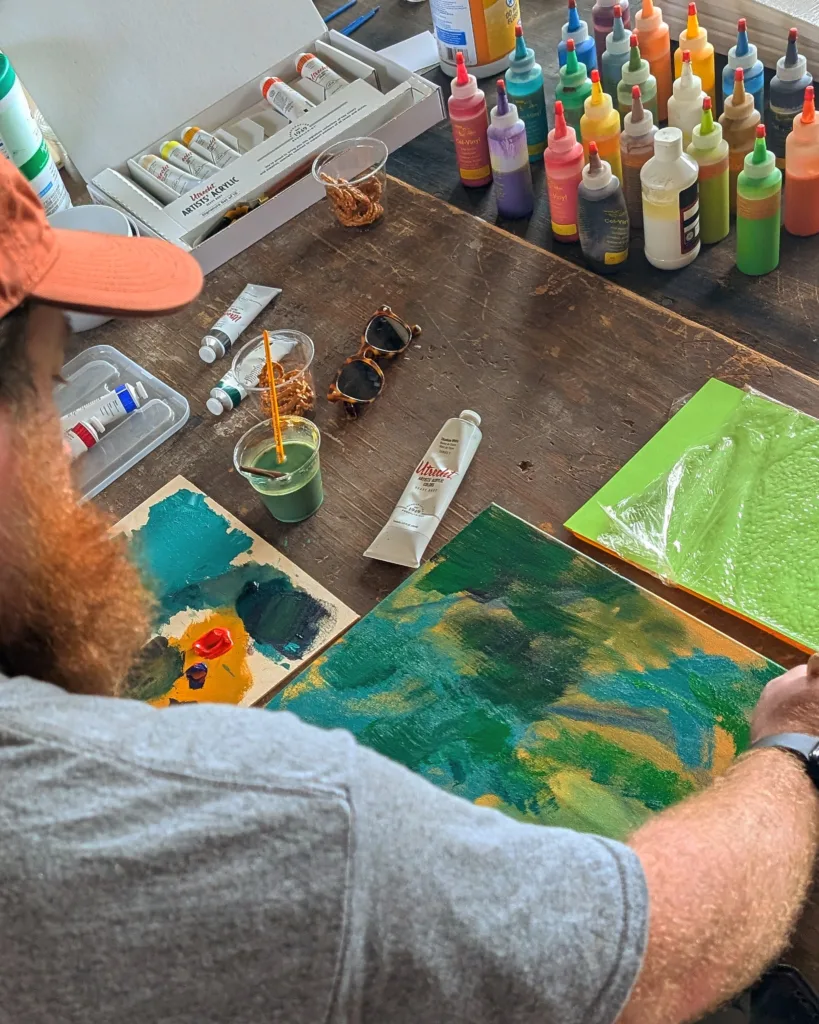
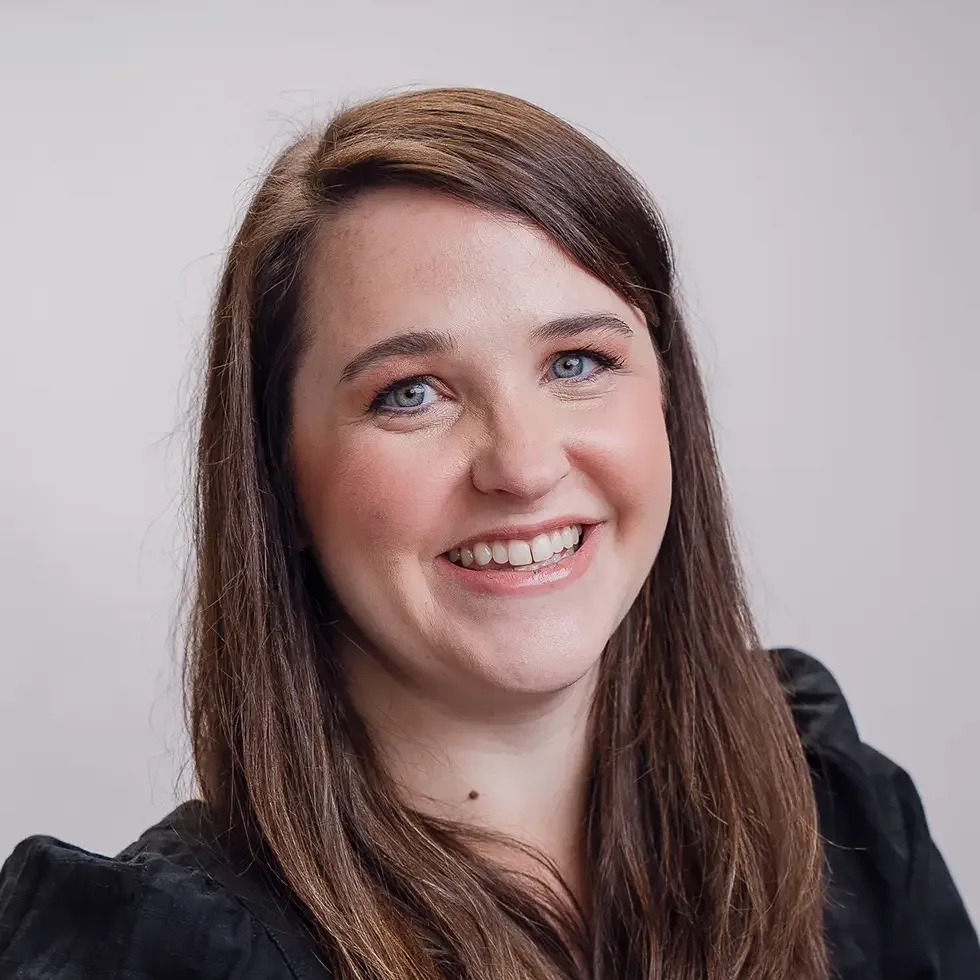
MADE—a nonprofit organization that recently shifted its focus towards the therapeutic power of art to uplift mental health—is home to 200 local makers ages 13 and up. The studio launched its Community Guided Art Sessions this week, offering an easy, inclusive outlet to all those who were impacted. Rachel King, executive director of MADE Makerspace, says this is just the beginning of MADE’s new mission: “At MADE, we strengthen mental health and resilience through the power of making—connecting the St. Louis community with tools, skills, and belonging. Simply: Make. Connect. Belong.”
Stay up-to-date with the local arts scene
Subscribe to the weekly St. Louis Arts+Culture newsletter to discover must-attend art exhibits, performances, festivals, and more.
The new workshops, which have been nearly daily at a range of times since the start, will be ongoing, King confirms, each led by local artists, therapists, and “compassionate community members.” All supplies are provided, thus far by Blick St. Louis, and local artists involved so far have included Michelle Ross, Lenore Raven Spitznagel, and Jenna Elizabeth. Photographer Felise Waxman has also been collecting funds for additional supplies. Currently, the sessions meet at Maker Hill outside of MADE Makerspace, but King notes that the team has been working with Delmar DevINe on future possibilities, as MADE is still without power due to the tornado’s impact.
“Creativity is very therapeutic, and now, more than ever, St. Louis needs a way to heal during the aftermath of this storm,” King says.
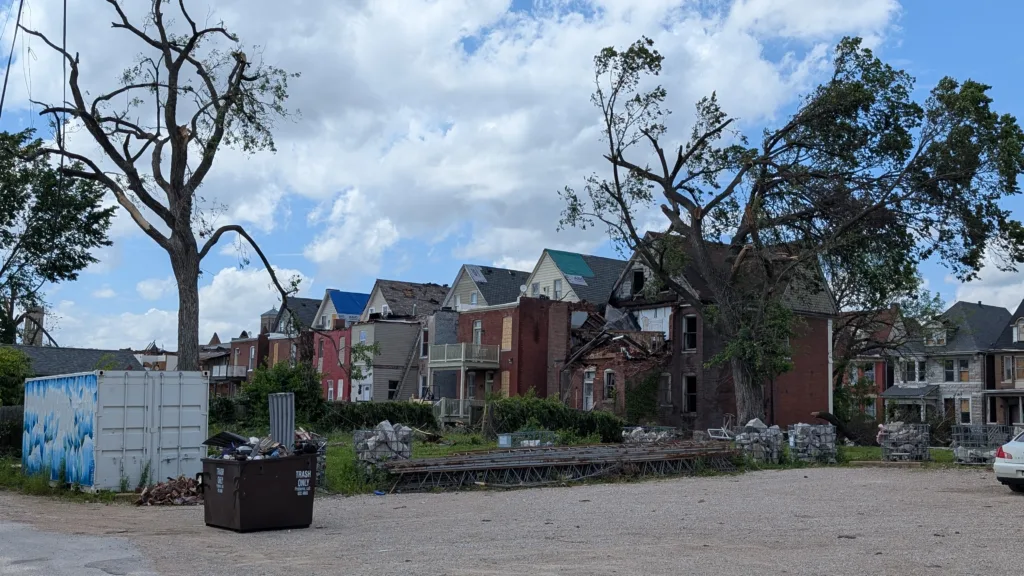
King, who is currently earning her master’s degree in clinical counseling, explains that her passion lies in the ways the creative and the clinical worlds collide. “We were already working towards opening up a community art studio, and the tornado that came through the afternoon of May 16 escalated these plans,” she explains. “MADE Makerspace took a direct hit, and community members were impacted by the traumatic experience, including our members and staff.”
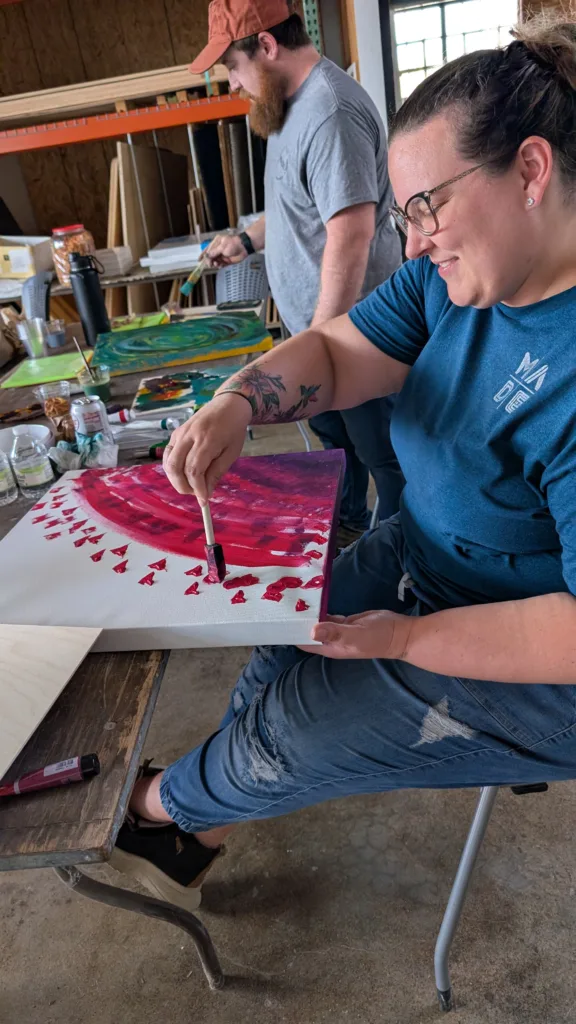
King notes that these sessions should not be considered formal therapy sessions, but “rather a way to unwind, recharge, and connect through creativity.”
“Not only did the storm impact the team at MADE emotionally, but we are also facing devastating damages to the space,” King says. “Our hearts go out to those who lost homes, entire businesses, and lives. We are fortunate to still have a building to come back to, and no one on-site was physically harmed.”
The best way people can offer support to both MADE’s reconstruction and its outreach efforts is to sign up for the nonprofit’s newsletter and make a donation to the organization’s GoFundMe that helps meet the needs of members who lost access to the space. “Many small business owners use MADE Makerspace as their headquarters, and with us closed, they are faced with significant challenges,” King says. “We hope to reopen as soon as possible, but without power, the timeline is uncertain.”
As for what’s next, King says MADE won’t miss a beat offering community to those who need it. “As we rebuild, we remain committed to providing resources, tools, and therapeutic creativity for those in need of mental health support well beyond this difficult time,” King says.