It was not so terribly long ago that women who wanted to write for Newsweek were told that they had to be researchers, not writers—gathering material that their male colleagues could then publish under their bylines. Or that women up for a job at the New York Times had to submit to a medical exam to show they weren’t pregnant. Or that female journalists weren’t allowed to attend the news-making luncheons at the National Press Club, forced to watch from a crowded balcony while men ate lunch, and fired off questions to the guest of honor, below.
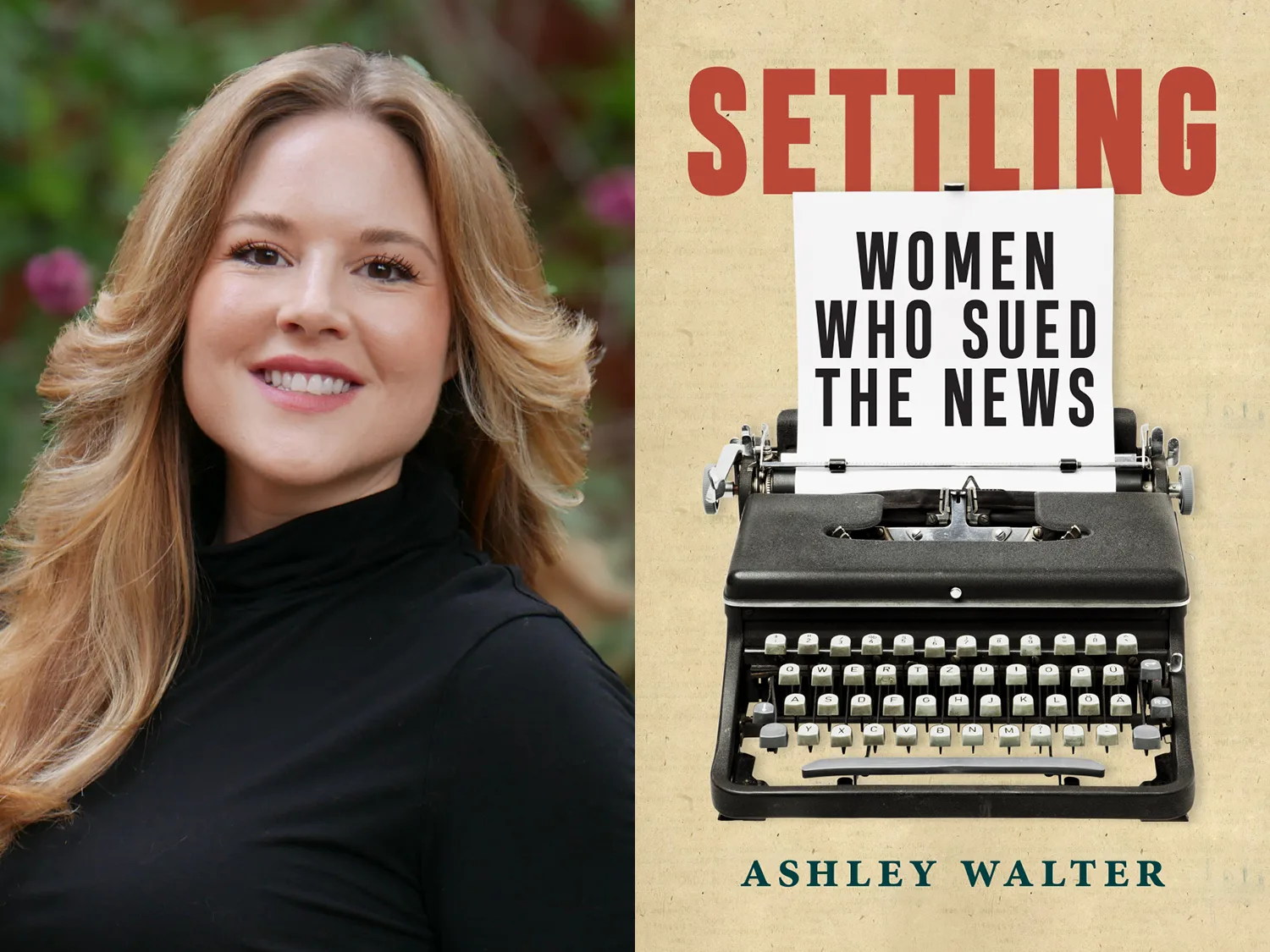
Female journalists weren’t just handed opportunities to even those playing fields. They had to fight for them—in many cases, by filing class action lawsuits. Those suits are the subject of the new book by Saint Louis University journalism professor Ashley Walter, Settling: Women Who Sued the News. In it, Walter details stories that would shock women who came up in the industry only a few decades later, some of which have never been told.
Stay up-to-date with the local arts scene
Subscribe to the weekly St. Louis Arts+Culture newsletter to discover must-attend art exhibits, performances, festivals, and more.
Walter doesn’t think that’s an accident. When future congresswoman Eleanor Holmes Norton (then with the ACLU) filed a first-of-its-kind lawsuit against Newsweek, alleging systemic gender-based discrimination, there was some coverage, she says, even if the tone was decidedly bemused (“they’re in mini skirts, they’re out of control” is how Walter summarizes it). That changed as the lawsuits continued.
“You can see a kind of closing of the ranks because one, they don’t want to write about their buddies discriminating,” she observes. “They don’t want to encourage women at their own employers. But there’s also just this idea that it’s not news.” And so when Walter began contacting women who’d participated in the litigation in the 1970s and the 1980s, some of them had never been interviewed on the record before.
“I had one woman tell me, ‘I’ve been waiting for you,’” she says. “A lot of these women kept their legal documents and gave them to me because they knew what they did was important.”
Walter is herself a former journalist who wrote for Pittsburgh’s alt-weekly, City Paper, from 2011 to 2015, when she started grad school. (She started at Saint Louis University in 2023.) The book began as her doctoral dissertation. She was inspired by Lynn Povich’s 2013 memoir The Good Girls Revolt (which later became a short-lived Amazon Prime series, Good Girls Revolt) and wanted to open the story up from the groundbreaking litigation at Newsweek to the many lawsuits that followed and changed conditions in newsrooms across the U.S. For seven years, she tracked down former litigants—feeling keenly that she had to catch them before it was too late.
The first woman Walter was connected with, Betsy Wade, had been the first woman hired as a copy editor at the New York Times. At first, Wade turned her down, telling her, in so many words, “I’m 92, I have cancer, and I don’t want to waste my time.” Walter persisted, and eventually, the two spent a wonderful afternoon together. Two years later, Wade was dead. “There was definitely an urgency,” Walter says.
The women she interviewed were tough—they had to be. Walter recalls that Wade, for one, copyedited an email that Walter sent her. But the stories they tell open up their era in all its complications. It makes for a gripping read.
Walter hopes to make today’s readers aware of the hard-fought battle for equality—and the price some women paid. “This didn’t happen overnight,” she says.
Editor’s note: I’ll interview Ashley Walter about Settling at Left Bank Books on Wednesday, November 11. It’s free to attend.