• The Saint Louis Science Center is one of only four stops on the Smithsonian’s special traveling tour of the exhibit Destination Moon: The Apollo 11 Mission. It features various artifacts, footage, and diagrams from the trek 49 years ago, but the most stunning highlight is the Columbia command module, the only piece of the journey to come back to Earth.
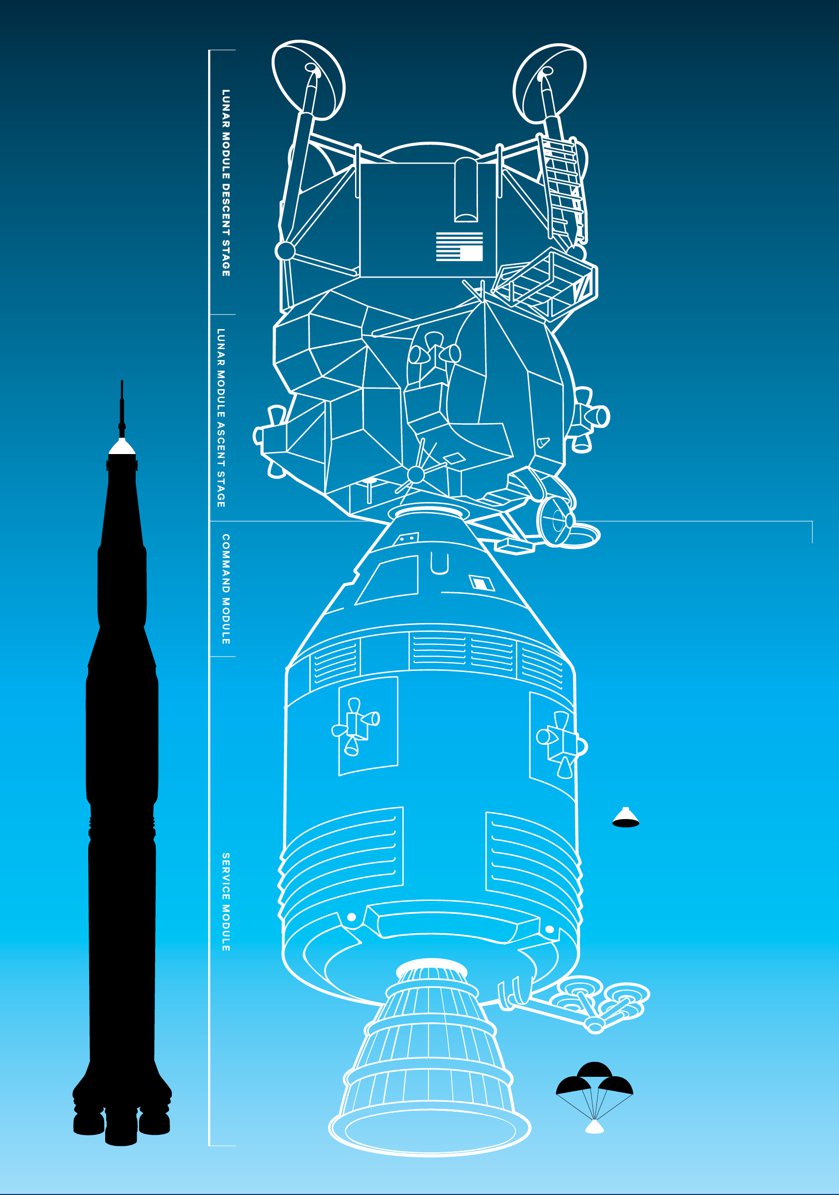
• Columbia was launched into space by the Saturn V rocket along with its service module and the Eagle lunar module, both of which were jettisoned (left in space).
Stay up-to-date with the local arts scene
Subscribe to the weekly St. Louis Arts+Culture newsletter to discover must-attend art exhibits, performances, festivals, and more.
• Columbia housed Neil Armstrong, Buzz Aldrin, and Michael Collins for their journey to and from the moon. About as large as an SUV (210 cubic feet), the command module was where the astronauts lived and worked.
• The command module was positioned between the lunar module, which was released to the moon’s surface, and the service module, which housed Columbia’s oxygen, water, and power and propelled the entire craft to and from the moon’s orbit.
• After the lunar module was discarded in space, the service module’s rocket engine launched Columbia back to Earth. It, too, became space trash.
• The heat shield (the saucer-shaped underside of the module) was covered in layers of material that acted as thermal protection, melting away during the extremely hot, fast (24,000-mph) reentry into Earth’s atmosphere.
• Openings at the top released three parachutes, which helped orient the descending module and decrease its speed before splashdown.
• After launching from Cape Kennedy on July 16, 1969, Columbia reentered the Earth’s atmosphere on July 24 and splashed down in the Pacific Ocean, 900 miles southwest of Hawaii at 11:50 p.m. It was recovered by the USS Hornet, which was 13 miles away at the time.