Local poet Justin Phillip Reed walks into HandleBar in The Grove as it opens for the evening. The place is empty, but there’s loud music. It’s perfect for Reed, who’s still trying to figure out how to respond to the media attention he’s attracted from winning the National Book Award for his poetry collection Indecency, to take refuge.
The National Book Award has been celebrating America’s best writing since 1950, and Reed won it with his first collection, 112 pages that explore themes of inequity and injustice. Winning is a remarkable feat and one that has deservedly caught the attention of the poetry community—and the media. But “it’s been a paradigm shift,” Reed says. “I’m not one who deals well with attention in that way, so the spotlight has found me hiding a bit.”
Stay up-to-date with the local arts scene
Subscribe to the weekly St. Louis Arts+Culture newsletter to discover must-attend art exhibits, performances, festivals, and more.
The poetry community has responded with questions about academic positions. Reed is not interested. He’s hoping that the momentum from winning the award will enable him to transition from his side jobs to a life of full-time writing. He’s also been thinking about the nature of talent and art, and how those fit into capitalism. “I was thinking specifically of the prison industrial complex,” he says, “and how many people are actively refused literacy because they are incarcerated and wondering what it would be like if those structures didn’t exist, because then there would be so many more voices and more artistic conversations. It kind of broke my heart to think about it.
“There could be entire ideologies and schools of thought that would arise from people who are currently incarcerated or refugees,” he continues.
Reed, who earned his MFA at Washington University in 2015, has always known that he wanted to be a writer, but says that “as I read more poets, it became this muscle that I wanted to flex.”
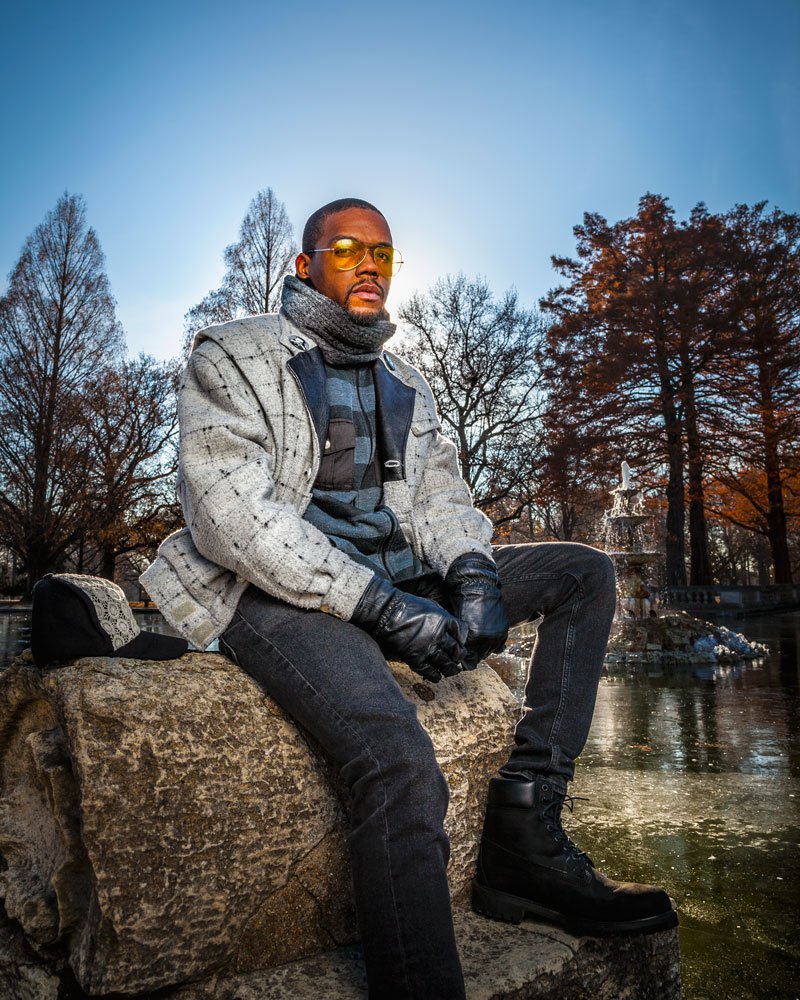
He acknowledges that narratives from St. Louis influenced Indecency, though the collection is not about one particular place. “I find that art that is invested in place is very complicated—it has a lot of responsibilities,” he says. In unpacking his personal narrative as a queer black man, Reed wants his work to speak to his experiences and not a “collective we,” which he says would be “problematic and deservedly criticized.”
“I feel that I have a certain responsibility to tell what I know about my time here,” he says. “Reading through this book now, I think that I’ve found that this couldn’t have come from anyone but myself.”
Next up for Reed is completing another poetry manuscript, one that explores such themes as violence and counter-violence, monstrosity, and majesty, which he says is one of his new favorite interests. “I’m also imagining what a collection of essays could look like,” he continues. His interests in terms of the essay: cultural critique or pop culture, specifically hard rock and heavy metal music, and horror and sci-fi films.
Here are a couple of poets Reed loves.
Reed came to St. Louis because he wanted to study with Carl Phillips, a poet he says he’ll always return to. Phillips, of course, is the renowned Wash. U. professor, National Book Award finalist, and author of 14 books of poetry. His most recent, Wild Is the Wind, published in January 2018, is a reflection on love and named after a jazz standard by Nina Simone. In the collection’s titular work, he writes: “About what’s past, Hold on when you can, I used to say / And when you can’t, let go, as if memory were one of those / mechanical bulls, easily dismountable, should the ride / turn rough.”
Reed considers Dawn Lundy Martin a mentor from afar because he learns so much from reading her poetry. Phillips selected her 2007 A Gathering of Matter/A Matter of Gathering for the Cave Canem Poetry Prize, an award given to outstanding works by black authors. Other collections include Discipline (2011), Life in a Box Is a Pretty Life (2014), and Good Stock Strange Blood (2017).