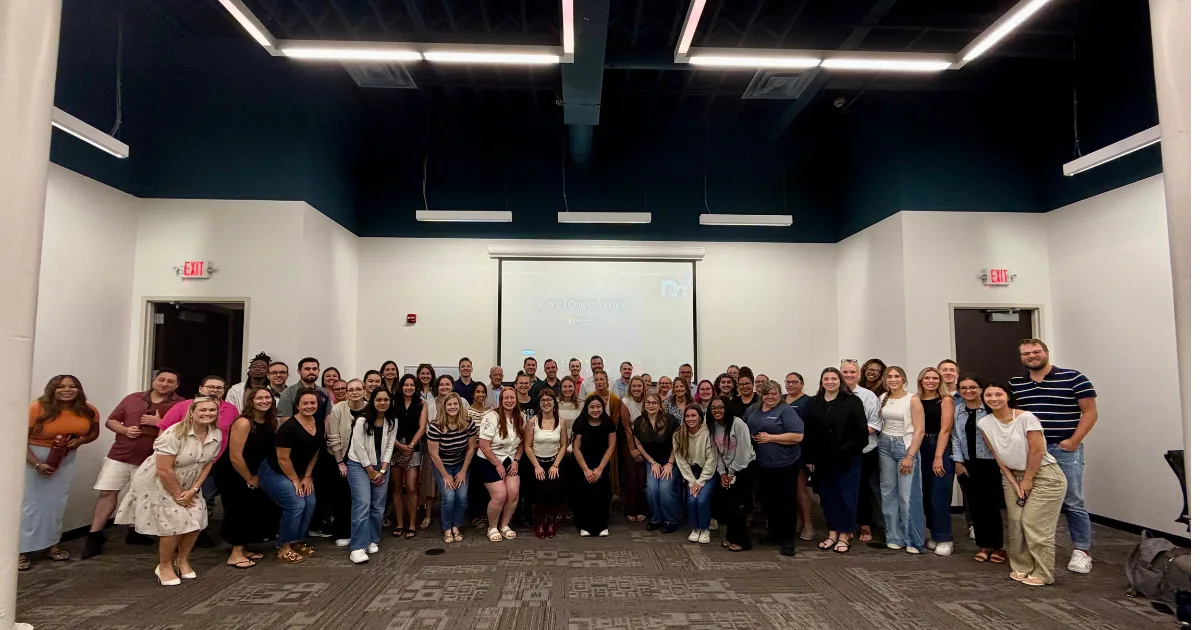
Data centers are the topic that just won’t go away, and given the public acrimony surrounding them, local business leaders and other supporters are keen on reframing the conversation. Case-in-point was the panel convened yesterday by the regional business association Greater St. Louis Inc. featuring representatives from the data center industry, labor unions, building trades, and even a former commissioner on Missouri’s Public Service Commission.
Go Deeper: Port KC president and CEO Jon Stephens shared what he believes has made the developments successful in the Kansas City area, which has seen new data centers come online and go under construction recently. He says large-scale data centers can create conditions for more industrial development to pop up around it, and not necessarily just those oriented toward computing power. Data center developers “build out significant infrastructure” like new roadways or utility connections, he says. “It then makes the other 11 parcels around this site more valuable.”
Keep up with local business news and trends
Subscribe to the St. Louis Business newsletter to get the latest insights sent to your inbox every morning.
Stephens also emphasized the importance of identifying specific outcomes from developments that align with community priorities, be that quality jobs, workforce training or other benefits.
Missouri AFL-CIO president Jacob Hummel pointed out massive multi-phased projects can keep construction workers and trades people employed for years during their buildout. “In our business, we would say there’s no permanent jobs, with the exception of data centers,” he says. “This is the only time I could ever point to a construction job that is permanent.”
The panelists also sought to dispel what they identified as myths or misinformation about data centers, such as how much water they use (a 2024 report from a Virginia Legislature committee found most facilities consume less water than a typical large office building) or them being the reason electricity rates are climbing higher (outdated transmission infrastructure in need of upgrading is also a culprit).
A former state legislator, Hummel laid some of the responsibility for the negativity at the feet of elected leaders, who’ve at times been outmatched by angry crowds at public meetings. “I’ve sat in these hearings where I know that our elected officials knew very well that the facts being presented were completely and wildly inaccurate, and they said nothing, because they didn’t want to anger their constituents,” he says.
Others blamed the sour sentiment toward data centers for poisoning what would be viewed as attractive proposals under any other name. “If these buildings had [BJC, WashU], or Anheuser-Busch on the front of them, there would be a ticker tape parade down St. Louis’ downtown,” says St. Louis Building and Construction Trades Council executive secretary-treasurer John Stiffler.
The Bigger Picture: The energy from attendees ranging from members of the media, elected officials, construction company leaders, consultants, and economic development organizations was rather subdued, with a few people taking notes and others nodding in agreement to what they heard. Absent were any data center detractors, at least vocal ones, who have been a fixture at public meetings on the topic. Then again, it’s not clear they got an invitation.