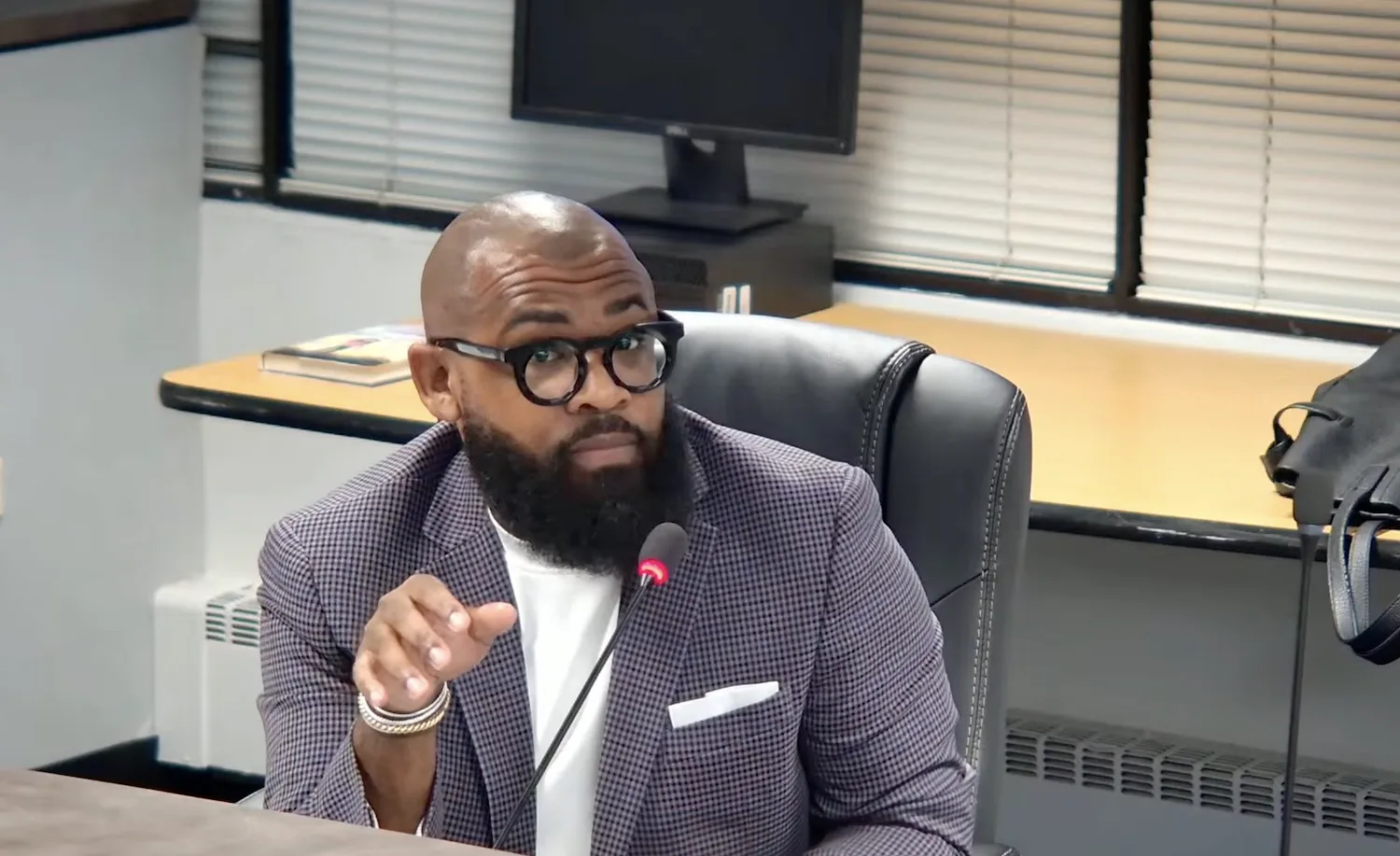
For St. Louis Development Corporation interim president and CEO Otis Williams, there’s no better time than now to have serious conversations about how the city of St. Louis uses development incentives and where they’re most needed.
That was the overarching message of Williams’ lengthy and detailed presentation to the St. Louis Board of Aldermen’s Housing, Urban Development and Zoning Committee earlier this month. It was cast against an annual report SLDC is required by ordinance to provide to the committee detailing the compliance of development projects receiving tax incentives.
Keep up with local business news and trends
Subscribe to the St. Louis Business newsletter to get the latest insights sent to your inbox every morning.
This year’s report shows a continuation of last year’s trend of the city issuing far fewer tax incentives for developments—even as overall building permits in the city are down slightly. Figures from the city show developers have applied for 3,678 permits so far in 2025, below the 4,163 issued in 2024 and roughly 5,000 issued each year from 2016 to 2023. The total value for permits in 2025 is up, though, at $1.2 billion compared to 2023 and 2024, which came in around $700 million.
Those numbers come even as, in 2024, the Land Clearance for Redevelopment Authority approved just four redevelopment areas or projects with abatements, with the Board of Aldermen signing off on just two those. No projects saw their incentives activated in that timeframe.
That’s down significantly from before the pandemic, when the LCRA and Board of Aldermen were approving dozens of projects annually, the most being 66 in 2017. But even as recently as 2023, both bodies signed off on 11, more than five times as many projects and redevelopment areas as aldermen did last year.
“You can look at it two ways,” Williams says. “You can say this is a good trend in the sense that there are less projects that are incentivized, but it also says to you that our pipeline is going dry.”
Williams points to figures from 2017 to 2024 detailing 275 projects delivered, or nearly complete, representing a $5.2 billion investment that generated nearly 10,000 housing units, more than 2,500 hotel rooms and millions more square feet of retail, office, and industrial uses.
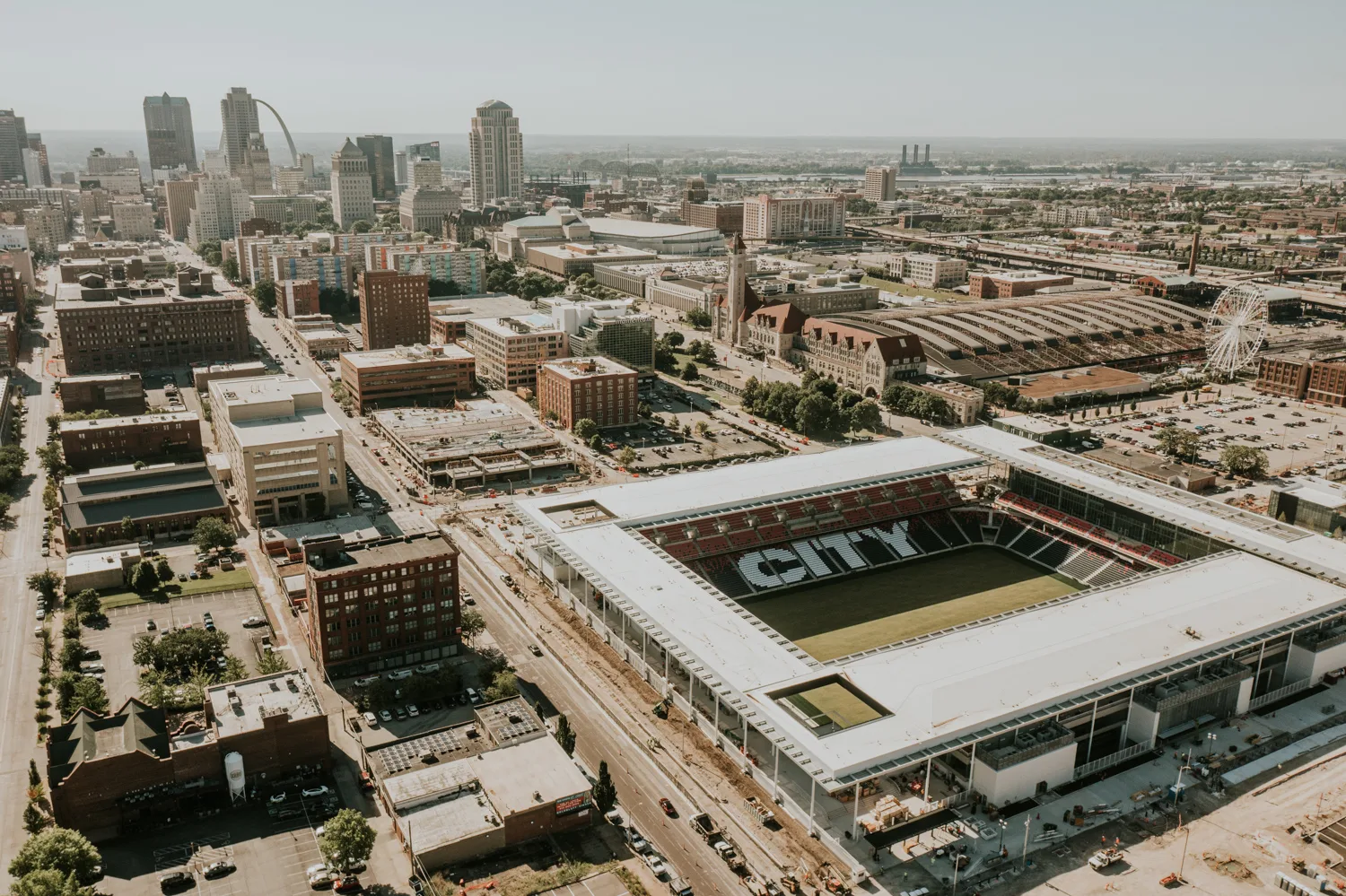
In that timeframe, WashU’s new Neuroscience Research Building and Energizer Park were built, the Butler Brother Building and old YMCA building in Downtown West were redeveloped into apartments and a hotel, respectively, City Foundry opened and Union Station saw continued redevelopment and added features. Williams cited some 35 completed major projects, 14 under construction, and another 14 in planning.
“The reason [those] projects happen is because of the help that the city and the Board of Aldermen provided,” he says. “We don’t have very many projects in the pipeline, at least those that developers are willing to bring to the table.”
Williams also revealed preliminary data shared by the License Collector’s Office showing the number of unique businesses in the city has suffered a 42 percent decrease since 2020, with data suggesting the city lost 4,573 businesses. (That sizable drop drew questions from aldermen and appears to be contradicted by state data; Williams said he would confirm the figures.)
All of this prompted Williams’ request to discuss how SLDC and the Board of Aldermen can better work together to spur development in the city, and create a climate where developers want to pursue projects with or without incentives.
“I’m not touting more incentives, but I am touting, let’s collaborate and figure out how to get more done,” he says. “Part of that is improving the process, the timeliness of our responses. And if we have a process, sticking with [it] and not changing [it] at the very end. That is probably three things that are most important to the development community, and changing the playing field is the one that is the most frustrating to the developers.”
He adds development incentives are necessary for the financial viability of major projects in St. Louis, as the construction costs are largely the same throughout the region, yet the market in the city doesn’t support rents that are high enough to make up for those costs.
Williams identified nearly a dozen initiatives that could help, including establishing business and developer advisory committees, working with the St. Louis Public School board to attract developers for vacant schools, and the city directly allocating funding for community development corporations and Legal Services of Eastern Missouri, which both shoulder essential work in responding to and addressing vacancy.
“We often look at what other communities are doing, cities we call our peer cities, and [in] those that are very successful, there’s a lot of collaboration and trust amongst those that are involved in [the] economic development process,” Williams says. “The legislative cycles, the administrators, the development communities are all working together to try and have growth.”
His points appeared to resonate with many aldermen on the committee. Ward 9 Alderman Michael Browning commented that the city’s current development process can frustrate developers, who pass muster with SLDC only to face more scrutiny from the Board of Aldermen.
“Sometimes we try to add things to [a project], which just to be clear, whenever we add a demand to a project, that increases the cost,” he says. “Whenever we send something to a political body, it becomes political and not based on just the numbers anymore.”
Ward 1 Alderwoman Anne Schweitzer agreed that St. Louis can benefit from upfront goals.
“I find it very uncomfortable when I hear about meetings taking place outside of the Board of Aldermen, outside of what we’re expecting developers to bring, and then a political figure has a different thing that they’re asking for or demanding when it’s not part of what the city is generally asking for,” she says.
Browning asked Williams if it’s normal for other cities to have their legislative body weigh in on individual development projects. Williams responded that many cities have “by right” development in specific areas, where the tools and incentives available to developers are clearly laid out.
“So [for] a developer who is working in that area, all they need to do is the work and submit the appropriate paperwork and it’s approved without going back through the legislative process,” he explained, adding some cities have laid out similar standards for tax-based incentives, whether that’s abating payroll tax, sales tax, or offering other tax breaks.
Ward 3 Alderman Shane Cohn noted St. Louis is much improved in tracking some of the larger-scale incentives it uses, and is getting better with tax abatements too. He repeated his desire for the city to use development apparatuses, like tax increment financing districts, for parts of north and southeast St. Louis, which have traditionally not been afforded those resources.
“That’s a development tool that the city has used repeatedly for many decades, and has also said ‘no’ to in certain parts of the city,” he says.
Williams says in the past, the narrative surrounding these tools was that they weren’t fully utilized even when offered, and that the most successful ones needed an anchor to be successful. After a question from Cohn about the dwindling number of such institutions in north and southeast St. Louis, Williams clarified that’s what the conversation had been in the past, and that he’s open to new ways to use these tools.
“We have to [be] based on where we are [as a city],” he says. “We need to be able to show people that we are predictable, that we can be trusted with what we tell people, and that we are willing to collaborate. ”
Ward 7 Alderwoman Alisha Sonnier added that consistency is something residents want too: “Some of them are cautious and skeptical of the way we do things, and they have really appreciated some of the improvements that put more transparency in place.”
Schweitzer asked about how the city enforces specific goals around minority contracting, which are often a requirement for activating incentives. “I’ve heard from both sides of the issue, in terms of a developer that felt they did everything they were supposed to and haven’t been able to get the incentive, and the workers who feel like they’re not getting paid what they were supposed to,” she said.
Williams said that issue goes back to establishing and sharing upfront guidelines with developers, which is part of the city’s goal in its new rules for minority contracting. He says it’s less about the amount of requirements but more about a clear upfront goal.
Editor’s note: A previous version of this article misstated the total amount of building permits sought in the city during 2025. So far, developers have applied for 3,678 permits this year, not 1,190. We regret the error. We also added context showing the total value of permits is higher this year than in 2023 and 2024.