McAnally envisions a bold future for the St. Louis region’s arts scene—one that will come to life in September, when Counterpublic kicks off three months of programming. “We’re excited to see the cultural community come together for three months, welcome visitors from around the world, and celebrate the futures of our region through a global lens,” McAnally says. “Art is a way to envision these futures, and Counterpublic 2026 will be a beacon for the transformations we hope to see here—and believe we are already seeing emerge.”
Keep up with local business news and trends
Subscribe to the St. Louis Business newsletter to get the latest insights sent to your inbox every morning.
2026 QUESTIONNAIRE
PROFESSIONAL ACCOMPLISHMENTS & OPPORTUNITIES
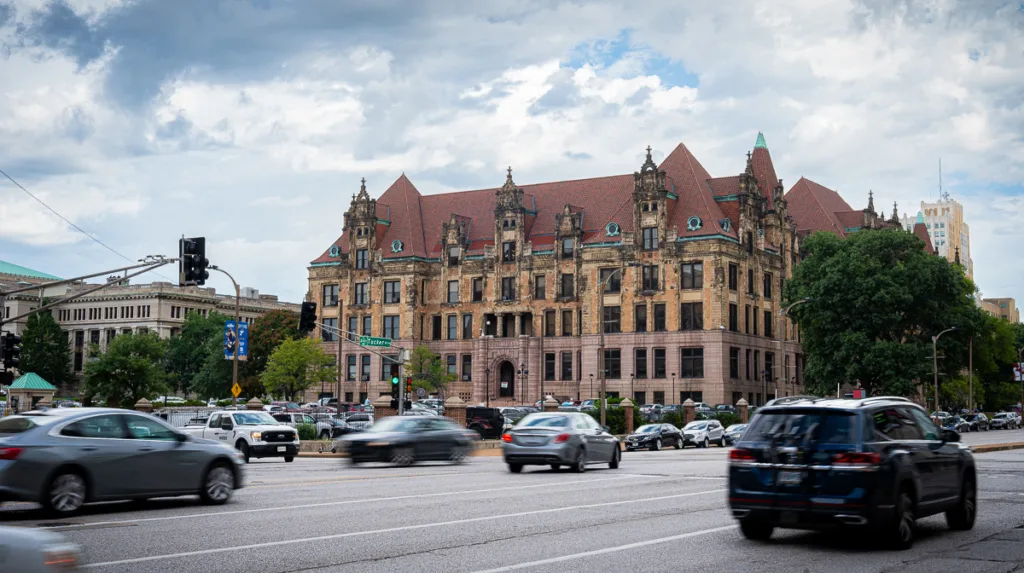
What has been your/your company’s most significant success over the past 12 months? Counterpublic is opening a new permanent location in the Grand Center Arts District in a historic house across the street from the Pulitzer Arts Foundation and Contemporary Art Museum. The house will expand our footprint to year-round programs and events outside of the triennial exhibition and be another exciting expansion of the region’s primary cultural district. We have recently completed two major milestone projects that initiated with our last exhibition in 2023. First, we recently completed the transfer of the final two sections of Sugarloaf Mound—the last intact Native American mound in the city—to the Osage Nation. This landmark accomplishment will be celebrated at City Hall in Fall 2025 with a first of its kind board resolution acknowledging the history and future of the mound. Second, working with many civic and community partners including Green City Coalition, Washington University, Pulitzer Arts Foundation and Arbolope Studio, we have completed a permanent “regenerative artwork” by artist Jordan Weber at Peace Park. The work features a stormwater-capturing garden, sculptures, and a water mister in the shape of a football field goal. The raingarden will divert half a million gallons of water from the storm system (and neighbors’ basements) while creating meditation spaces, play spaces, and a monument to the founder of the park, Otis Woodard—all connecting art with tangible change in the community.
What has you most excited about the future of your company or industry? Counterpublic emerged out of a belief that St. Louis is a world-class art city and that we deserve a spotlight bigger than any other exhibition in the nation. We are excited for our next edition in 2026, in which we’ll work across the region at numerous museums and public places, including the Mississippi Riverfront, the International Institute, St. Louis Art Museum, Kemper Art Museum at Washington University, The Ville neighborhood, and the National Building Art Center, among many others. We’re excited to see the cultural community come together for three months, welcome visitors from around the world, and celebrate the futures of our region through a global lens. Art is a way to envision these futures, and Counterpublic 2026 will be a beacon for the transformations we hope to see here, and believe we are already seeing emerge.
If you could change one thing about your industry, what would it be and why? St. Louis is an amazing museum city, but I think artists and creative people come to places where they feel like they can start something, and shape the kinds of spaces they want to be in. That was true for me and why I stayed in St. Louis after coming here as a student, but the kinds of access I received aren’t always true. I think we need more forms of start up support for small scale art spaces, house galleries, pop-ups, one-off exhibitions, festivals and more, with a focus on emerging voices and communities that tend to receive less support. If artists and creative people feel like they have agency to shape the culture of the city, I think we’ll start to see more of the population swell come alongside it. In short, I want to see more investment in the young, experimental, risk-taking people and ideas that will shape the future of our region.
What’s the toughest business challenge you’ve had to overcome? The long, and sometimes uncertain, process of starting a new organization is one that takes every skill in the arsenal. From being a founder to fundraiser, curator to accountant, those first years of any venture is a test of will in many ways. However, starting up Counterpublic as an organization in the midst of the COVID pandemic while juggling two other leadership positions had to be the toughest challenge as it involved all the usual challenges of startup timing with the unique conditions of that moment and balancing so many exciting visions with the daily realities of executing them.
What’s a risk you took in business that didn’t pan out—but taught you something valuable? I started a globally focused publication in March 2020. We created meaningful books and essays for about five years before officially calling it quits. It wasn’t planned to launch into a pandemic, but taught me a few valuable lessons. One, timing is invaluable and turns on a dime. What feels like the right idea one day can be entirely wrong the next. More importantly, though, is that I learned that an idea is not enough and what you pay attention to grows. This project was always my second (or third, or fourth) priority at any given time and never got the attention from me to succeed. If I as a founder wasn’t inspired to give it my full attention, how could anyone else be expected to?
What advice would you give to the next generation of St. Louis entrepreneurs or leaders? Don’t wait—we need you. St. Louis needs those with ideas to take the leap and start. Whether an artist or organizer, chef, or entrepreneur, I think there is more than enough space and resources for your idea and that people are hungry for vision.
MENTORS & PEERS
What is a key strength of the St. Louis metro area business environment? It is impossible to replicate a distinct culture, and I think St. Louis often doesn’t know how much of a strength its art and cultural scene is. Whatever sector you are in, the arts make it stronger: It brings creativity to the day-to-day, makes our neighborhoods more livable, supports recruiting in other industries, builds talent, shapes the economy, and grows tourism. I will forever be proclaiming that the arts are what the region should be embracing as its historic strength and its most vibrant future.
What is one thing you would change about the St. Louis metro area business environment? St. Louis needs to be empowering young, visionary leaders—particularly Black, Brown, and queer leaders—to set the agendas for where we are headed. A friend from outside the area calls St. Louis the land of missed opportunities because many of the things we know work throughout the world to make a place more liveable are just not often implemented in our region. Right now, the St. Louis metro area tends to produce endless studies that track our issues but rarely taking the risk to implement a new idea that have direct impacts on people’s lives. The ideas we need are already here, we just aren’t often hearing them.
Who is the most interesting under-the-radar/emerging business leader in St. Louis? Brogan Drissell and Emily Kostiuk, owners of ‘Ssippi, a natural wine bar, and co-owners of Tschüss, a dance club, both on Cherokee Street are a good example of business leaders who know how to create space, program a concept that would work anywhere in the country, and continually evolve to make sure they are staying ahead of the curve.
Who in your company (or industry) deserves more recognition for their impact? Kristin Fleischmann-Brewer has been a quiet force in the St. Louis art scene for many years. We now work together—she’s the deputy director at Counterpublic—but previously in her roles at the Pulitzer Arts Foundation, as a co-founder of Monaco and member of numerous collective projects, she has always advocated for artists and ideas that have shifted what is possible here. We’re grateful to get to work with her daily now to build programs such as our national Convening, debuting this October at The Big Top in Grand Center.
What’s a local organization, nonprofit, or initiative that more people should know about—and why? I’m a big fan of Christopher Loss and the People’s Art and Recreation Center (PARC). Perhaps best known as the founder of the influential shop and clothing brand Profield Reserve, Christopher has pivoted to creating PARC as a new model connecting art and recreation. Everything he touches is novel, needed and people-focused. I am eagerly watching what he comes up with next.
BACKGROUND
Where were you born? Lexington, Kentucky
What educational degrees do you hold, and where were they earned? BA, Washington University in St. Louis
What was your first job, and what did you learn from it? My first job, believe it or not, was programming my school district’s computers to prepare them for Y2K. It was the summer of 1999, and I had to upload and run a specific software program on every computer in the district as a 16 year old with no experience. I excelled in class, so a teacher recruited me for the role even though I knew very little about the process. Being paid to hedge against a conspiracy theory while watching what happened in the wider economic and cultural world was a lesson, to be sure. I learned that those making decisions about the future often have less sense of it than the everyday person, that being trustworthy will get you the keys to almost anywhere, and that the economy is based more on emotion than reality.
HOBBIES & INTERESTS
What’s your hobby/passion? These days, I embrace hikes and excursions into the wider region with my son, Pascal, and wife, Chloë (and anyone who will join me).
What is one book you think everyone should read (or podcast everyone should listen to) and why? Octavia Butler’s Parable of the Sower is a book I think is worth everyone’s time. Published in 1993, but set in our own moment, the book is a meditation on change that is alternatingly harrowing and inspiring, and is probably the most influential book for a certain generation of writers and thinkers shaping our time.
What do you do when you’re feeling stuck or uninspired? When I’m feeling stuck, I like to step outside the city and drive along the river road from Alton to Pere Marquette. It is rooting for me to be near the river and helps shift perspective.
What would people be surprised to learn about you (fun fact)? Despite my art reputation, I’m a secret sports guy. I started playing baseball again over the last year or two as a part of St. Louis Sandlot, a startup baseball league open to all ages and abilities, and it has been a nice reminder of how grounding sports can be and of how community comes together to make the spaces that they need.