At a time when many companies are being bought by private equity firms, one St. Louis firm is following a different path: sharing ownership with employees.
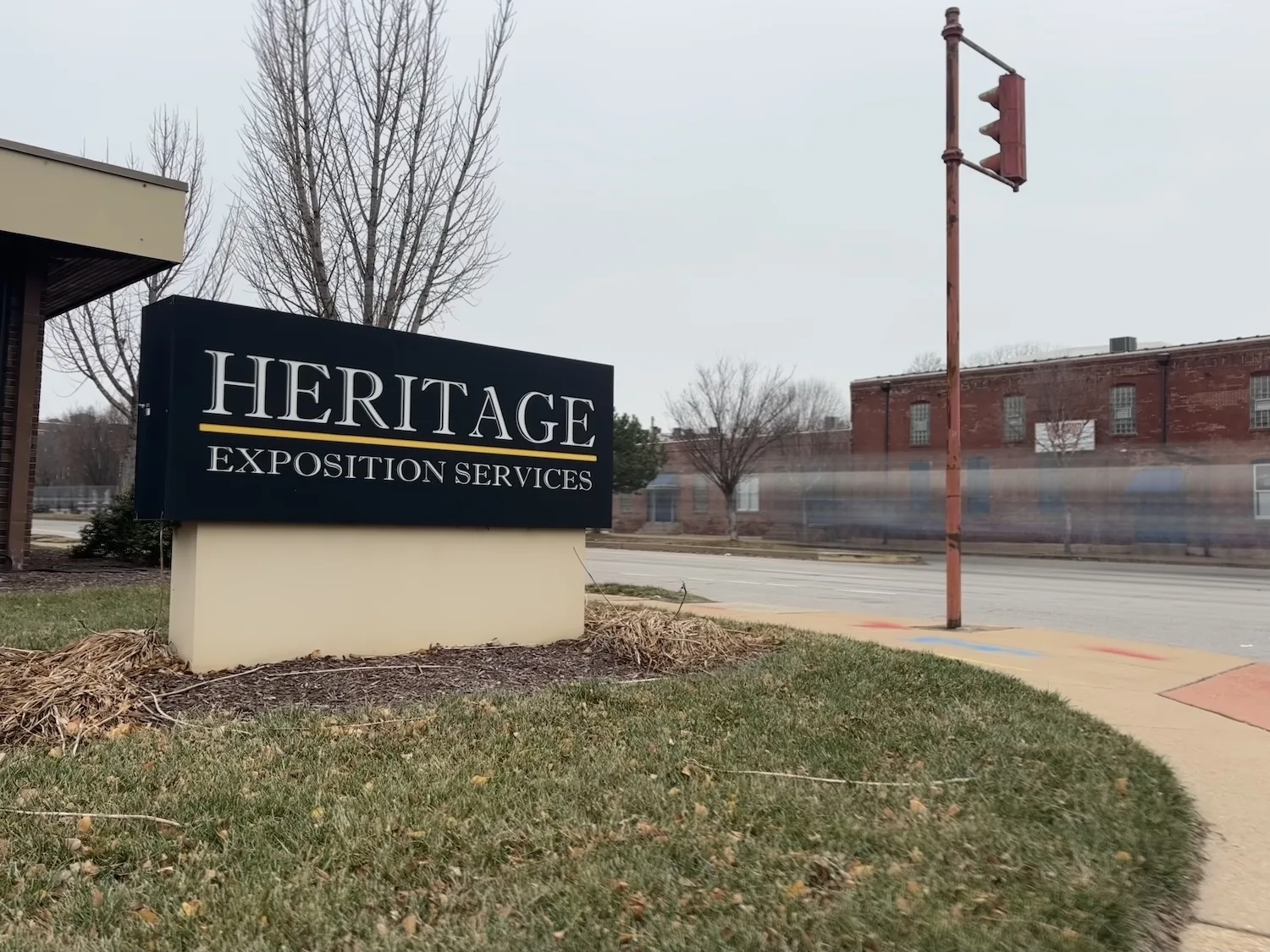
Heritage Exposition Services, an event and trade show contractor founded in 1963, announced last month that it’s establishing an employee stock ownership plan, also known as an ESOP.
Keep up with local business news and trends
Subscribe to the St. Louis Business newsletter to get the latest insights sent to your inbox every morning.
The event services industry requires a lot of sacrifice from employees like traveling regularly, working in high-adrenaline environments, and meeting strict deadlines, according to company president Ryan Yemm. Heritage has been under current management for about 25 years, he says, with leaders who rose through the company’s ranks.
“It’s always been a goal of ours to give back and really share some of that ownership with our team members that still make that sacrifice, day in and day out,” Yemm says.
Headquartered in the city’s industrial Kosciusko neighborhood, Heritage had been wanting to establish an ESOP since the early 2000s, but the company was never large enough for it to be financially feasible. That changed in recent years.
During COVID-19, Heritage was able to retain most of its employees due to senior management’s approach to running an asset-heavy company without relying on debt as well as support from Enterprise Bank throughout the pandemic and after. In recent years, Heritage has expanded into fast-growing markets like Phoenix, San Diego, and Las Vegas. The upshot: The company has grown close to 450 percent since 2019, according to Yemm.
“We were at the scope or at the size where we’re able to give back to our people, and that’s what we’ve done,” he says. More than 150 employees at Heritage meet the requirement of working at least 1,000 hours per year to participate in the ESOP.
A path to employee ownership
Generally, when a business creates an ESOP, it sets up a trust fund and contributes new shares of its own stock or cash to buy existing shares. Shares in the trust are then allocated to employees’ individual accounts over time. When employees leave or retire, they receive their stock, which the company then buys back at fair market value. ESOPs are often provided in addition to 401(k) plans; unlike 401(k)s, however, they do not require employee contributions.
The ESOP trust has only a minority stake in Heritage at this time, but Yemm says 100 percent employee ownership could be a possibility in the future.
A handful of other St. Louis businesses have already made that jump, notably McCarthy Building Companies, which established an ESOP in 1996 and became 100 percent employee owned in 2002. Today, it’s among the largest majority employee-owned companies in the U.S.
Before the ESOP, the McCarthy family owned the construction company, according to Ryan Sawall, CEO of McCarthy’s Central Region. The family wasn’t interested in just selling the organization; rather, they wanted to transition ownership to the employees who had given so much to help McCarthy get to where it’s at, he says.
“The ESOP has been tremendous, just a huge success financially, obviously, and then probably even bigger than that, culturally,” Sawall says.
Because McCarthy’s 4,200 employees are all owners, they feel responsible for its results. Sawall says that longer-term, bigger-picture thinking helps the company foster better relationships with clients and produce better quality work.
He credits the ESOP for the company’s ability to attract and retain the best talent in the industry, too. Year over year, McCarthy outperforms the attrition rate of its competitors, “and by quite a big gap,” Sawall says.
“I have found that it has been an accelerator for success,” he says.
Research supports that conclusion. Bill Castellano, director of Rutgers’ Institute for the Study of Employee Ownership and Profit Sharing, says sharing ownership with employees in some way—even without selling the entire firm to employees—provides an advantage.
“There’s a phenomenal amount of research that shows that makes employees more committed. It reduces turnover. Employees are more engaged,” Castellano says.
Selling 100 percent of a company to employees offers further benefit: the ability to operate tax-free. ESOPs are tax-exempt; as a result, future profits won’t be taxed, which increases the value of both the ESOP and the company.
There are about 7,000 ESOP firms in the U.S., a number that has remained steady over the past 10 or so years. “We really haven’t seen the kind of growth in employee ownership that we would like to see,” Castellano says.
He thinks that could change, however, with the “silver tsunami,” a metaphor for the large demographic shift now underway as baby boomers age past 65. The vast majority of companies are privately owned, and over half of those business owners are either nearing or at retirement, according to Castellano. The result: trillions of dollars of wealth that need to be passed on in some form of succession plan at a time of growing wealth inequality in the country.
ESOPs are worth considering for many businesses, especially privately-held, small to mid-sized firms, because of their tax benefits and job preservation, he says.
Selling to a competitor, strategic buyer, or private equity firm can have negative effects on employees, from relocation to layoffs.
“Selling to your employees with an ESOP maintains the business, it maintains the legacy of the business owner, and then, of course, it also has a very positive impact on that local economy,” Castellano says.