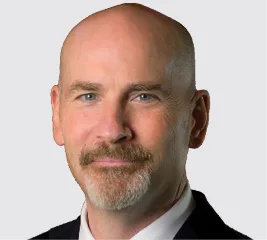
Whether skate – skiing, reading the work of thought-provoking writers like Wendell Berry, or cheering on his nephew—former Saturday Night Live cast member Michael Longfellow—Feser has a reputation for exuding curiosity and gratitude. These days, Feser is celebrating SLU’s new status as an R1 research institution. “I’m proud of the talented SLU researchers and dedicated supporters who advanced SLU’s research trajectory over the past 10 years,” says Feser, who succeeded former SLU president Fred Pestello. “Because of them, SLU is having a greater positive impact on people’s lives, here locally and around the world.”
Keep up with local business news and trends
Subscribe to the St. Louis Business newsletter to get the latest insights sent to your inbox every morning.
2026 QUESTIONNAIRE
PROFESSIONAL ACCOMPLISHMENTS & OPPORTUNITIES
What has been your/your company’s most significant success over the past 12 months? In February of this year, Saint Louis University received the Research-1 designation from the American Council on Education and the Carnegie Foundation for the Advancement of Teaching. This is the highest designation a university can receive for the scale and scope of its research enterprise, and it makes SLU one of only 52 private R1 universities in the U.S. I’m proud of the talented SLU researchers and dedicated supporters who advanced SLU’s research trajectory over the past 10 years. Because of them, SLU is having a greater positive impact on people’s lives, here locally and around the world.
What has you most excited about the future of your company or industry? SLU prepares students to be more than experts in their fields—our graduates also become ethical leaders committed to the good of the communities they serve. SLU educates for a life of hope and purpose, in addition to career success. It’s the advantage of a Jesuit education at a time when many prospective students are seeking greater meaning.
If you could change one thing about your industry, what would it be and why? Defining my industry broadly to include education from pre-K through university, as well as corporate workforce development, we would do a better job of collaborating across the board to innovate in the delivery of education and training, so we are better supporting learning needs across the lifespan (true lifelong learning), reducing costs, and making education more accessible to all.
What’s a risk you took in business that didn’t pan out—but taught you something valuable? I launched an internal innovation unit as provost at my previous university. Its role was to catalyze and incubate projects that would advance the university’s mission and generate net new revenue. Had to be both. Some projects were successful; others failed, sometimes after considerable investment. This was by design, because we wanted to take enough risk across a mix of projects to generate significant aggregate return. I had to be comfortable with defending losses in a sector that is generally risk-averse, and help others to see the value of thinking in terms of a portfolio, and not just a single project.
MENTORS & PEERS
What is a key strength of the St. Louis metro area business environment? In my short time in St. Louis, I’ve been impressed by how business, civic, and education leaders are pulling together to support the growth and prosperity of the city and region. Any city’s success requires strong, collaborative leadership. My wife, Kathy, and I are especially moved by the collective efforts to support recovery and rebuilding following the devastating tornado in May. I look forward to ensuring that SLU continues to be an active contributor to a city and region where everyone thrives.
Who in your company (or industry) deserves more recognition for their impact? There are many people who are critical to a university’s success who aren’t recognized often enough because they’re mostly behind the scenes. The workers who keep the Saint Louis University campus looking absolutely beautiful, and the maintenance workers who keep centuries-old buildings running. The food service employees, public safety officers, and administrative staff who support our students with their kindness and presence. The academic advisors, athletic trainers, and mental health clinicians who help SLU students grow as whole people. Universities are wonderful places because of so many people who are needed to make them run.
BACKGROUND
Where were you born? In Cardston, Alberta, Canada. My father was a National Park ranger stationed for a time at Glacier National Park in northern Montana. The nearest health care was across the border.
What educational degrees do you hold, and where were they earned? I earned a B.A. in Government from the University of San Francisco and a master’s and Ph.D. in city and regional planning from the University of North Carolina at Chapel Hill.
What was your first job, and what did you learn from it? I earned my first regular paycheck as a teenager working in a local diner/burger joint, first at the counter and then as a cook and supervisor. We had to work hard and fast, which taught me that every member of a team is critical to the success of an organization. Anything meaningful I’ve ever accomplished—in dozens of jobs I’ve held since, from manual laborer to university president—has been with the help of talented teams, committed to working together.
HOBBIES & INTERESTS
What’s your hobby/passion? I took up skate skiing—a form of cross-country skiing—eight years ago. It’s hard, and after eight years, I can report that I’m still a beginner. But in the few moments of smooth gliding and speed when I manage to get the technique right—pure joy.
What is one book you think everyone should read (or podcast everyone should listen to) and why? Wendell Berry’s The Way of Ignorance: And Other Essays. Berry reminds us that as the stock of knowledge grows, what remains unknown is always greater: “do what we will, we are never going to be free of mortality, partiality, fallibility, and error.” Therefore, we should engage one another and the land we live on with a “way of ignorance,” a “way of neighborly love, kindness, caution, care, appropriate scale, thrift, good work, right livelihood.” The book is over 20 years old; it couldn’t be more relevant today.
What would people be surprised to learn about you (fun fact)? One of my nephews, Michael Longfellow, was a cast member on Saturday Night Live.