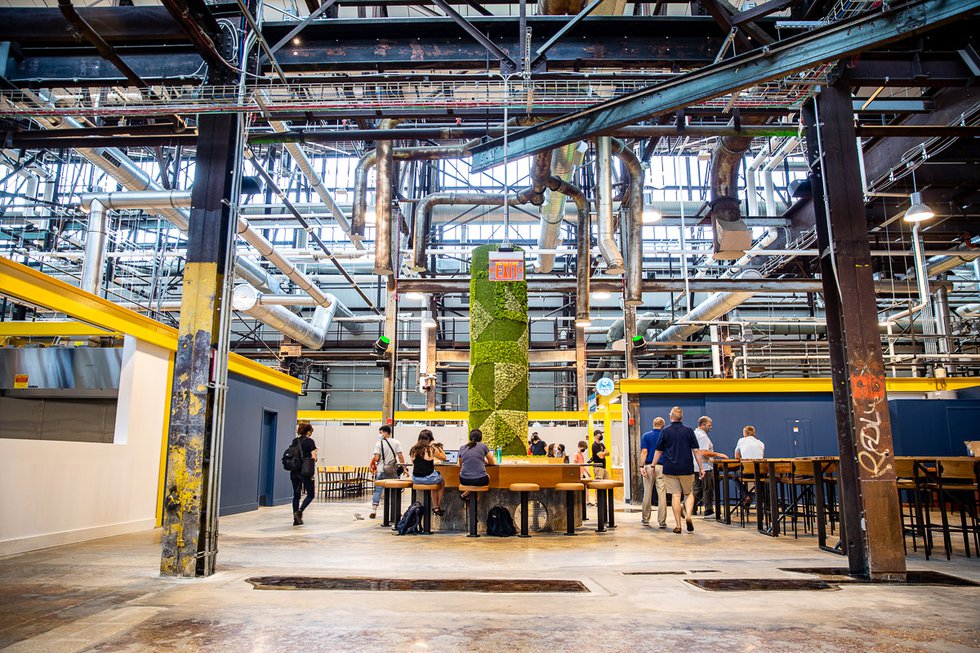
When Steve Smith, CEO of the development firm New + Found, thinks about the data center proposed for Midtown St. Louis, he can’t help but think of a previous plan for a different site that’s directly adjacent, the 15 acres that now hold City Foundry.
A development firm wanted to tear down the hulking Century Electric Foundry factory at at Forest Park Avenue and Spring Street and put in a big box retailer—in Smith’s words, “ a strip center with a sea of surface parking.”
Keep up with local business news and trends
Subscribe to the St. Louis Business newsletter to get the latest insights sent to your inbox every morning.
The idea seemed to have some merit on a site that was otherwise vacant, Smith acknowledges. As he recalls in a new episode of The 314 Podcast, people suggested, “hey, we’d get some development, we’d get some tax base.”
But, he says, “That would not have done anything, in my opinion, to differentiate St. Louis, to differentiate Midtown, compared to trying to do something unique.” When then-Alderman Joe Roddy balked at the plans, that opened the door for Smith’s team to instead redevelop the manufacturing plant in a more ambitious way, preserving its industrial bones and creating a mixed use development that includes a food hall, a movie theater, office space, and retail, all surrounding a central plaza. The project has become a destination for people outside the city limits and even tourists, with tax revenue steadily ticking upwards and visitors increasingly coming from far away.
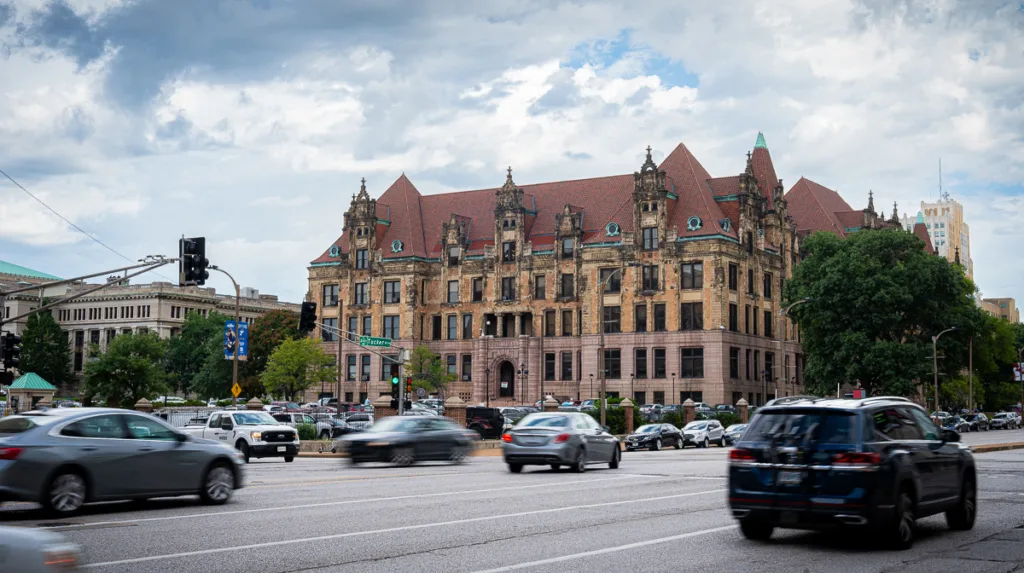
And to Smith, City Foundry’s success is a good argument for why the city should think twice about the two massive data centers that have been proposed for the historic Armory and a vacant site just next door—both right around the corner from City Foundry.
It’s partly about how Smith believes city leaders should prioritize projects that make St. Louis a destination. It’s also partly about the momentum Smith feels in the neighborhood, which now includes two sizable apartment complexes right next to City Foundry.
“ Our aspiration is for not just the City Foundry itself, but the entire district there, to be a hub of innovation, of community building, unique places to congregate around food, entertainment, office, all the amenities that create a vibrant city,” he says. “And that is a tremendous site next to City Foundry, next to Cortex, next to SLU. We could have had a strip center where City Foundry is. Do we take what is quick and convenient, or do we really hold off [in order to do] a bigger and better thing?”
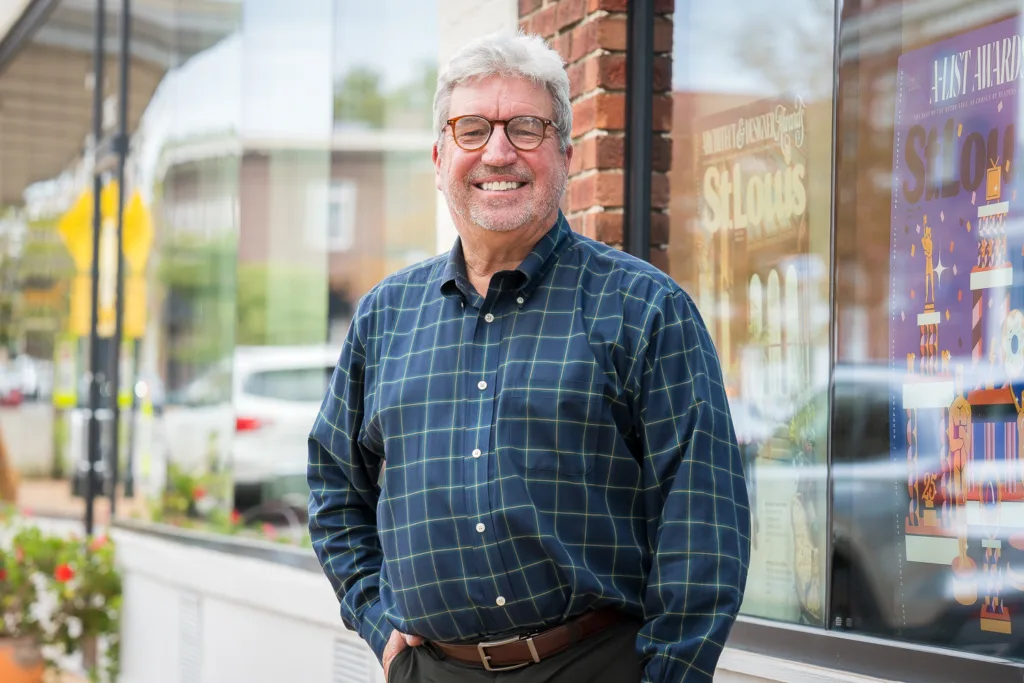
Smith’s son Will, the president of New + Found, shares his concerns about how a standalone data center—which historically means a lot of square footage, without many employees on site post-construction—could affect plans for not just that block, but the central corridor as a whole.
“If there’s anywhere in the city creating a real momentum around office space and innovation and housing and rebuilding the urban fabric, I feel like it is in Midtown,” Will Smith told SLM in a phone call last Friday. “And the great part of it is that Midtown would then connect the Central West End to Downtown West, where there is also a lot of momentum. And this just seems extremely short-sighted, at least in the current iteration of the design.”
Previously, developer Green Street turned The Armory into a giant bar and entertainment space after an office tenant fell through. The bar later closed, and then a partner in the development firm filed for bankruptcy. The new plan, led by THO Investments and Simms Building Group, seems like something of a hail mary. (A consultant for the project has stressed that it would add $213 million in tax revenue over 10 years, plus 30 full-time jobs.)
And with high office vacancies in districts as diverse as the heart of downtown and suburban Chesterfield, some observers have questioned whether the Armory has a constructive use other than as a data center.
The Smiths say yes. They believe there is demand for Class-A office space, something echoed in a recent report by Colliers examining the St. Louis office market that spoke of a “flight to quality” and the desire for office tenants to be in spaces with amenities. Will Smith says that not only is City Foundry’s office space fully leased, but they’ve had to turn prospective tenants away. They believe a building like The Armory makes sense for offices or another entertainment-style use, ideally both, to build off what’s happening at City Foundry (a planned pedestrian bridge connecting the two sites would help).
“ I think the office of the future is going to be different than the office of the past,” says Steve Smith. “And that’s what I think the opportunity is.”
Both Smiths stress that they are not against data centers—but rather the idea of two sizable data centers in the midst of what is now a neighborhood with a lot of buzz (and not the buzzing caused by giant electrical turbines). Will Smith points to the way Philadelphia has dealt with a bridge like the one now on South Grand to connect it to the surrounding neighborhoods and increase walkability as one potential model for the vacant site next to the Armory.
“I’m not saying necessarily the data center can’t be a part of it, but to me, to kind of plop a data center in the middle of that parking and basically make the entire parcel unusable feels like a totally missed opportunity to tie the entire neighborhood together and create real access between City Foundry, the MetroLink, and SLU,” Will Smith says.
Says Steve Smith, “ It’s a great site that we should think big and long-term for. I do want to be on the record to say I support data centers. That’s the future. I just think we want to be thoughtful about where they go and then how they’re incorporated in a broader development area.”
On The 314 Podcast, Steve Smith also discussed his desire to change St. Louis’ narrative, and how he sees projects like City Foundry and his new music venue, The Sovereign, fitting into that.
“ St. Louis as a region sometimes doesn’t have the same kind of positive national stature as a place like Nashville or Austin or increasingly Columbus, Ohio, or places like that, where young people naturally want to gravitate to,” Steve Smith said. “But when you look at the substance of what St. Louis has, the institutions, the attributes, the free amenities that we have for families, Nashville, Austin, and Columbus can’t hold a candle to us.”
Editor’s note: A previous version of this story referred inaccurately to a bankruptcy involving development firm Green Street. It was a partner in the firm who filed for bankruptcy, not the firm itself. We regret the error.
Hear Fenske’s full interview with Smith on The 314 Podcast.