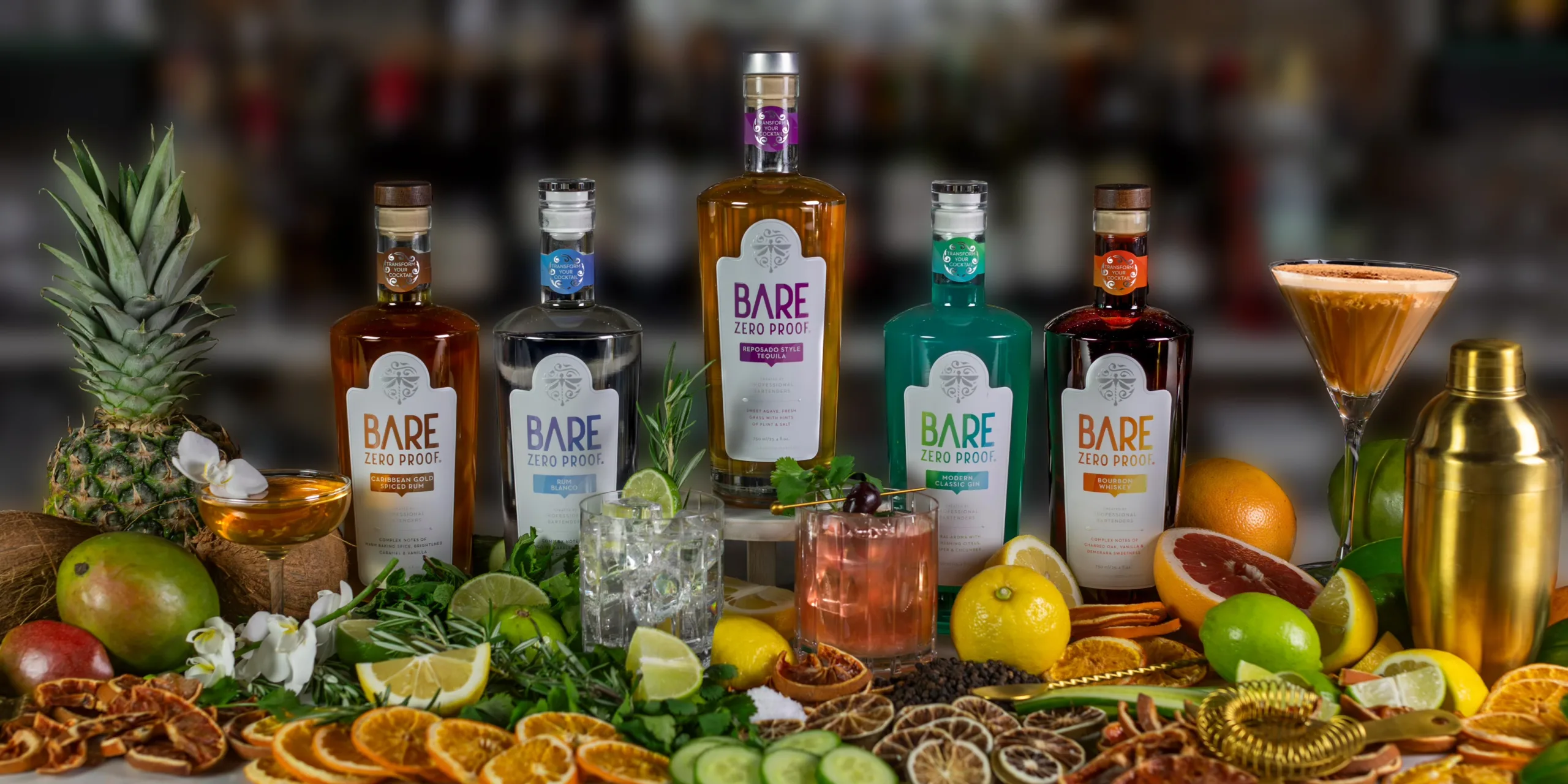
James Kempland saw the writing on the wall all the way back in 2017: Alcohol consumption among younger people was on the decline. At the time, Kempland was the director of marketing for Angel’s Envy, a Kentucky Straight Bourbon owned by Bacardi.
The clues of this impending drop-off in drinking among Gen Z and some younger Millennials started popping up in the market research that Kempland follows closely given his background in strategic marketing.
Keep up with local business news and trends
Subscribe to the St. Louis Business newsletter to get the latest insights sent to your inbox every morning.
“That’s what began to startle me, because if that trend was continuing, number one, why? And number two, what did it portend?” he says. “As we’ve advanced since then, this is obviously no longer a trend; it’s a movement. The non-alcoholic beverage category, whether that’s beer, wine, or spirits, is truly here to stay.”
What came next for Kempland was the launch of a new business seeking to meet that movement—and provide the products to serve it. He recalls doing Dry January in 2018 and buying non-alcoholic beer.
“And there were some non-alcoholic wines,” he recalls. “The non-alcoholic spirits category didn’t exist.”
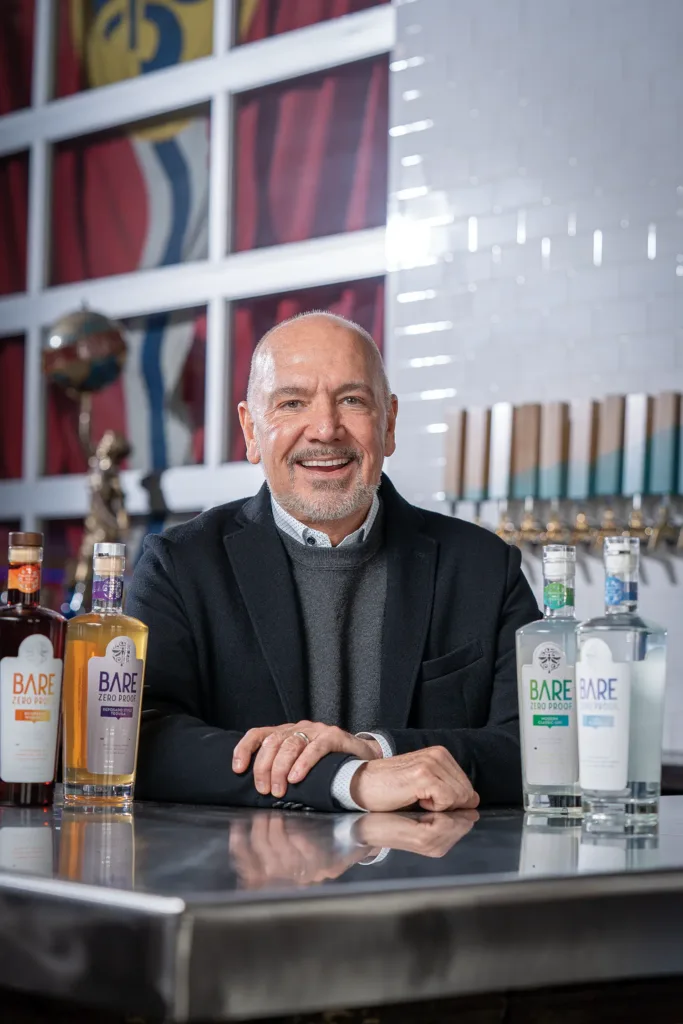
Kempland called Sam Newberg, a friend with a food chemistry background, wondering whether they could make a non-alcoholic Old Fashioned. Newberg took a few days to get back to him, but eventually responded not with a non-alcoholic bourbon but “a passable gin,” Kempland says. From there, BARE Zero Proof Spirits formed in 2018.
“That was really what prompted it: Why can’t I have something that obviously should be a matter of choice from a consumer standpoint?” Kempland explains.
Turns out, a lot of that had to do with food chemistry, or rather beverage chemistry. Distilled alcohol is “an excellent flavor carrier,” Kempland says, meaning gin may pack a vibrancy with notes of juniper or chamomile, or a bourbon can take on the flavor of the barrel it’s aged in. Designing non-alcoholic spirits that met their high expectations for a consumer-facing brand, however, proved “significantly difficult,” he adds.
It took four years to crack that code, with the breakthrough coming from hiring a team of expert bartenders “whose palates are almost perfect,” Kempland says.
“They began looking at it differently, saying, you’re not trying to create what’s in the bottle, you’re actually trying to create what’s in the glass,” he says. The success of BARE Zero Proof products depended on how they interacted with sweet, sour, and bitter flavors, the building blocks of cocktails.
“Anybody that’s on the sober journey, whether they’re abstaining or they’re moderating, they’re going to consume those types of beverages in a cocktail,” Kempland says. “It doesn’t make any sense to do shots of non-alcoholic tequila, right?”
Focusing on the resulting cocktail instead of replicating a non-alcoholic version of a base spirit let BARE Zero Proof stand out from others trying to get into the same nascent space. Kempland says his team was grateful to not be the first non-alcoholic spirit on the market when BARE Zero Proof launched in 2022 in St. Louis and Kansas City with non-alcoholic tequila, gin and bourbon products, because it meant people were already aware and less skeptical of the small but growing beverage category. Even so, people’s eyebrows went up at the mention of “non-alcoholic spirits,” and Kempland had to answer “who’s going to drink that?” frequently.
“As it turns out, almost one-third of the American population does not drink alcohol and they were tired of drinking club soda with a lime or Diet Coke with a lemon,” he says. “We knew that there was a market for this type of product in order for people to feel included in a social setting [and not] stigmatized.”
Since launching its first products in 2022, BARE Zero Proof has expanded from what Kempland calls its “flagship market” of Missouri to Maryland, Maine, South Carolina, Georgia, Washington, Oregon, Arkansas, and Mississippi.
BARE Zero Proof is offered at a variety of local grocery and liquor stores, including locations of Randalls, Friar Tuck’s, select Schnucks, and soon to be Straubs. Local restaurants Session Taco, Salt + Smoke, Annie Gunn’s, Niche Food Group, and Katie’s Pizza carry the non-alcoholic spirits as well.
Chris Kelling, director of restaurants for Katie’s Pizza, says he recalls being impressed with BARE Zero Proof’s products on first taste, having years of experience as a bartender and running beverage programs in St. Louis and San Francisco.
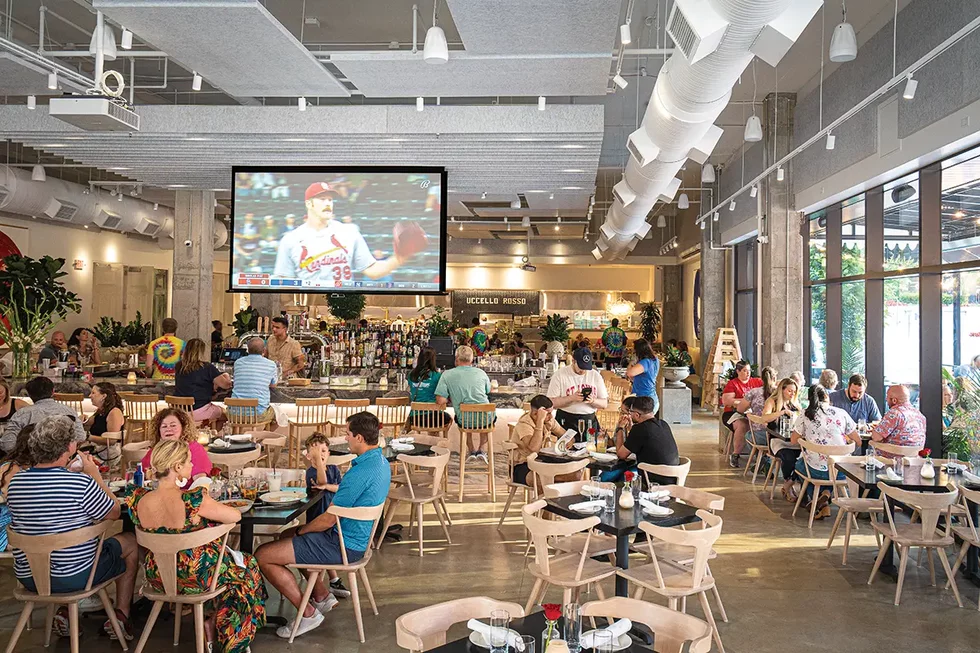
“They’re offering a depth of flavor that we can’t get elsewhere without making the process painstaking,” he says. “It’s proven to be quite successful on our end, as far as making sure our non-alcoholic offerings are equally compelling as those of our spirited options.”
Kelling explains BARE Zero Proof products come with a depth of flavor that makes it much easier to create a menu of non-alcoholic cocktails. It’s not enough to just offer a NA gin and tonic, for example, he says.
“One thing you’ll always miss is the weight [in a non-alcoholic cocktail]. And I’m playing around with a few things right now to kind of get that mouthfeel back to it,” Kelling says. “But it’s really nice to see these spirits aren’t just a flavoring; that they have a dimension and some complexity.”
The real test comes when someone orders a non-alcoholic cocktail, because not only are they competing with “spirited” versions, but also more budget friendly non-alcoholic drinks too, such as lemonade, ginger beer, or iced tea. And often it’s about what customers don’t say about the drink that is the best indicator of its performance.
“We’re getting a lot of second ordering,” Kelling says. “That’s high praise.”
To Kempland, though, it’s not surprising.
“Once we enter an on-premise establishment, our rate of retention is in the high 80s,” he says. “People understand that they have a quality product and they want to serve their customer quality product.”
BARE Zero Proof is eyeing a significant expansion this coming year, having signed an agreement with Southern Glazer Wine & Spirits, a national beverage alcohol distributor, to roll out its products to half the country next year. (Breakthru Beverage Group is BARE Zero Proof’s distributor in Missouri.)
“We’re luckily being able to roll it out in a manner that’s consistent with what our production capabilities are but it still is daunting,” Kempland says.
It coincides with winning an Arch Grant this fall, which will help pay for an expansion of production and ongoing marketing. “We are competing against some of the largest spirit companies in the world and so when you are doing that, to break through can be difficult and capital intensive,” Kempland explains.
At the moment, BARE Zero Proof is about halfway to producing and selling the 5,000 to 10,000 nine-liter cases on an annual basis that’s considered the typical threshold for viable spirit companies. That, to Kempland, feels like a big achievement.
“This is a nascent category,” he notes. “It technically didn’t exist seven years ago. And so when you’re trying to build benchmarks and you’re utilizing a comparative product that’s been in existence for 2,000 years It isn’t necessarily a fair one, but it’s the one I have to work with.”
Still, he expects the category—and his brand—to grow as more people engage in sobriety, either permanently or occasionally. Kelling agrees that high-quality non-alcoholic options, especially cocktails, are here to stay.
“Drinking is drastically down across the board. But the desire to feel fancy remains steady,” he says. “People are expecting to be able to come out and order a fancy drink, whether it has alcohol in it or not. For society at large, that’s probably a good thing.”