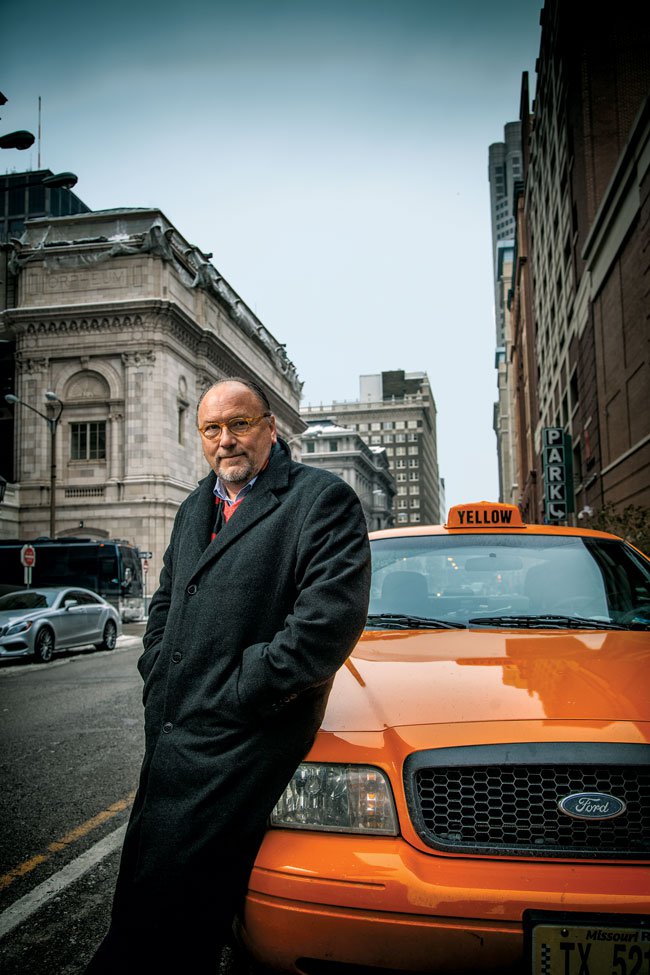
Lou Hamilton cut his teeth as a member of former Mayor Vince Schoemehl’s staff in the ’80s. He’s since served as a go-between with A-B Inbev, the Cardinals, and other corporations, connecting business interests with local governments. Over the past 12 years, he was the head of the St. Louis Metropolitan Taxicab Commission. He resigned in December after a tumultuous year of jousting with Uber.
How did the commission start?
Get a fresh take on the day’s top news
Subscribe to the St. Louis Daily newsletter for a smart, succinct guide to local news from award-winning journalists Sarah Fenske and Ryan Krull.
The taxi industry was in disarray. The cars were crappy. The business and tourism industry were complaining. We had the city, the county, and the municipalities to deal with. [County Executive] Buzz Westfall started to promote an overlay commission. It took about four years to get it through the Legislature. The Highway Patrol insisted that any driver be required to submit to biometric background checks and fingerprinting; the FBI would do a national criminal background check.
It’s all paid by permit fees, driven by permit fees. The city and county have been paying for inspectors, they don’t have to do that. Some did a good job, others didn’t. The county kept books for the Taxi Commission, the department of public work did. For the first two years, they did a census of every taxi in the region. They could not take the permit away. At the time we took the census, we had 2,500 to 2,600 taxis. There were a lot. The average age of a taxi then was 21 years. The only city that had taxis older than St. Louis was Havana. They had ’56 Buicks. We gave them two or three years to do a phase in and we went from an average age of 21 years to most averaging nine years. In two years we cut the age in half. There’s something to be said about that. We instituted background checks and drug testing if you want to drive a cab. Generally it’s worked pretty well.
Is it accurate to portray the Uber controversy as an old school–versus–new school conflict?
You have to look at how these ‘ride hail’ services have rolled out across the country and the world. They like to describe themselves as a ‘disruptive technology.’ Basically, every city they’ve come to, they’ve bulldozed their way in and overtaken a very slow-to-respond legacy taxicab industry.
In every city they go into, they try to create “This is the hip thing, and everyone else is not hip.” I’ve got no bitch between Uber and the taxi guys—that’s a competitive thing. [But] if we make the taxis follow certain laws and regulations based on safety and protection of the public, then Uber should be subject to them, too.
The bottom line is the PR juggernaut of Uber kind of swamped the facts. People need to slow down and back up a little bit. They’ll see. Uber is secretly testing fingerprinting across its system. It became an issue that, in a perfect world, would have been taken care of in context. It wasn’t. It blew up.
While the rest of the world is burning, we’re f—ing around worrying about whether some middle-class kid is going to be able to take Uber to go bar-hopping. There are bigger issues in the world.
What were the obstacles?
They gave us 15 things they’d like to have, and 12 of them were not a big deal. There were three that were troublesome: insurance, fingerprints, and the requirement that drivers have a commercial driver’s license. They wanted to do their own background checks that did not include fingerprints. I said I had no choice in that; that’s Statute 67.1809. So they launched this offensive against us.
If the mayor and county executive think what Uber will do for security is fine, then they can support efforts in Jeff City to remove that requirement.
Uber pulled stunts like they would give free rides on the 4th of July. That’s great. We said we’d stay open and streamline the process for background checks, but you’re not going to operate without proper background checks. They blew up and made us all look like troglodytes.
They started beating up on us. It got really ugly. As of now, UberX is operating contrary to the law. We expect litigation to be kicked back to circuit court because it’s a state issue. They’re going to Jeff City to try to exempt themselves from any regulation.
Was the way it played out predictable?
Absolutely. All you had to do was look at the template. They have very smart people, and the taxi industry is slow to the app world and social media. They’re getting there, but Uber was born in the social media generation. It didn’t have to retrofit; they started out with it. The model is successful.
The most valuable part of Uber is its big data. They’re going to make plenty of money from giving rides. They’ll be able to tell what a person of a certain age is doing between 6 and 8 on a Friday night. They can tell exactly. They’re doing a billion rides a day and they will have profiles on everyone. I think that’s their secret.
Will Uber be operating in St. Louis a year from now?
Lawfully? Maybe. They’re going to do what they did last year. The big argument now is over UberX, which is the low price alternative. In the summer of 2014, we adjusted our vehicle for hire entry for Uber Black, their high end, luxury service. We went through all sorts of gymnastics to accommodate them, to make it profitable to operate UberX, it was a different thing. We had a ‘black car category’ for Uber Black, the first and only service they had. They wanted to dispatch it through our system and relax the rules. We had a three car minimum. They wanted to relax the rules, and we did. We worked with the mayor. They were difficult to deal with but we got it done. From the first meeting in May 2014 until July, in 60 days we were able to create and adopt new regulations that permitted their lawful entry into the market with Uber Black.
It wasn’t until the late fall that they talked about UberX. They kept talking about it, they never sat down with us.
My job with the taxi commission was not to prevent competition, it was just to make sure everyone did what they had to do and it was done the right way.
Instead they hired people to represent them in the Missouri Legislature. They filed or caused to have filed a number of pieces of legislation in different categories that would have essentially exempted Uber from regulations at all.
The mayor of Kansas City, Sly James, gave one of the most stirring political speeches I’ve ever heard. He gave a stemwinder on the floor of the city council, blasting Uber for how they did things.
Do you think that Uber views the litigation as a cost of doing business?
Yes, absolutely. They’ve done this in other states, including Texas. They got 90 percent of what they wanted, except fingerprinting. Kansas City is not required to do fingerprints, we are. In Houston, they didn’t require fingerprints and it’s been a nightmare. In Austin, the headquarters of hipness, the city council now requires Uber drivers be fingerprinted. I rest my case.
Do you regret calling fellow commission member Chris Sommers of Pi an “insufferable douche” on Twitter?
I regret launching it into a public forum. I’ve got thick skin. My frustration with the person in question had reached epic proportions. That launched a whole new wave of craziness. If I had to do it over again, I probably would have been more discriminating and done a private message. But you can’t unring the bell.
Why did you resign?
I was tired. I’ve been on the commission for 12 years. I had told the mayor and the county executive that I was planning to leave in the fall. They asked me not to leave; I said I’d be out by December. There is only so much fun one guy can have.