
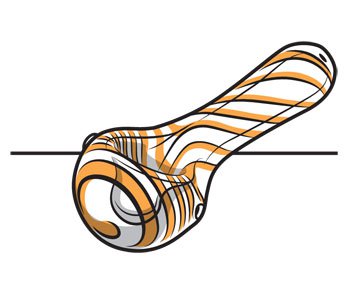

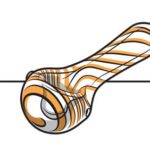
David Alper’s glass pipes range from a simple bowl with a stem to elaborate multichambered rainbow-colored creations that are emblematic of the cosmic journeys some users might hope to take. Here’s how he makes the magic happen. ([email protected])
1. First, Alper warms and softens his glass in a tabletop annealing oven, heated to about 1,000 degrees.
Get a fresh take on the day’s top news
Subscribe to the St. Louis Daily newsletter for a smart, succinct guide to local news from award-winning journalists Sarah Fenske and Ryan Krull.
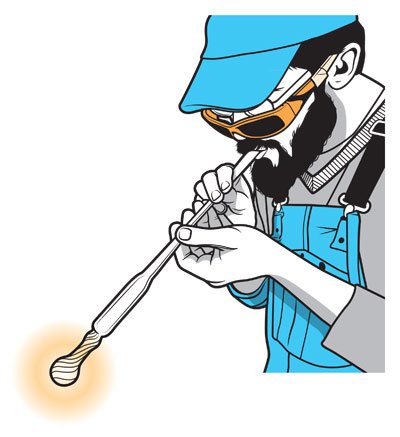
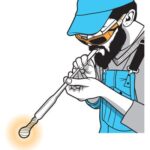
2. When the glass is ready, he starts to stretch it in the adjustable flame of the bench burner. Fueled by propane and oxygen, the burner’s flame turns the glass a hypnotic shade of orange, and the glass artist pulls it like taffy.
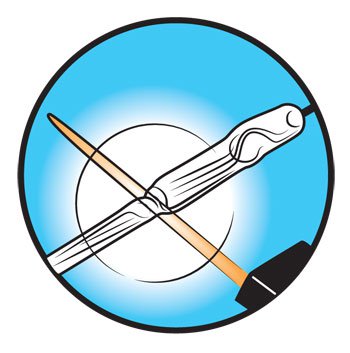
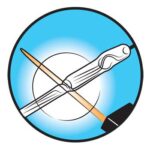
3. Color is applied to clear glass by “painting” it with a tube of colored glass. The glass surfaces adhere to each other.
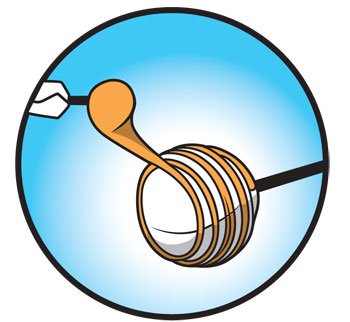
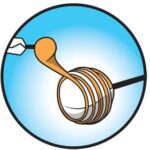
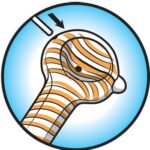
4. The next step is turning colors into patterns. The glass blower might twist the glass, for instance, to turn straight stripes into curved ones.
5. Then comes the blowing part: The artist pushes and pulls on the glass—and sometimes blows air into it—to make a pipe shape.
6. Handheld tools such as a graphite reamer and metal tweezers can be used for poking and squeezing, too. To hold the glass during this part of the procedure, Alper uses glass tubes that are later removed.
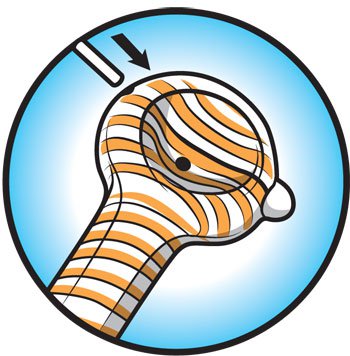
7. Once he has the shape he wants, it’s time to pop a few holes in the pipe: one for the bottom of the bowl and one for the “carb,” or carburetor, to aid in filling and clearing the chamber of smoke. Directing a thin jet of flame at a small stress point while blowing into the glass makes it pop open.
8. The last steps include flattening one surface of the pipe so that it sits on a table without rocking and decorating the pipe with, say, textural dots of colored glass.
9. A final trip through the annealing oven makes the glass more durable. Once it cools, it’s done.