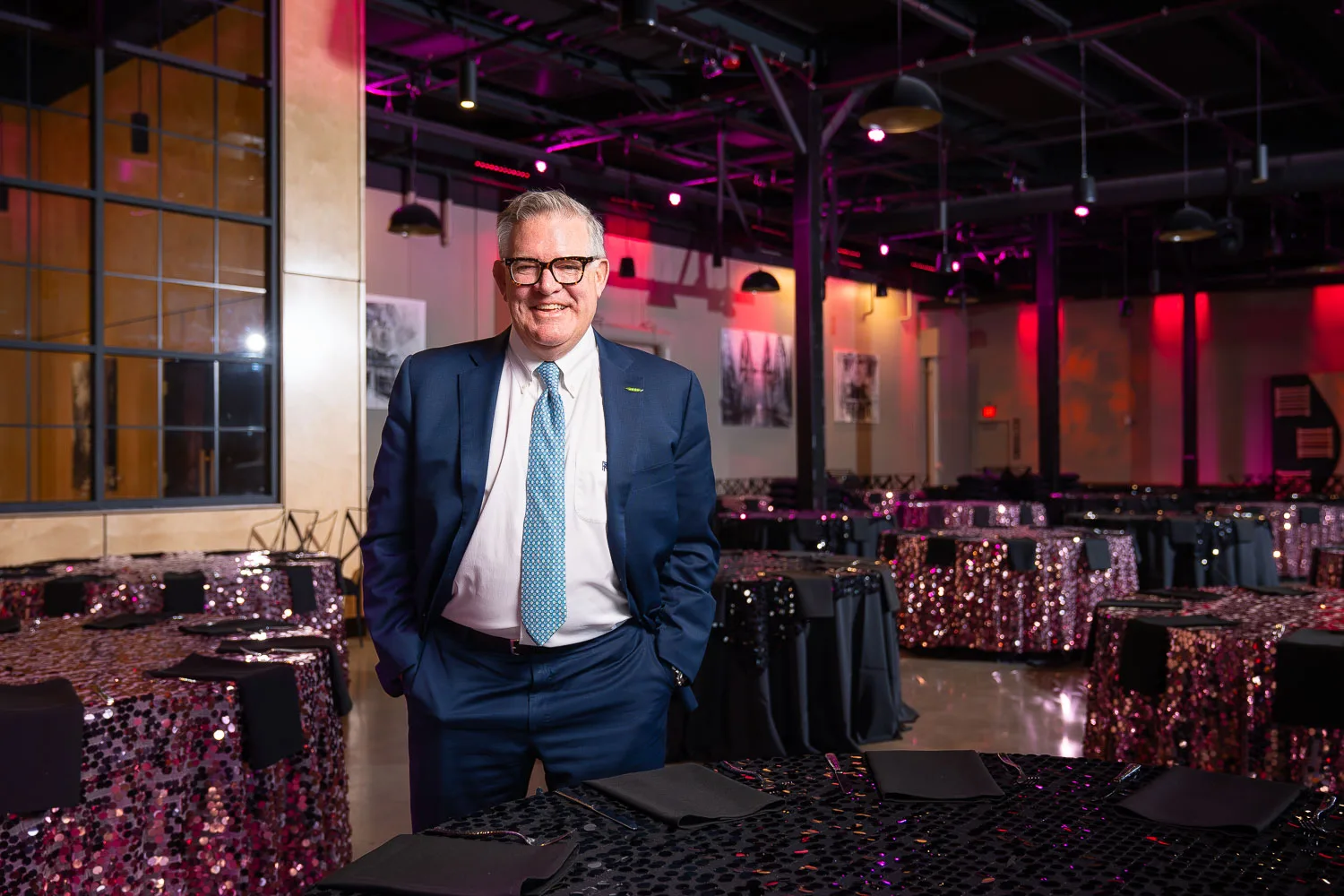
Anyone who has attended a St. Louis wedding reception or gala over the past several decades likely recognizes the name Butler’s Pantry. Founded 60 years ago, the company has grown into one of the largest catering operations in St. Louis—arguably the largest—and among the biggest in Missouri. Its résumé ranges from presidential and papal visits to intimate home and office gatherings. Less widely known is its early influence on local dining: Butler’s Pantry helped introduce St. Louisans to two now-iconic pasta dishes and pioneered the boxed lunch, then called the “Beauty Box.” That legacy, and the occasion of the 60th anniversary of Butler’s Pantry, set the stage for SLM’s recent conversation with second-generation owner Richard “Ricky” Nix Jr.
Catering discussions aside, is it true we owe our collective love for Pasta con Broccoli and Chicken Tetrazzini to the Nix family? Those were two of the recipes my mom carried in her head and passed down to all of us Nix kids. Pasta really entered the American mainstream in the ’50s and ’60s, alongside meat and potatoes, but our connection goes back further. My extended family, the Vivianos, bought the pasta maker from the 1904 World’s Fair and started producing pasta with canned tomato sauce. Pasta became a foundation of Butler’s Pantry, which led us into cream sauces and dishes like tetrazzini. Over time, those became wedding staples and people bragged about serving chicken tetrazzini instead of the usual mostaccioli. Pasta con broccoli replaced red mostaccioli and ham. [Laughs.] We didn’t sell much ham after that—and still don’t.
What’s the story with the boxed lunch? What’s now known as the boxed lunch descended from something we called the beauty box. Back in the day, there were no spas or spa food, but there were beauty parlors where women went to get their hair done. We sold prepackaged sandwich boxes to beauticians throughout the city, who could then offer a full ‘day of beauty’ and keep clients longer. It was a great way to build our name early on. Today, we don’t do as many boxes because they’re labor-intensive. Instead, we offer what we call ‘collections’—a more buffet-style setup where guests can customize sandwiches or salads. It’s fully customizable, easy to deliver, and served on disposable chafers and trays. We call the program Entertaining Now.


How did Butler’s Pantry get its start? My parents opened it 1966, where the House of India is now on Delmar, starting with grab-and-go comfort food and prepared items. It was a precursor to a Gourmet To Go-type operation. It was a tough sell at the time, so they turned to catering to keep the doors open.

When did you get into the business? Long before high school—probably as soon as I could walk. I started by cutting vegetables and peeling shrimp. My kids followed the same path. Ricky III was bussing tables and cleaning the Piper Palm House when he was 11, and Peyton started hosting there at a young age. Both are still very involved in the business.
How important is family to the company? The family aspect has been the through line for 60 years and not just the Nix family. We have employees whose parents and even grandparents worked here. We truly are a family company—the Butler’s Pantry family, hundreds strong—and we’re incredibly proud of that. We also support other families through our Full Pantry, Full Life initiative, donating $5 for every 50 guests served to local food pantries and related organizations.

How has catering evolved since the 1960s and ’70s? In the ’60s, catering was very utilitarian—simple church basement receptions, basic buffet lines, and guests seated at long rectangular tables. Flair and presentation wasn’t a focus yet. In the ’70s, tents became more common, though not the elaborate structures of today. It was still expensive, since we had to rent the tent, the tables, the chairs… That’s also when presentation improved, with silver chafers, floral and carved fruit displays, table skirting, ice sculptures, and ice bowls filled with shrimp…


Butler’s Pantry also introduced round buffets here, where people could access food from any angle, allowing us to handle larger groups more effectively and attractively than at standard 8-foot tables. By the late ’70s, rising costs at hotels and clubs pushed people to host events at home or alternative venues, where they could do so for a lot less money. Nonprofits also shifted from sending out mailers or calling prospects for donations to hosting fundraising events like sit-down galas, where the focus was keeping people engaged—and donating—throughout the evening.


And the ’80s? The ’80s was the dawn of food as theater, when action station stations became popular—things like carving and pasta stations or even mobile stations, where chefs are on the move. You also saw no-chef-stations, like self-serve taco or nacho bars, or straight pick-up bars, like for pizza and desserts. Buffets were still popular, where the presentation got amped up, with entire tables being dedicated to fruits or vegetables or charcuterie. That’s also when the frilled toothpick became a thing. One of my first jobs was to divide and separate them by color touching only the frills, stuff them neatly into glasses, and wrap them in plastic wrap. That kind of sorting was a tough job for an 8-year-old kid. Catering in general became more mainstream in the late ’80s and early ’90s, as two-income households became more common and corporations began using catered events as a marketing tool, entertaining customers at one event and employees at another. It became a great way to expand their culture.


What defined the ’90s? Themed events took off across the board. Corporate client appreciation became an event, employee culture was celebrated, and employee training was paired with a theme. As homes and backyards got bigger, entertaining at home became more common, often with themes like luaus there as well. Tents also became more affordable and elaborate, fueling the rise of backyard weddings.


Were themed uniforms part of that trend? They were, but not so much anymore. Today, we get requests for custom aprons or ties, but full costumes are less common. Our uniforms still change depending on the venue and the level of sophistication desired. Bow ties, cummerbunds, and starched shirts are a challenge especially in hot weather, when we sometimes provide a set-up shirt so the staffer can look fresh at showtime.


How did catering change after all of the Y2K parties? After 2000 is when weddings became glamorous affairs—not at the parents’ clubs but at unique places. That’s when we got into the venue business. Events in general became immersive art experiences, where everything had to make a statement, and we created a design division just for that. Ice sculptures evolved into branding pieces, food displays grew taller and more dramatic, sometimes seven tiers high, and global cuisine surged in popularity when clients wanted something beyond traditional American fare. We did an Indian dinner where guests sat on the floor around a large rectangular table that was open in the middle. Event hosts now wanted to tell a story. They want an experience. They want to leave an impression. This was also when websites and email marketing, accompanied by beautiful photos, became the front door to your business, replacing reliance on traditional TV and print advertising.
What stands out since 2010? Tents now rival permanent structures, with hardwood floors, HVAC, and sophisticated lighting that will project images using GOBO lights. Traditional chafers are being replaced by induction burners and warming pads. Personalization has grown… There are individual sculptured butter molds tied to the couple, different custom cocktails, some with edible discs with imprinted pictures floating on the top. You’ll see a passed hors d’oeuvre or dessert reflecting personal preferences, stamped ice, keepsake monogrammed napkins—anything that can be personally customized. Even in St. Louis, weddings have hit the $1 million mark.
What does a typical wedding in 2026 look like? Less formal and more flexible. Stations have largely replaced sit-down dinners. More and more young people are getting away from being tied down like that. Ethnic cuisine buffets are still popular, right down to themed cocktail stations. Some get so involved you almost need an interactive map. Couples who want to reflect their heritage may not want say, a full Bosnian or Nigerian menu, but they want a nod to that. We are doing a lot of Indian weddings and more Indian food in general. That may be the most asked-for cuisine lately. We’re seeing regional preferences come out late at night, too, like the breakfast burritos requested by a Texas bride, Kansas City-style barbecue, or the Chicago-born groom who wanted Chicago dogs and Garrett mixed popcorn. Something else in-demand is Kosher cuisine, which we feel more people would appreciate if offered. Regarding beverages, people have become more particular. They are specific about the vodka, for example, and about the cocktail preparation. Now we offer specific alcohol brands, and even a non-alcohol program, whether it’s a menu of mocktails or a dirty soda bar, which has become a trend.


Butler’s Pantry has also operated restaurants. Would you do that again? In 2009, we operated Bixby’s at the Missouri History Museum and then Piccione’s Pastry on the Delmar Loop. I wouldn’t rule out doing retail in the future, but it would have to be more like a gourmet market, which is more in our wheelhouse. I could see us doing a bougie bodega like that. But starting an open-daily restaurant on your own was, is, and will still be really tough, which is why a lot of restaurants have silent partners.
Is staffing still a challenge post-pandemic? Service expectations are higher than ever, which for us means better training and deeper staff. It went from ‘we just need a hand,’ to ‘we need a professional hand.’ We’ve built a strong training program and now have about 250 part-time team members, so we rarely have to rely on temp agencies. Butlers Pantry’s business had grown steadily until the pandemic, when it fell off a cliff. It took us five years to recover. We consider ourselves lucky to still be here.

How many venues do you service today? We own The Coronado, and we’ve added 18 Rails at City Foundry and The Reverie in Chesterfield. At The Reverie, the sweet spot is 350, but we can direct smaller events to The Gallery at The District, which showcases a lot of great pop artwork. The ambience there is built in. At 18 Rails, we use partitions for smaller parties, which can also allow transitions from cocktails to dinner to after dinner entertainment. We are a preferred caterer at more than 40 venues.
What challenges lie ahead? One is how to deal with the cannabis-infused beverage requests. It’s a question that hasn’t come up yet, but we feel soon will, once it becomes more mainstream. Legally, we can serve them in Missouri, just not alongside alcohol at the same bar, so we’re preparing for that. And if you’re wondering, we haven’t had any requests for the so-called Ozempic menus. That phenomenon has yet to cross over into wedding dinner planning.
What does the future hold? The new venues provide an excellent growth opportunity and we hope to add more event spaces, hopefully in conjunction with hotel rooms, something that is needed that we don’t currently have. I expect to see continued creativity and personalization, though perhaps less over-the-top than in the past. The third generation of the Nix family is now involved, so we’ll see where it all goes. Personally, I’d love to cater an event on a SpaceX Starship.
Find the best food in St. Louis
Subscribe to the St. Louis Dining In and Dining Out newsletters to stay up-to-date on the local restaurant and culinary scene.