Hear more about commonly mispronounced foods and St. Louis restaurant names on the Arch Eats podcast.
Ask George: “Have you ever compiled a list of mispronounced foods?” —Debra D., St. Louis
Find the best food in St. Louis
Subscribe to the St. Louis Dining In and Dining Out newsletters to stay up-to-date on the local restaurant and culinary scene.
Yes, and I’ve added to the list several times over the years, but it was a recent mispronunciation of the word “mostaccioli” by a local radio host—who continued to call the dish “muskaccioli” even after being corrected—that sparked the renewed interest. “Well, that’s just the way I say it,” he shrugged. Old habits…
As the world shrinks and diners become more sophisticated, more culinary terms emerge, so proper pronunciation is an ongoing exercise but a worthy one, since no one wants to order something incorrectly in a restaurant, or worse, feel obligated to do a point and shoot, saying, “Um, I’ll have that.”
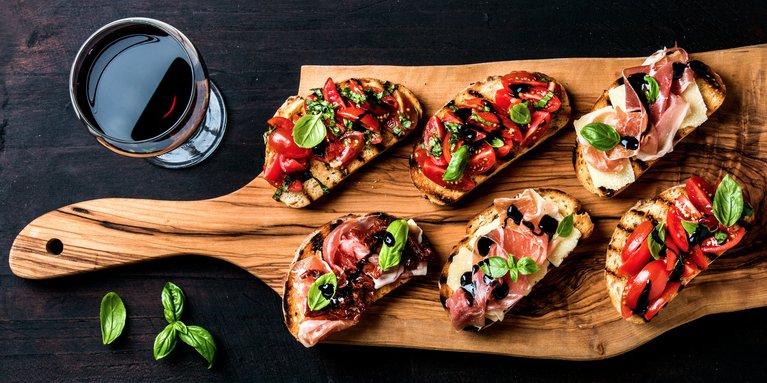
The original inquiry was about the correct pronunciation of bruschetta—”or at least the one I should use in St. Louis. I don’t want to sound pretentious.”
Here was my answer: Regarding bruschetta, the clumsy sounding “broo-SKEH-tuh” is correct in the strict Italian sense, which calls to mind the word endive. Sometimes, you just sound like a snob applying the proper accents trying to be proper.
My rule of thumb: Pronounce according to the surroundings. Call me crazy, but I’ll likely pronounce bruschetta differently at Olive Garden than at Tony’s. And yet I always say tuh-MAE-toh. Go figure…
That said, here’s a list of mispronounced culinary terms, summarized in alphabetical order:
- Açai: The berrylike fruit, one of the so-called super foods, is ah-sigh-EE
- Anise: ANN-iss. The “a” is short, not long.
- Au Gratin: Americans say oh (or aw) GRAH-tin; the French say oh-grah-TAHN, barely pronouncing the “n”.
- Au jus: oh-ZHU or oh-ZHUS
- Beignet: bain-YAY
- Blue Curaçao: If I hear one more bartender call this liqueur koo-RAH-koh, my head’s gonna explode.
- Boudin: The Cajun rice staple is called boo-DAN.
- Bouillabaisse: That other fish stew takes several pronunciations, among them BOO-yuh-bes, BOOL-yuh-base, and BOOL-yuh-bayz.
- Cannoli: Italian bakeries and restaurants have all heard guests saying canneloni, when ordering the iconic stuffed pastry.
- Caramel: Two syllables or three? Either works, but I prefer two, CAR-mull.
- Caramelized: Three for me. Four seems too clumsy.
- Celeraic: If you don’t want to call it celery root, say seh-LEH-ree-ack.
- Ceviche: Fish “cooked” in citrus juice is called seh-VEE-chay.
- Chipotle: chih-POHT-lay, even though saying chih-POHL-tay is easier
- Cioppino: chuh-PEE-noh. Three syllables, no more.
- Clafouti: Clah-foo-TEE (For years, I accented the wrong syllable.)
- Confit: The process is cooking meat in its own rendered fat; the pronunciation is cone-FEE.
- Crème Fraîche: Neither “cream” nor “fraish” is correct, but crehm-FRESH. Stay close to the French pronunciation…but roll your r’s only while in France.
- Crêpe: I go the other way with this one. I’m French, and even I say craype.
- Cynar: CHEE-nahr is the Italian digestif made from artichokes (chee-NAHR is acceptable as well)
- Dukkah: DUCK-uh and DUKE-uh are both correct for the Egyptian spice blend.
- Endive: You can gauge the pretentiousness of a restaurant by the way the staff handles this one: ENN-dive, and you’re good. ON-deev or on-DEEV, and you better hope someone else is paying.
- Espresso: es-PRESS-oh. Don’t express your naivete by adding an “x.”
- Filé: FEE-lay, note the final accent
- Foie Gras: Just remember it rhymes: fwah grah
- Gnocchi: NYOH-kee
- Gnudi: In similar fashion, NYEU-dee
- Gochujang: Korea’s most famous condiment is pronounced KOH-chew-jahng.
- Gougère: In the United States, the accent is on the second syllable, so it’s goo-ZHAIR. In France, it’s reversed. In both, the plural is pronounced the same.
- Gratin: GRAH-tin rhymes with satin
- Guanciale: Truth be told, gwahn-she-AH-lay is sometimes called “face bacon.”
- Gyro: Everywhere but in New York, where it’s pronounced JYE-roe, the popular pita sandwich is called a YEE-roe. Asked the reason for the mispronunciation, one New Yorker replied, “We pronounce it wrong, because we’ve always pronounced it wrong, and we aren’t about to stop now.”
- Haricot Verts: ah-ree-koh-VEHR—the “s” is silent.
- Herbs: Unless you’re imitating Martha Stewart or Gordon Ramsay, the “h” is silent.
- Jicama: HEE-kah-mah
- Kefir: Never fear keh-FEER
- Kouign-amann: queen uh-MAHN
- Macaroon/Macaron: Different items, different spellings, and different pronunciations. The one made predominantly with coconut is mack-uh-ROON; the filled French sandwich cookie is mack-uh-ROHN, the “n” barely audible.
- Mascarpone: MASS-car-pohn. There is no “r” in that first syllable.
- Mole: MOH-lay, pronounced like it has a final accent
- Mostaccioli: There’s no “k” in the word, k? That is, unless the reference is to the foodstuff served at local weddings, when the “muskaccioli” pronunciation is, for some reason, mandatory.
- Moussaka: MOOSE-uh-kuh
- Muffuletta: moo-fuh-LET-tah or moo-fuh-LAH-tah or muff-uh-LAH-tah… Do as I do: Simply order the “moof.”
- Nicoise: There are a lot of wrong ones here—nee-COYS, nuh-COYS, nee-QWAH, nee-SWAH—and only one right. The French word translates to “in the style of Nice,” so think of that city when you say nee-SWAHZ.
- ‘Nduja: The trendy, spreadable salami is pronounced en-DOO-yuh
- Omakase: Ask for oh-mah-KAH-say when you want to order the chef’s choice tasting menu at a Japanese restaurant. Omakase means “I’ll leave it up to you.”
- Paczki: No one who isn’t Polish gets this one right. It’s PAWNCH-key.
- Paella: Fortunately, I have never heard anyone say the “l’s” in pie-AY-uh.
- Pasty: The Scottish meat pie has a short “a”, so PASS-tee. (Mnemonic: Good pasties aren’t pasty.)
- Pho: it’s FUH, but FOE is more common in the U.S.
- Pinot Noir: It’s NWAHR, just like film noir. Not nor, no how.
- Poke: You no longer have to travel to Hawaii to experience poh-kay, as poke shops have sprung up all over the continental U.S.
- Prix Fixe: pree FEEKS
- Quesadilla: kay-suh-DEE-uh, rhymes with tortilla from which it’s made
- Quinoa: KEEN-wah
- Sake: SAH-kay
- Salmon: Please don’t say the “l.”
- Salmonella: Please pronounce the “l”, unlike in salmon.
- Semifreddo: Meaning literally “half cold,” the semi-frozen dessert (usually made with gelato), is pronounced seh-mee-FRED-doh.
- Sriracha: SIR-rotch-ah
- Swiss Chard: The “ch” is hard, so not “shard.” Sheesh…
- Tartare: The raw steak dish is tar-TAR; the sauce is TAR-tur, and spelled without the “e.”
- Tortilla: You know this one, but I did hear a person (a local chef, believe it or not) refer to the Mexican staple as a tore-TILL-yuh
- Turmeric: I’ve been hearing more of the “r” these days, but TOO-mer-ick is still far more common than TERR-mer-ick.
- Worchestershire: Wooster-sure or wooster-shire—both are considered correct. So is “Lea & Perrins.”
Is there another mispronounced culinary word that just drives you bonkers? Please feel free to list it in the comments section below.
Follow George on Twitter and Instagram, or send him an “Ask George” email at [email protected]. For more from St. Louis Magazine, subscribe or follow us on Facebook, Twitter, and Instagram.