Jesse Francis’ love of architecture and preservation began with a passion for history. As a teenager growing up in Park Hills, Missouri, Francis, 66, had aspirations of becoming a history teacher–until a teacher gave him a sage piece of advice.
“He said, ‘If you’re going to have trouble teaching school because kids don’t like history, go into the museum or preservation field’,” recalls Francis. “No one shows up there that doesn’t like history.”
Get a weekly dose of home and style inspiration
Subscribe to the St. Louis Design+Home newsletter to explore the latest stories from the local interior design, fashion, and retail scene.
For the past 37 years, Francis has worked as the cultural site manager at Faust Park, dedicating himself to the preservation of Missouri history.
“I like saving pieces of history,” he says. “I tell people, ‘We’re saving history for your children’s future.’ That’s what we do out here at Faust Park and everywhere I go.”
Heeding the advice of his teacher, Francis attended Southeast Missouri State University and studied preservation from 1979-1983. He was still in college when he stumbled across a historic home in Ste. Genevieve, surrounded by a crew of people he thought were intent on tearing down the building. Ripe with the indignation of a newly educated college student, he says, he began to lecture the team about the home’s architecture.
But the team was actually working to save the house and invited him back the following week to meet the architect. Soon, they offered him a job. “They told me they’d pay me $3.25 an hour, and I said, ‘Oh yeah.’”
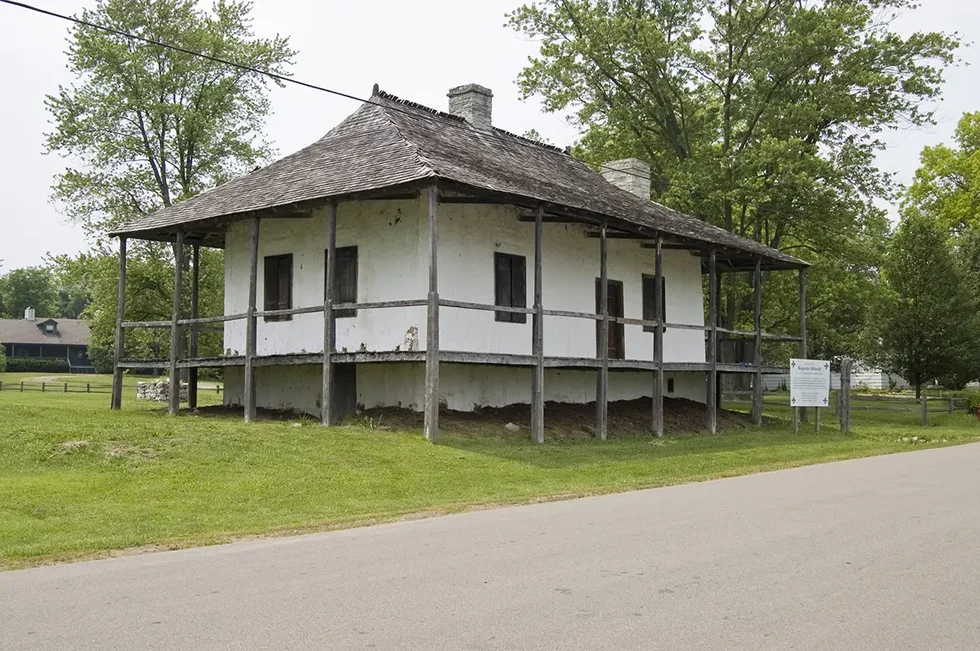
The house in Ste. Genevieve was the historic Bequette-Ribault House, a French Colonial home built around 1808 and owned by Clarisse, a free woman of color, and her descendants, called the Ribaults. This was 1981 and the house was Francis’ first professional preservation project. The study of French Colonial architecture, which is abundant in Ste. Genevieve, would become a focus of Francis’ career. Ste. Genevieve was settled by the French in the 1740s, and its earliest inhabitants were French-Canadian who farmed the rich soil. The houses they built are characterized by vertical logs and poteaux en terre—or “post in ground”—construction, where posts make direct contact with the ground.
This style of architecture is rare in St. Louis, since most log buildings were banned and torn down after the St. Louis fire of 1849, when homes were mandated to be constructed using stone or brick. Now, preservationists mostly rely on archaeology to find traces of French Colonial homes, though Francis says he sometimes “scours the backcountry” for them.
“It’s kind of a strange thing to go out and knock on somebody’s door when you look at a house and you think it’s French,” he says. His suspicions are raised by the look of a porch, foundation, or roofline. But to know if the home is truly French, he has to take a look inside at either the attic or basement.
In 2014, Francis published his first book, Vanishing French Heritage, with colleague and friend Jack Luer, on the subject of French Colonial log cabin architecture. The book draws on his years of experience preserving Missouri history: moving and reconstructing historic homes in Faust Park’s Historic Village, stabilizing French Colonial homes after a flood stole through Ste. Genevieve, and constructing a replica of the 1791 St. Borromeo Church in St. Charles.
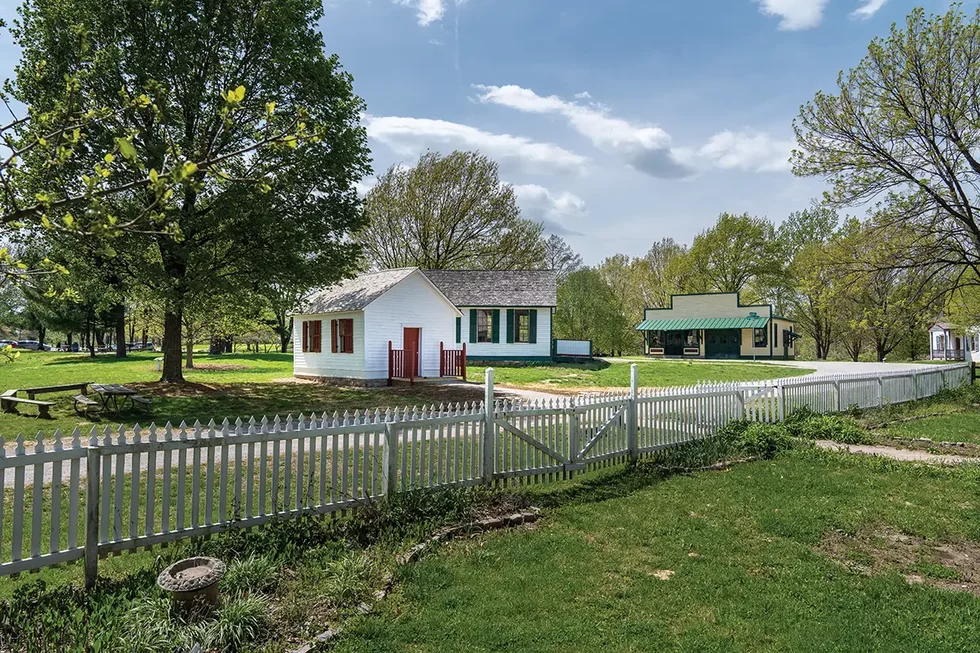
His latest project involved the move and reconstruction of African School No. 4 in Faust Park’s Historic Village, a project that was years in the making due to two owners who refused his attempts to access and preserve it. Eventually, Francis prevailed. In 2023 the school was opened to the public as a museum.
Francis takes a special joy in the heart behind his work: saving pieces of history for future generations. When he talks about the hands-on history workshops he teaches for children at Faust Park, it’s easy to see the same boy who wanted to be a history teacher so long ago.
“That’s why I keep doing what I do,” Francis says. “When somebody appreciates it enough to make sure their kids get a piece of it…that’s something they’ll remember down the road.”