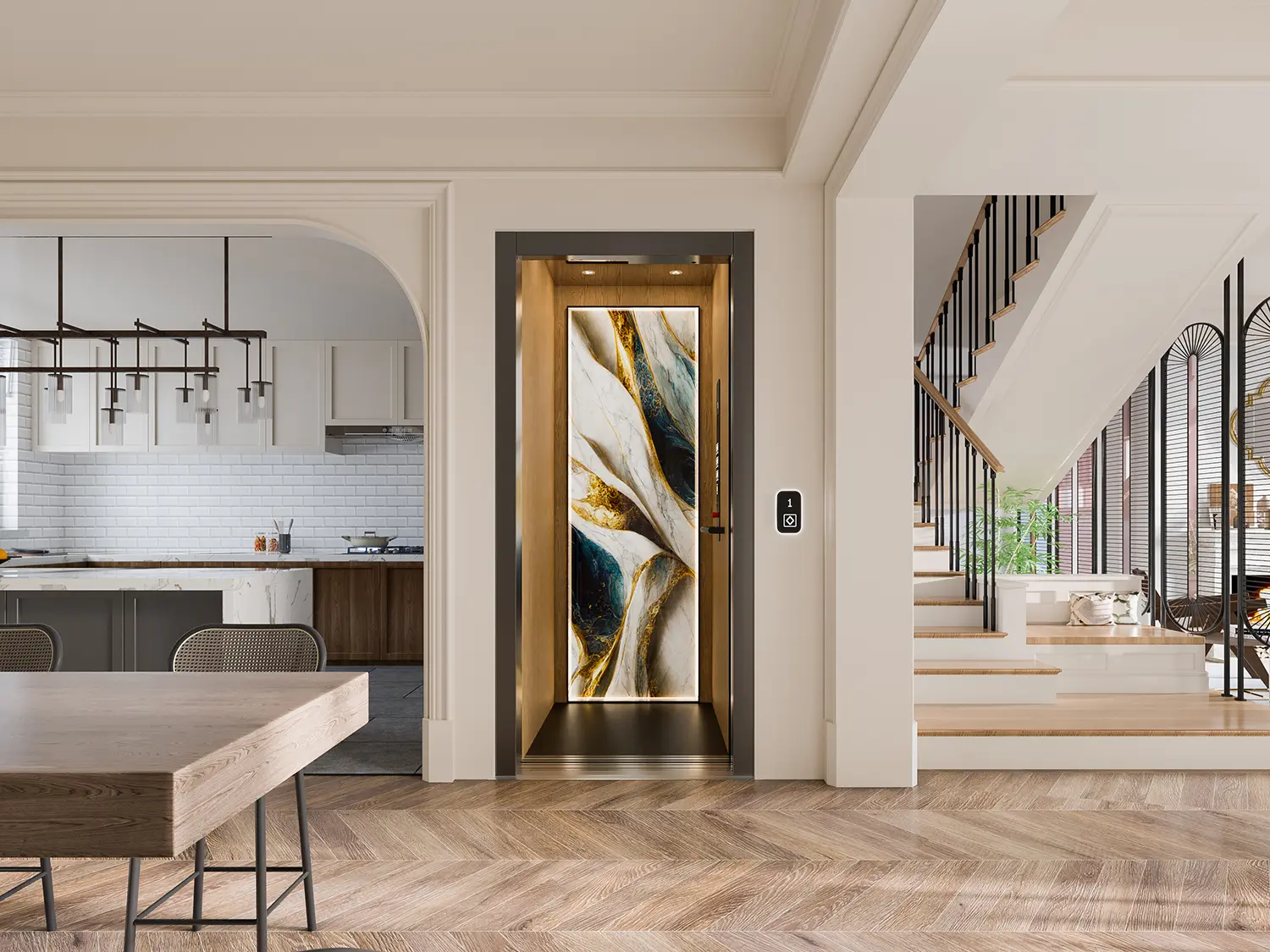
The technology behind home elevators has evolved since the traditional, somewhat clunky, closet elevator of yesteryear. These days, elevators can run on air and be built with the shaftway outside of the house.
Choosing the right elevator begins by finding out the why, says Jason Fawe, sales manager for Country Home Elevator in St. Louis. It’s communicating who will be using it; where it will be installed, “because in the world of home elevators, there are a lot of different options,” he says.
Get a weekly dose of home and style inspiration
Subscribe to the St. Louis Design+Home newsletter to explore the latest stories from the local interior design, fashion, and retail scene.
The first thing to know is that home elevators run on three main types of technology: The hydraulic elevator, which requires a dedicated, nearby machine room to hold equipment and therefore takes up more space in the home; the winding drum elevator, dating to the 1930s, and rarely installed anymore due to its complex engineering involving sheaves and pulleys; and the machine room-less inline gear drive elevator, operated by a motor that sits on top of the shaftway.
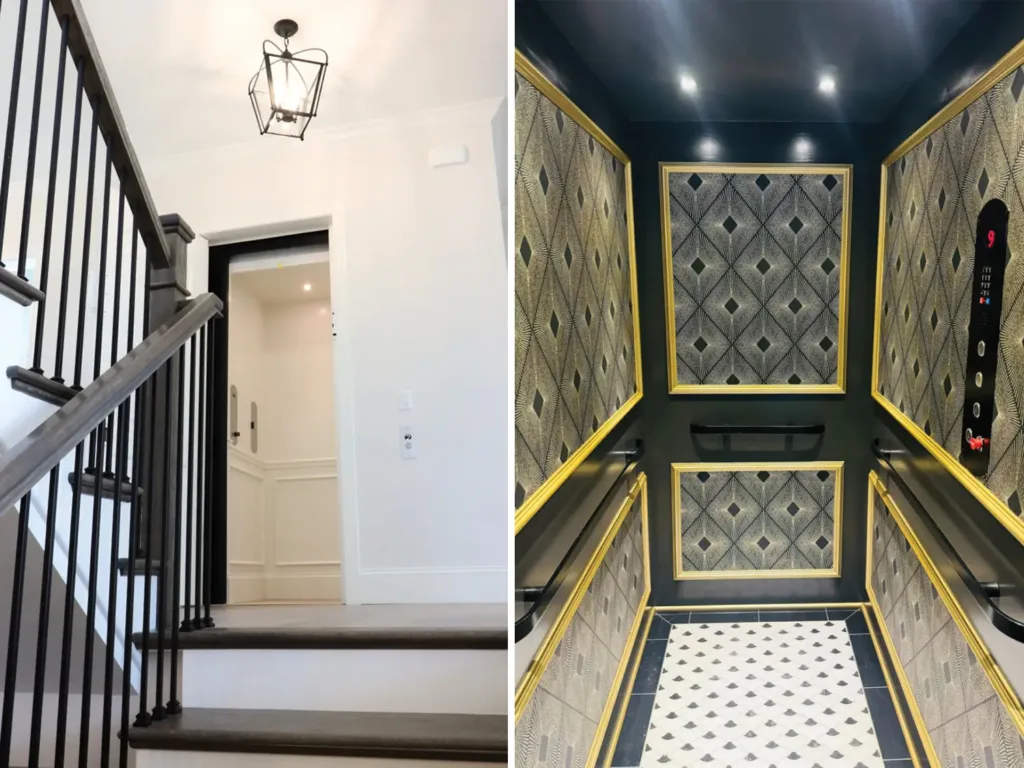
“You can still have a really big traditional elevator but the technology itself isn’t going to be as clunky and take up as much room,” says Kayla Fawe, Country Home’s marketing manager. The inline gear elevator is what we install almost every single time now, she adds.
But if your home can’t accommodate a traditional shaftway—most need approximately five by five feet—a pneumatic vacuum elevator may be your ticket. “It’s a futuristic-looking elevator,” says Kayla. “They’re beautiful. They’re round. Some can be wheelchair accessible, but it’s all moved by air. You don’t have a machine room, which is helpful for a lot of people who are already in their home.”
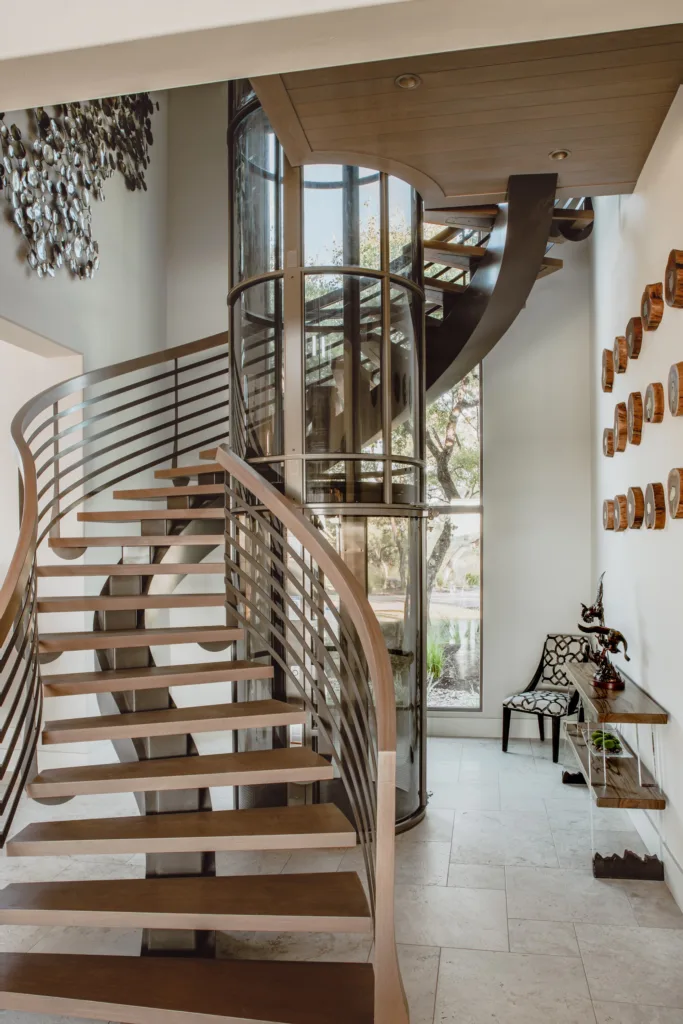
The style, a glass showpiece, is available in three sizes: 30-, 37-, and 52-inches round. But it’s not for everyone, cautions Jason. They aren’t built into an alcove with a box or walls around them, he says. Typically, they’re placed in a corner of a room or around a spiral staircase. In other words, you need to be OK with the elevator being not only visible but part of the design aesthetic in your house.
An existing blueprint of stacked closets makes elevator installation relatively easy. But in instances where a home may not be set up with such a layout, the shaftway can be built outside of the house. This option creates a look that’s akin to a home addition designed to appear as if it’s always been part of the property. “As aging in place becomes more popular, we’re seeing a lot more people taking advantage of the opportunity,” says Kayla.
And, then, there is the shaftless elevator. These run on a track alongside a wall, require minimal construction, and give homeowners options for where they can be installed. “They can go in places other than [near] a staircase,” notes Kayla. This category of elevator, she adds, can take a smaller footprint similar to the aforementioned PVEs, but can only service two floors. And, lastly, don’t forget about lifts, many of which can be customized based on the needs of the homeowner. This fall, the Cibes company, based in Sweden but with operations around the world, is announcing the new “Dream” lift, which will function like a traditional elevator with buttons that don’t need to be held down for the duration of the ride. Its modern aesthetic is likely to appeal to homeowners with an appreciation for design.
In addition to the type of elevator and its location in the house, the Fawes say it’s important to consider where the elevator would enter and exist on each floor. “When you’re mapping out an elevator, you always start from the bottom and travel up,” says Jason.
“You’re looking at all of these different spaces. Well, this doesn’t have a lot of existing mechanical or utilities running through it; or,You’d have to move a bathroom if you did it here; and, Hey, this exit would lead directly into your primary bedroom.
“Sometimes folks forget about the future of the elevator,” says Jason.
If you’re planning on staying in the house, design the elevator to meet your exact needs. But, if the house is on a five-to-seven-year plan, think about resale.
Says Jason: “Some people don’t like guests coming straight into the bedroom.”