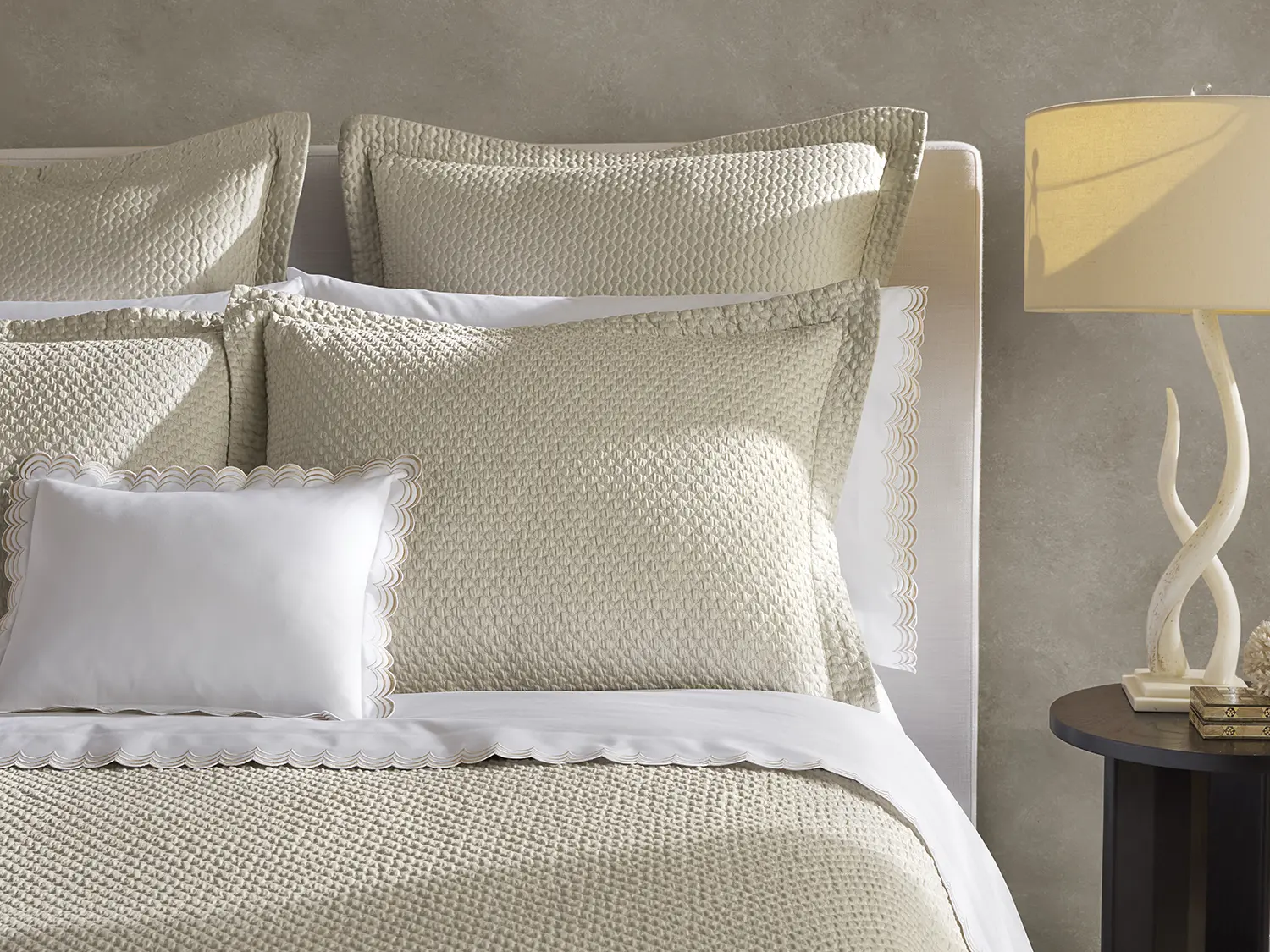
An upcoming exhibit at Saint Louis Art Museum featuring a selection of 19th-century quilts and coverlets has me thinking about bedding and coverlets in particular. What exactly is a coverlet? Is a coverlet the same thing as a quilt? And how about bedspreads? How do they fit in?
According to Sarah Berg, research assistant in the museum’s department of decorative arts and design, quilts and coverlets are two types of bedcoverings commonly used both in the 19th century and today. “Quilts are composed of multiple layers of fabric, often with batting in the middle, sewn together with stitches that pass through each layer,” she says.
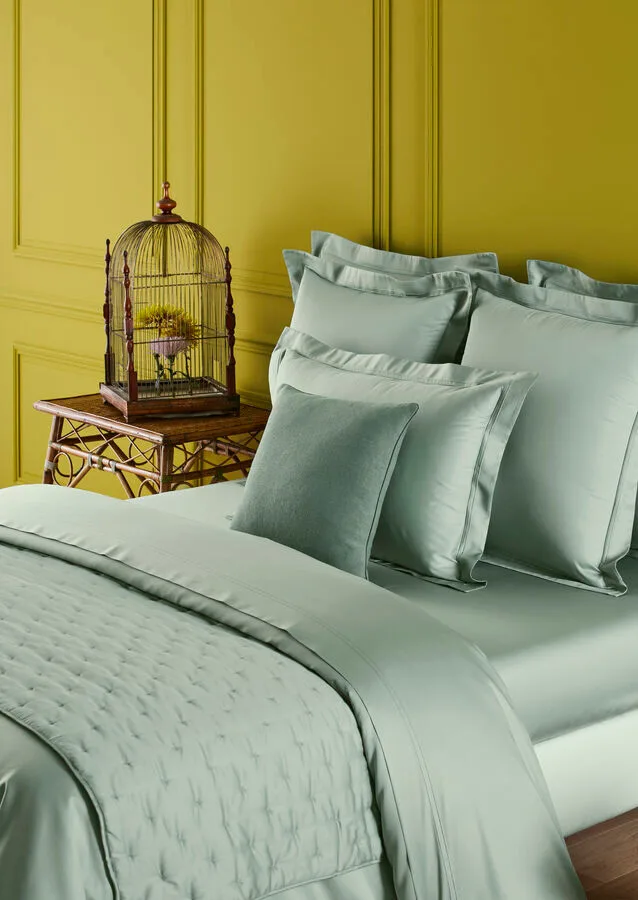
A coverlet, on the other hand, is a lighter bedspread usually made from a single layer of woven fabric. Used as a design element on a bed, coverlets also serve a practical purpose as an all-season layer, says Cassie Chapie, a bedding and bath specialist at Sallie Home in Ladue. “Typically, the final layer would be a duvet cover,” she says, “but when the bed is made up, you want to see the coverlet. It finishes the bed and usually ties in with the shams.”
Coverlets can be distinguished from bedspreads by their size. Traditionally, a bedspread drops to the floor and covers the whole bed, says Chapie. A coverlet usually falls to just below the edge of the mattress, with a bedskirt completing the look. Some coverlets are more similar to blankets, made from cotton or sustainable fibers such as modal, which is derived from the beech tree. The softness of the fabric, which imparts the warmth and coziness of a blanket, makes this style of coverlet more utilitarian by design. “It feels like cashmere,” says Chapie.
Get a weekly dose of home and style inspiration
Subscribe to the St. Louis Design+Home newsletter to explore the latest stories from the local interior design, fashion, and retail scene.
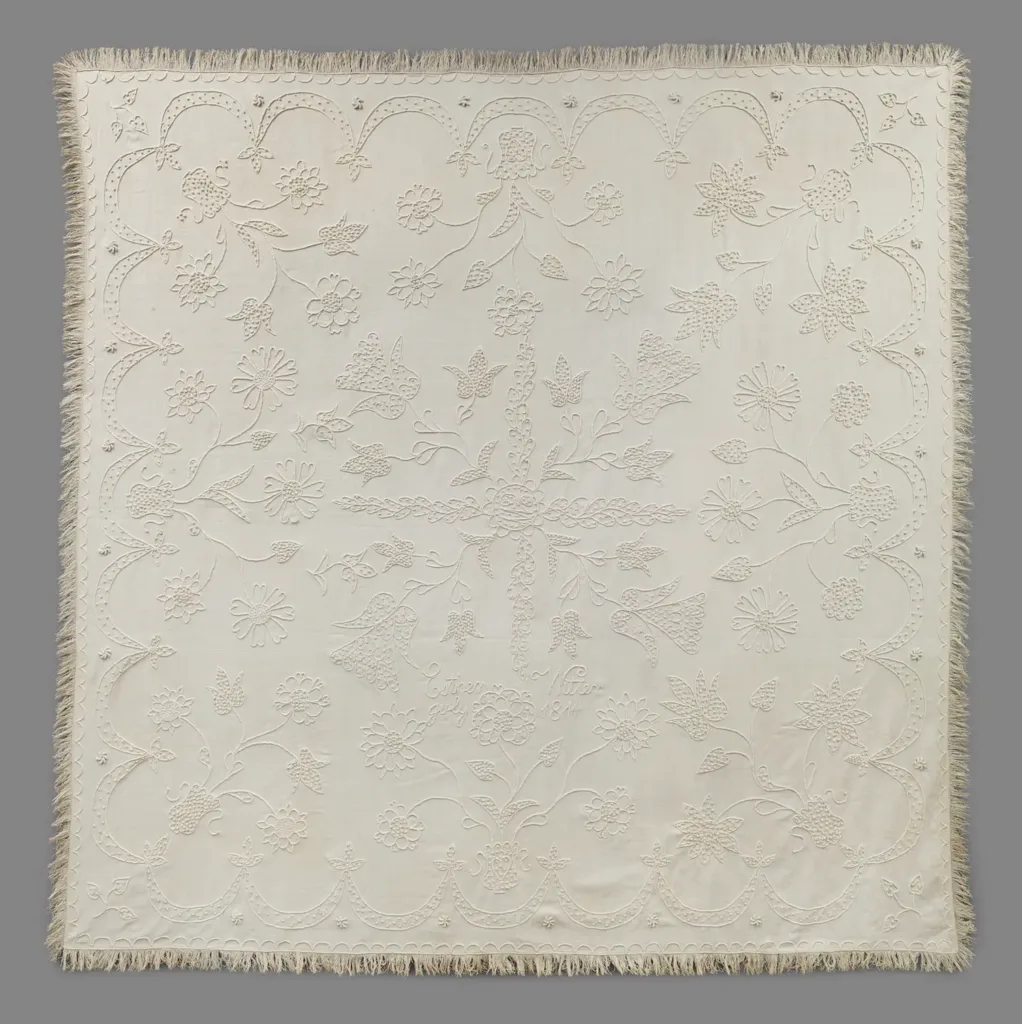
“Historically, coverlets have displayed various types of decorative needlework other than quilting, in particular, ‘candlewicking,’ an embroidery technique in which heavy cotton yarn is used to create raised designs,” says Berg. In addition, says Chapie, a matelassé texture on a coverlet is achieved during weaving on a jacquard or dobby loom, with shrunken threads creating a “puckered” effect. Matelassé can be made from cotton, wool, or silk in patterns such as diamonds, flowers, or geometric designs. A “quilted”-style coverlet melds the quilt and coverlet into one. It’s made up of three layers, with a middle batting layer resting between two pieces of fabric held together by a decorative quilting stitch. The stitching, says Chapie, can vary from a simple diamond shape to scrolls and other intricate patterns.
As in most things for the home, customizing your coverlet is an option. At Design & Detail in Maplewood, the selection of fabrics available for designing a coverlet is ample. From 100 percent washable cotton for a quilted coverlet, to a linen-cotton blend in a matelassé texture, you can achieve the look of your dream bedroom in a range of hues.
To view Saint Louis Art Museum’s exhibit on historic quilts and coverlets, visit Gallery 100, October 2, 2026 through April 18, 2027.