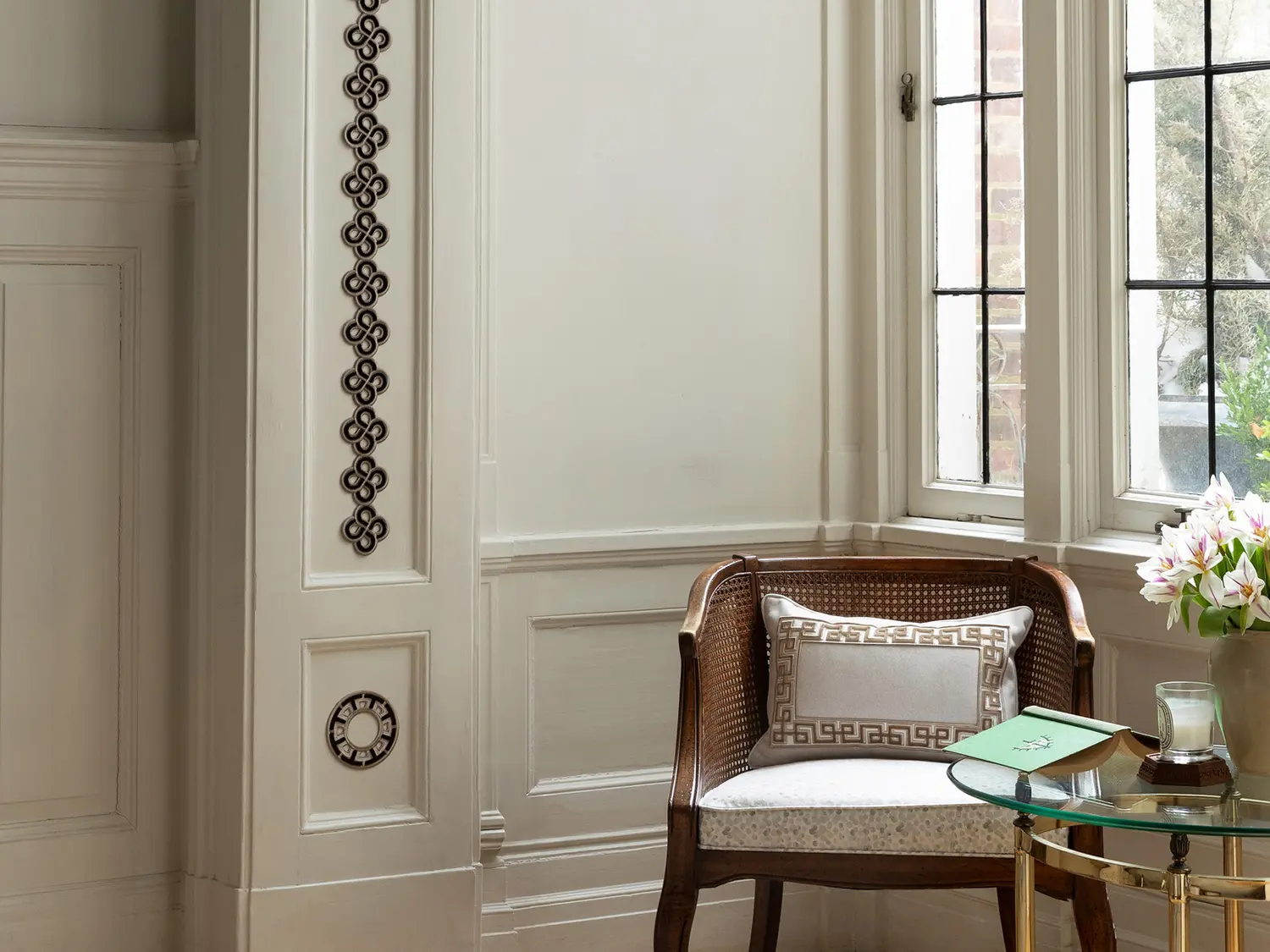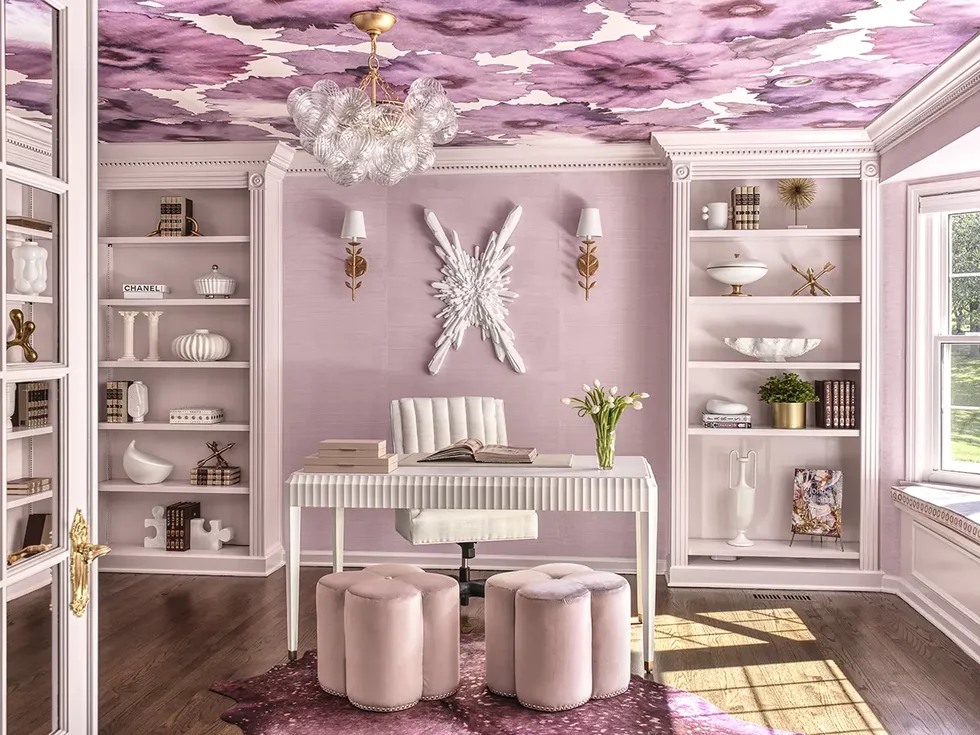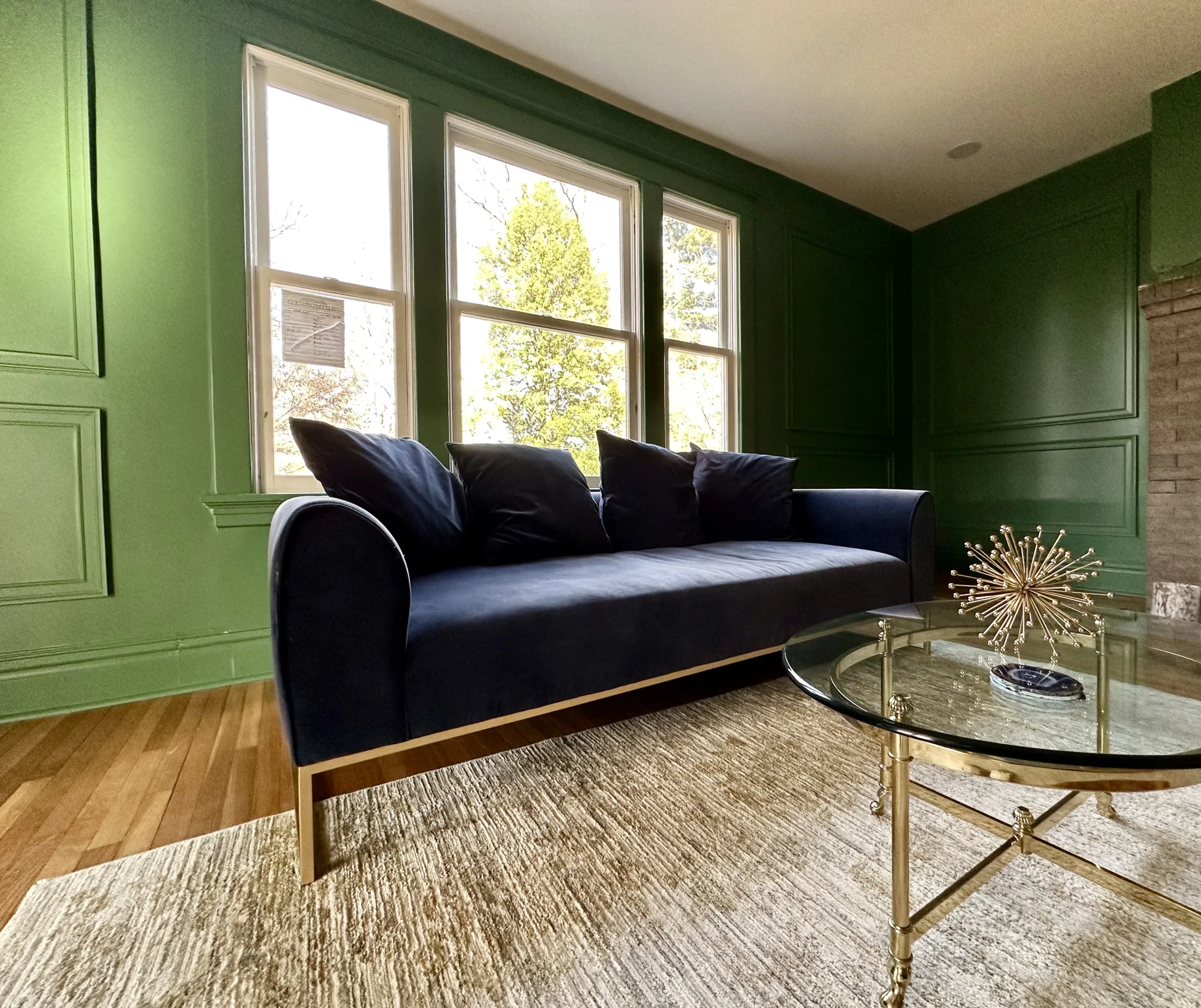
The lacquered look isn’t just for manicures and classic cars.
Adding a lacquer paint to a room is a powerful way to add depth and drama to any interior space. But to achieve that glass-like gloss, homeowners should be prepared to make an investment of time, patience, and money.
“Designers love lacquer because it adds movement and dimension that standard paint simply cannot,” says Wendy Weller, founder of House of Paint & Design Co. “When it comes to the process, lacquered walls are really about preparation and patience. The surface has to be extremely smooth before any lacquer is applied.”
That could mean wall repair, skim coating, detailed sanding, and meticulously controlling dust before the first wash of paint can be applied. And, so, therefore, because of all the upfront work that’s required, the cost of a lacquer treatment is not determined ahead of time. “These kinds of rooms do not have square foot pricing,” says Weller. “Determining price requires an onsite visit and having a conversation with the client about the level of finish they want.”
But once the walls are prepped and ready to go, Weller’s team moves in with thin coats of a primer compatible with the lacquer paint; they also sand each coat and apply lacquer with light sanding between each layer before adding the finish coat.
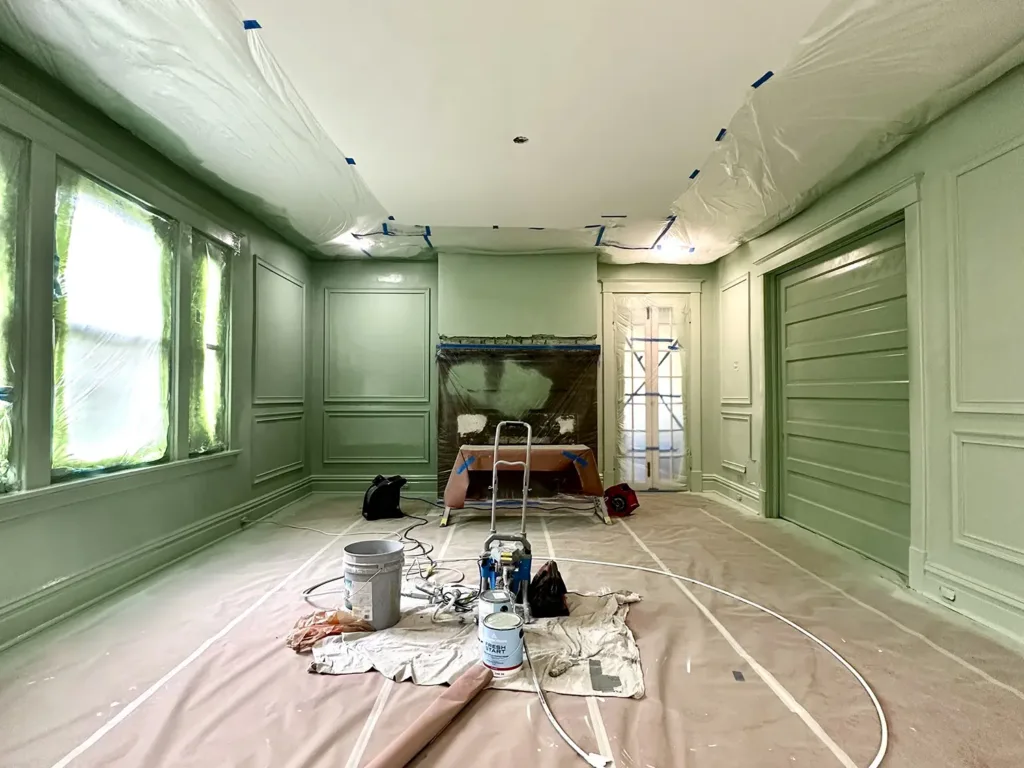
“The finished surface should feel smooth and reflective, almost like glass,” says Weller, who uses Centurion Wood Coatings, a waterborne lacquer product. “Any imperfection cannot simply be touched up, you have to spray the whole wall again.”
The multi-step process, and painstaking attention to detail, drives up the effort and therefore the cost, two reasons lacquer is a popular option in rooms where homeowners host guests, says Kathleen Grim, an interior designer with Srote & Co.
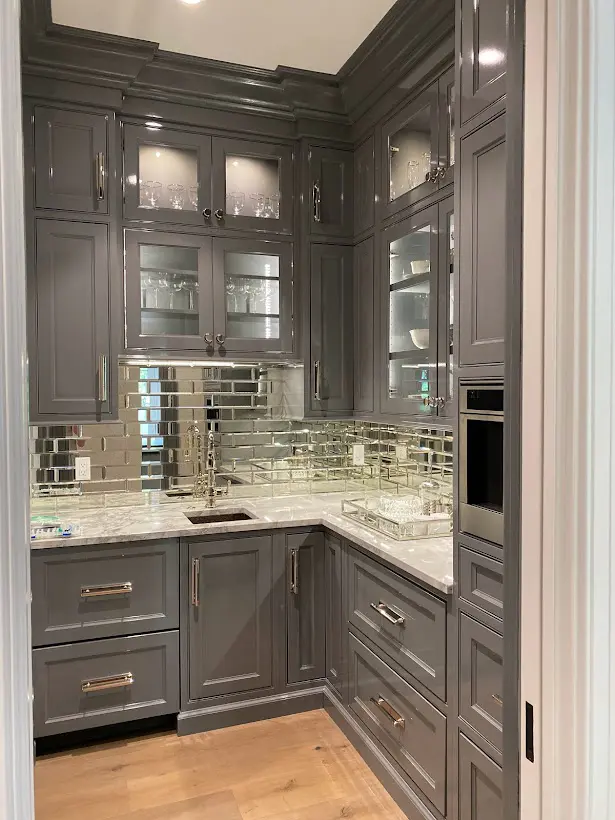
“It’s just such a statement and such a special, interesting feature that I personally like to use it in a room where you really want to highlight something,” she says. “So a butler’s pantry or a bar, which are both functional but visually important because they’re going to be in the public part of the house.”
This doesn’t mean lacquered walls can’t be beautiful in bedrooms or other private spaces, especially if the homeowner really loves the look and wants to enjoy it for herself. Lacquering furniture can also add sheen and sophistication to a home, says Karen Korn, founder of Karen Korn Interiors.
“I think all furniture looks beautiful with a lacquered finish,” says Korn. Her firm recently lacquered a desk and is about to begin on a dining room project.
“Lacquering furniture is a fun way to bring in a different finish,” she says. “But lacquering a room would be my favorite way to use the technique because it makes such a big impact.”
That’s why, when designing a room with lacquer paint, Korn favors using the product to cover every wall surface in that room, including the molding and cabinetry. “You want to feel like you’re wrapped in the lacquer,” she says.
All colors are suitable to a lacquer application but the finish changes how the color behaves, says Weller. “Deeper tones and jewel colors tend to feel rich and dramatic because the gloss adds depth. Neutrals can be just as beautiful when the goal is something softer and more refined.” Keep in mind that lighter colors require the most prep because they show imperfections. “It’s all about that light reflective value and how lighting affects it,” Weller says.
If a lacquered room is the goal, consider creating contrast with the furniture and fabric selection, mixing in softness, texture, and materials, such as metal and wood, to highlight the sheen of the wall.
And how about accent walls? “If you’re only doing one accent wall, it’s just standing out in an odd way,” Korn says.
Lacquered ceilings, on the other hand, create cohesion while adding visual interest, says Weller.
“Using the same wall color in a lacquer finish creates a cohesive look with a subtle impact. Going slightly darker on the ceiling can add warmth and intimacy, while lighter lacquered ceilings work well in spaces with strong architecture and good natural light. It really comes down to the feel you want in the room and how the light moves through it.”
Get a weekly dose of home and style inspiration
Subscribe to the St. Louis Design+Home newsletter to explore the latest stories from the local interior design, fashion, and retail scene.
It’s important to keep in mind that lacquered surfaces and lighting design go hand in hand, since shiny smooth surfaces reflect and amplify like mirrors, says designer Kathleen Grim. She appreciates the look of lacquered cabinets because depth changes in bevels, trim, and other door panel features accentuate the glossiness of a lacquer finish. “The reflection is part of the appeal,” she says.
“Where I do think it takes a bit of special care is in cabinet and under-cabinet lighting,” she continues. “You don’t want those to standout as a result of the reflection with the lacquer. Make sure you’re not suddenly seeing all the diodes,” she says.
Whether you’re going for lacquered walls or surfaces, they both make strong statements. Before the rest of the room is done, the finish can seem a bit over the top. But, when executed well, homeowners are impressed with the dramatic results.
“Stand behind the integrity of the design to get it done,” says Grim, “Don’t freak out in the middle of the process. Give time for the rest of the room to come together,and it’ll all make sense.”