In a new exhibition at the Saint Louis Art Museum, “Millet and Modern Art: From Van Gogh to Dalí,” the far-reaching legacy and radicalism of 19th-century French painter Jean-François Millet is considered. Organized by SLAM and the Van Gogh Museum, Amsterdam, the exhibition shows the considerable influence Millet had on Van Gogh, who, as curator Simon Kelly explains, “saw Millet as a mentor and guide, describing him as ‘father Millet.’” It also explores how the French painter’s themes and compositions affected the work of others including Dalí, who was fascinated with Millet’s painting The Angelus and adapted it into his own paintings.
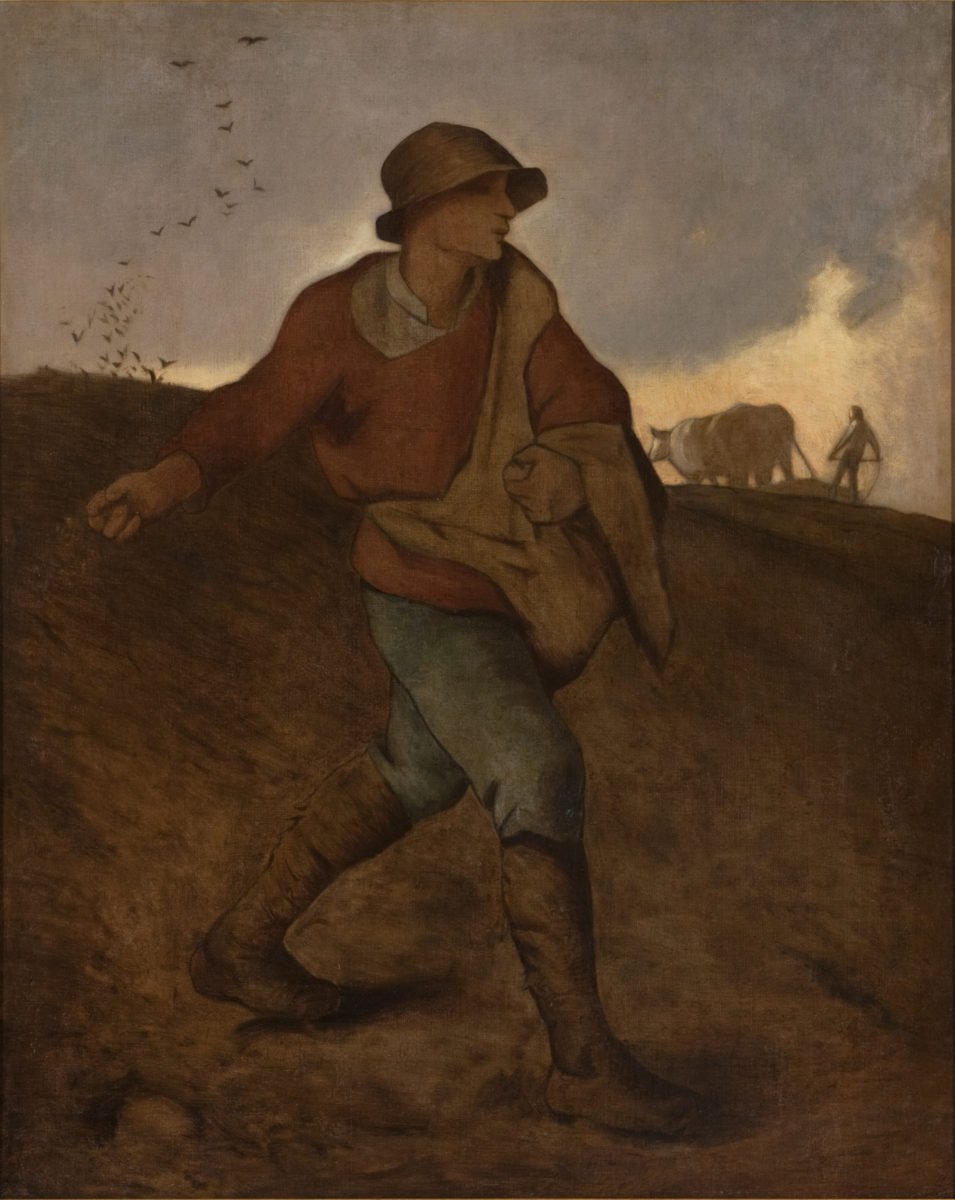
Millet’s work focuses greatly on peasant labor and life, with special attention to the domestic work of women. He heroizes the rural laborer and their work of sowing, reaping, and gleaning the fields, along with chores such as shearing, butchering, and spinning yarn. Millet saw the beauty in their hardships and writes, as quoted by Kelly in his catalogue essay, “I see as well, in the plain, the steaming horses at work and in a rocky place a man, all worn out, whose ‘han!’ has been heard all morning, and who tries to straighten himself a moment and breathe, the drama is surrounded by beauty.”
Stay up-to-date with the local arts scene
Subscribe to the weekly St. Louis Arts+Culture newsletter to discover must-attend art exhibits, performances, festivals, and more.
France was being reshaped in the 19th century by a series of revolutions and, after 1848, universal suffrage for men was enacted. These affirming depictions of the peasant life were innately political, even if the artist never explicitly defined his politics. As Kelly observes, “His advocacy of the moral value of agrarian labor carried a radical charge at a time of increasing urban wealth, often as a result of financial speculation.” Millet celebrated the humble farmer and the fecundity of the land, and these scenes of labor and rest are explored further in paintings by Paul Gauguin, Émile Bernard, Georges Seurat, Camille Pissarro, Winslow Homer, Edvard Munch, Ferdinand Hodler, and Natalia Goncharova, among others.
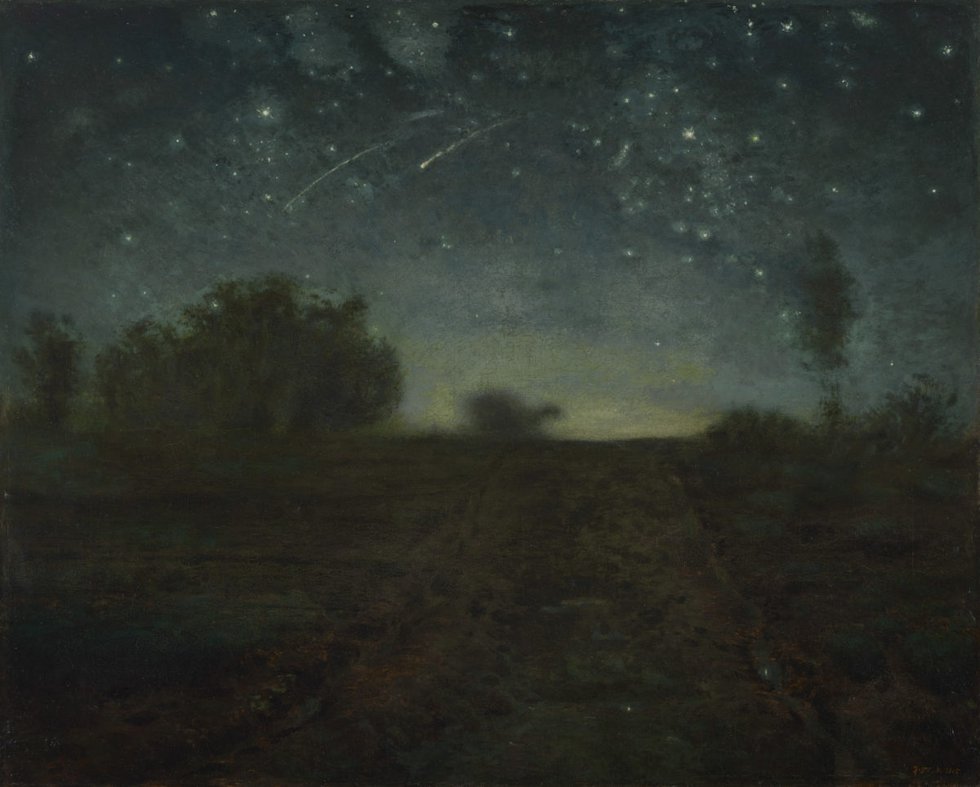
Along with these agrarian themes, the exhibition explores Millet’s connection to nature. In his inventive landscapes we see high horizon lines and cropped compositions. The artist writes: “If only you knew how beautiful the night is! There are times when I hurry out of the doors at nightfall…and I always come in overwhelmed. The calm and the grandeur of it are so awesome that I feel actually afraid.”
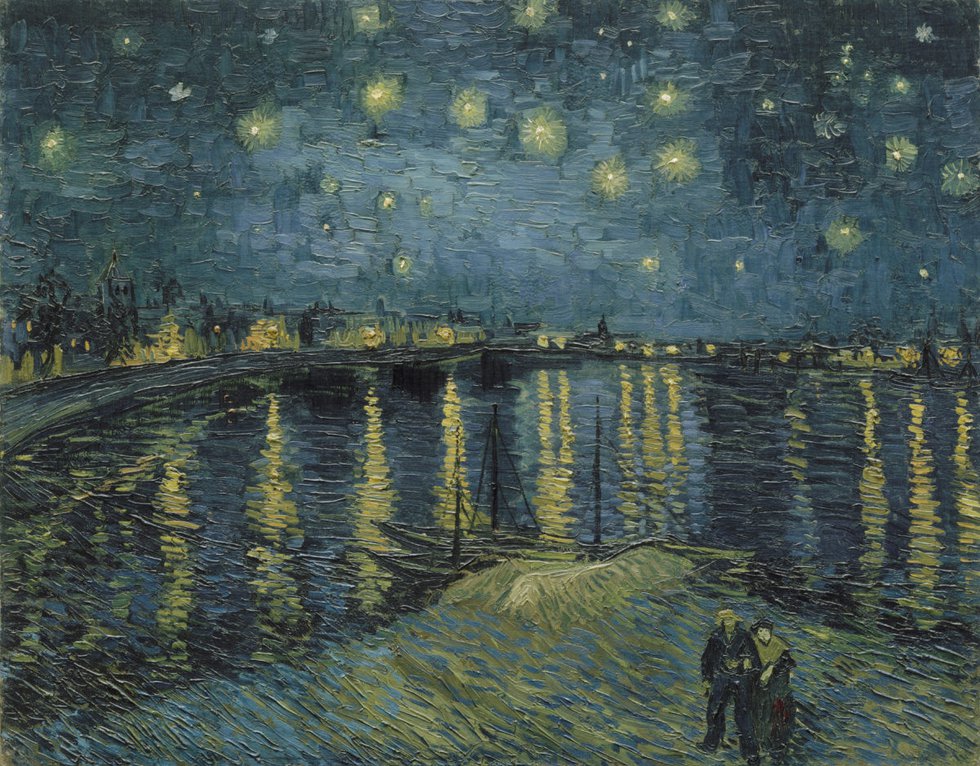
This sentiment is reflected in his painting Starry Night, where we see the last moments of twilight fading to reveal a sky full of stars and constellations. Van Gogh, who emulated Millet in his depictions of peasants and landscapes, painted his own Starry Night, set in a cityscape decades later. Both of these works on are display in “Millet and Modern Art.”
In the painting titled Spring, we see the exact moment when the sun comes out after a storm, with rainbows in the background. This atmospheric landscape influenced George Inness’ After a Summer Shower and also Willem Roelofs’ The Rainbow on view.
Also included in the exhibition is a collection of Millet’s nudes and biblical scenes. In the erotic crayon drawing Lovers, we see two figures suggestively intertwined, and in Shooting Stars, a scene from “Canto V” of Dante’s “Inferno” is depicted. In the work on paper, The Flight Into Egypt, Joseph leads the donkey carrying Mary and Jesus. The nocturnal scene is quiet and the figures are almost consumed by the darkness, except for the holy glow emanating from the Christ-child that reflects on Mary’s face brings clarity to the image.
This compelling exhibition seeks to make the case for Millet as a key figure in the origins of modern art. There will be a scholarly symposium related to the exhibition and information about gallery talks, lectures, and family programs can be found here. The show is open now and runs through May 17.