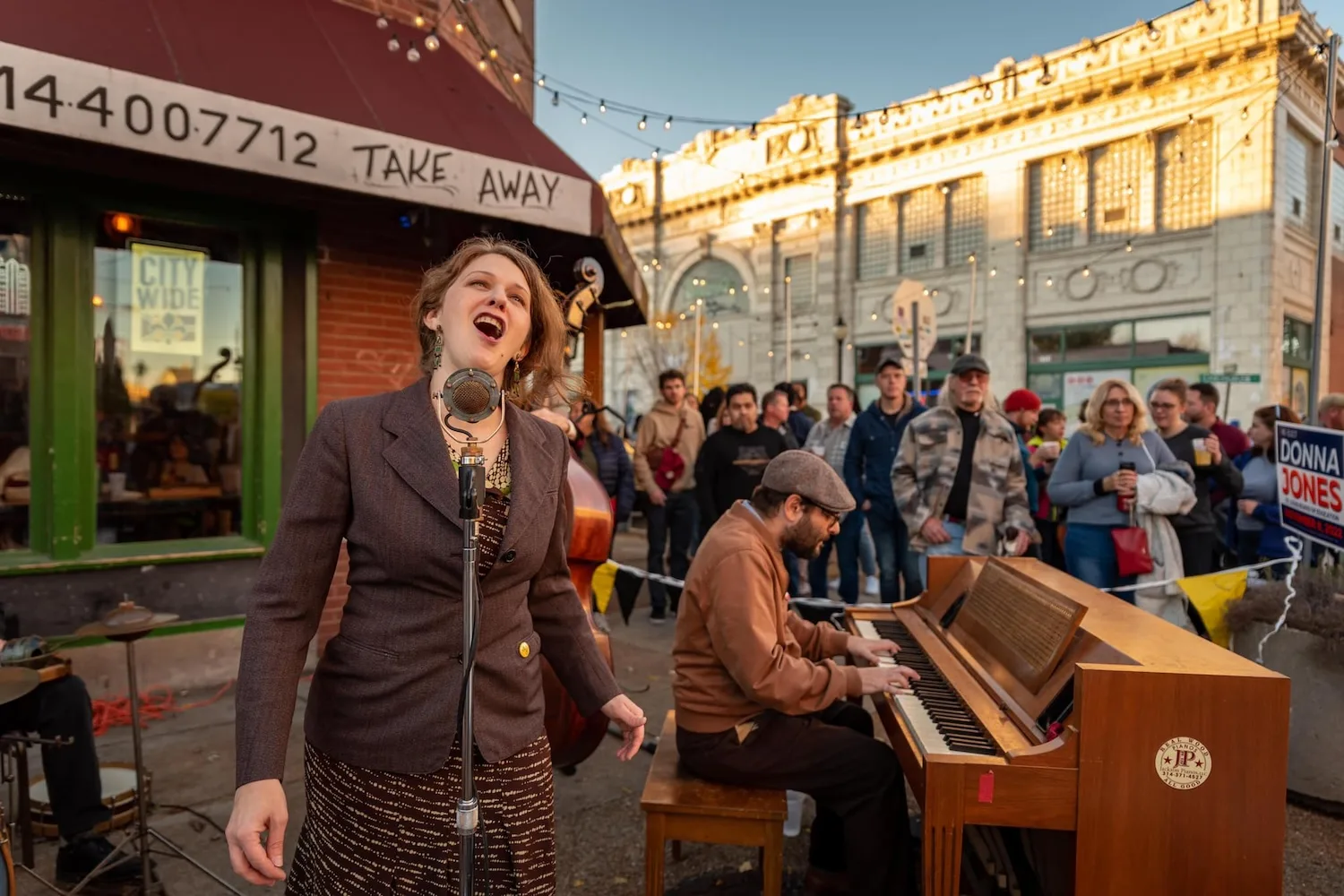
It was just about 13 years ago when Joe Jackson started giving pianos to local bars and restaurants. The owner of Jackson Pianos called his initiative “Keys to the Community,” and his ambitions went far beyond individual pianos or stages: He wanted to make St. Louis a magnet for pianists. “The idea,” he says, “is to make a stronger piano culture.”
He found plenty of takers. Jackson gave away more than a dozen refurbished pianos, and most of the establishments he donated to upheld their end of the bargain, offering steady work to pianists, both visiting and local.
Get a guide to the region’s booming music scene
Subscribe to the St. Louis Music newsletter to discover upcoming concerts, local artists to watch, and more across an eclectic playlist of genres.
But then the pandemic upended the hospitality industry. A business model that always had razor-thin margins saw balance sheets turn upside-down, piano or no piano, as people simply stayed home. Jackson is now down to just six pianos in the Keys to the Community program, and to him, that’s not nearly enough.
So he’s now gearing up to give away another dozen pianos, ready to kickstart Keys to the Community all over again. The terms are simple: He’ll tune the pianos a few times a year, for free, and give any bar owner that’s interested access to a portal where they can connect with pianists for hire.
There’s only one real requirement: They must agree to pay a living wage. Jackson would rather not specify what that is, though he acknowledges when pressed it should be higher, in his mind, than the minimum wage. The main thing he wants is musicians to get paid. “If you just put a tip jar out, then we’re taking the piano back,” he warns.
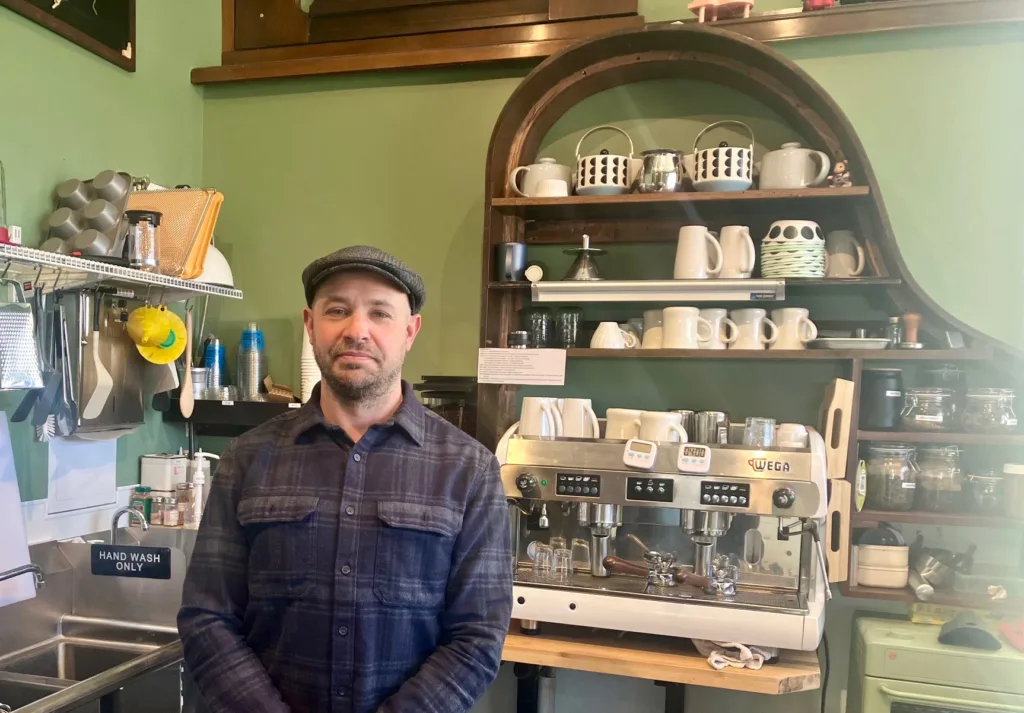
The idea is to create the kind of conditions that will compel a musician like Ethan Leinwand to move here. A Connecticut native, Leinwand was living in New York City in the 2010s when he grew entranced with St. Louis’ rich piano history. “I was discovering these records that are nowadays pretty obscure, but in their time, they weren’t,” he recalls. “Like in the 1920s and 30s, the blue superstars, a lot of them were piano players from St. Louis.” Then Leinwand came for a visit, and, in his words, “I just fell in love with the town as well.”
Part of the appeal was that, thanks to Jackson, there were soon plenty of places around town where a pianist could score a gig. Leinwand is dismissive of electronic keyboards. “It doesn’t move the soul, because it doesn’t move the air,” he says. “It’s like playing a video game or something.” The very real pianos at places like Blue Strawberry, the Dark Room, and Evangeline’s offered an opportunity to play music the way Leinwand knew it should be played—and created a circuit that kept other pianists busy as well.
The pianos were a good opportunity for the bars, too. Don Bailey, who owns Evangeline’s Bistro & Music House in the Central West End, accepted a piano from Jackson around the time of the program’s inception—and through near daily use (seven days a week of live music before the pandemic, and five days a week today), Evangeline’s has worn out so many pianos that it’s now on its third. All that playing has been a boon to business. “It’s definitely helped out, because it’s a real piano,” Bailey says. “There’s just so much more mystique and character about it. It makes better musicians want to come in and play. And it just looks cooler.”
The last few years have been tough on the hospitality industry, as rising costs have coupled with a customer base that still hasn’t recovered from the pandemic. Bailey, though, is hopeful that last year could represent rock bottom. “I feel like it’s starting to come back, I do,” he says. “I think it was really, really hard for a lot of musicians, because they went two or three years without really making decent money. But I think 2026 and 2027 is going to get better. People are starting to get out more.”
Leinwand notes that it’s not a St. Louis problem; musicians across the country have experienced the lull. But he’s hopeful that a few donated pianos can get the scene rocking and rolling again. “Everything is cyclical,” he says. “We’re right at that point where we can’t get any lower. And there is a need. Pretty soon, some new blues club has to appear in this town. When someone does it right, it will be a jewel of the country, and certainly to St. Louis, because we’re in a town where tourists want to see blues, locals want to see blues, and traveling musicians want to come here and play.”
Leinwand notes that the city’s smaller scale means even one or two more music venues can make a big impact for performers and the vitality of the scene. “We’re not a town that needs 30 clubs,” he says. “We just need three more.”
Jackson has the pianos to supply them, and he’s ready to go. He hopes to start giving them away in April, with the goal of placing more than a dozen in local businesses by October.
Can he restart piano culture in St. Louis and give a jump to the bar and restaurant industry? “I love challenges,” he says. “I don’t want to do anything easy.”
Any business interested in participating should reach out via Jackson Pianos’ website.