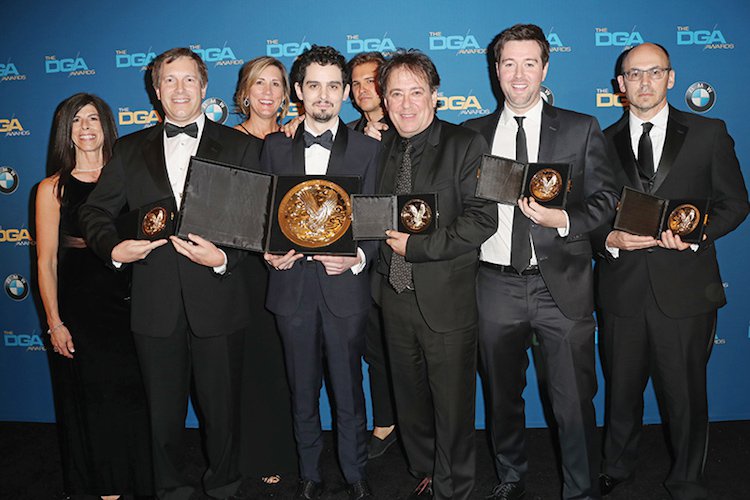
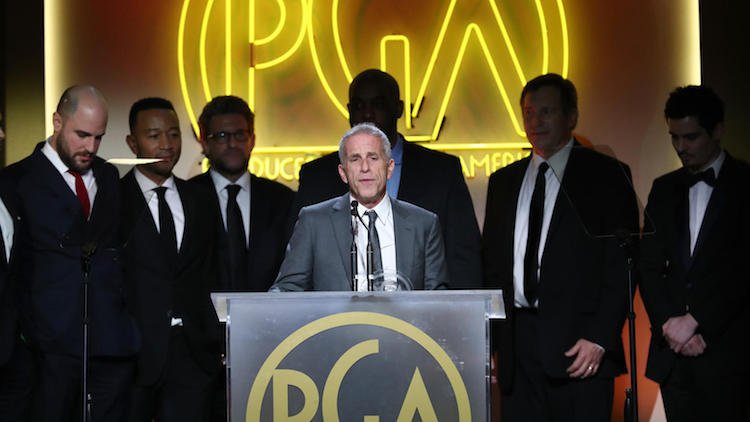
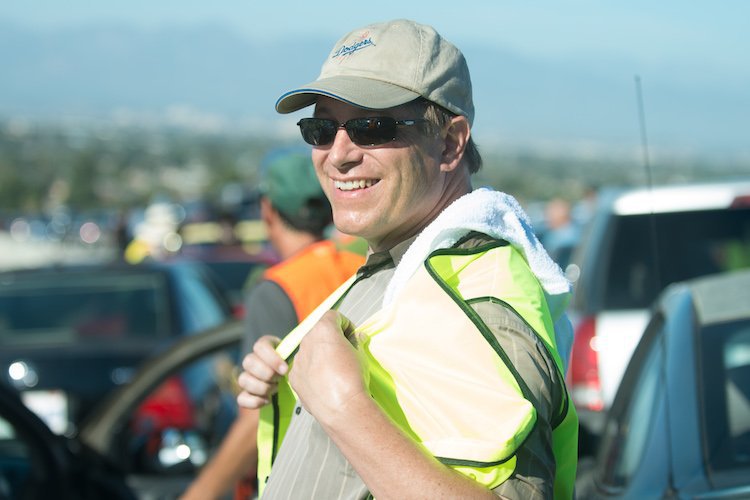
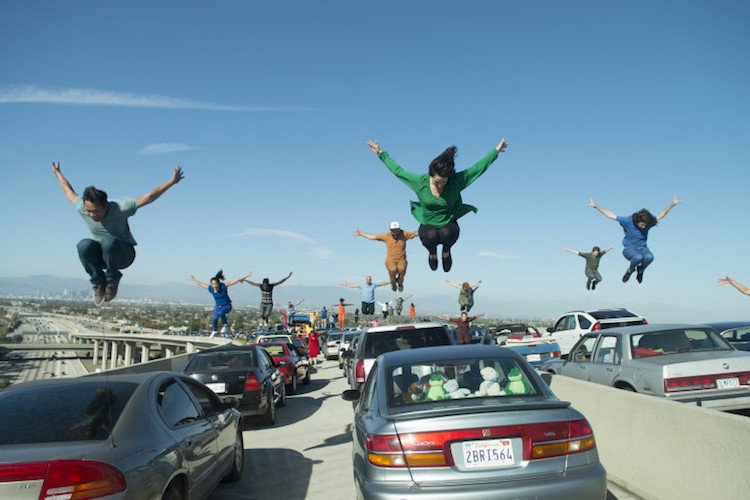
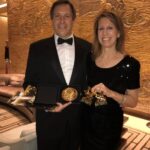

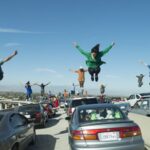



There’s a chance that in about a week’s time, La La Land will be sweeping the Oscars. As the first position Executive Producer for the audience and critical favorite, St. Louis native Michael Beugg has come a long way from the days when he left a job in energy and environmental policy in Washington, D.C. to move to Hollywood and make movies. After over 20 years as a producer, his credits run from early indie dramas by the late St. Louis director George Hickenlooper (Dogtown, The Big Brass Ring) to hits from director Jason Reitman (Thank You for Smoking, Up in the Air), to the Sundance smash Little Miss Sunshine.
Beugg sat down with St. Louis Magazine film critic Andrew Wyatt to talk about the connection that La La Land has made with viewers, about the changes he’s observed in the film industry, and about the benchmarks on his path from acting in a guerilla short film in high school to a career as a prolific, award-winning film and television producer.
Stay up-to-date with the local arts scene
Subscribe to the weekly St. Louis Arts+Culture newsletter to discover must-attend art exhibits, performances, festivals, and more.
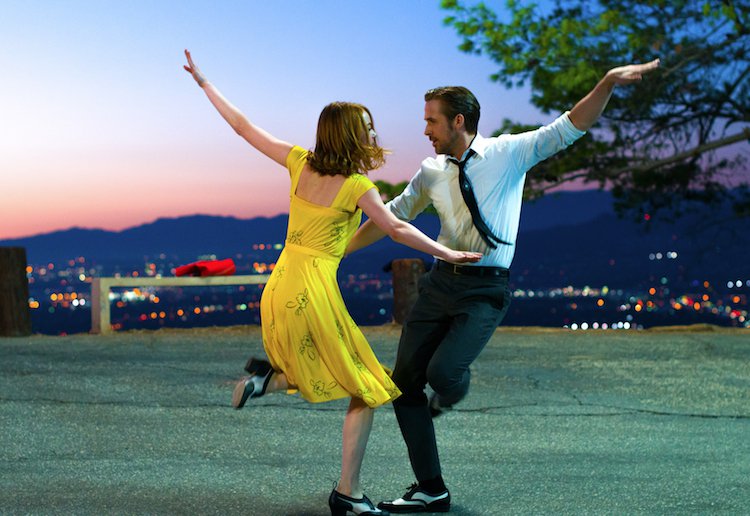
There’s been a lot of critical back-and-forth about La La Land: effusive praise, the inevitable backlash, and the equally inevitable counter-backlash. But the public reaction in general has been overwhelming. The film has already passed the $200 million mark in box office receipts, and is on track to make its original budget back tenfold. Do you have any sense personally as to why it’s connected with so many people?
The most likely explanations I can think of are two. One is that I think there’s an interest in an original musical, and once people have heard that there’s one out there that both fans and non-fans of musicals enjoy, I think people are curious about that. That’s one thing that’s driving people to the theaters. Another would be that it’s a film about dreamers, and about roads taken and not taken. I think that people in a wide variety of age groups can connect with that, because almost everyone has something in their life that reminds them of the scenarios in the film.
I also think that Ryan Gosling and Emma Stone are already becoming one of the classical screen couples in the way that recalls some of the great couples from the past. Hepburn and Tracy come to mind, in that they’re interesting and fun to watch together. Some people perhaps saw [Gosling and Stone] in Crazy Stupid Love and liked their dynamic in that film. I think that’s brought some people back to the theaters, to see the two of them paired again.
I also think there’s an idealism in the film, and perhaps our present times are supportive of that in a way. Perhaps people would like to experience that idealism at the theater, and maybe wish they could experience it in real life.
I’m glad you brought up the original musical factor, because that’s been on my mind as well. As a producer, there’s doubtlessly some built-in appeal in bringing an existing Broadway show to the screen–either a well-worn classic or a recent hit. That seems to be the usual approach for live-action musical features in recent years. I think I can count on two hands the number of original Broadway-style film musicals that have had any kind of success, outside of animation. I would assume it’s a niche sub-genre in 2016, but clearly people like and wants more features in that vein.
I’m sure you, like many people, have heard about [director] Damien [Chazelle’s] struggles to get La La Land made, in the years between his college days and, say, 2015, when cameras started to roll. Damien and his composer roommate Justin Hurwitz hatched this idea. They subsequently moved to L.A., and met a couple of younger producers, Jordan Horowitz and Fred Berger. But it didn’t get too far for the reasons you describe. Original musicals were considered risky, and first-time feature directors, especially theatrical feature directors, were also considered risky. So despite the merits of the screenplay and the passion of that group, it didn’t really take off.
And then, as you also probably know, once Damien made the Whiplash short and then the Whiplash feature, and brought it to Sundance, then people in the industry could see his skills as a director and storyteller. Even before Whiplash the feature was released, the folks at Lionsgate became excited about the idea of working with Damien on a follow-up project, and he was right there and ready to say, “I know just the project. It’s this musical called La La Land.”
That’s the point where I was able to get involved, when Lionsgate was strongly considering making the musical. They wanted to pair the two original producers with someone with a few more films, and that’s how I got involved about a year before the filming. For myself, I had always wanted to do a musical. Like so many people, I was in a couple of musicals in high school, and did a couple after college in a sort of summer stock. Nothing where my career on stage was ever going to take off. [Laughs.] But it remained something I enjoyed, and I just figured that after working in Hollywood for twenty-plus years that I would one day work on a musical. But that day seemed not to be coming. And then I got paired up with this team, and before too long we had Lionsgate’s approval to go ahead and we were filming.
I can’t remember if I answered your original question. [Laughs.] So, yes, it was extra hard for Damien to get the film made because it was an original musical. Only with the success of Whiplash—being musically themed, even if not a musical—did it start to gain momentum. Now, by the time Whiplash had won three Oscars, we were already pretty deep into the process of putting the team together for La La Land. So it didn’t take that to push it over the edge, but it was definitely Whiplash’s great reception at Sundance that got the ball rolling.
I guess that’s the nature of the beast with that long Sundance-to-Oscar gap. A film hits in January and the industry buzz is crazy, but it takes another year for the awards nominations to start appearing.
I think the timing on Whiplash was: Sundance in January, opening in limited release in October, and then Oscars the following February. And we were rolling camera on La La Land in the August after that.
Do you feel like La La Land is going to shift the terrain at all, in terms of the kinds of films that can get greenlit? In between the box office and the awards that keep rolling in, I suspect it will make it easier for the next person to pitch an original musical feature.
I think it will be much easier for the next person. And I’m fairly certain that most of the studios are out there right now saying, “Where will our original musical come from, and who’s the director?” Whether there will be a young, first-time director with an original musical who will get a shot right away this time, or whether they will need their own Whiplash to make it happen, that’s still an open question. But I do think that people have now seen that if you execute it really well, there doesn’t have to be what Hollywood calls a built-in audience for a film to succeed. It doesn’t have to be derived from another property that people are already familiar with. I think that will be the major contribution of La La Land to the musical-makers of the near future. We’ve shown you can do it without that.
The downside is that every pitch for a while now is going to be “Like La La Land, but…”
[Laughs] It certainly will, you’re right about that.
You’ve got a lot of production experience with director Jason Reitman.
Yes. Most notably, of course, being back in St. Louis with Up in the Air. But I have done four films with Jason.
Including Thank You for Smoking, with is still my favorite of his films.
I enjoyed all of them, but Thank You for Smoking was my first film with Jason, and one of my all-time favorite films to work on. It came out so well, even though our resources were very small. And it was a challenging film to do, involving both Hollywood and official Washington. All for $6 million, which was tough, but we did film in both locations. I thought Jason coming out of the box with that film was truly amazing. I’m very proud to have worked on that.
Up in the Air was also exciting, because who gets to go to their hometown and work on a film and then wind up with six Oscar nominations? That was a career highlight for me.
I recall that there was a lot of excitement surrounding Up in the Air in St. Louis generally at that time [2009]. Most of the filming was done here, and Cinema St. Louis then brought it in for the St. Louis International Film Festival prior to the wide release. I think the last time a production based primarily in St. Louis attracted that level of attention was Steven Soderbergh’s King of the Hill, back in 1992 or 1993.
In fact, there’s a little bit of a link there. A woman named Georgia Kacandes was the head of physical production a Paramount at the time we made Up in the Air, and she had been a production manager on King of the Hill. So, after scouting, when I told a few other people that we thought St. Louis was the best home for the film, they said, “Oh that’s crazy. Filming in St. Louis?” Fortunately, when the movie found its home at Paramount and I mentioned it to Georgia, she said, “Oh, what a great idea! I was there on King of the Hill!” So that was a lucky break.
Thank You for Smoking made a fairly sizable impression, but the first film that you produced that really broke out into the mainstream and garnered substantial awards recognition was probably Little Miss Sunshine.
Yeah, those two films were in pretty rapid succession, and Thank You for Smoking did get a Golden Globe Best Picture nomination, but didn’t get the Oscar nomination. Little Miss Sunshine did get the Oscar nomination, and also won the Producer’s Guild [of America], Screen Actor’s Guild, and Writer’s Guild [of America] awards. But it fell short of winning the Best Picture Oscar.
Who did it lose to that year? I can’t recall off the top of my head.
The Departed. And that was tough competition. People now think of Martin Scorsese as an award-winning director, but prior to that awards season [2006] he had actually not yet won the Best Director Academy Award. So I think there was momentum there that contributed to the success of The Departed overall.
That is tough competition, admittedly, especially when you consider that Little Miss Sunshine directors Jonathan Dayton and Valerie Faris weren’t exactly household names.
And that was their debut feature. So in relatively short order I had worked on Jason Reitman’s and Dayton and Faris’ debut features, and both turned out well, which was nice.
You had a lot of experience in BET telefilms in the late 1990s and early 2000s, correct?
That was an interesting assignment. Roy Campanella [II], son of the Hall of Fame baseball player [Roy Campanella] and a film director and producer, had this idea that he would like to create a movie studio that focused on the writing and directing contributions of African-American artists. With the notion that it could also be a professional training ground that would give opportunities to African-American crew members to advance up the ladder and join the guilds and unions out in Los Angeles. We actually had a slate of ten original features, which were filmed nearly back to back, with about four days off between them. Each with their own director and mostly a common crew. So we took some of the production methodologies of episodic television and instead took on the sort of ambitious task of doing ten features that were adapted from books.
That’s a furious pace, even for television films.
Yeah! One quarter of my feature films were essentially finished in a fifteen-month period.
Of course, now you’ll never be that prolific again.
[Laughs] Yeah, that was the career high in terms of productivity, for sure. It was good learning experience for me to try to start this studio from scratch and help Roy with his dream of being a catalyst for creativity in a community that doesn’t always get a lot of opportunities. And it included male and female directors—I believe we had four female African-American directors on that slate.
It’s an intriguing effort, especially considering that pall that has been cast over the Oscars in the past couple of years regarding the representation of people of color in the nominations, let alone the winners. But I’m glad you mentioned the crew side of things, because while acting has received some attention, you don’t often hear people talking about the need for more diversity behind the camera.
Yeah, I think within each of the guilds and unions out in Hollywood, it’s an issue that everybody puts quite a bit of focus on, on trying to improve [diversity]. But as you say, with the general public it hasn’t quite caught on, partly because the audience isn’t as aware of what happens behind the camera. But, if anything, it’s a more significant issue, if only because of the larger numbers of people are involved. There might be 100, 150, 200, or more people on a film crew.
Here’s the uncomfortable question I’ve been trying to pose to producers in interviews: Have there been any films that were eventually made and released but were pure hell to bring to fruition?
[Laughs] Oh my goodness.
You don’t have to name names. I’m just curious about the war stories.
I’m trying to think of the film that took the longest, or the film that was the hardest to produce, but nothing is jumping to mind. There’s nothing that perfectly fits that description, but certainly in the independent days it wasn’t easy. All of my films with my great but unfortunately late friend George Hickenlooper, in the early days, those were all super-low budget, unpaid type of productions. They proceeded relatively expeditiously towards being filmed once we got the go-ahead, but those were the hardest because you’re trying to get a lot done in a limited number of shooting days, and for a tiny budget, and without any perks like nice catering to keep people happy. [Laughs.] So those were the hard ones, but I don’t know that there’s anything that fits that description exactly.
Well that’s a good thing, right? There’s not a film that metaphorically took six months off your life.
This might sound odd, but in the film community, I’m known as someone with a high percentage of converting things that I get involved with into things that actually happen. So maybe it’s reflected in that. I don’t know how interesting it is to your readers, but in general I find that in entertainment, it seems like you have prospective projects that you hope will come to pass, and that give you hope going forward that there is some sort of structure or stability in your life. And there’s the projects that actually happen, which often come together very quickly, and are not necessarily the ones you knew about in advance.
So it’s hard to predict.
Yeah, it’s an interesting thing where you’re looking forward and thinking, “In the second half of the year, I might be doing this.” But rarely, when you actually get to the second half of the year, are you actually doing that. But it keeps you going to know that there might be something out there.
Can you tell me a bit about working with George Hickenlooper, who was another St. Louis native son?
George and I were in high school and college at the same time, and I first helped him with a short film when I was about 15 years old. That was George’s first short, and sadly it was not completed, despite my claim of helping people get things to completion. [Laughs.] I didn’t show early promise in that area. We did manage to film at Busch Stadium, the Arch, Six Flags, and pretty much any other famous St. Louis landmark you could imagine. We were trying to stitch that all together into a short film about an assassin, who I played. And since I found my career on the other side of the camera, perhaps I was the problem with that film.
It would have been a masterpiece otherwise.
If it hadn’t been for the casting, yes. [Laughs.]
But that meant that the first film officially in your resume ended up being the acclaimed short “Some Folks Call It a Sling Blade.”
Yeah. The story there is that years later, in 1993, I was coming to the end of what I thought was my time in Washington. I had this idea that I wanted to move west and get into the film industry, and George sent me the script for the “Sling Blade” short. He pretty much said that if you move to L.A. and join the team for this short film as a producer, everybody else will eventually drop out, because shorts are unpaid and they lose their charm after a few weeks of no pay. But he said if you stick it out to the end of the six months or whatever it requires to get it made, by the end you’ll know how to be a producer. You won’t get rich, he said, and in fact you’ll be considerably poorer because you’ll be working for six months with no pay, but maybe you’ll be able to start as a producer.
I talked to my wife, she gave it the thumbs-up, we packed our bags and moved to L.A., and we did the “Sling Blade” short. Then it got into Sundance, where it was well-regarded. At that time, the television show America’s Most Wanted, which ran for something like 24 years, was a big recruiter at Sundance, particularly from the shorts program and the first-time feature program. They let their directors cut the crime reenactments without interference from the show, so a lot of independent directors were excited about the chance to earn a paycheck and film those reenactments. The show offered that opportunity to George Hickenlooper, and then George persuaded the staff—against their vehement objections-—that his producer colleague from “Sling Blade” was very suitable to television producing. Which was probably a dubious contention. [Laughs.]
The show was a tremendously difficult boot camp for both producers and directors. The drill back then was that you’d get a 10- or 12-page script and then they’d say, “Okay, you’re to fly to Miami and you have one week to budget it, schedule it, find all the cast, all the crew, all the locations.” Then you have three days to film it and you’re off to the edit room.
That’s really just a slightly more generous iteration of the 48 Hour Film Project.
Yeah, exactly, it was a paid version of the 48 Hour Film Project! So I did the first one with George, and while I was trying to get my independent film producer career going, I did about 40 of these reenactment films with different directors over the next four or five years. It was a chance to work on my craft of producing under fire and also—since all the early independent features had a payday of zero—a chance to support myself until I got to a point where there were some paid features in my future.
Which film was the first financial success you had a producer?
The first film where I actually got paid-—we’ll call that the first level of financial success—was a film called Sand. If you look on iMDb, it didn’t come out until 2000, but we actually filmed it in 1996, shortly after Dogtown. I guess the first feature that was well-received at Sundance or something along those lines was Thick as Thieves with Alec Baldwin and a great young writer-director named Scott Sanders. It was a very entertaining film, but got caught up in a merger between film distribution companies, so it didn’t really get the kind of release it deserved. But it was well-reviewed, so I would say that was my first critically successful feature that was done at a commercial scale, with like a $6 million budget.
So that was the first film where you could mention the title to other industry folks and they would recognize it.
Right, where they would actually know what it was. My first wider studio release was probably Catch That Kid. It was just a fun action-adventure for a young audience. It had the misfortune when it came out of being condemned by critics nationwide as a “bank robbing manual for children.” That wasn’t the intention of the writer or director, but that’s the phrase that caught on. [Laughs.]
That kind of “think of the children” furor seems almost quaint in retrospect.
Exactly, yes. Then I guess the next step was Thank You for Smoking and Little Miss Sunshine both being really well-received at their respective festivals and also being good money-makers at the specialty box office for Fox Searchlight. Then I got to work with another St. Louisan, Ken Kwapis, on He’s Just Not That Into You. And that was a wider release with a bigger budget and a pretty good box office. Anyway, I guess that gives you like seven answers to your question.
It’s a good overview. Those are the benchmarks, so to speak.
Those are moments. Nearly every film, when you start to make it, aspires to be a great film. People are always saying, “This actor could be nominated,” or “If we do this right, we could get an Independent Spirit Award, or be in the Best Picture race.” But I think the infrequency with which films actually turn out to achieve those aspirations shows just how hard it is to have all the factors go right in a very time-sensitive profession.
First, the star’s availability has to line up with the director’s availability and the interests of the financier, and usually there’s only one or two months, if that, where that can happen. You have to rush to be prepared for production, whenever that does happen. From there, each of the craftspeople has to have enough time and resources to figure out how to make what they do look great. Then the actors have to have enough time to commune with the director, understand that script, et cetera. And each of the shooting days there are disasters that can happen, because you may have a scene that you know how to tackle, but the way to tackle it would take 18 hours but for safety reasons and others, about 12 or 13 hours is about the best you do. Even more tricky, with a film like Little Miss Sunshine or my recent film, The Wonder, which hasn’t come out yet, you have children in the cast, and so you only have nine hours to get it done. They’re in makeup for part of that, and in the school room for three hours. So even though there might be a path to doing it just right, you have to do it in half that time.
All those kinds of things go into what turns out to be the alchemy of converting the elements into a great film.
I just saw a new documentary called Reset about the Paris Opera Ballet, and specifically about the premiere ballet for the new Artistic Director, Benjamin Millepied. And it was a ballet he had to create from scratch in 39 days. It’s almost hard to watch, because the tension of orchestrating that complex creative process is so thick. What you say about the “alchemy” of producing reminded me instantly of that.
That tension is there, because usually you just don’t know if all those things are going to get to where they need to be in time. I’m sure there are some who would claim they knew it all along, but I think most of the people who have been in the trenches will acknowledge that it’s pretty uncertain as you’re doing it.
With Little Miss Sunshine, I presume you’ve thought about this possibility before, but assuming the stars line up right for La La Land and it walks away with a Best Picture Oscar, will you be up on stage as the producer?
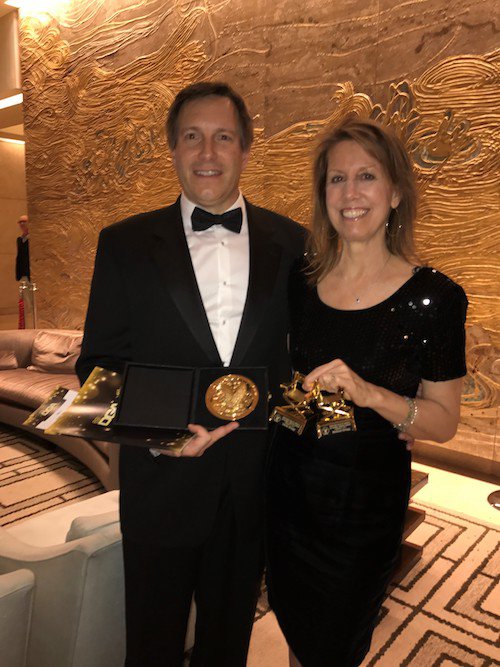
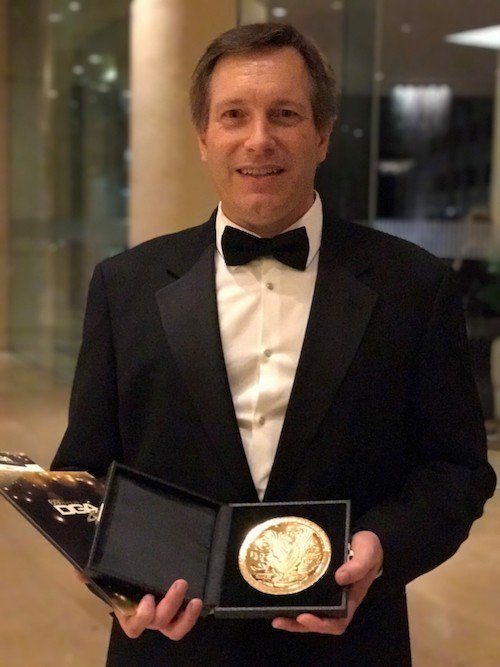
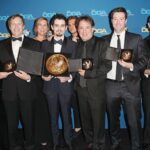
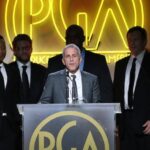
At the Producer’s Guild [of America] awards last weekend, I did get to go up on stage, when we won, so I will say that. [Laughs.] Whether past events predict the future, that’s hard to say. To get technical for a moment, the Academy determines usually up to three people from among those credited as “Producer” be the official nominees for the Best Picture award. The award is really to the picture itself, but there are three formal producer nominees. I’m the first position Executive Producer on the film, which is as good as you can get for an EP, but I’m not one of the offical “Producer” nominees. I kind of depend on the benevolence of my colleagues, the studio, and the Academy what will happen in regards to the stage. [Laughs.] I’m always hoping, but first we have to be chosen.
Is that something where, if you look back to when you first became involved in the entertainment industry, you secretly dreamed, “Maybe someday I’ll be on stage accepting an Oscar,” or did it seem so far outside the realm of possibility that you didn’t think about it?
Getting into entertainment—just the idea that I could be born in St. Louis, set out for Hollywood, and one day be making films—that was sort of exotic enough. I wasn’t fueled by the idea of “And the Oscar goes to…” And now that I’ve been in the industry for a while, making a lot of films has been more of a driver. I will say that when the films are well-received, I do enjoy that.
So would you say that looking back on a hefty filmography, shepherding a lot of different projects to fruition, that’s the achievement in your view?
Yeah. If I had known when I was setting out that 20 years later I would have 40 films and 40 episodes of television under my belt, I would have said, that’s pretty fantastic. The chance that any one of them wins an award is pretty small, so I’m pretty happy that four films have now been nominated for Best Picture at the Golden Globes, and three at the Academy, and those have mostly been in the last ten years. So I feel like maybe I’m getting better at this!
The 89th Annual Academy Awards will take place Sunday, February 26, with a broadcast time of 7:30 p.m. Central Standard Time.