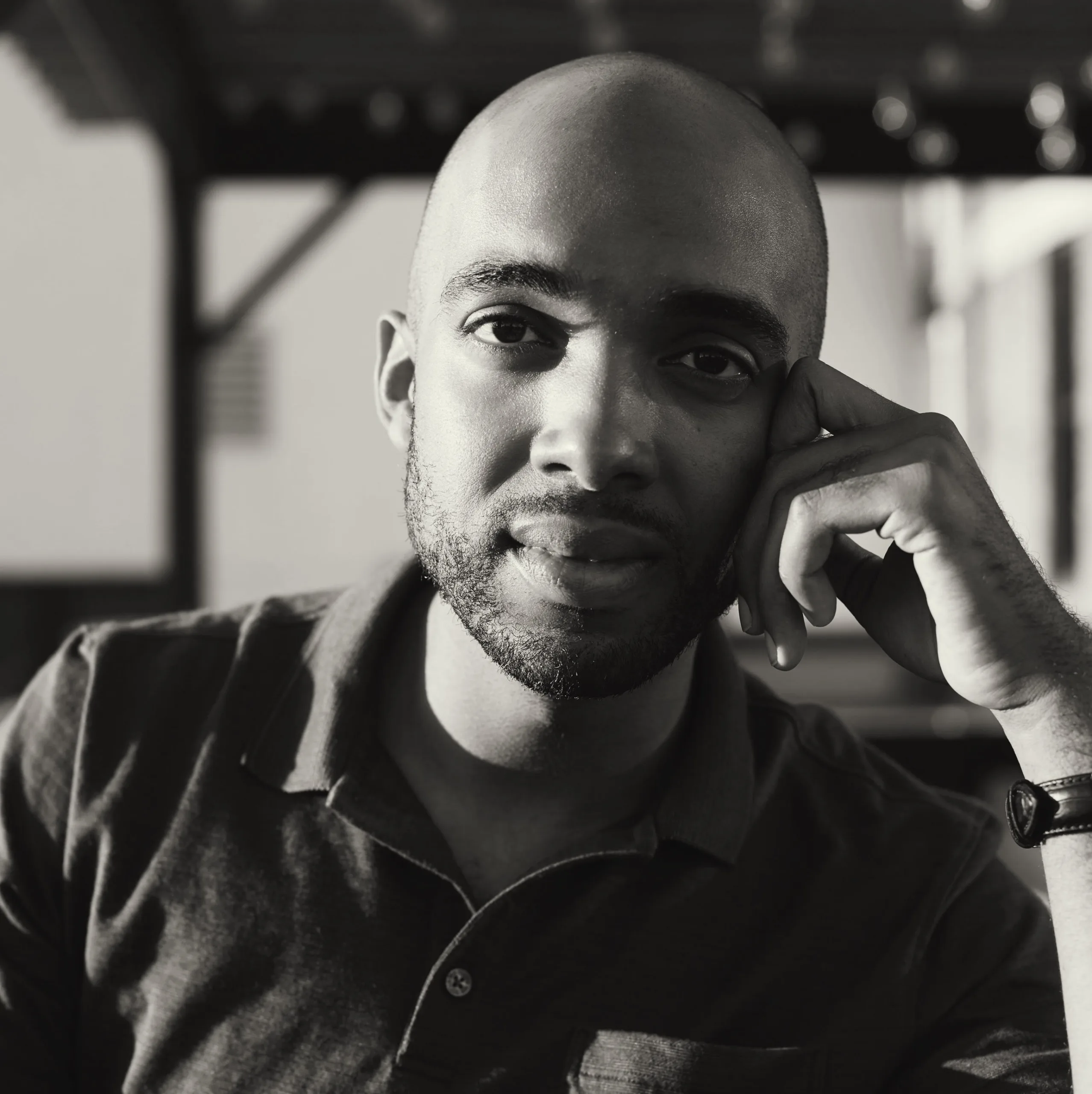
There are two remarkable things about Nicholas Ma, who screened his new documentary film, Leap of Faith, to a sold-out audience at John Burroughs School on August 29: he’s a very good filmmaker, and he’s the son of the renowned cellist and citizen artist, Yo-Yo Ma, who lent his support to the film’s release with a short performance before the screening.
The event was conceived in large part by St. Louis native Lori Samuels—current Chair-Elect for Silkroad, the elder Ma’s global-reaching arts organization—and also featured the school’s string quartet, three of whose four members are also musicians in the St. Louis Symphony Youth Orchestra. “Our students’ passion for music was on full display, and I thought they nailed it,” says Ginger Imster, assistant head of school for external affairs at Burroughs.
Stay up-to-date with the local arts scene
Subscribe to the weekly St. Louis Arts+Culture newsletter to discover must-attend art exhibits, performances, festivals, and more.
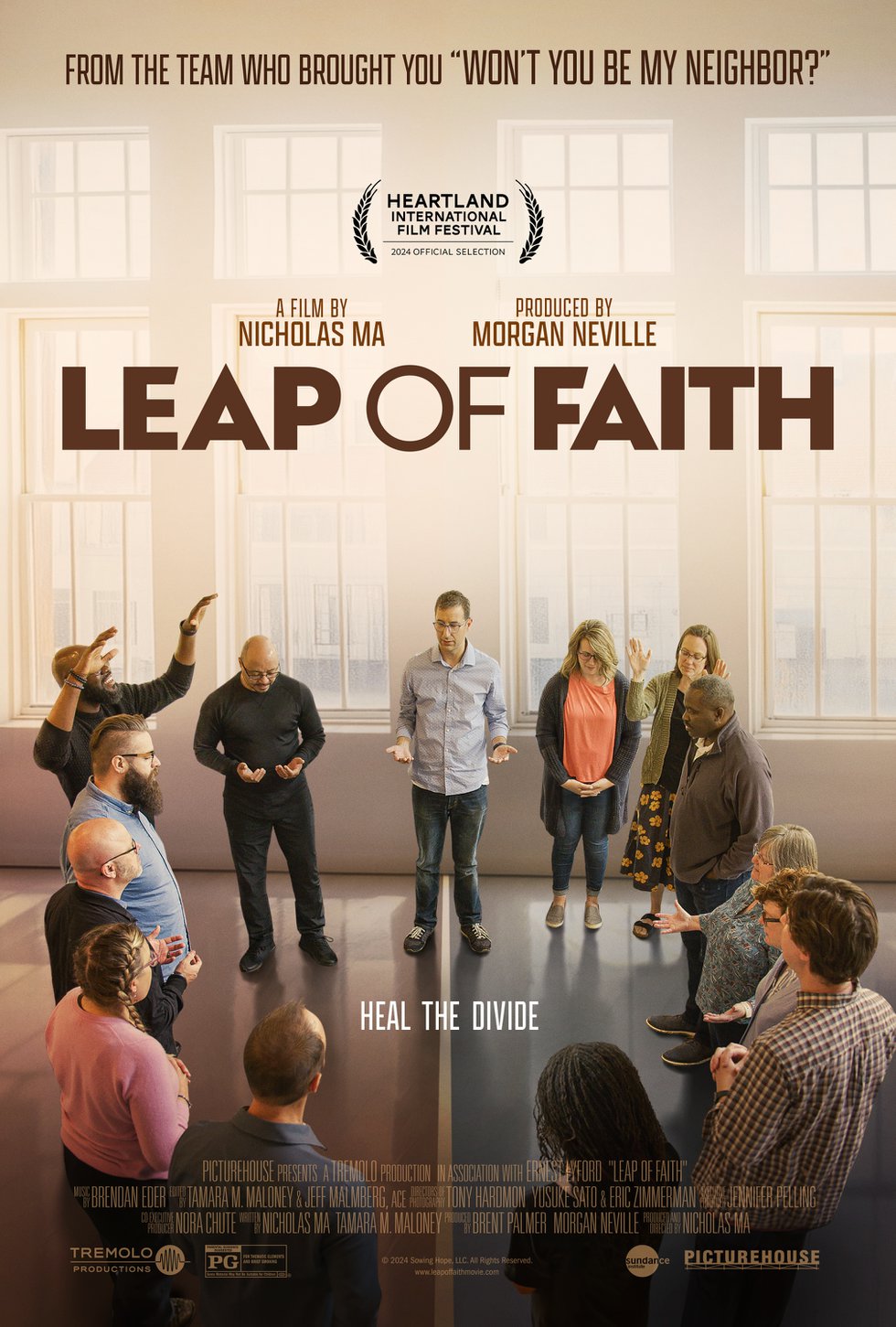
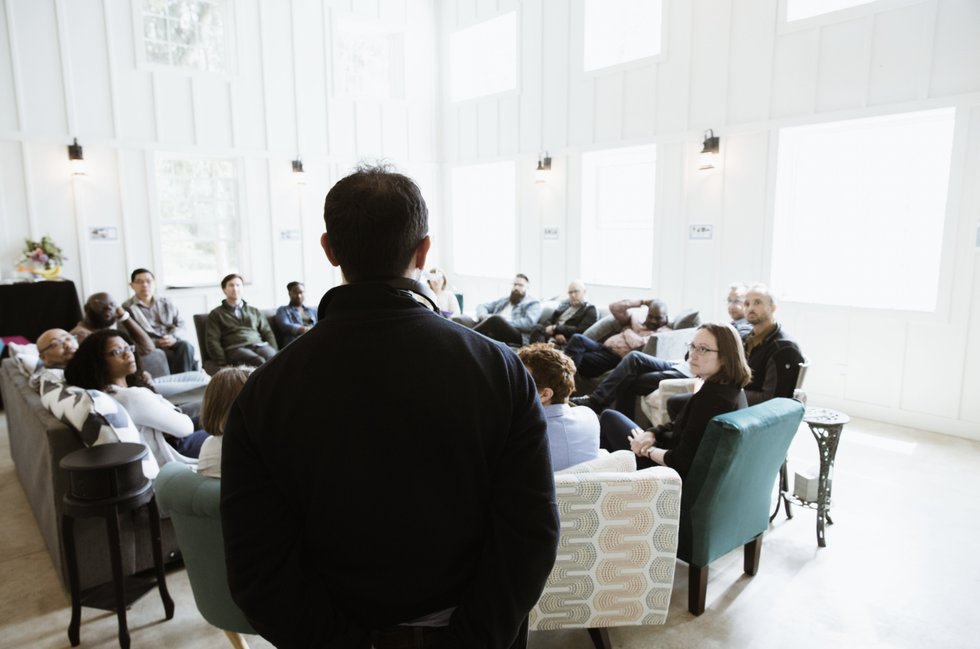
In collaboration with producer Morgan Neville, with whom he’d previously worked on the award-winning 2018 Fred Rogers documentary, Won’t You Be My Neighbor?, the younger Ma traces relationships formed over the course of a year among 12 Michigan-based pastors who fall across different lines of denominational affiliation and belief. Convened by Michael Gulker, president of The Colossian Forum, these Christian leaders accompany each other through conversation (and just as often through silence) on issues of gender, sexuality, and race, reckonings which have rocked the American church in recent decades.
Ahead of the film’s wider theatrical release at Ronnie’s Cinema on October 4, SLM sat down with Nicholas Ma, Yo-Yo Ma, and Michael Gulker to talk about conflict transformation, faith, and the common good.
Could you talk about your decision to begin the screenings for Leap of Faith in St. Louis?
Nicholas Ma: I live in Brooklyn, so when Michael told me he wanted to do this in Grand Rapids, I got nervous. It wasn’t a place that I knew or had spent any time, but it was really important to Michael, and I just trusted that. And over the past four years, I’ve come to know Grand Rapids, the fissures and the deep, deep problems that exist within that city, and yet also the pride that a lot of the people take in being from that city. To me, that strain between the terrible problems that we face, and our deep hopes and pride in where we live and who we are, is something that’s so shared between those two cities, and I think it’s actually shared more broadly. St Louis and Grand Rapids, to me, feel like kindred spirits in that way.
I think the challenge always with movies is to remind people that the specific world that they see on screen is something that also exists universally and specifically within them. And the hope of drawing that parallel between Grand Rapids and St. Louis is an opportunity to have those conversations, to open the door for conversations that are difficult. We just can’t be afraid of them, but we also have to find love for each other in having them so that we can find possibilities that we didn’t know existed before. And I think that’s really hard for us right now. I think it’s hard watching the movie. There are moments that you want to walk away. There are moments that you want the pastors to walk away. It’s really hard, and you can only make the commitment to stay if you know that you could be loved by the other person. So how do we justify that and do that?
There are ways that clergy in our own community like Rev. Traci Blackmon have modeled that kind of bridge-building.
NM: I agree. It often feels scary, but I think it’s also an opportunity for clergy. And I feel so impressed with the clergy in Grand Rapids taking that risk and that vulnerability on camera. They watched the film about six weeks ago, and what they all said to each other is, “I have your back. Whatever happens, I have your back because I know you, and I know that you care, and I know that we want to get through this together.” And that’s the kind of result that you can’t know is going to happen, but you realize, Well, if that’s true, what else might be possible?
How did you walk alongside and bear witness to the work of these ministers who the film represents as the connective tissue of their communities?
Michael Gulker: As a pastor, my central grammar is theological. So thinking about: What stories, what characters give our moral imagination power? As a Christian, it’s the life and the death and really the outpouring of God’s own life, this self-emptying act, this giving oneself away in the most counterintuitive way, that actually leads to life. That’s the central narrative.
When you’re bridge-building, you don’t know where that bridge is going to, and you don’t know if somebody’s going to respond. At one level, you just have faith in this story, that the way that the universe functions is in this kenotic, self-emptying way, and that you’re going to have faith in that. You’re going to put yourself out there and see what happens. And almost never what you expect happens. But something usually comes back, and often it’s beautiful, and often it’s painful, and often it’s both. That work of bridge-building, of giving ourselves away, is what leads to the new possibility that the world can’t imagine without the giving away. But it’s not identical return—going back to Kierkegaard—it’s gift economy.
Yo-Yo Ma: I’m thinking about when Michael says “as a pastor,” or Nicholas says “as a filmmaker,” or for me you’d say, “Yo-Yo is a cellist.” When I was 9 years old, I read something that I really loved. It was a great musician who said, “I think of myself as a human being first, as a musician second, and as a cellist third.” Now get this: As a 9-year-old, your parents are saying to you, “Practice!” And I was thinking, Wait a minute. Practice? I’m a human being first! I want to be a human being, and not be a cellist. And guess what? As a 68-year-old, I still feel the same way. For me, the common denominator is the fact that we’re human. Michael alluded to the question of what brings us together. Well, we’re human, and every one of the 8.2 billion human beings we have on the planet has a unique genetic composition, will have unique experiences in life, will make unique decisions. With those decisions, with those experiences, with the genetic component, the whole arc of their lives is part of the miracle of life. And so if I explore that part of the infinitude of variety in living forms, and even inanimate forms—stars, planets—we get close to the mysterious. And as Nicholas says, “there’s never enough of it.”
Every music is a form of expression of somebody and of who they are and what they want to tell us. So, obviously, you’ll like something more than others, but that’s what it is. And I like to revel in the infinite variety of our ecology and of our human ecology, and I think the more we can treasure that as part of the miracle of life, the more excited I become, because it’s a lifelong learning and curiosity.
Leap of Faith premiers on October 4 at Ronnie’s Cinema, 5320 S. Lindbergh.