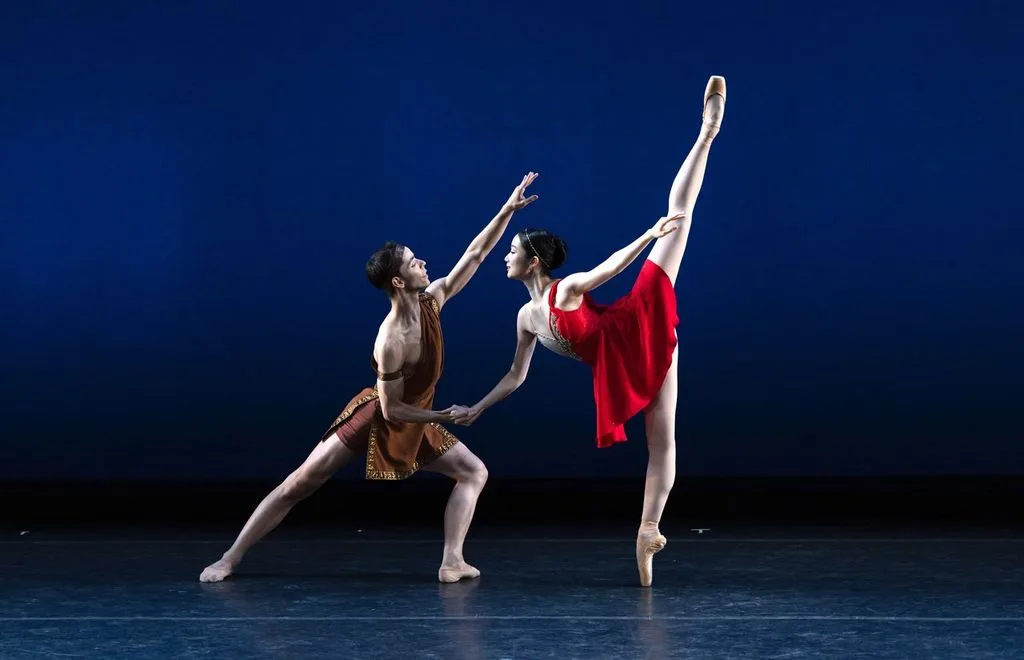
Dance St. Louis is celebrating a big milestone this year, kicking off their 60th anniversary season this weekend with a selection of contemporary and classical favorites performed by American Ballet Theatre’s Studio Company
Dance St. Louis, originally called the Dance Concert Society, was founded in 1966 by Washington University dance professor Annelise Mertz as a nonprofit dance presenter bringing nationally renowned dance companies to St. Louis. Mertz’s idea proved to be one St. Louisans could get behind. In the 1980s, household names like Mikhail Baryshnikov and Rudolf Nureyev had danced in St. Louis. And by the tail end of the 20th century, the list of notable companies presented by Dance St. Louis rivaled any city in the country.
Stay up-to-date with the local arts scene
Subscribe to the weekly St. Louis Arts+Culture newsletter to discover must-attend art exhibits, performances, festivals, and more.
Case in point: White Oak Dance Project came in 1991, a company founded by Baryshnikov and iconoclastic modern dance choreographer Mark Morris. It was the first time Morris’ work was seen in St. Louis—a big deal for any city, especially in the ‘90s.
It was a banner year. A report in the St. Louis Post-Dispatch confirms White Oak kept very good company that season, with San Francisco Ballet, Batsheva Dance Company, Pilobolus, Paul Taylor Dance Company, and the Joffrey Ballet (then still based in New York), all traveling to St. Louis to perform. And that’s not even a complete list.
In six decades, Dance St. Louis has hosted 30,000 dancers from 500 companies and performed for more than three million people. Keeping such a legacy alive has been executive director Richard Dee’s top priority. For the past six years, he has been Dance St. Louis’ only full-time employee, bringing the organization through hard times which started before (but certainly weren’t helped by) the COVID-19 pandemic.
“It’s a struggle to keep an organization going in this climate,” Dee says. “Part of our strategic plan is the financial sustainability of the organization. Even though we’re a nonprofit, we have to run it as a business. That’s reflected in eight straight years in the black.”
With the organization focused on living within their means, the 2025-26 season is miniscule compared to 1991. There are just four engagements, including the 18th annual Spring to Dance Festival. But artistic director Michael Uthoff packed the petite-by-comparison season with a lot of intention.
“I wanted to make sure it was a celebration of dance in America,” he says.
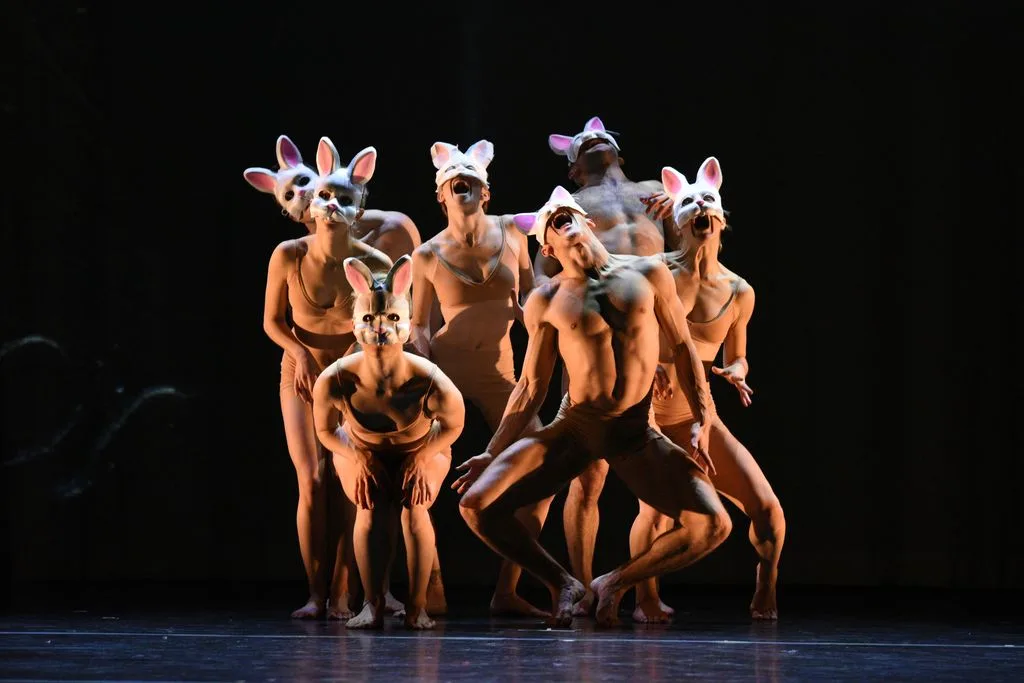
ABT Studio Company’s November 14 & 15 program at the Touhill Performing Arts Center includes works by several Americans: Twyla Tharp; New York City Ballet principal dancer Tiler Peck; Jerome Robbins; Vermont native Katie Currier, who danced with Peridance and the Madrid-based company Metamorphosis; and current ABT dancer Brady Farrar (who first leaped into living rooms as a cast member on Dance Moms). On March 7, 2026, MOMIX will return to St. Louis with its magical take on Alice in Wonderland.
“MOMIX is really a celebration of what can happen when you have talent in America. You can do some special things and not only create a product, but attract the audience,” says Uthoff.
And Ailey II visits April 10 & 11 performing, among other things, a world premiere commissioned by Dance St. Louis set to music by an iconic late St. Louisan, Chuck Berry, commemorating what would have been his 100th birthday in 2026.
The same approach extends to Spring to Dance, which returns May 22 & 23 with a mix of big swings and audience favorites in a variety-packed weekend that prioritizes out-of-towners. St. Louis’ dance companies have been notably absent from recent Spring to Dance festivals. Also gone is New Dance Horizons, a million-dollar initiative that commissioned choreographers who color outside the lines to create new works for area companies.
“We spent a lot of time and a lot of money in recent years encouraging and strengthening the local dance companies,” says Uthoff. “We felt that as we move forward, we need to bring events that are larger than them.”
In a way, that approach more closely mirrors Annelise Mertz’s original vision for Dance St. Louis. The organization also aims to send a message that Dance St. Louis is not going anywhere, ushering in the next 60 years with a fresh brand and tagline, and positioning the Gateway Arch in the center of a new logo.
“What I’d really like to see moving forward is Dance St. Louis continuing to take the lead to grow an audience for dance,” says Dee, who begins his 15th year with the organization this fall. “How do we do that? You have to put people in seats.”
Current plans include reestablishing an endowment and reenergizing season subscriptions. Dance St. Louis eventually wants to restore Spring to Dance’s original format—having two shows a night—and add another engagement to the season’s menu. At 58, Dee says he’s still got plenty of time to make that happen. And Uthoff, who turns 82 this month, says he’s also not done yet. He dreams of future lineups bound to dazzle audiences as much as Baryshnikov and Nureyev did in the ‘80s. Akram Khan, Whim W’Him, and Ballet Preljocaj are at the top of his wish list.
“I think I have a lot to give,” he says. “If there’s a solid plan, I’m willing to spend a couple more years trying to push it forward and have someone in place before I walk away. The question is, who is that person? For Dance St. Louis, you need a kind of person with global eyes, with the gateway point of view, who can bring works that would complement what is being done here and enhance the dance scene as a whole.”