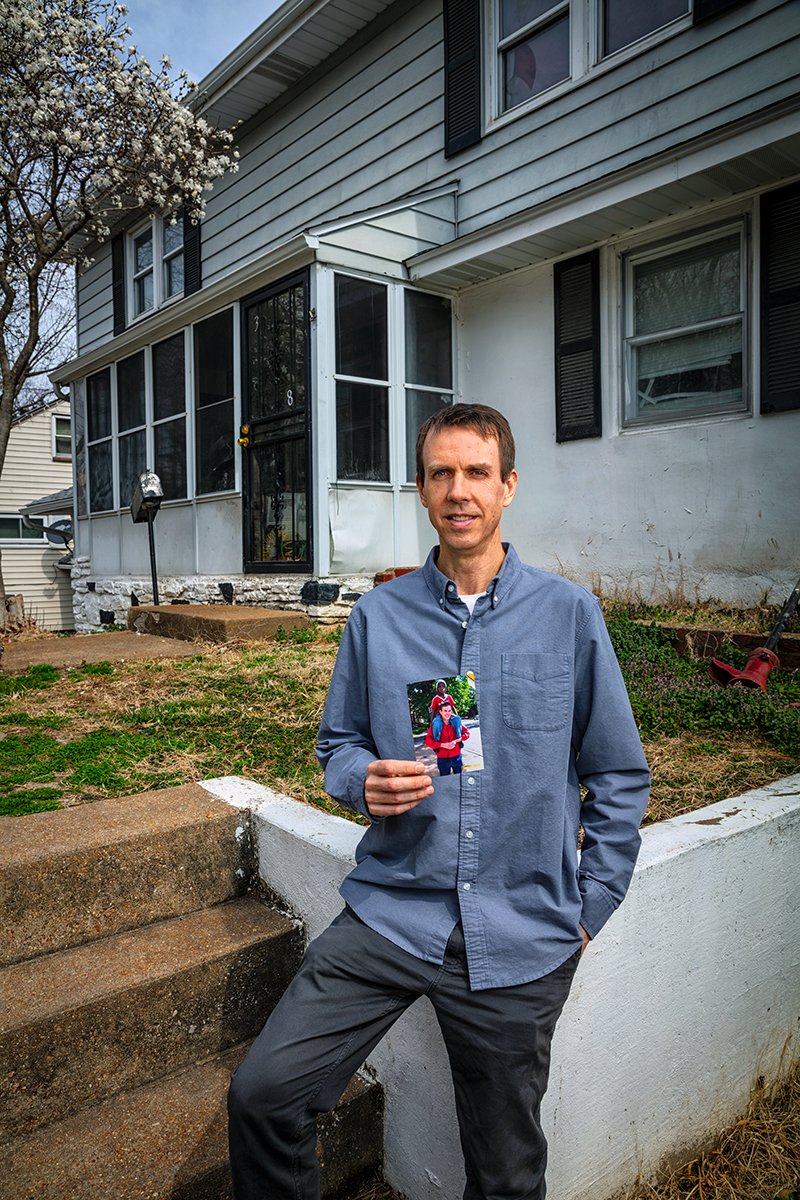
For the first two years after Jorell Cleveland was killed, journalist and author Ben Westhoff couldn’t bring himself to dig into the reasons why. The murder of the 19-year-old on the streets of Kinloch was devastating. But to Westhoff, who had mentored the Ferguson teen since age 8 through Big Brothers, Big Sisters, it seemed a random act of violence.
While writing his 2019 book, Fentanyl, Inc., however, Westhoff learned a fact that surprised him: Most murder victims know their killer in some way. That piece of information stuck with him.
Stay up-to-date with the local arts scene
Subscribe to the weekly St. Louis Arts+Culture newsletter to discover must-attend art exhibits, performances, festivals, and more.
“I was thinking of writing a book about St. Louis, and Jorell was going to be just the introduction—what happened to him, his plight. My agent was like, ‘You know, that should be the whole book.’ But I wasn’t ready. I still hadn’t taken my head out of the sand. I thought it must have been a random killing,” says Westhoff. “And it wasn’t until months later that it started dawning on me. I was doing this book about drugs, Fentanyl, Inc., and I was writing more about crime and criminals… Once this all started dawning on me, I was like, There probably is a lot more to this.”
There was. Westhoff launched an investigation that illuminated not only Cleveland’s murder, but also the myriad systemic issues that led to his death and those of many others around him. The resulting book, Little Brother: Love, Tragedy, and My Search for the Truth, out May 24 from Hachette Books, is an empathetic, emotional, and deeply personal tale. In the end, Cleveland’s story became Westhoff’s St. Louis book, and more specifically, his North County book.
“More than anything, it’s a book about North County,” says Westhoff. “There’s been a lot of books about St. Louis, but I feel like North County is really not written about much at all. The most satisfying research I did was about Ferguson, Kinloch, and the history of those places.”
Westhoff’s investigation is far-reaching, and his time spent in the community has led him to a few conclusions about ways to make things better—such ideas as better firearm and policing policies—which are thoughtfully shared in the story’s epilogue.
It would be easy for a story like Cleveland’s to feel hopeless, yet another young Black man from North County lost to violence among the barely acknowledged losses of so many others. And while the facts are often hard to swallow, Little Brother is not without its bright spots.
Westhoff paints moving portraits of Cleveland’s family and friends, especially his father, Joe Cleveland, a devoted single dad who has brought up 10 children and lost three to sickness and violence. Westhoff’s descriptions of his grace in spite of the tragedies he has faced are both beautiful and sobering, especially alongside the stories of quick retaliation and vengeance around him.
Little Brother brought a sense of catharsis for Westhoff and the Clevelands, but for its wider audience, it fills another role. In cementing Cleveland’s legacy, Westhoff has also created an accessible, human story for those who want to understand the complex issues facing North County.
“I think the goal is for people to understand how poverty works from the inside. Most of my readers—or at least a lot of my readers—will be people who don’t live in poverty,” says Westhoff. “Through the eyes of one person’s story, you can really understand something better than just a big overview. Through Jorell’s story, I hope that people who have influence can try to alleviate poverty using the levers we have. That, to me, would be a great outcome for this book.”
Little Brother: Love, Tragedy, and My Search for the Truth is now available for pre-order. The book launch event will take place May 25 at The Ethical Society of St. Louis.