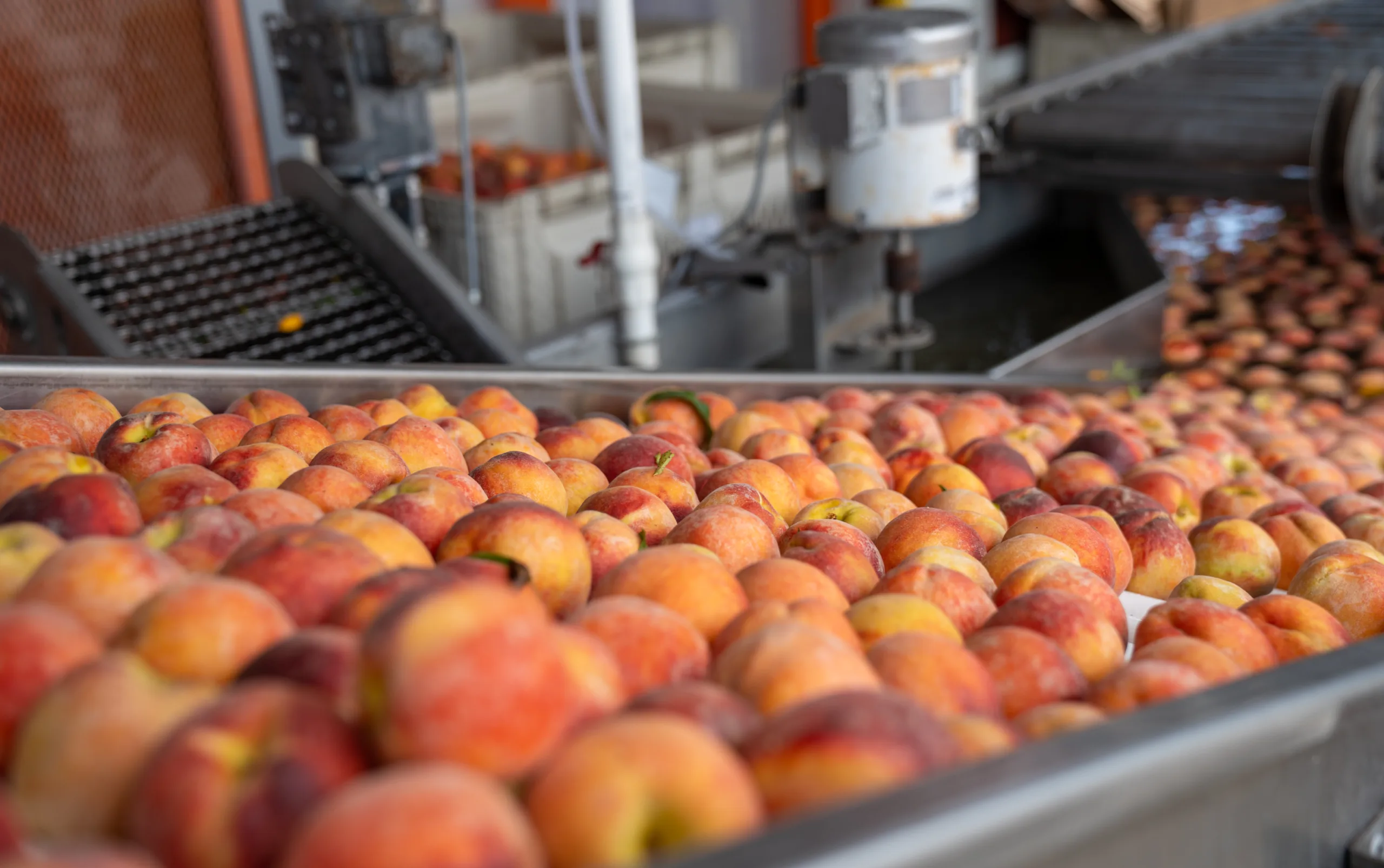
After two years of down crops, peaches are back and more bountiful than ever for Eckert’s, as the Metro East farm stares down its largest harvest in the farm’s history.
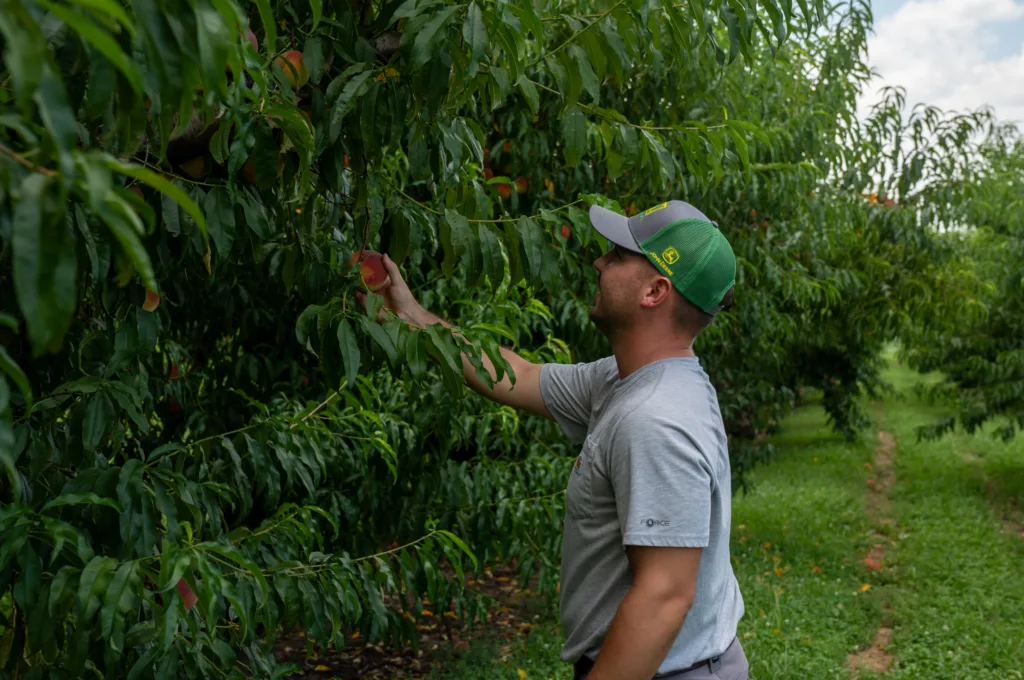
Eckert’s farm operations manager Jack Lanxon says the indications of a record harvest were present once the peach trees started blooming toward the end of February to mid March.
Keep up with local business news and trends
Subscribe to the St. Louis Business newsletter to get the latest insights sent to your inbox every morning.
“Peaches have a really pretty bloom: just a sea of pink and white,” he says. “They were super heavy this year and that’s when it hit me that this is going to be a big job ahead of us, and a challenge we were really hoping to have finally in the past three to four years.”
In the winters preceding the 2023 and 2024 growing season, Lanxon says the temperatures dropped so low that many buds on the orchards’ trees died and never bloomed. Last year, that meant production was cut by half.
But the abundance of this year’s harvest is helping one of St. Louis’ most recognizable peach suppliers re-establish itself in the Chicagoland market, with its fruit on offer in Whole Foods stores across that upstate region.
“We’ve not been able to take any peaches into the Chicago market for about four or five years,” says Eckert’s Inc. president Chris Eckert. “They’re excited to get homegrown peaches back in the stores.”
Talks with the major grocery chain started in spring, after the farm was sure it would have a robust crop, he says. About four weeks into this year’s harvest, Eckert says the feedback has been positive.
“The most obvious message is when they increase their orders,” he says. “That was the loud and clear message that things are going better than we thought.”
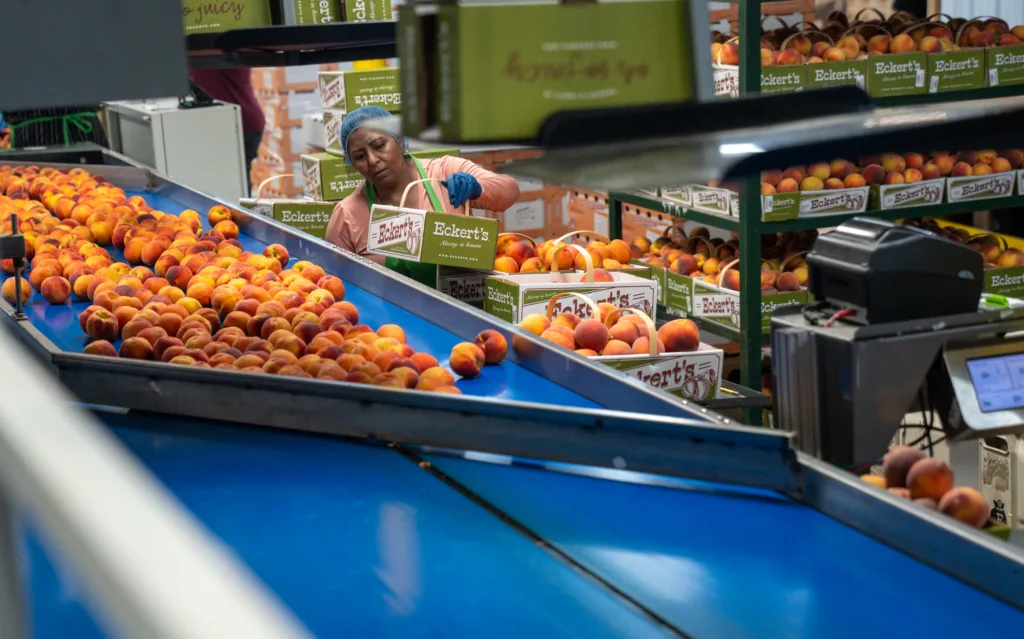
On average, the farm is sending about one-and-a-half semi truck loads of peaches a week, which jumps to two semi truck loads if the stores are actively promoting the fruit. All in all, it’s about 20 to 30 percent more than expected, Eckert explains.
The farm planted additional acreage in recent years, bringing its total peach production to 300 acres, with each acre producing an average 250–300 bushels of peaches, he says. That necessitated an “expanded sales strategy,” Eckert says.
Even so, St. Louis remains the farm’s the most important market.
“We’re never going to not supply the St. Louis market. We’re selling 10 times the amount of peaches [here] than we’re selling in the Chicago market,” Eckert says. “So [Chicago] has a lot of room to grow.”
The challenge comes with recognition. Eckert says St. Louisans have come to know what to expect when they see an “Eckert’s peach” in the grocery store. Chicagoans don’t.
“We’re not known as the peach farm from Illinois, even though it’s our home state,” Eckert says. “We’re having to introduce ourselves to that market and educate the consumer about the difference that a homegrown peach delivers from a peach that’s been shipped in.”
He says he expects the quality of the peaches will “speak for themselves.” They’re tapping into local social media influencers in a hope to move the needle, too, though it’s too soon to see the results of that effort yet.
If Eckert’s can crack the Chicago market, it could be a boon for other downstate peach growers looking to get their peaches to more wholesalers, says Raghela Scavuzzo, executive director of Illinois’ Specialty Growers Association, which covers fruits, vegetables, flowers and other unique market segments that are “bright and colorful.” Chicago represents the third largest market in the country.
“That’s a huge opportunity, and we are continually encouraging and pushing: Can we get our Illinois peaches and our Illinois orchards into those Chicago markets, even when a lot of our peaches are in southern Illinois?” she says. “Seeing something like that happen for [Eckert’s] begins the conversation for other orchards to be able to gain new markets as well.”
Illinois growers face competition from specialty crop growers across the border in Michigan and Wisconsin, Scavuzzo says. “We want ‘Illinois grown’ in the Chicago market,” she says. “This is a big conversation when some of our largest food industries are in that city.”
More growers following in Eckert’s footsteps could spur a conversation about how best to move crops grown in the south of the state to the north.
“We can start looking at cross stocking or even multiple stops within Chicago to make sure it’s worthwhile for everybody trucking up there,” Scavuzzo says. “We’re beginning to see what aggregation looks like and how partners can be built.”
Recent cuts to the USDA’s Local Food Purchase Assistance Cooperative Agreement Program, which provided funding for states, tribes, and territories to buy produce directly from local and regional producers, left many farms in need of new wholesale markets, Scavuzzo says.
“The LFPA program helped a lot of our farms start to learn wholesale markets, but as that program closed a lot of farms are needing new wholesale markets,” she says. “To see this relationship grow with Whole Foods, and in general new wholesale markets open up, it begins the conversation of what’s next, and this is really important for scalability.”
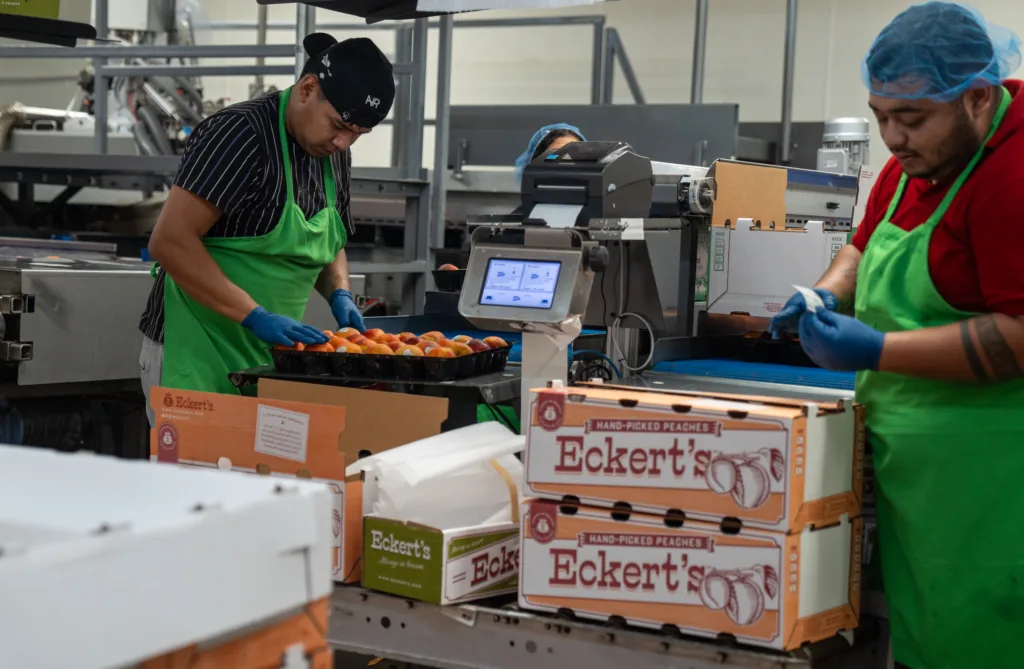
And when Eckert’s blazes a trail, Scavuzzo says the farm often reaches back to share what lessons it’s learned with other growers.
That learning curve continues, even with a record crop. The cost and availability of labor is a key one. “It’s what keeps all of us up at night,” says Lanxon.
Eckert explains crops like peaches or apples—or any fruit or vegetable, for that matter—are harvested by hand with labor that’s getting more expensive every year.
“That makes the math more challenging to be profitable growing fruits and vegetables in the United States,” he says. “I think all fruit growers are facing an uphill challenge on their cost structure right now.”
Hear more about Eckert’s record-breaking season on the Arch Eats podcast.